Plant Cytogenetics and Molecular Biology Group, Faculty of Natural Sciences, Institute of Biology, Biotechnology and Environmental Protection, University of Silesia in Katowice, 40-032 Katowice, Poland.
Institute of Biological, Environmental and Rural Sciences (IBERS), Aberystwyth University, Aberystwyth SY23 3DA, UK.
Cells. 2021 Mar 19;10(3):683. doi: 10.3390/cells10030683.
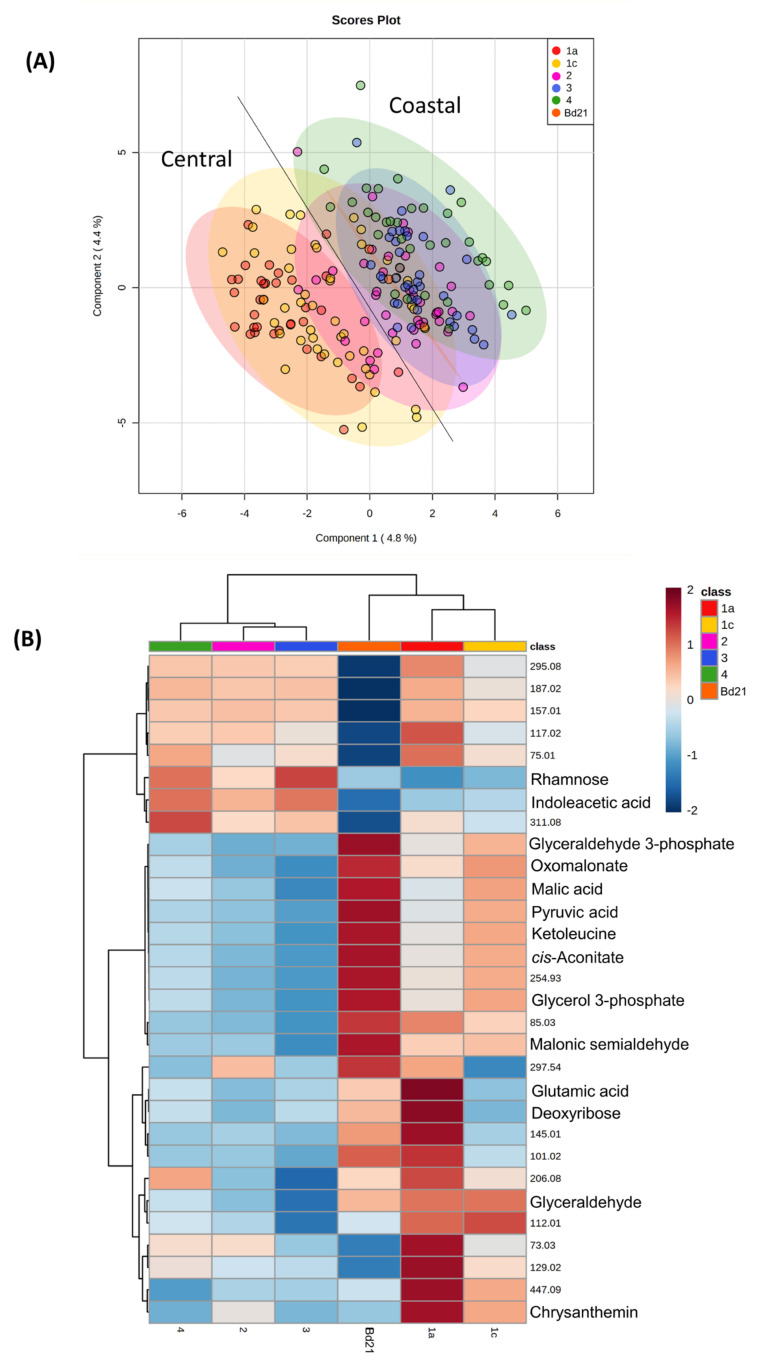
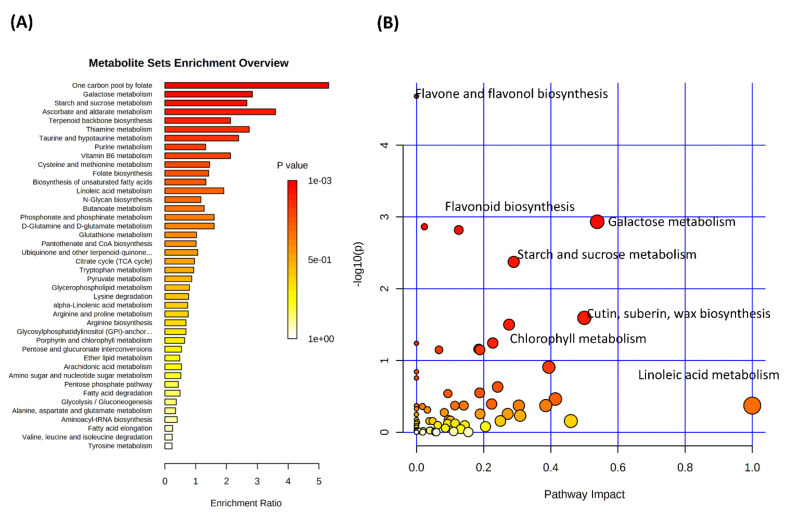
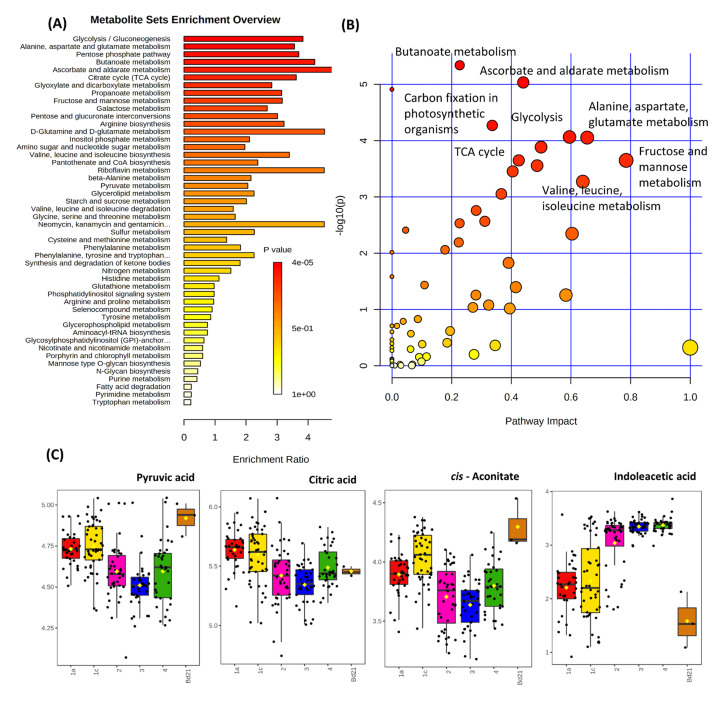
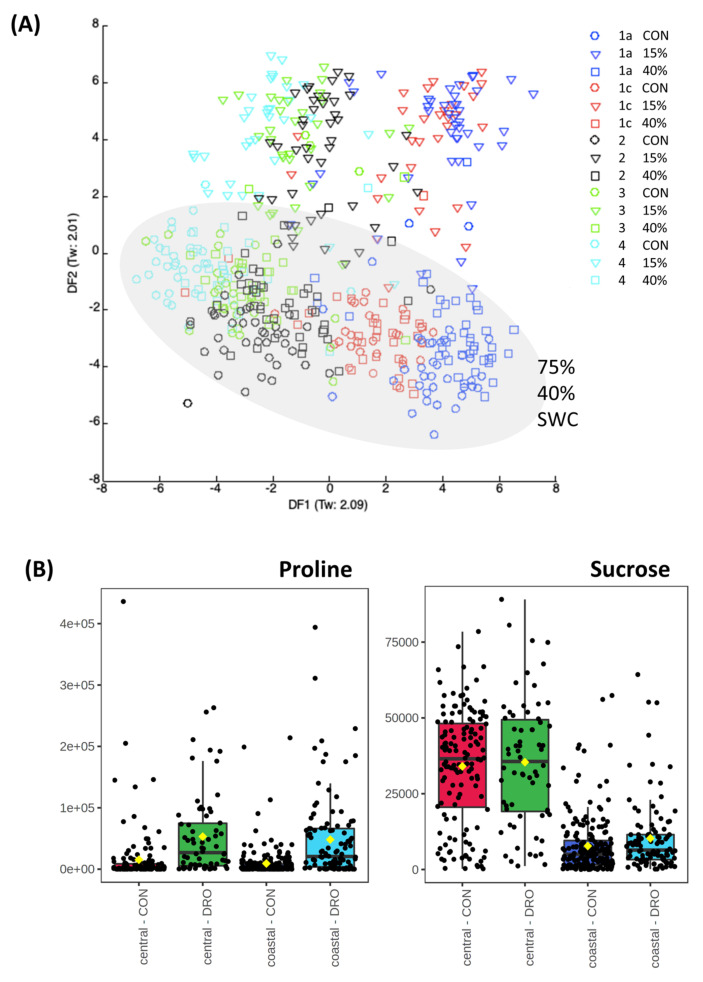
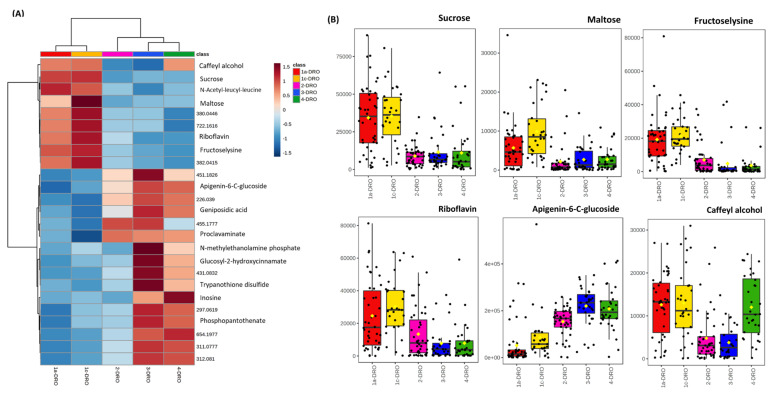
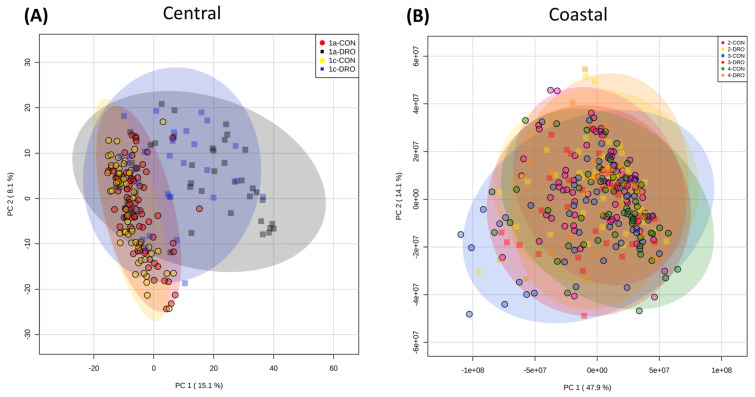
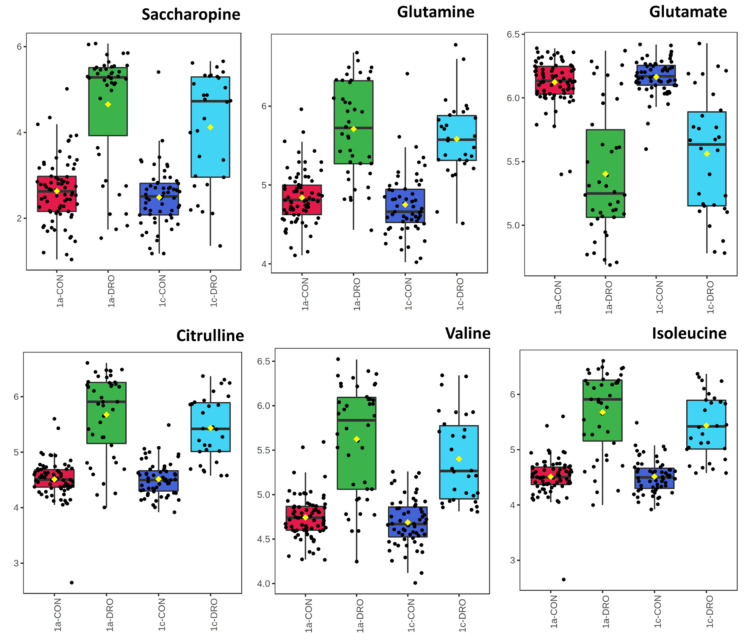
(Brachypodium) is a non-domesticated model grass that has been used to assess population level genomic variation. We have previously established a collection of 55 Brachypodium accessions that were sampled to reflect five different climatic regions of Turkey; designated 1a, 1c, 2, 3 and 4. Genomic and methylomic variation differentiated the collection into two subpopulations designated as coastal and central (respectively from regions 1a, 1c and the other from 2, 3 and 4) which were linked to environmental variables such as relative precipitation. Here, we assessed how far genomic variation would be reflected in the metabolomes and if this could be linked to an adaptive trait. Metabolites were extracted from eight-week-old seedlings from each accession and assessed using flow infusion high-resolution mass spectrometry (FIE-HRMS). Principal Component Analysis (PCA) of the derived metabolomes differentiated between samples from coastal and central subpopulations. The major sources of variation between seedling from the coastal and central subpopulations were identified. The central subpopulation was typified by significant increases in alanine, aspartate and glutamate metabolism and the tricarboxylic acid (TCA) cycle. Coastal subpopulation exhibited elevated levels of the auxin, indolacetic acid and rhamnose. The metabolomes of the seedling were also determined following the imposition of drought stress for seven days. The central subpopulation exhibited a metabolomic shift in response to drought, but no significant changes were seen in the coastal one. The drought responses in the central subpopulation were typified by changes in amino acids, increasing the glutamine that could be functioning as a stress signal. There were also changes in sugars that were likely to be an osmotic counter to drought, and changes in bioenergetic metabolism. These data indicate that genomic variation in our Turkish Brachypodium collection is largely reflected as distinctive metabolomes ("metabolotypes") through which drought tolerance might be mediated.
(柳枝稷)是一种非驯化的模式草,已被用于评估群体水平的基因组变异。我们之前建立了一个包含 55 个柳枝稷品种的集合,这些品种是为了反映土耳其的五个不同气候区域而采样的;分别命名为 1a、1c、2、3 和 4。基因组和甲基组变异将该集合分为两个亚群,分别命名为沿海和内陆(分别来自 1a、1c 地区和其他来自 2、3 和 4 地区),这与相对降水等环境变量有关。在这里,我们评估了基因组变异在代谢组中会反映到多远的程度,以及这是否可以与适应性状相关联。从每个品种的 8 周龄幼苗中提取代谢物,并使用流动注射高分辨率质谱(FIE-HRMS)进行评估。基于主成分分析(PCA)的衍生代谢组学区分了沿海和内陆亚群之间的样本。确定了沿海和内陆亚群幼苗之间变异的主要来源。内陆亚群的特征是丙氨酸、天冬氨酸和谷氨酸代谢以及三羧酸(TCA)循环显著增加。沿海亚群表现出吲哚乙酸和鼠李糖水平升高。在施加干旱胁迫 7 天后,还确定了幼苗的代谢组。内陆亚群对干旱表现出代谢组变化,但沿海亚群没有明显变化。内陆亚群对干旱的反应特征是氨基酸变化,增加了可能作为应激信号的谷氨酰胺。糖也有变化,这可能是对干旱的渗透压补偿,以及生物能量代谢的变化。这些数据表明,我们在土耳其柳枝稷集合中的基因组变异在很大程度上反映为独特的代谢组(“代谢型”),通过这些代谢型可能介导耐旱性。