Center for Genomic and Personalized Medicine, Guangxi Medical University, Nanning, China.
Guangxi Key Laboratory for Genomic and Personalized Medicine, Guangxi, Collaborative Innovation Center for Genomic and Personalized Medicine, Nanning, China.
J Clin Lab Anal. 2021 May;35(5):e23754. doi: 10.1002/jcla.23754. Epub 2021 Apr 4.
Muscle-invasive bladder cancer (MIBC) is a heterogeneous disease with varying clinical courses and responses to treatment. To improve the prognosis of patients, it is necessary to understand such heterogeneity.
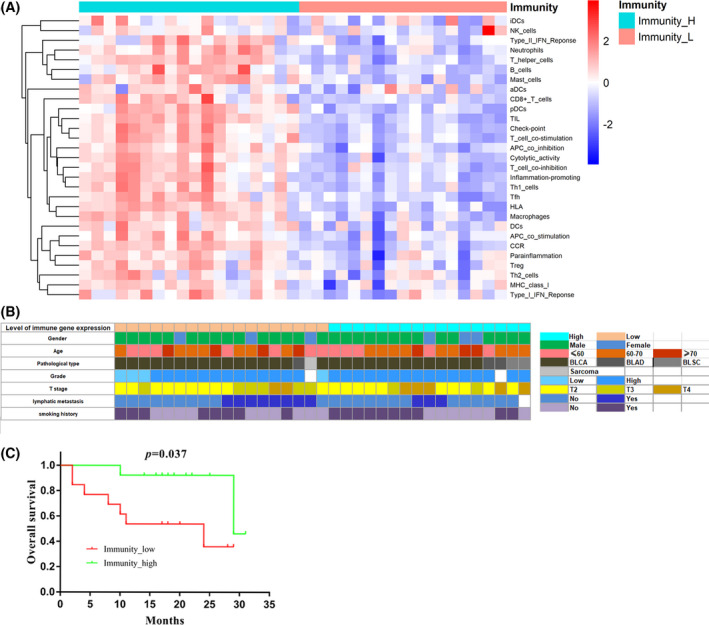
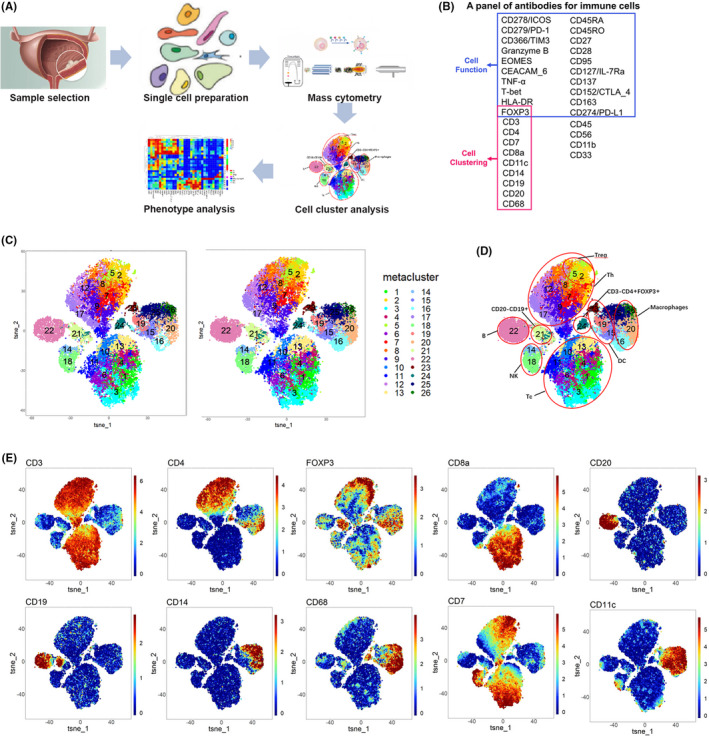
We used single-sample gene set enrichment analysis to classify 35 MIBC cases into immunity-high and immunity-low groups. Bioinformatics analyses were conducted to compare the differences between these groups. Eventually, single-cell mass cytometry (CyTOF) was used to compare the characteristics of the immune microenvironment between the patients in the two groups.
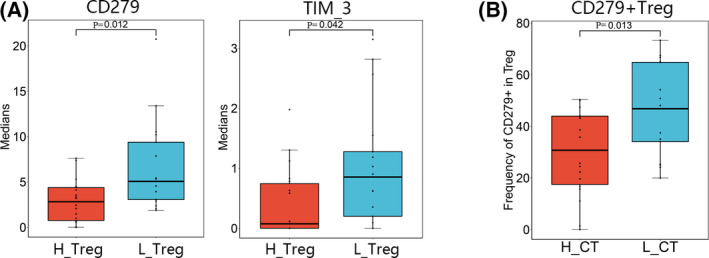
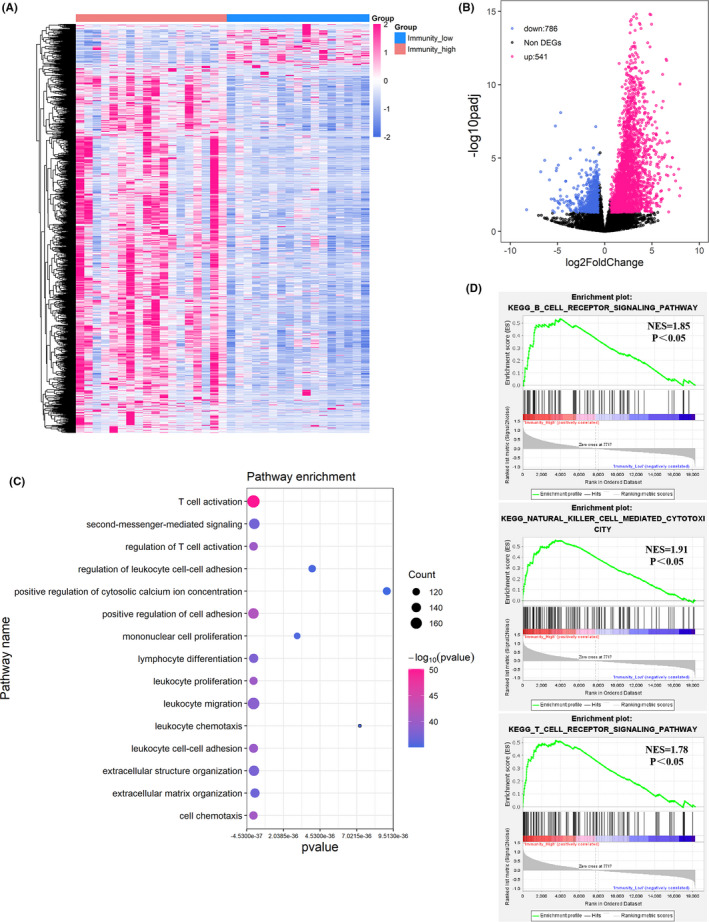
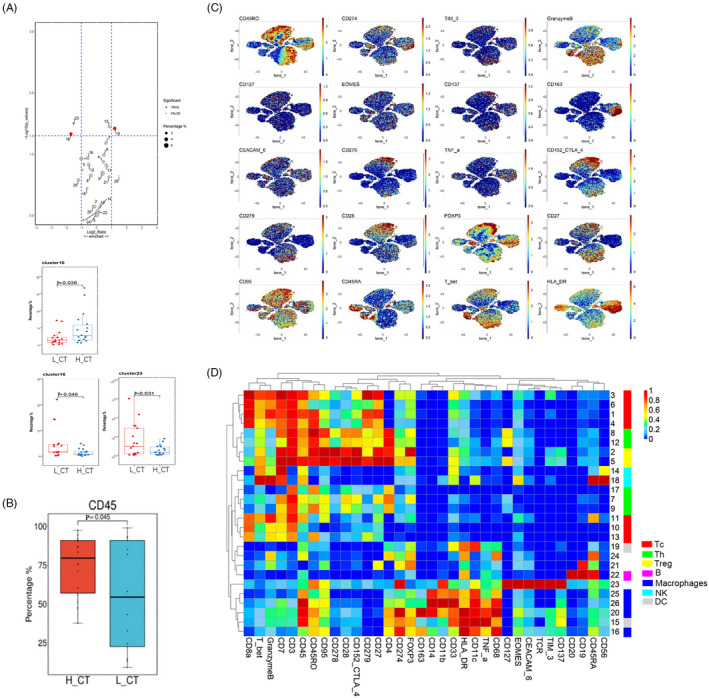
Compared with patients in the immunity-low group, patients in the immunity-high group had a higher number of tumor-infiltrating immune cells and greater enrichment of gene sets associated with antitumor immune activity. Furthermore, positive immune response-related pathways were more enriched in the immunity-high group. We identified 26 immune cell subsets, including cytotoxic T cells (Tcs), helper T cells (Ths), regulatory T cells (Tregs), B cells, macrophages, natural killer (NK) cells, and dendritic cells (DCs) using CyTOF. Furthermore, there was a higher proportion of CD45+ lymphocytes and enrichment of one Tc subset in the immunity-high group. Additionally, M2 macrophages were highly enriched in the immunity-low group. Finally, there was higher expression of PD-1 and Tim-3 on Tregs as well as a higher proportion of PD-1+ Tregs in the immunity-low group than in the immunity-high group.
In summary, the immune microenvironments of the immunity-high and immunity-low groups of patients with MIBC are heterogeneous. Specifically, immune suppression was observed in the immune microenvironment of the patients in the immunity-low group.
肌层浸润性膀胱癌(MIBC)是一种异质性疾病,其临床病程和对治疗的反应各不相同。为了改善患者的预后,有必要了解这种异质性。
我们使用单样本基因集富集分析将 35 例 MIBC 病例分为免疫高和免疫低两组。进行生物信息学分析以比较两组之间的差异。最后,使用单细胞质谱流式细胞术(CyTOF)比较两组患者的免疫微环境特征。
与免疫低组患者相比,免疫高组患者的肿瘤浸润免疫细胞数量更多,与抗肿瘤免疫活性相关的基因集富集程度更高。此外,免疫高组中阳性免疫反应相关通路更为丰富。我们使用 CyTOF 鉴定了 26 种免疫细胞亚群,包括细胞毒性 T 细胞(Tc)、辅助性 T 细胞(Th)、调节性 T 细胞(Treg)、B 细胞、巨噬细胞、自然杀伤(NK)细胞和树突状细胞(DC)。此外,免疫高组中 CD45+淋巴细胞比例较高,且 Tc 亚群富集。此外,免疫低组中 M2 巨噬细胞高度富集。最后,免疫低组 Tregs 上 PD-1 和 Tim-3 的表达较高,且 PD-1+Tregs 的比例较高。
总之,MIBC 患者免疫高和免疫低组的免疫微环境存在异质性。具体来说,免疫低组患者的免疫微环境中存在免疫抑制。