Zhang Wei, Fu Xianghui, Xie Jiansheng, Pan Hongming, Han Weidong, Huang Wendong
Department of Medical Oncology, Sir Run Run Shaw Hospital, College of Medicine, Zhejiang University, 3 East Qingchun Road, Hangzhou, Zhejiang 310016, China.
Department of Diabetes Complications and Metabolism, Diabetes and Metabolism Research Institute, Beckman Research Institute, City of Hope National Medical Center, 1500 E. Duarte Road, Duarte, CA 91010, USA.
Mol Ther Nucleic Acids. 2021 Mar 1;24:264-273. doi: 10.1016/j.omtn.2021.02.029. eCollection 2021 Jun 4.
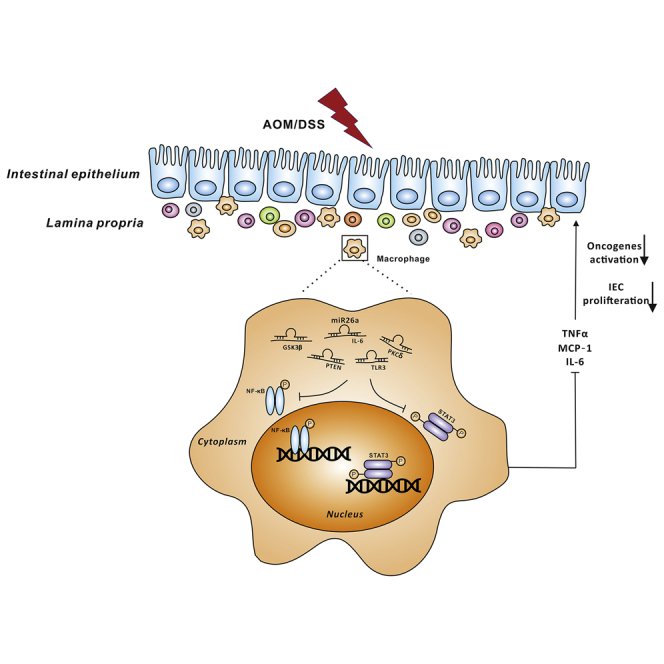
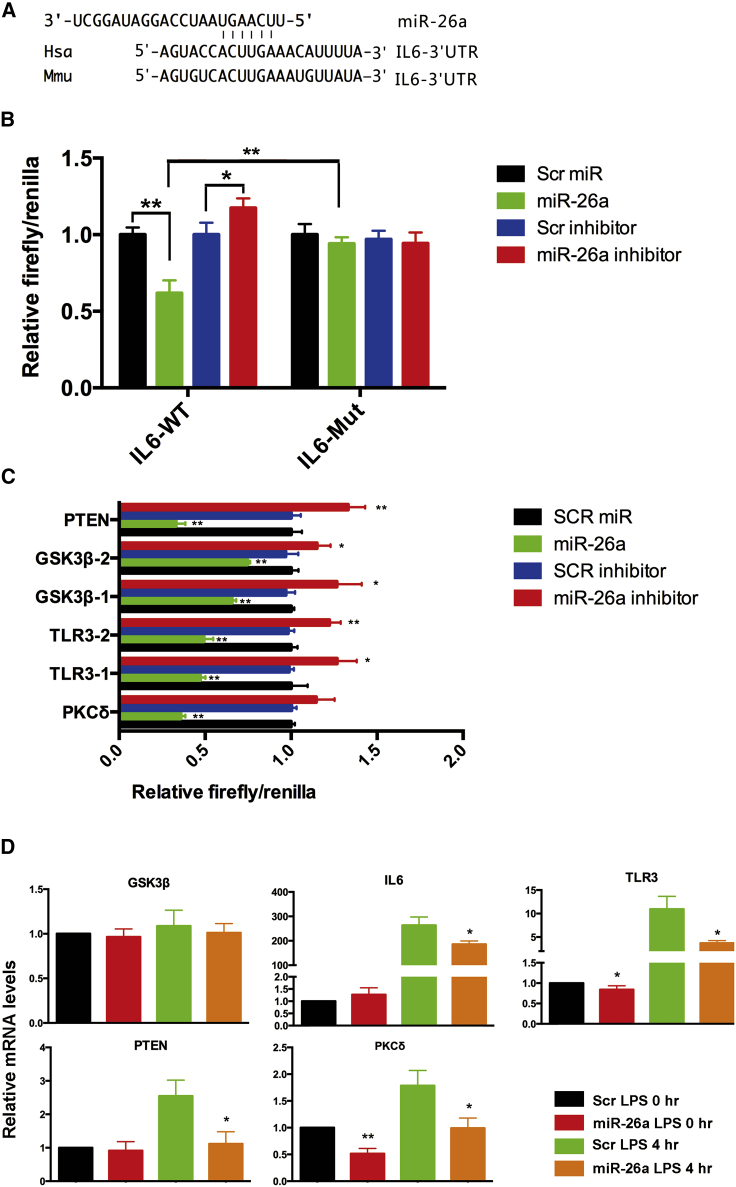
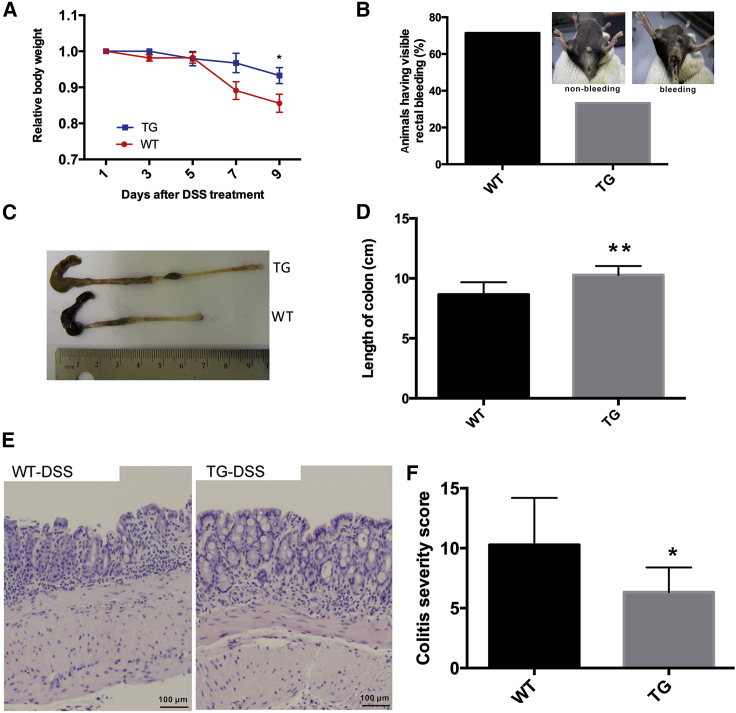
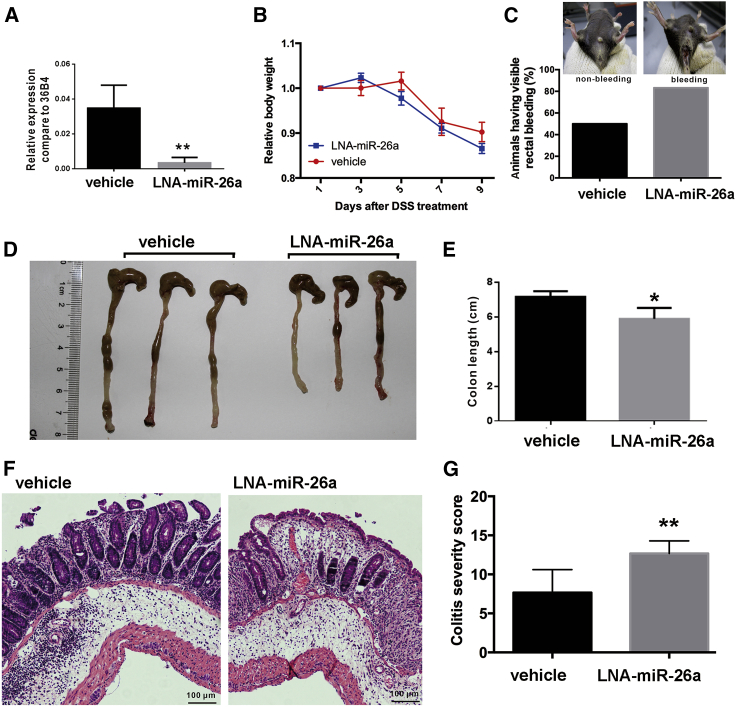
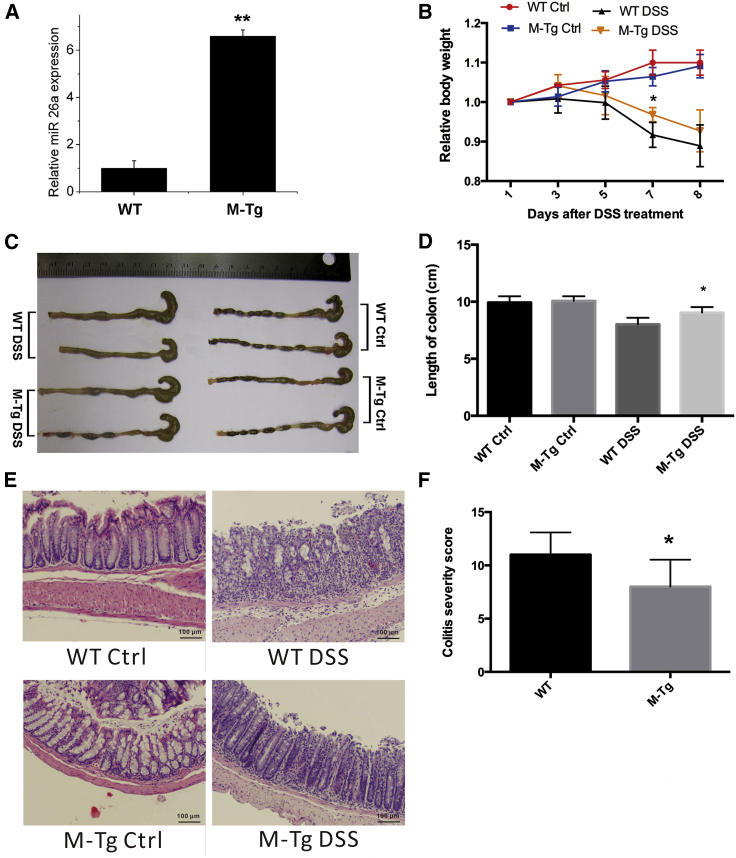
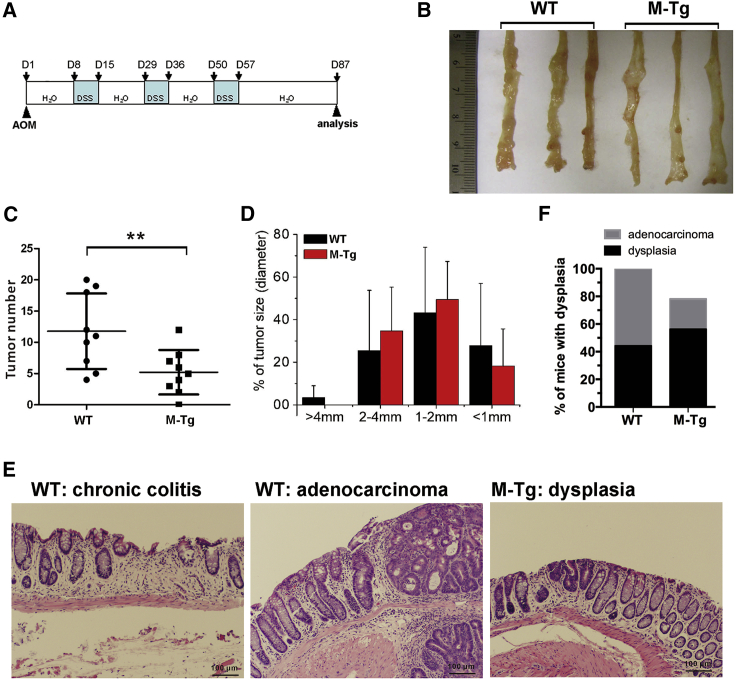
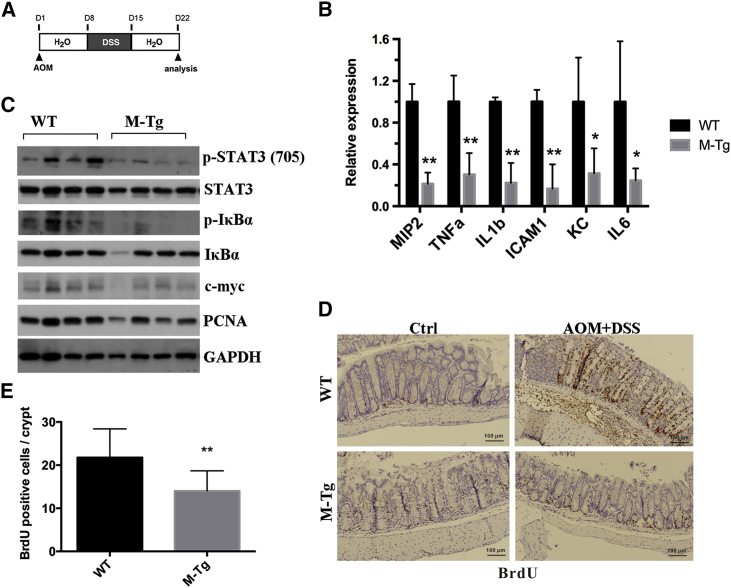
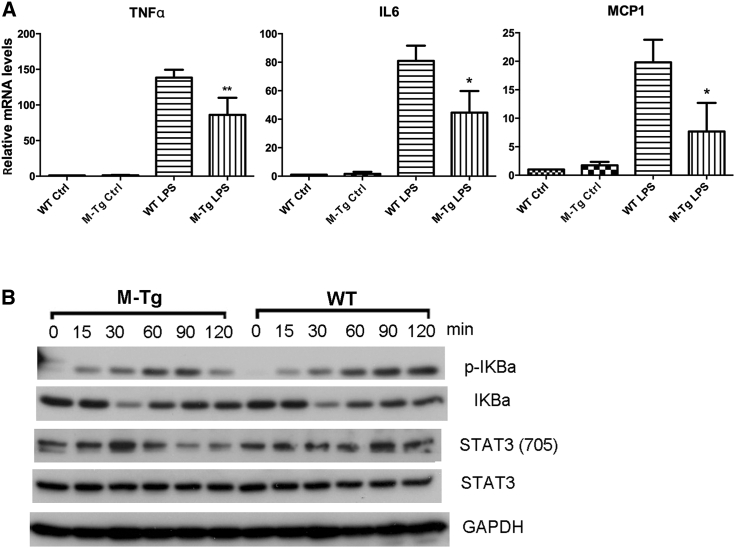
Patients with inflammatory bowel disease are at increased risk for colitis-associated colorectal cancer (CAC). Therefore, controlling intestinal inflammation is a key therapeutic strategy for CAC. MicroRNAs (miRNAs or miRs) are a family of small noncoding RNAs that have the capacity to regulate fundamental biological processes. To date, a number of miRNAs have been identified as critical regulators of inflammation. However, the specific role of miR-26a in colonic inflammation and colitis-associated carcinogenesis is still elusive. Here, we generated mice with miR-26a myeloid-cell-specific overexpression to show that miR-26a suppressed the intestinal inflammatory response in macrophages by decreasing nuclear factor κB (NF-κB)/STAT3 activation and interleukin 6 (IL-6) production. At the molecular level, a number of NF-κB regulators, including TLR3, PTEN, and PKCδ, were identified as potential targets of miR-26a. Our results thus identify a novel miRNA-mediated mechanism that suppresses carcinogenic inflammation in the colon.
炎症性肠病患者患结肠炎相关结直肠癌(CAC)的风险增加。因此,控制肠道炎症是CAC的关键治疗策略。微小RNA(miRNA或miR)是一类小的非编码RNA,具有调节基本生物学过程的能力。迄今为止,许多miRNA已被确定为炎症的关键调节因子。然而,miR-26a在结肠炎症和结肠炎相关致癌作用中的具体作用仍不清楚。在这里,我们构建了miR-26a髓系细胞特异性过表达的小鼠,以表明miR-26a通过降低核因子κB(NF-κB)/信号转导和转录激活因子3(STAT3)的激活以及白细胞介素6(IL-6)的产生来抑制巨噬细胞中的肠道炎症反应。在分子水平上,包括Toll样受体3(TLR3)、磷酸酶和张力蛋白同源物(PTEN)以及蛋白激酶Cδ(PKCδ)在内的一些NF-κB调节因子被确定为miR-26a的潜在靶点。因此,我们的结果确定了一种新的miRNA介导的机制,该机制可抑制结肠中的致癌性炎症。