Geriatrics Digestion Department of Internal Medicine, The First Affiliated Hospital of Guangxi Medical University, Nanning, China.
Guangxi Key Laboratory of AIDS Prevention and Treatment, School of Public Health, Guangxi Medical University, Nanning, China.
Front Cell Infect Microbiol. 2021 Mar 17;11:649060. doi: 10.3389/fcimb.2021.649060. eCollection 2021.
New evidence implies that the imbalance of gut microbiota is associated with the progression of alcoholic liver disease (ALD) and that the composition of gut microbiota is altered in ALD patients. However, the predominant bacterium in patients involved in the progress of ALD has not been identified. The purpose of this study is to investigate the predominant bacterium in the early and end-stages of ALD as well as the relationship between the bacterium and the degree of liver injury.
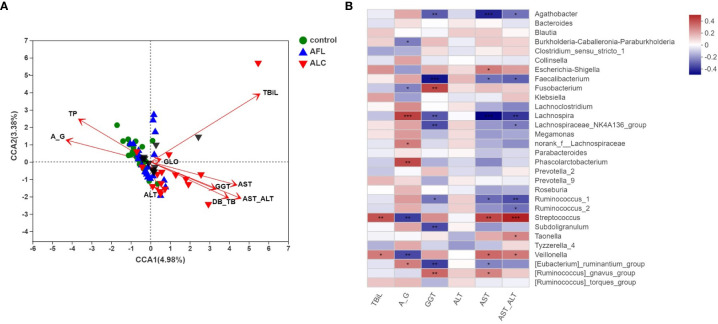
We enrolled 21 alcoholic fatty liver (AFL) patients, 17 alcoholic liver cirrhosis (ALC) patients and 27 healthy controls, and sequenced the 16S rRNA gene of their fecal microbiota. The gut microbiota composition and its relationship with the indicators of clinical hepatic function were assessed using canonical correspondence analysis (CCA), spearman correlation heatmap and multivariate association with linear (MaAsLin) Models.
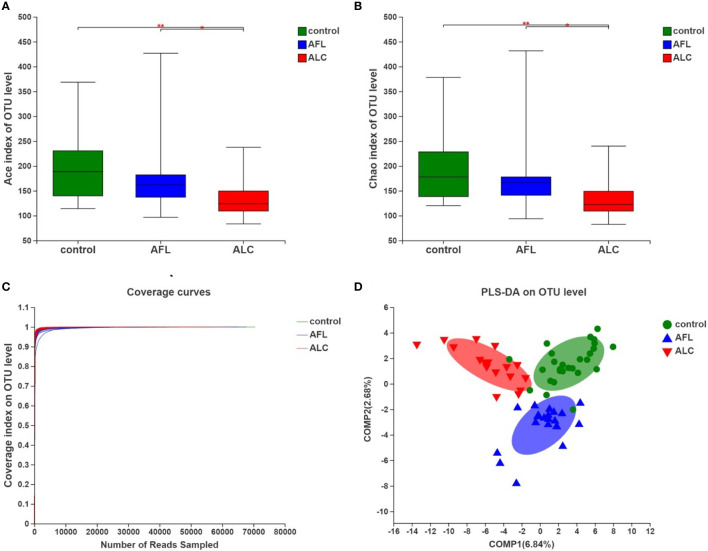
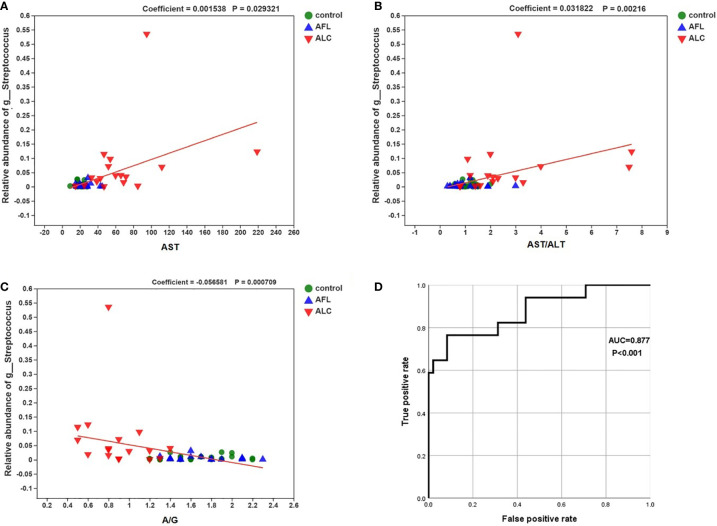
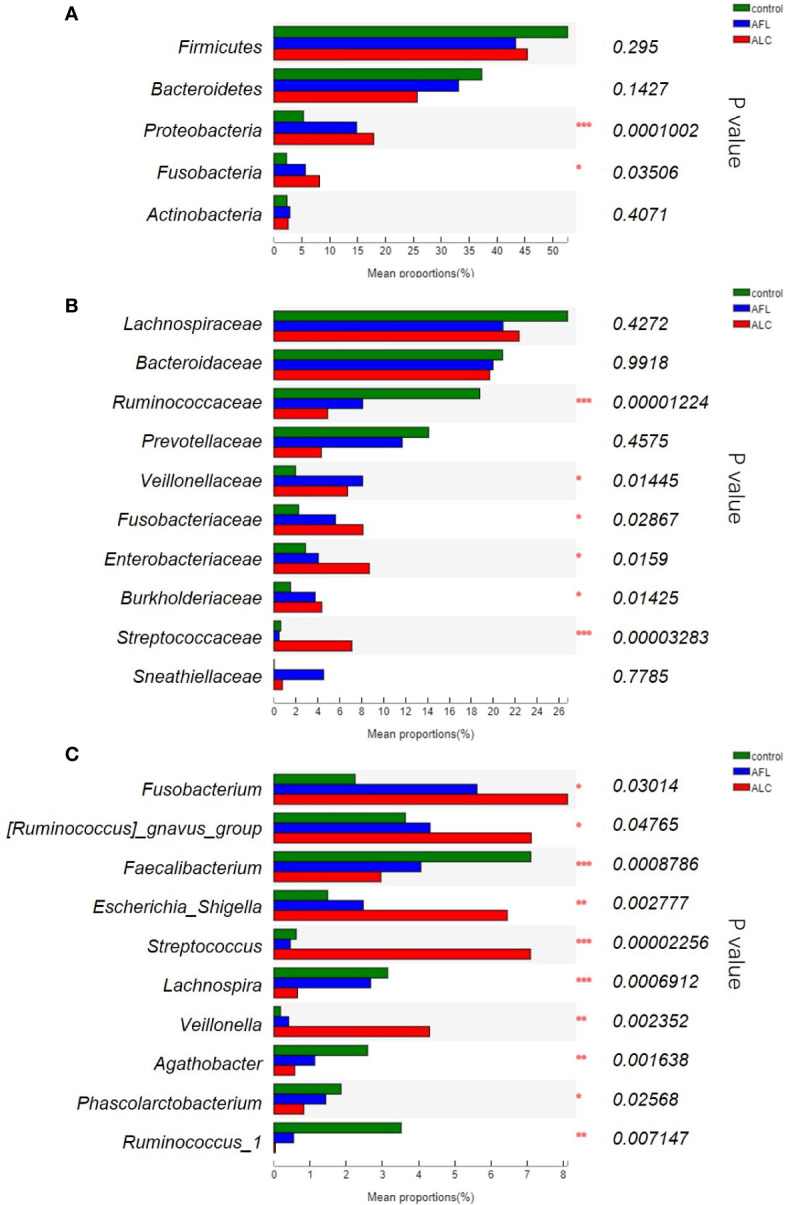
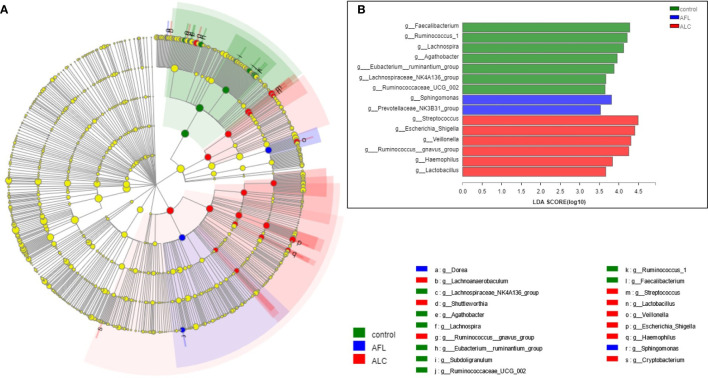
The composition and structure of gut microbiota changed greatly in different stages of ALD, and the degree of disorder was aggravated with the progression of ALD, even in the early stage. Moreover, the relative abundance of was highly enriched only in patients with ALC (P <0.001), and positively correlated with AST level (P = 0.029). The abundance of distinguished the liver injury of ALC patients from the controls with an area under the receiver-operating characteristic curve (AUC) of 0.877 (P < 0.001).
These findings indicate that the imbalance of gut microbiota exists at the early and end-stages of ALD, and the degree of disorder is aggravated with the progression of ALD. , as the predominant bacterium, may be a microbiological marker to evaluate the severity of liver injury in ALD patients.
新的证据表明,肠道微生物群落失衡与酒精性肝病(ALD)的进展有关,并且 ALD 患者的肠道微生物群落组成发生了改变。然而,参与 ALD 进展的患者中的主要细菌尚未确定。本研究旨在研究 ALD 早期和晚期的主要细菌以及该细菌与肝损伤程度之间的关系。
我们纳入了 21 例酒精性脂肪肝(AFL)患者、17 例酒精性肝硬化(ALC)患者和 27 例健康对照者,并对其粪便微生物群的 16S rRNA 基因进行了测序。采用典范对应分析(CCA)、Spearman 相关热图和多元线性关联(MaAsLin)模型评估肠道微生物群落组成及其与临床肝功能指标的关系。
不同阶段的 ALD 中肠道微生物群落的组成和结构发生了很大变化,并且随着 ALD 的进展,紊乱程度加剧,甚至在早期阶段也是如此。此外, 仅在 ALC 患者中高度富集(P<0.001),并且与 AST 水平呈正相关(P=0.029)。 的丰度可将 ALC 患者的肝损伤与对照组区分开来,其受试者工作特征曲线下面积(AUC)为 0.877(P<0.001)。
这些发现表明,肠道微生物群落失衡存在于 ALD 的早期和晚期阶段,并且随着 ALD 的进展,紊乱程度加剧。 作为主要细菌,可能是评估 ALD 患者肝损伤严重程度的微生物学标志物。