Tuhkanen Samuel, Pekkanen Jami, Lehtonen Esko, Lappi Otto
University of Helsinki, Finland.
University of Leeds, United Kingdom.
J Eye Mov Res. 2019 Aug 8;12(3). doi: 10.16910/jemr.12.3.1.
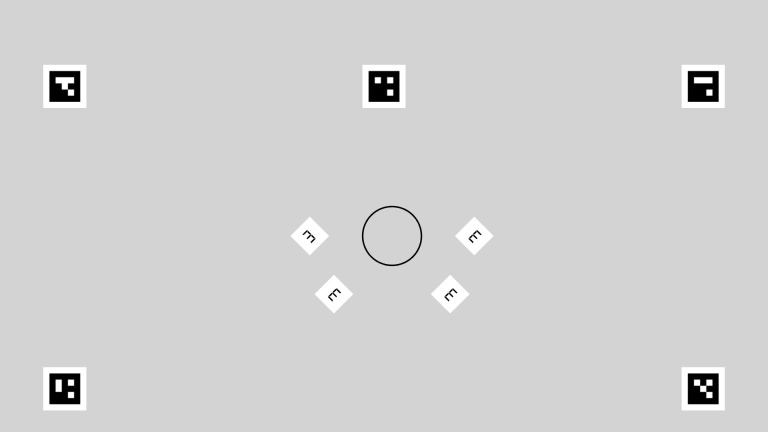
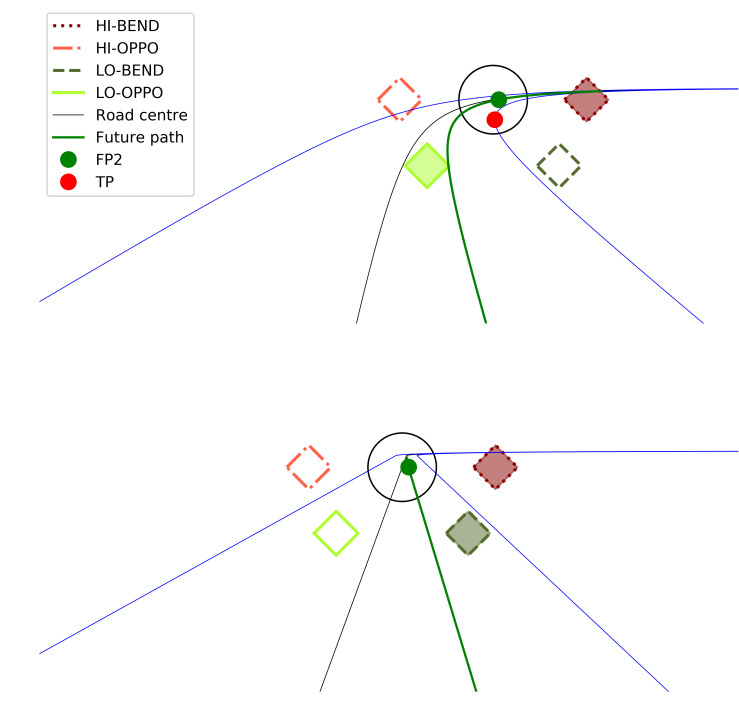
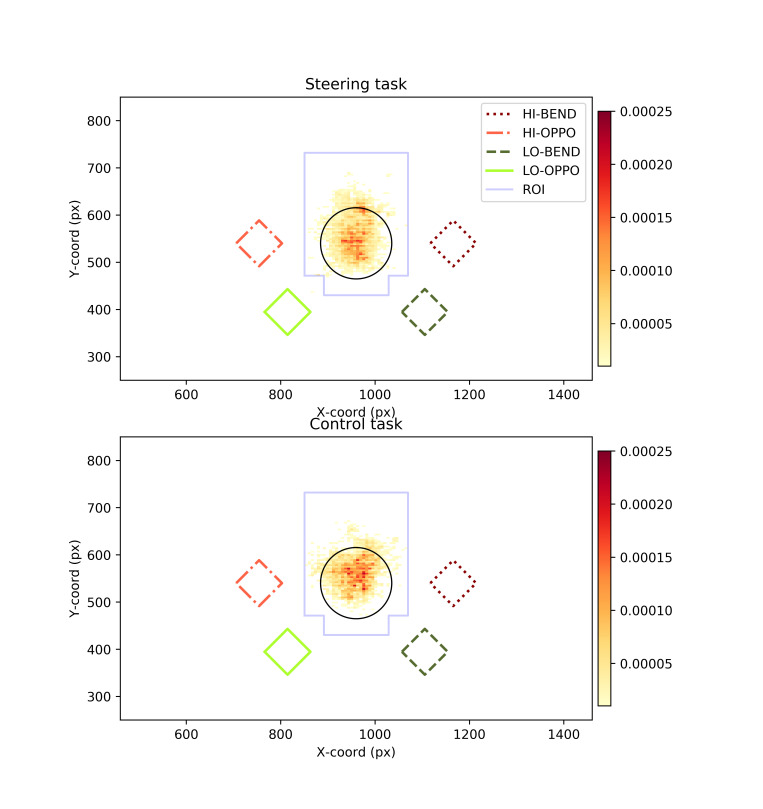
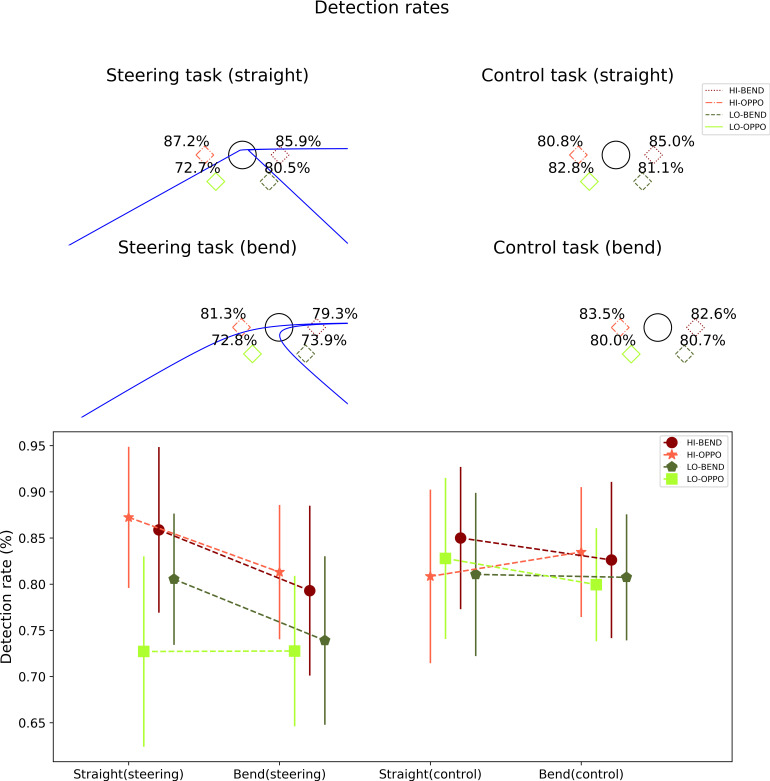
In complex dynamic tasks such as driving it is essential to be aware of potentially important targets in peripheral vision. While eye tracking methods in various driving tasks have provided much information about drivers' gaze strategies, these methods only inform about overt attention and provide limited grounds to assess hypotheses concerning covert attention. We adapted the Posner cue paradigm to a dynamic steering task in a driving simulator. The participants were instructed to report the presence of peripheral targets while their gaze was fixed to the road. We aimed to see whether and how the active steering task and complex visual stimulus might affect directing covert attention to the visual periphery. In a control condition, the detection task was performed without a visual scene and active steering. Detection performance in bends was better in the control task compared to corresponding performance in the steering task, indicating that active steering and the complex visual scene affected the ability to distribute covert attention. Lower targets were discriminated slower than targets at the level of the fixation circle in both conditions. We did not observe higher discriminability for on-road targets. The results may be accounted for by either bottom-up optic flow biasing of attention, or top-down saccade planning.
在诸如驾驶这样的复杂动态任务中,留意周边视觉中潜在的重要目标至关重要。虽然各种驾驶任务中的眼动追踪方法已经提供了许多关于驾驶员注视策略的信息,但这些方法仅能告知显性注意力,为评估有关隐性注意力的假设提供的依据有限。我们将波斯纳线索范式应用于驾驶模拟器中的动态转向任务。参与者被要求在眼睛注视道路的同时报告周边目标的存在。我们旨在探究主动转向任务和复杂视觉刺激是否以及如何影响将隐性注意力导向视觉周边。在对照条件下,检测任务在没有视觉场景和主动转向的情况下进行。与转向任务中的相应表现相比,对照任务中弯道处的检测性能更好,这表明主动转向和复杂视觉场景影响了分配隐性注意力的能力。在两种条件下,较低位置的目标比注视圈水平处的目标辨别速度都要慢。我们没有观察到道路上目标的辨别能力更高。这些结果可能是由自下而上的视觉流对注意力的偏向,或者自上而下的扫视计划所导致的。