Department of Cardiology, King George's Medical University, Lucknow, Uttar Pradesh 226003, India.
Department of Internal Medicine, King George's Medical University, Lucknow, Uttar Pradesh 226003, India.
Pulm Med. 2021 Mar 20;2021:8878746. doi: 10.1155/2021/8878746. eCollection 2021.
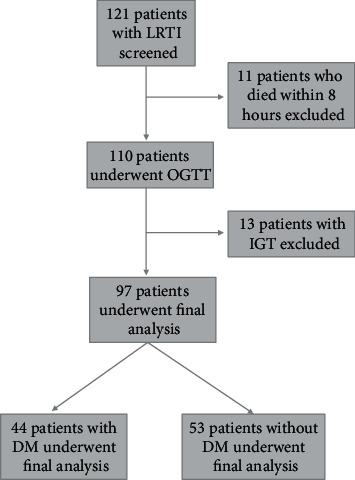
Diabetes mellitus is associated with increased rate of respiratory tract infections. The objective was to compare demographic, clinical, serum biochemical, and typical and atypical radiological profiles among hospitalized diabetics and nondiabetics with lower respiratory tract infection. . A prospective, hospital-based, consecutive, comparative observational study of 12-month study duration was conducted. Patients aged 13-90 years diagnosed with lower respiratory tract infection with or without diagnosed diabetes mellitus participated in the study. Demographic, clinical, serum biochemistry, and radiological profiles of diabetics ( = 44) and nondiabetics ( = 53) were compared.
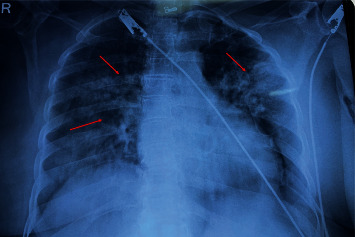
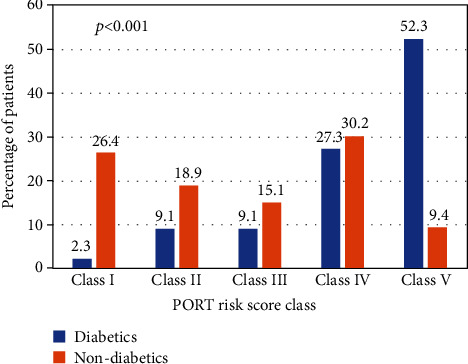
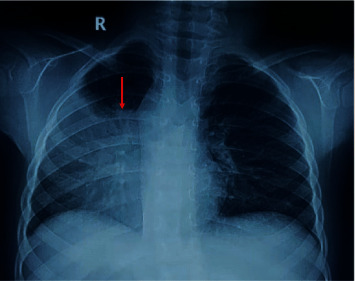
Diabetics were older than nondiabetics at presentation ( < 0.0001). Difference in mean random blood sugar (RBS) ( < 0.001), fasting blood sugar (FBS) ( < 0.001), and postprandial blood sugar (PPBS) ( < 0.0001) was significant between diabetics and nondiabetics. Nondiabetics more frequently presented with fever ( = 0.0032), chest pain ( = 0.0002), and hemoptysis ( = 0.01) as compared to diabetics. Diabetics more frequently presented with extreme temperatures (hypothermia or hyperpyrexia) ( = 0.022), lower serum sodium levels ( = 0.047), and lower partial arterial pressure ( < 0.001) than nondiabetics. The mean pneumonia patient outcomes research team (PORT) risk score was higher in diabetics (124.84 ± 41.31) compared to nondiabetics (77.85 ± 39.77) ( < 0.001). Diabetics more commonly displayed bilateral lesions with multilobe or lower lobe involvement, the most common type of lesion being exudative.
Diabetic patients usually had severe pulmonary infection and poor prognosis as suggested by higher mean PORT risk score. They also more frequently presented with bilateral lesions with multilobe or lower lobe involvement as evidenced by radiography as compared to nondiabetic patients.
糖尿病与呼吸道感染发生率增加有关。本研究旨在比较住院糖尿病患者和非糖尿病下呼吸道感染患者的人口统计学、临床、血清生化以及典型和非典型影像学特征。
进行了一项为期 12 个月的前瞻性、基于医院的、连续的、对照观察性研究。年龄在 13-90 岁之间,被诊断患有下呼吸道感染,且无论是否患有糖尿病的患者都参与了本研究。比较了糖尿病患者(n=44)和非糖尿病患者(n=53)的人口统计学、临床、血清生化和影像学特征。
糖尿病患者在就诊时比非糖尿病患者年龄更大(<0.0001)。糖尿病患者和非糖尿病患者的平均随机血糖(RBS)(<0.001)、空腹血糖(FBS)(<0.001)和餐后血糖(PPBS)(<0.0001)差异有统计学意义。与糖尿病患者相比,非糖尿病患者更常出现发热(=0.0032)、胸痛(=0.0002)和咯血(=0.01)。与非糖尿病患者相比,糖尿病患者更常出现体温极端变化(低温或高热)(=0.022)、血清钠水平较低(=0.047)和部分动脉压低(<0.001)。与非糖尿病患者相比,糖尿病患者肺炎患者结局研究团队(PORT)风险评分更高(124.84±41.31 比 77.85±39.77)(<0.001)。糖尿病患者更常见双侧病变,多叶或下叶受累,最常见的病变类型为渗出性。
糖尿病患者通常有严重的肺部感染和不良预后,这表明平均 PORT 风险评分较高。与非糖尿病患者相比,他们的放射学检查更常显示双侧病变,多叶或下叶受累。