Wellcome-Wolfson Institute for Experimental Medicine, School of Medicine, Dentistry and Biomedical Sciences, Queen's University Belfast, Belfast, United Kingdom.
Belfast Health & Social Care Trust, Regional Intensive Care Unit, Royal Victoria Hospital, Belfast, United Kingdom.
PLoS One. 2021 Apr 8;16(4):e0249547. doi: 10.1371/journal.pone.0249547. eCollection 2021.
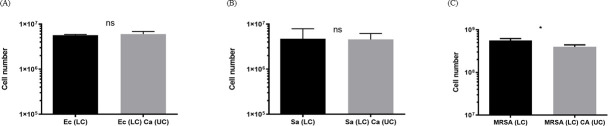
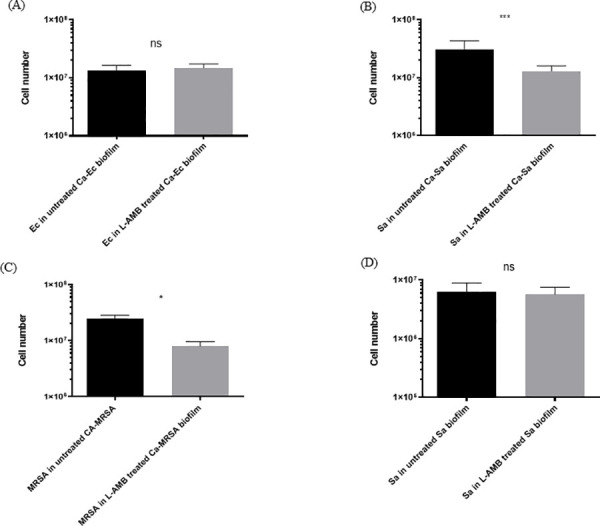
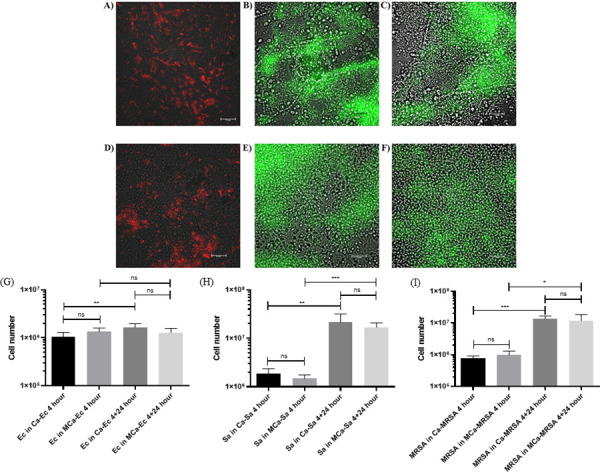
Polymicrobial biofilms consisting of fungi and bacteria are frequently formed on endotracheal tubes and may contribute to development of ventilator associated pneumonia (VAP) in critically ill patients. This study aimed to determine the role of early Candida albicans biofilms in supporting dual-species (dual-kingdom) biofilm formation with respiratory pathogens in vitro, and investigated the effect of targeted antifungal treatment on bacterial cells within the biofilms. Dual-species biofilm formation between C. albicans and three respiratory pathogens commonly associated with VAP (Pseudomonas aeruginosa, Escherichia coli and Staphylococcus aureus) was studied using quantitative PCR. It was shown that early C. albicans biofilms enhanced the numbers of E. coli and S. aureus (including methicillin resistant S. aureus; MRSA) but not P. aeruginosa within dual-species biofilms. Transwell assays demonstrated that contact with C. albicans was required for the increased bacterial cell numbers observed. Total Internal Reflection Fluorescence microscopy showed that both wild type and hyphal-deficient C. albicans provided a scaffold for initial bacterial adhesion in dual species biofilms. qPCR results suggested that further maturation of the dual-species biofilm significantly increased bacterial cell numbers, except in the case of E.coli with hyphal-deficient C. albicans (Ca_gcn5Δ/Δ). A targeted preventative approach with liposomal amphotericin (AmBisome®) resulted in significantly decreased numbers of S. aureus in dual-species biofilms, as determined by propidium monoazide-modified qPCR. Similar results were observed when dual-species biofilms consisting of clinical isolates of C. albicans and MRSA were treated with liposomal amphotericin. However, reductions in E. coli numbers were not observed following liposomal amphotericin treatment. We conclude that early C. albicans biofilms have a key supporting role in dual-species biofilms by enhancing bacterial cell numbers during biofilm maturation. In the setting of increasing antibiotic resistance, an important and unexpected consequence of antifungal treatment of dual-species biofilms, is the additional benefit of decreased growth of multi-drug resistant bacteria such as MRSA, which could represent a novel future preventive strategy.
真菌和细菌组成的多微生物生物膜经常在气管内导管上形成,并可能导致重症患者呼吸机相关性肺炎(VAP)的发生。本研究旨在确定早期白色念珠菌生物膜在体外支持与呼吸道病原体的双物种(双王国)生物膜形成中的作用,并研究靶向抗真菌治疗对生物膜内细菌细胞的影响。使用定量 PCR 研究了白色念珠菌与三种与 VAP 相关的常见呼吸道病原体(铜绿假单胞菌、大肠杆菌和金黄色葡萄球菌)之间的双物种生物膜形成。结果表明,早期白色念珠菌生物膜增强了大肠杆菌和金黄色葡萄球菌(包括耐甲氧西林金黄色葡萄球菌;MRSA)而不是铜绿假单胞菌在双物种生物膜内的数量。Transwell 测定表明,与白色念珠菌接触是观察到的细菌细胞数量增加所必需的。全内反射荧光显微镜显示,野生型和菌丝缺陷型白色念珠菌均为双物种生物膜中初始细菌附着提供了支架。qPCR 结果表明,双物种生物膜的进一步成熟显著增加了细菌细胞数量,除了与菌丝缺陷型白色念珠菌(Ca_gcn5Δ/Δ)的大肠杆菌外。脂质体两性霉素(AmBisome®)的靶向预防方法导致双物种生物膜中金黄色葡萄球菌数量显著减少,如通过质单氮唑(PMA)修饰 qPCR 测定。当用脂质体两性霉素治疗由白色念珠菌和耐甲氧西林金黄色葡萄球菌的临床分离株组成的双物种生物膜时,观察到类似的结果。然而,在用脂质体两性霉素处理后,未观察到大肠杆菌数量减少。我们得出结论,早期白色念珠菌生物膜通过在生物膜成熟过程中增强细菌细胞数量,在双物种生物膜中具有关键的支持作用。在抗生素耐药性不断增加的情况下,抗真菌治疗双物种生物膜的一个重要且意外的后果是,多药耐药细菌(如耐甲氧西林金黄色葡萄球菌)的生长减少,这可能代表一种新的未来预防策略。