The Fourth Affiliated Hospital Zhejiang University School of Medicine, Yiwu, Zhejiang, China.
The First Affiliated Hospital Zhejiang University School of Medicine, Hangzhou, Zhejiang, China.
Mediators Inflamm. 2021 Apr 1;2021:6635925. doi: 10.1155/2021/6635925. eCollection 2021.
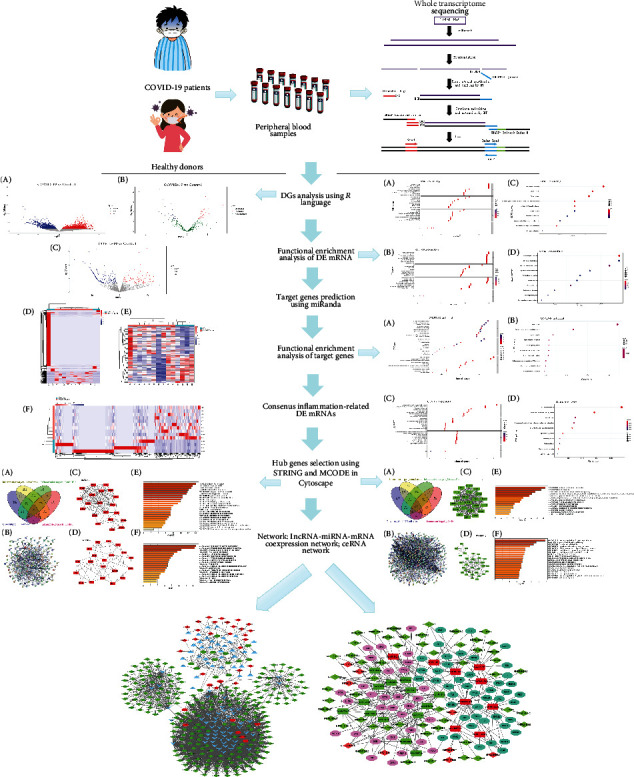
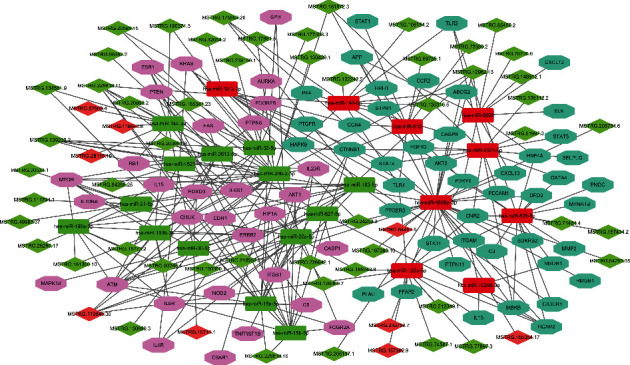
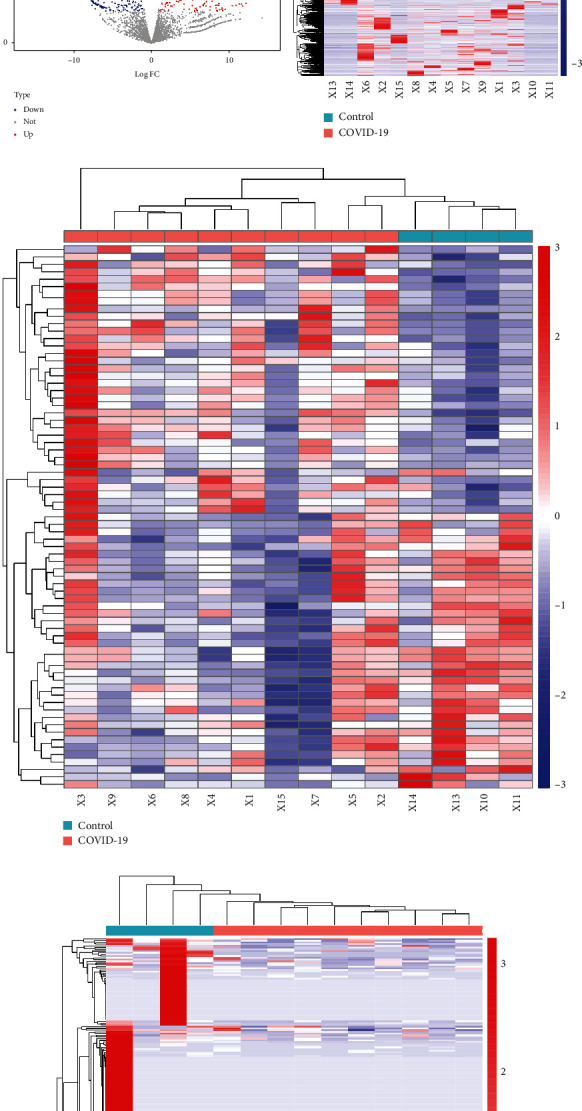
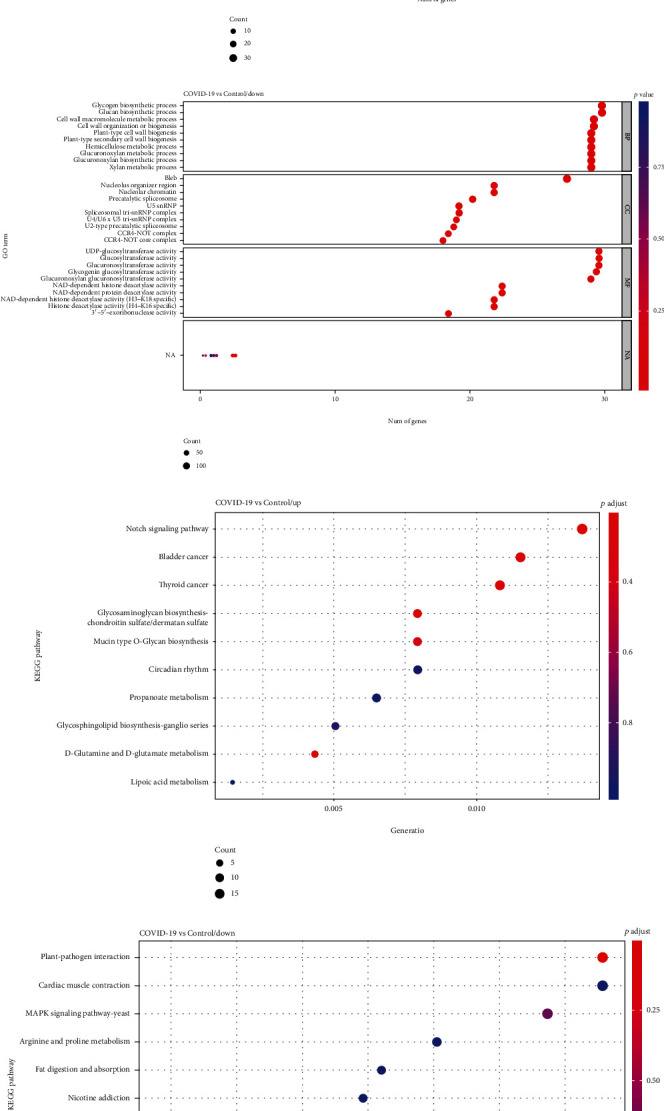
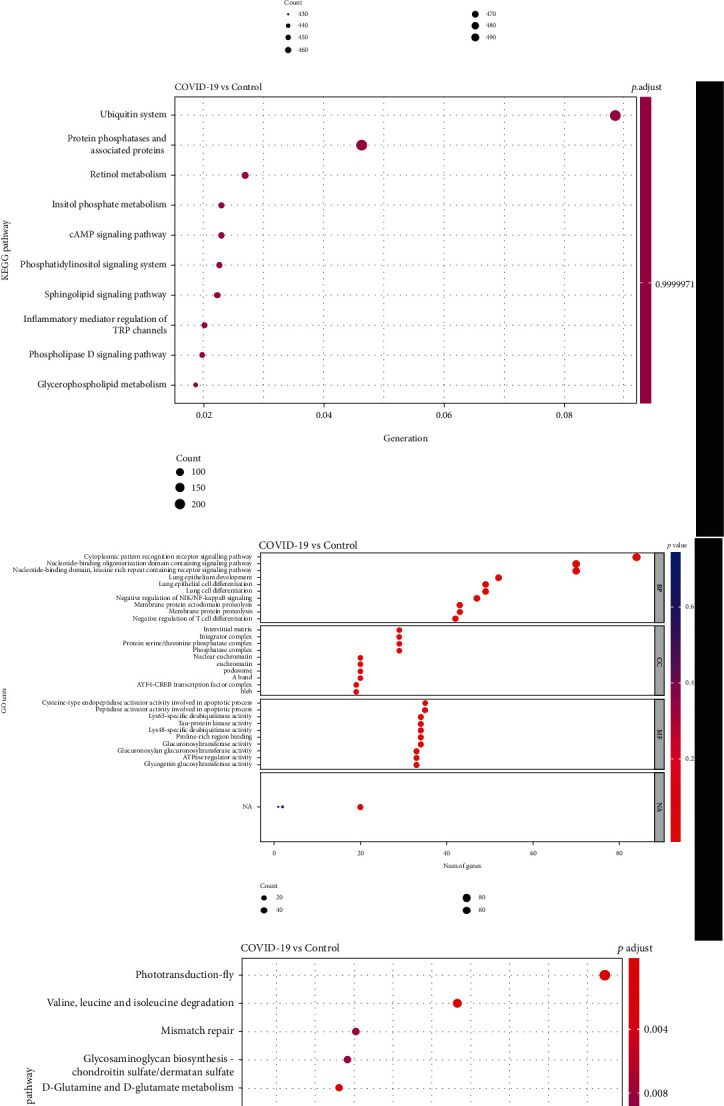
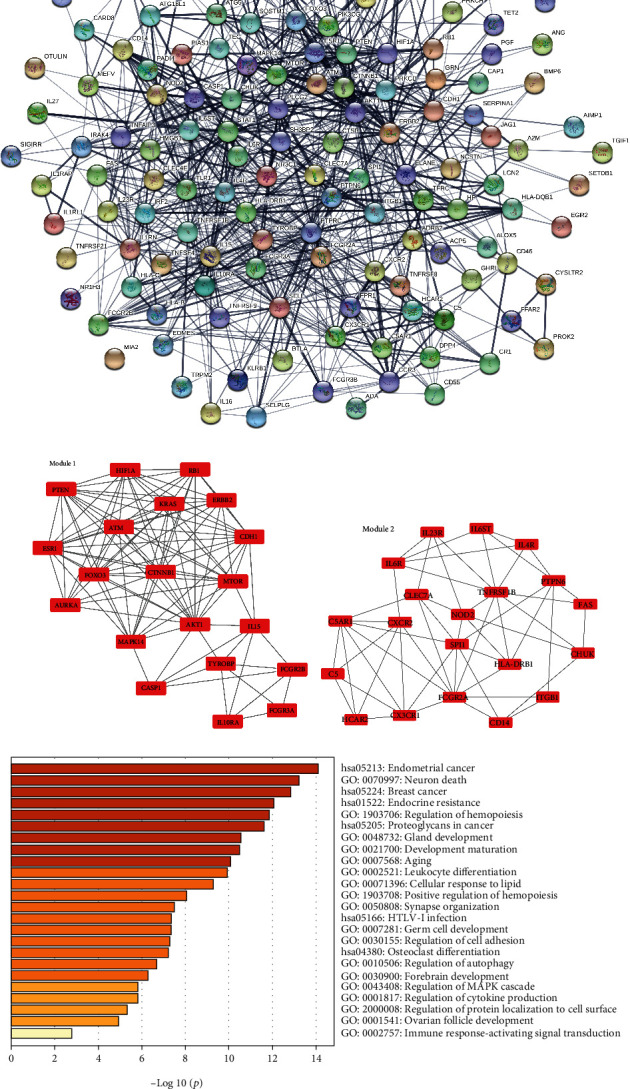
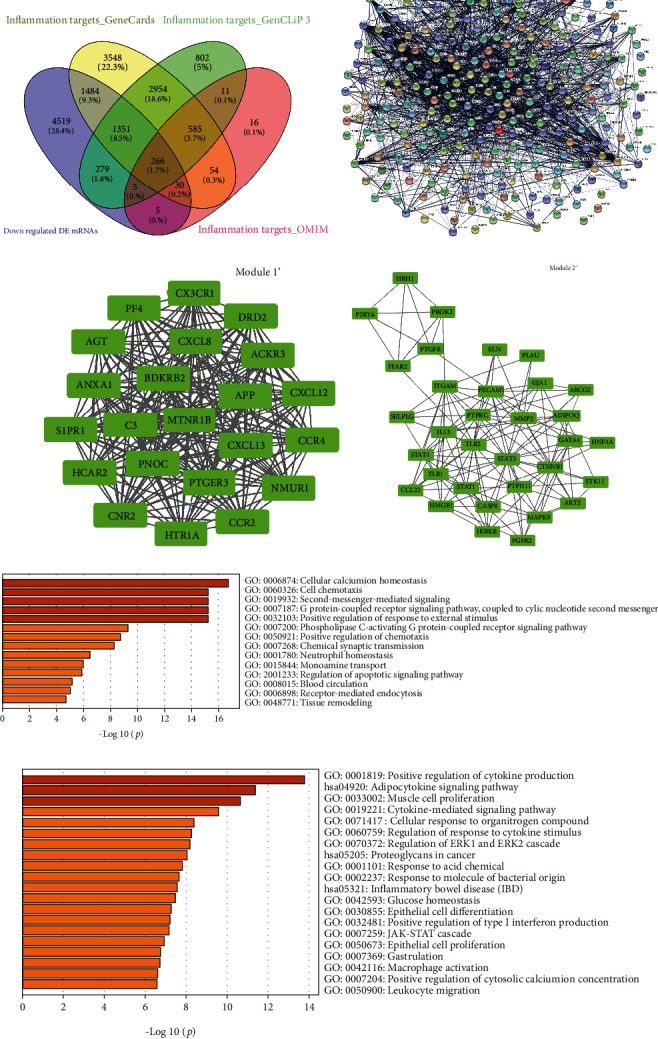
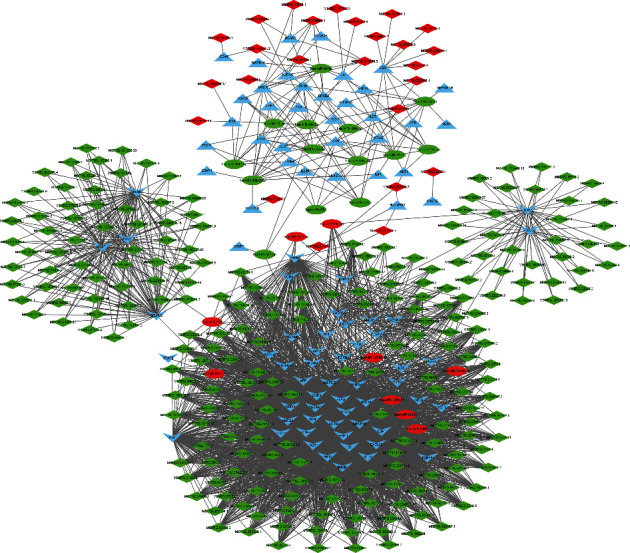
Severe acute respiratory syndrome coronavirus 2 (SARS-CoV-2) was initially identified in China and currently worldwide dispersed, resulting in the coronavirus disease 2019 (COVID-19) pandemic. Notably, COVID-19 is characterized by systemic inflammation. However, the potential mechanisms of the "cytokine storm" of COVID-19 are still limited. In this study, fourteen peripheral blood samples from COVID-19 patients ( = 10) and healthy donors ( = 4) were collected to perform the whole-transcriptome sequencing. Lung tissues of COVID-19 patients (70%) presenting with ground-glass opacity. Also, the leukocytes and lymphocytes were significantly decreased in COVID-19 compared with the control group ( < 0.05). In total, 25,482 differentially expressed messenger RNAs (DE mRNA), 23 differentially expressed microRNAs (DE miRNA), and 410 differentially expressed long noncoding RNAs (DE lncRNAs) were identified in the COVID-19 samples compared to the healthy controls. Gene Ontology (GO) analysis showed that the upregulated DE mRNAs were mainly involved in antigen processing and presentation of endogenous antigen, positive regulation of T cell mediated cytotoxicity, and positive regulation of gamma-delta T cell activation. The downregulated DE mRNAs were mainly concentrated in the glycogen biosynthetic process. We also established the protein-protein interaction (PPI) networks of up/downregulated DE mRNAs and identified 4 modules. Functional enrichment analyses indicated that these module targets were associated with positive regulation of cytokine production, cytokine-mediated signaling pathway, leukocyte differentiation, and migration. A total of 6 hub genes were selected in the PPI module networks including AKT1, TNFRSF1B, FCGR2A, CXCL8, STAT3, and TLR2. Moreover, a competing endogenous RNA network showed the interactions between lncRNAs, mRNAs, and miRNAs. Our results highlight the potential pathogenesis of excessive cytokine production such as MSTRG.119845.30/hsa-miR-20a-5p/TNFRSF1B, MSTRG.119845.30/hsa-miR-29b-2-5p/FCGR2A, and MSTRG.106112.2/hsa-miR-6501-5p/STAT3 axis, which may also play an important role in the development of ground-glass opacity in COVID-19 patients. This study gives new insights into inflammation regulatory mechanisms of coding and noncoding RNAs in COVID-19, which may provide novel diagnostic biomarkers and therapeutic avenues for COVID-19 patients.
严重急性呼吸综合征冠状病毒 2(SARS-CoV-2)最初在中国被发现,目前已在全球范围内传播,导致 2019 年冠状病毒病(COVID-19)大流行。值得注意的是,COVID-19 的特征是全身炎症。然而,COVID-19 的“细胞因子风暴”的潜在机制仍有限。在这项研究中,从 COVID-19 患者(=10)和健康供体(=4)中采集了 14 份外周血样本进行全转录组测序。COVID-19 患者的肺组织(70%)呈现磨玻璃样混浊。此外,与对照组相比,COVID-19 患者的白细胞和淋巴细胞明显减少(<0.05)。与健康对照组相比,在 COVID-19 样本中总共鉴定出 25482 个差异表达的信使 RNA(DE mRNA)、23 个差异表达的 microRNA(DE miRNA)和 410 个差异表达的长非编码 RNA(DE lncRNA)。基因本体论(GO)分析表明,上调的 DE mRNAs 主要参与内源性抗原的抗原加工和呈递、T 细胞介导的细胞毒性的正调节以及γ-δ T 细胞激活的正调节。下调的 DE mRNAs 主要集中在糖原生物合成过程中。我们还建立了上调/下调的 DE mRNAs 的蛋白质-蛋白质相互作用(PPI)网络,并鉴定出 4 个模块。功能富集分析表明,这些模块靶标与细胞因子产生的正调节、细胞因子介导的信号通路、白细胞分化和迁移有关。在 PPI 模块网络中选择了 6 个枢纽基因,包括 AKT1、TNFRSF1B、FCGR2A、CXCL8、STAT3 和 TLR2。此外,竞争内源性 RNA 网络显示了 lncRNA、mRNA 和 miRNA 之间的相互作用。我们的结果强调了过度细胞因子产生的潜在发病机制,例如 MSTRG.119845.30/hsa-miR-20a-5p/TNFRSF1B、MSTRG.119845.30/hsa-miR-29b-2-5p/FCGR2A 和 MSTRG.106112.2/hsa-miR-6501-5p/STAT3 轴,这也可能在 COVID-19 患者的磨玻璃样混浊发展中发挥重要作用。本研究为 COVID-19 编码和非编码 RNA 的炎症调控机制提供了新的见解,可能为 COVID-19 患者提供新的诊断生物标志物和治疗途径。