Department of Preventative and Restorative Dental Sciences, UCSF School of Dentistry, San Francisco, CA, USA.
Department of Preventative and Restorative Dental Sciences, UCSF School of Dentistry, San Francisco, CA, USA; Missouri School of Dentistry and Oral Health, A.T. Still University, Kirksville, MO, USA.
J Dent. 2021 Jun;109:103659. doi: 10.1016/j.jdent.2021.103659. Epub 2021 Apr 6.
The study evaluates the efficacy to remineralize artificial and natural dentin lesions through restorative dental procedures that include the Polymer-Induced Liquid Precursor (PILP) method comprising polyaspartic acid (pAsp).
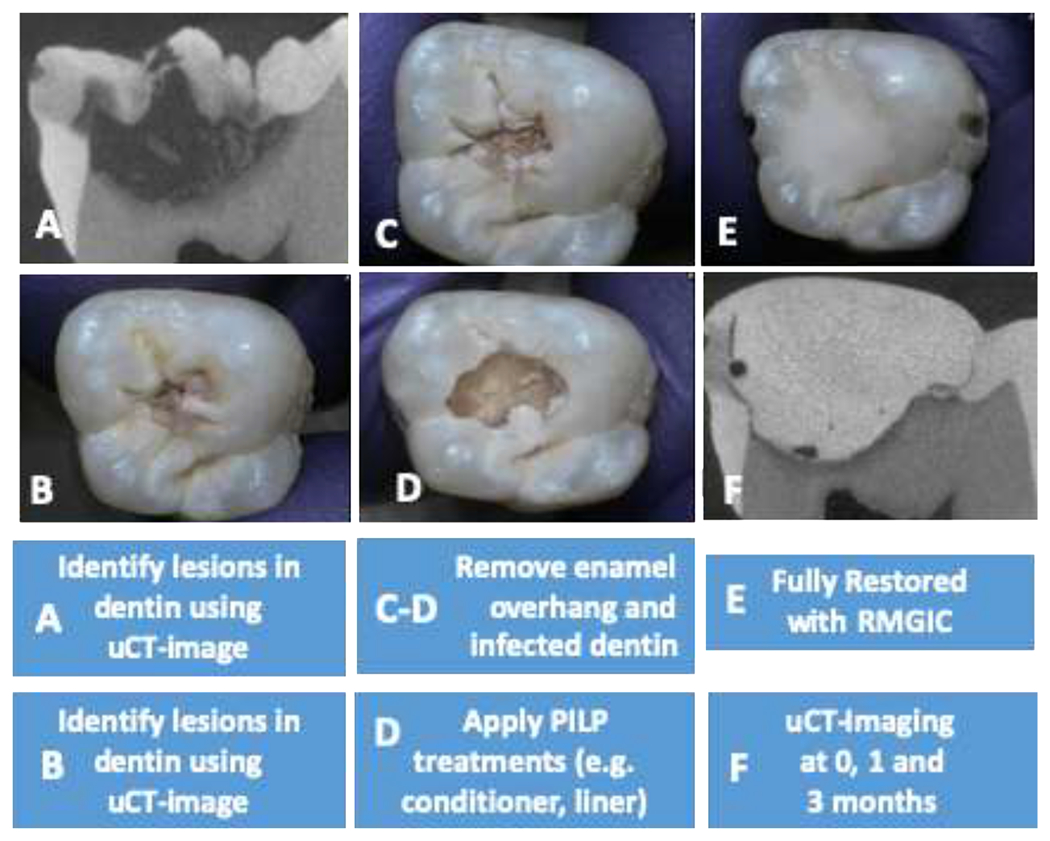
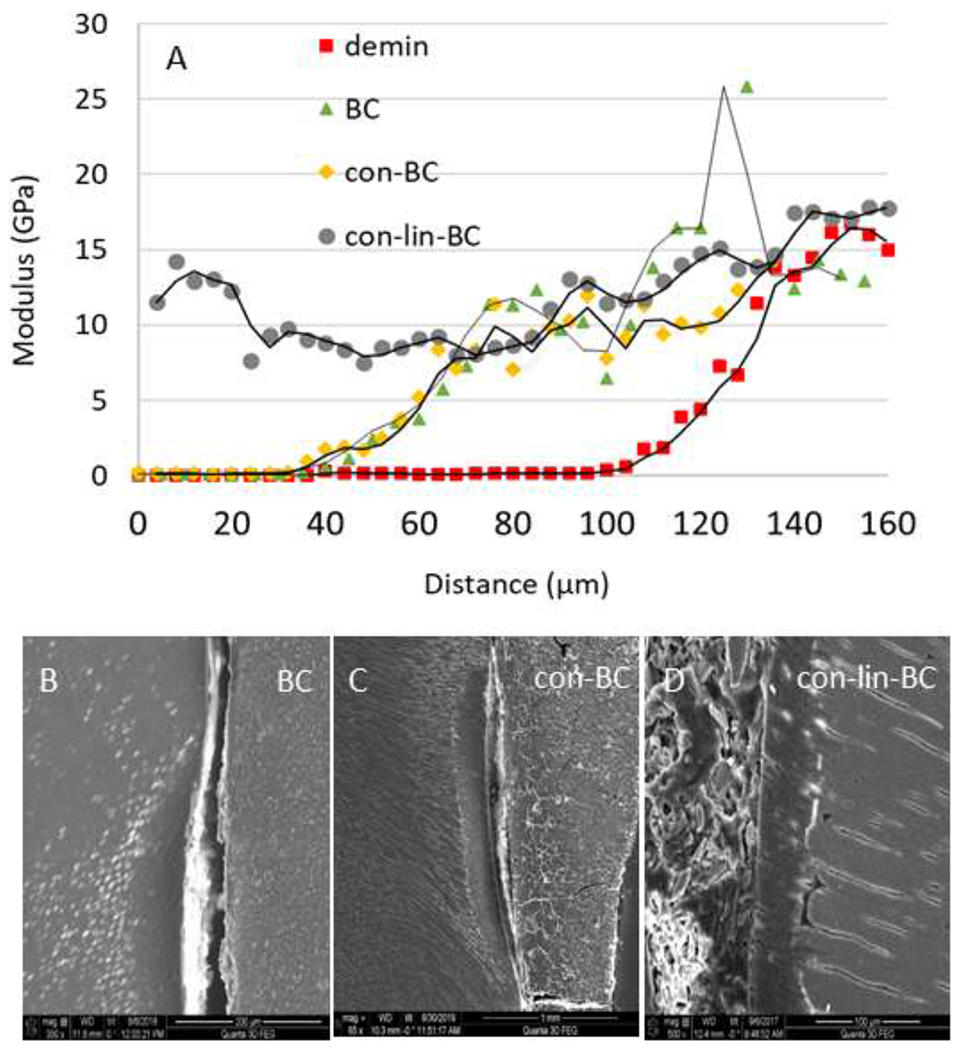
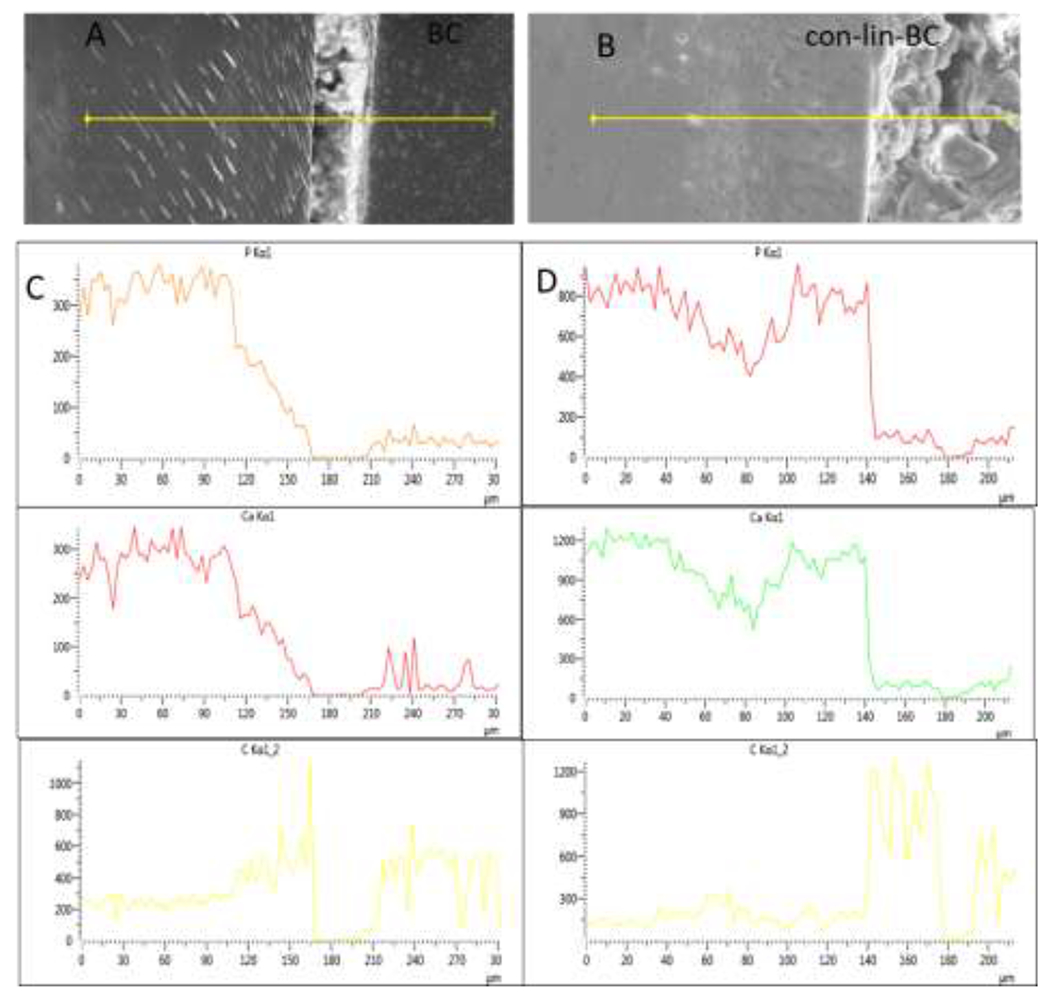
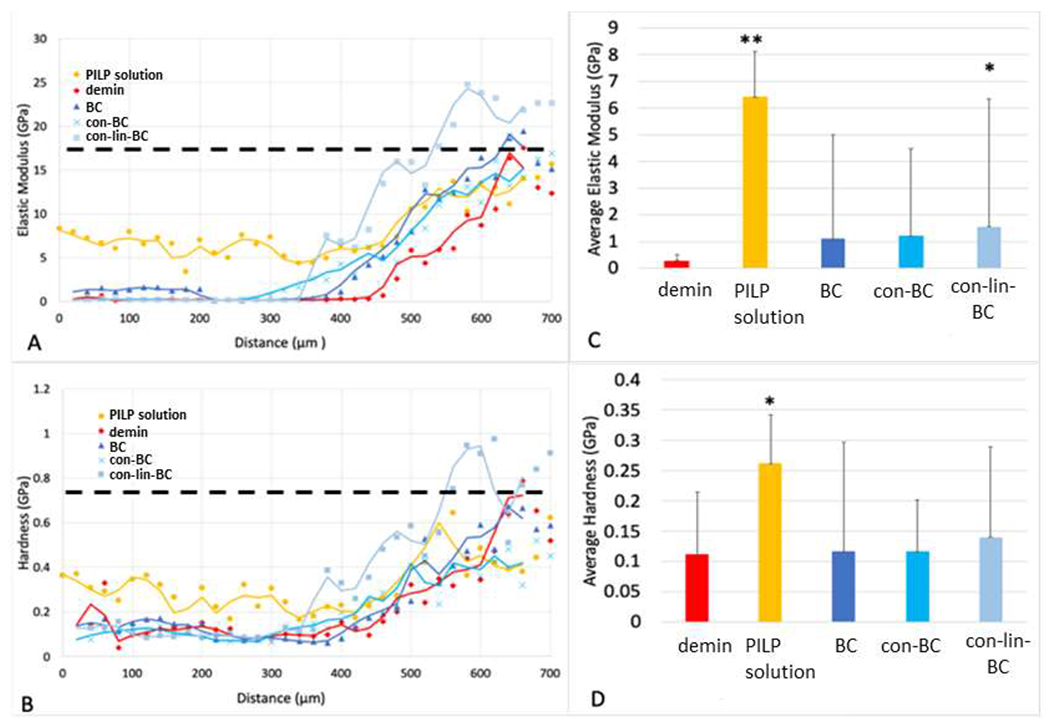
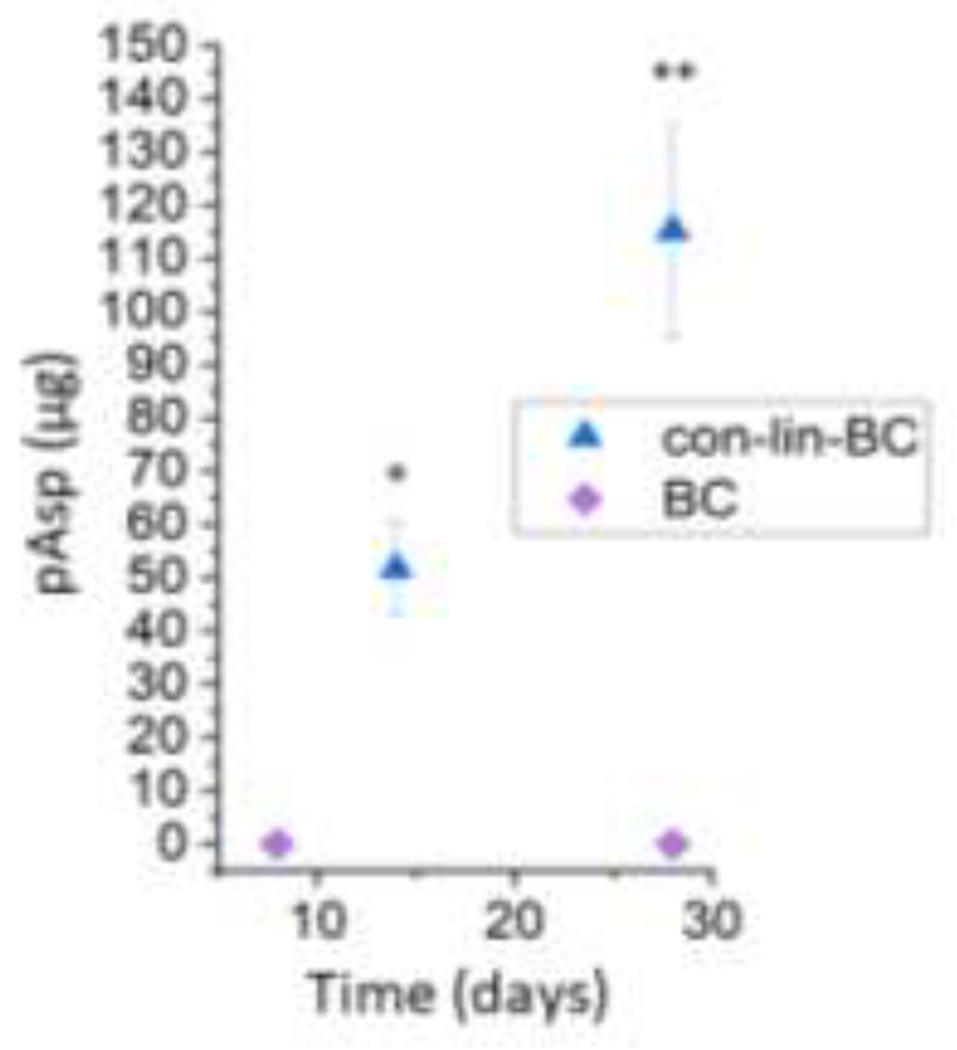
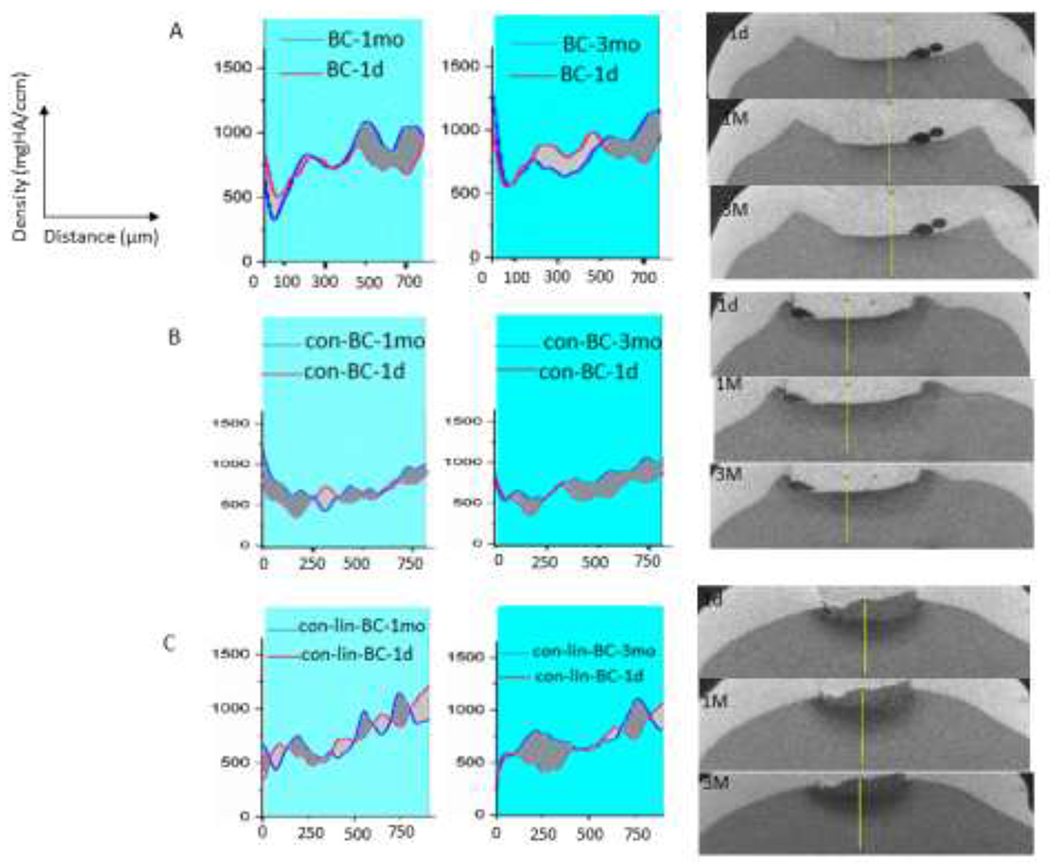
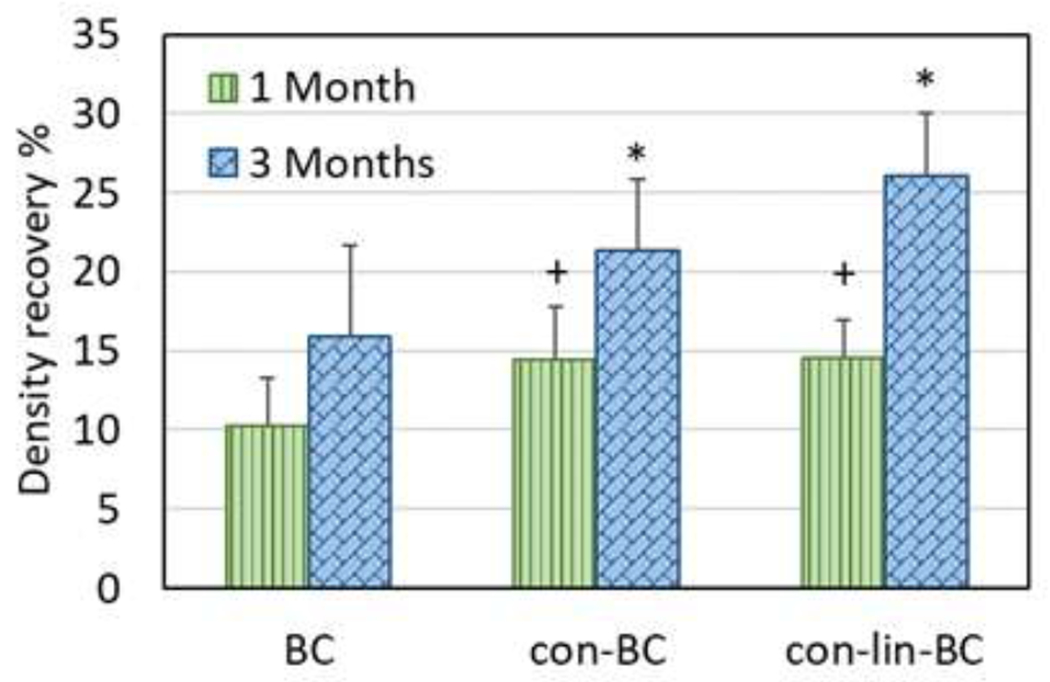
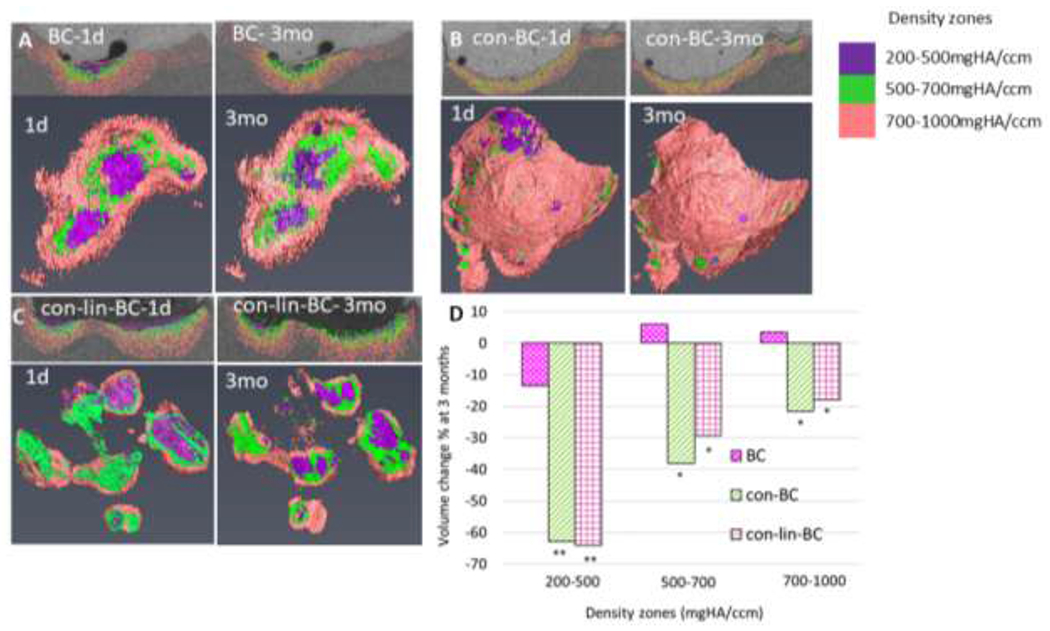
Novel ionomeric cement compositions based on bioglass 45S5 and pAsp mixtures, as well as conditioning solutions (conditioner) containing 5 mg/mL pAsp, were developed and tested on demineralized dentin blocks (3-4 mm thick) on shallow and deep lesions with the thickness of 140 μm ± 50 and 700 μm ± 50, respectively. In the first treatment group, 20 μL of conditioner was applied to demineralized shallow (n = 3) and deep (n = 3) lesion specimens for 20 s before restoration with glass ionomer cement (RMGIC). For the PILP cement treatment group, cement was applied onto the wet surface of the demineralized specimen for both shallow (n = 3) and deep (n = 3) artificial lesions after the application of the conditioner and before the final restoration. Sample groups were compared to RMGIC restoration, for both shallow and deep lesions (n = 3 each) and treatments in PILP-solution (n = 3 for deep lesions) without restoration for 4 weeks. All of the restored specimens were immersed in simulated body fluid (SBF) solution for 2 weeks and 4 weeks for shallow and deep lesions respectively to allow for remineralization. The artificial lesion specimens were evaluated for changes in the nanomechanical profile (E-modulus and hardness) using nanoindentation. Shallow lesions were analyzed by SEM under vacuum for changes in morphology caused by PILP treatments. Also, a pilot study on human third molars with moderate lesions in dentin (n = 3) was initiated to test the efficacy of treatments in natural lesions based on mineral densities using microcomputed tomography (μCT) at 0, 1, and 3 months.
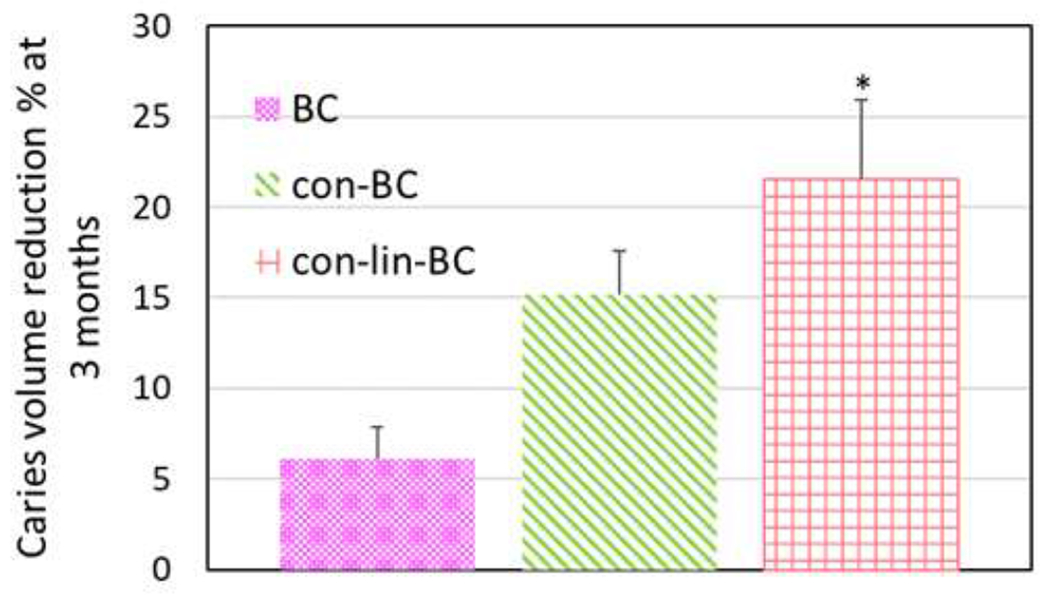
This study showed that functional remineralization of artificial lesions using PILP-releasing restoratives occurred, indicated by an increase of the elastic modulus in shallow lesions and in the middle zone of deep artificial lesions. The mechanical improvement was significant when compared to RMGIC restoration without pAsp (P < 0.05). Nonetheless, recovery across artificial lesions was most significant when specimens were immersed into PILP-solution with restorative (P < 0.01). Furthermore, natural lesions increased in mineral volume content to a higher degree when the restorative treatment included the PILP-method (P < 0.05). However, none of the natural lesions recovered to full mineral degree regardless of the treatments.
CLINICAL SIGNIFICANCE/CONCLUSION: These findings indicate the benefit of PILP applications in the functional repair of dentin caries and illustrate the challenge to integrate the PILP-method into a restorative approach in minimally invasive dental procedures.
本研究通过包括包含多聚天冬氨酸(pAsp)的聚合物诱导液体前体(PILP)方法在内的修复牙科程序,评估人工和天然牙本质病变再矿化的功效。
开发了基于生物玻璃 45S5 和 pAsp 混合物的新型离聚物水泥组合物,以及含有 5mg/mL pAsp 的调理液(调理剂),并在 3-4mm 厚的脱矿质牙本质块上对浅和深病变进行了测试,深度病变的厚度分别为 140μm±50 和 700μm±50。在第一治疗组中,在使用玻璃离子水门汀(RMGIC)修复之前,将 20μL 调理剂应用于浅(n=3)和深(n=3)病变标本上 20 秒。对于 PILP 水泥治疗组,在应用调理剂后,将水泥应用于脱矿质标本的湿表面,用于浅(n=3)和深(n=3)人工病变,然后再进行最终修复。与 RMGIC 修复相比,对浅(n=3)和深(n=3)病变的所有样本组进行了比较,以及在 PILP 溶液中(n=3)的治疗组,深病变未经修复 4 周。所有修复标本均浸入模拟体液(SBF)溶液中 2 周和 4 周,以进行再矿化。使用纳米压痕法评估纳米力学特性(弹性模量和硬度)的人工病变标本。对浅病变进行真空中的扫描电镜分析,以研究 PILP 处理引起的形态变化。此外,还启动了一项针对第三磨牙中度牙本质病变的初步研究(n=3),基于微计算机断层扫描(μCT)在 0、1 和 3 个月时的矿物质密度,测试天然病变治疗的效果。
本研究表明,使用释放 pAsp 的 PILP 释放修复剂可实现人工病变的功能性再矿化,这表明在浅病变和深人工病变的中间区域弹性模量增加。与不含 pAsp 的 RMGIC 修复相比,机械改善具有统计学意义(P<0.05)。然而,当标本浸入含有修复剂的 PILP 溶液中时,人工病变的恢复最为显著(P<0.01)。此外,当修复治疗包括 PILP 方法时,天然病变的矿物质体积含量增加到更高程度(P<0.05)。然而,无论治疗如何,都没有一个天然病变恢复到完全矿化程度。
临床意义/结论:这些发现表明 PILP 应用在牙本质龋的功能性修复中的益处,并说明了将 PILP 方法整合到微创牙科程序中的修复方法中的挑战。