Mogi Ryohei, Spijker Jeroen
Centre d'Estudis Demogràfics, Carrer de Ca n'Altayó, Edifici E2, Universitat Autònoma de Barcelona, 08193 Bellatarra, Spain.
J Popul Res (Canberra). 2022;39(4):495-511. doi: 10.1007/s12546-021-09257-1. Epub 2021 Apr 5.
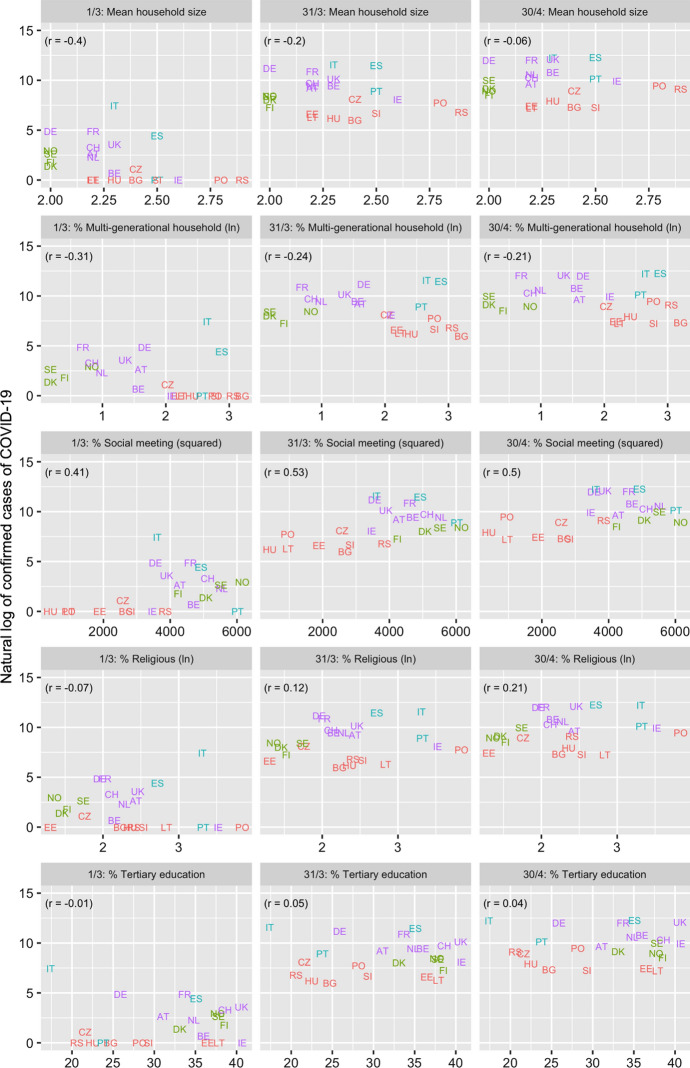
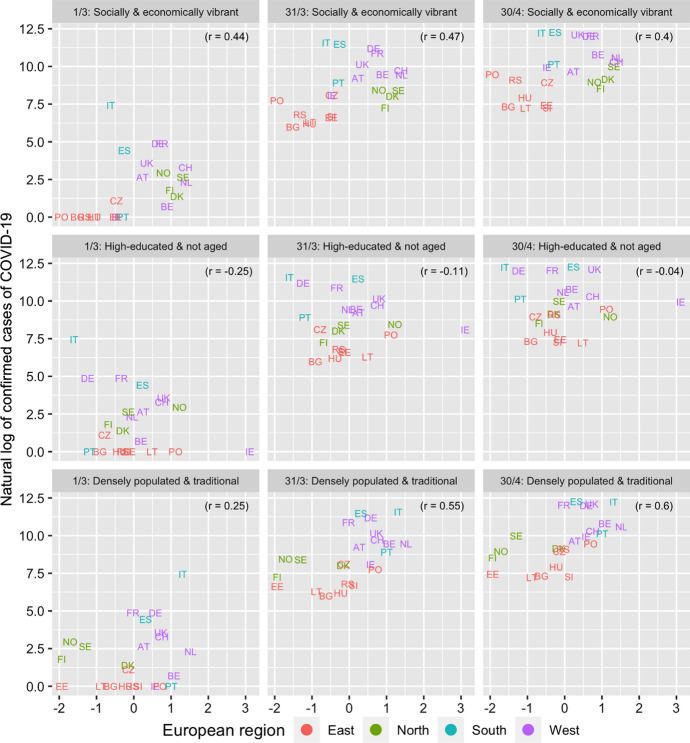
By late January 2020, the 2019 novel coronavirus (SARS-CoV-2) had reached Europe and most European countries had registered cases by March 1. However, the spread of the virus has been uneven in both prevalence and speed of propagation. We analyse the association of social, economic, and demographic factors in the initial spread of the coronavirus disease COVID-19 across 23 European countries between March 1 and April 30, 2020. Diagnosed COVID-19 cases from Johns Hopkins University and data from the European Social Survey and other sources were used to estimate bivariate associations between cumulative reported case numbers at ten-day intervals and nine social, demographic, and economic variables. To avoid overfitting, we first reduce these variables to three factors by factor analysis before conducting a multiple regression analysis. We also perform a sensitivity analysis using rates and new cases between two time periods. Results showed that social and economic factors are strongly and positively associated with COVID-19 throughout the studied period, while the association with population density and cultural factors was initially low, but by April, was higher than the earlier mentioned factors. For future influenza-like pandemics, implementing strict movement restrictions from early on will be crucial to curb the spread of such diseases in economically, socially, and culturally vibrant and densely populated countries.
The online version contains supplementary material available at 10.1007/s12546-021-09257-1.
到2020年1月下旬,2019新型冠状病毒(SARS-CoV-2)已蔓延至欧洲,大多数欧洲国家在3月1日前已报告确诊病例。然而,该病毒的传播在流行程度和传播速度上并不均衡。我们分析了2020年3月1日至4月30日期间,社会、经济和人口因素与新型冠状病毒肺炎(COVID-19)在23个欧洲国家最初传播之间的关联。利用约翰·霍普金斯大学公布的COVID-19确诊病例数据以及欧洲社会调查和其他来源的数据,来估计每十天累计报告病例数与九个社会、人口和经济变量之间的双变量关联。为避免过度拟合,我们在进行多元回归分析之前,先通过因子分析将这些变量简化为三个因子。我们还使用两个时间段之间的发病率和新增病例数进行了敏感性分析。结果表明,在整个研究期间,社会和经济因素与COVID-19呈强正相关,而与人口密度和文化因素的关联最初较低,但到4月时,高于上述因素。对于未来类似流感的大流行,在经济、社会和文化活跃且人口密集的国家,尽早实施严格的行动限制对于遏制此类疾病的传播至关重要。
在线版本包含可在10.1007/s12546-021-09257-1获取的补充材料。