• 文献检索
  • 文档翻译
  • 深度研究
  • 学术资讯
  • Suppr Zotero 插件Zotero 插件
  • 邀请有礼
  • 套餐&价格
  • 历史记录
应用&插件
Suppr Zotero 插件Zotero 插件浏览器插件Mac 客户端Windows 客户端微信小程序
定价
高级版会员购买积分包购买API积分包
服务
文献检索文档翻译深度研究API 文档MCP 服务
关于我们
关于 Suppr公司介绍联系我们用户协议隐私条款
关注我们

Suppr 超能文献

核心技术专利:CN118964589B侵权必究
粤ICP备2023148730 号-1Suppr @ 2026

文献检索

告别复杂PubMed语法,用中文像聊天一样搜索,搜遍4000万医学文献。AI智能推荐,让科研检索更轻松。

立即免费搜索

文件翻译

保留排版,准确专业,支持PDF/Word/PPT等文件格式,支持 12+语言互译。

免费翻译文档

深度研究

AI帮你快速写综述,25分钟生成高质量综述,智能提取关键信息,辅助科研写作。

立即免费体验

使用长短期记忆网络(LSTM)算法进行2019冠状病毒病(COVID-19)预测:海湾合作委员会(GCC)案例研究

COVID-19 prediction using LSTM algorithm: GCC case study.

作者信息

Ghany Kareem Kamal A, Zawbaa Hossam M, Sabri Heba M

机构信息

College of Computing and Informatics, Saudi Electronic University, Riyadh, Saudi Arabia.

Faculty of Computers and Artificial Intelligence, Beni-Suef University, Beni Suef, Egypt.

出版信息

Inform Med Unlocked. 2021;23:100566. doi: 10.1016/j.imu.2021.100566. Epub 2021 Apr 6.

DOI:10.1016/j.imu.2021.100566
PMID:33842686
原文链接:https://pmc.ncbi.nlm.nih.gov/articles/PMC8021451/
Abstract

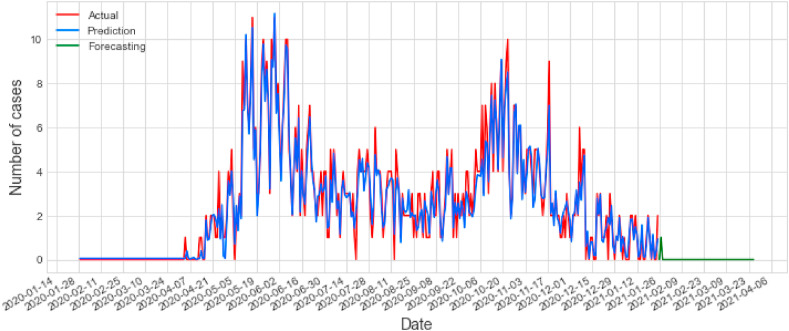
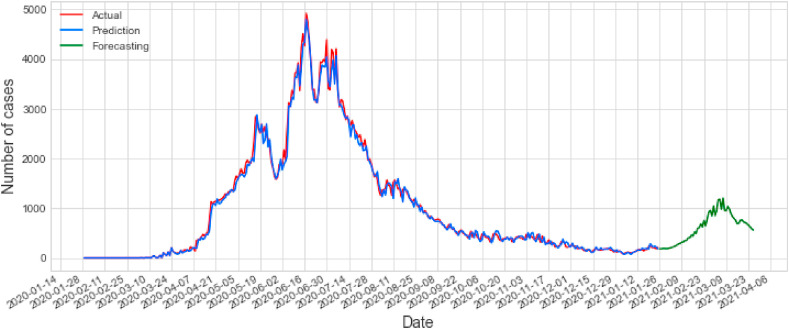
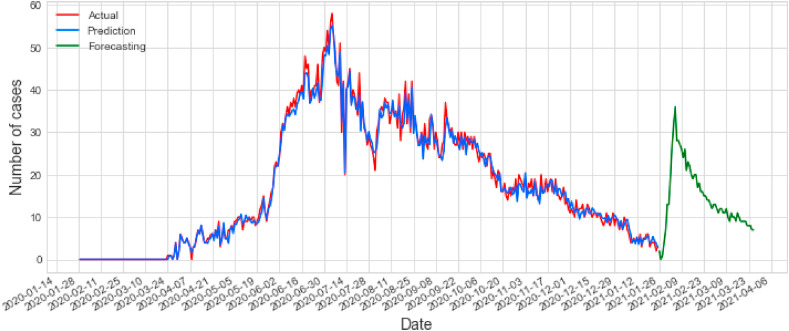
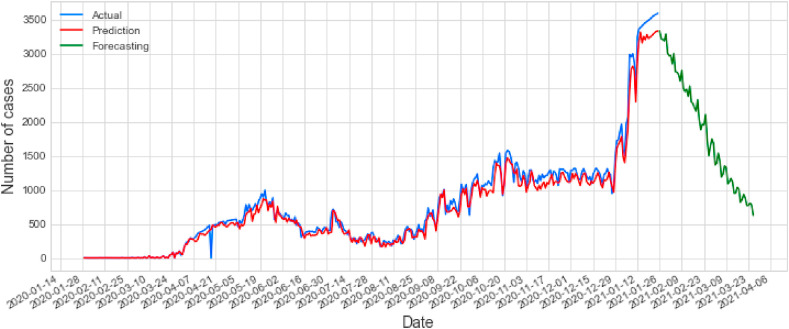
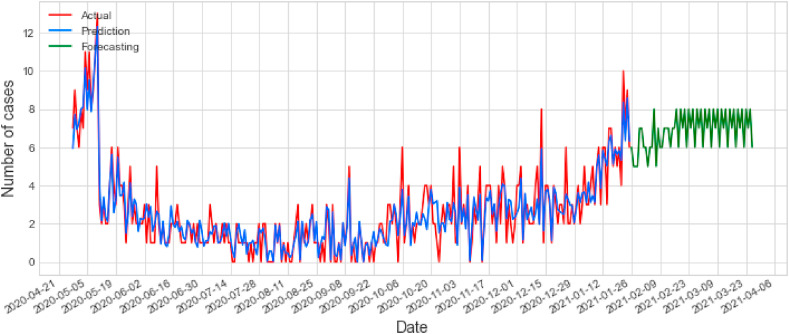
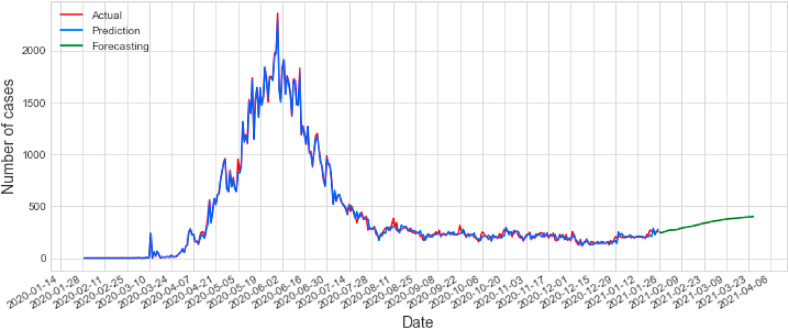
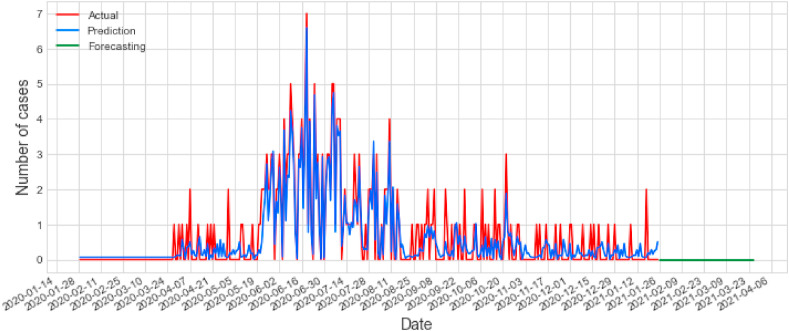
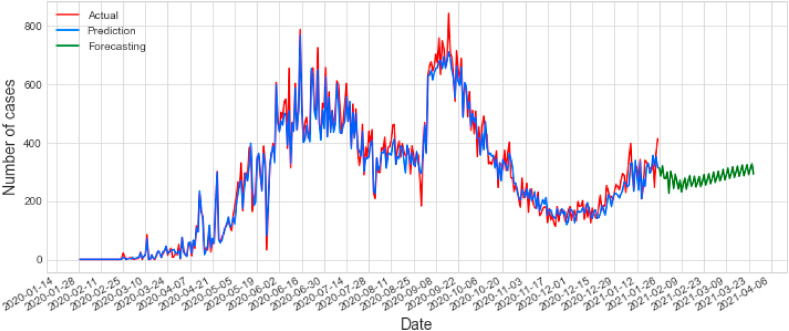
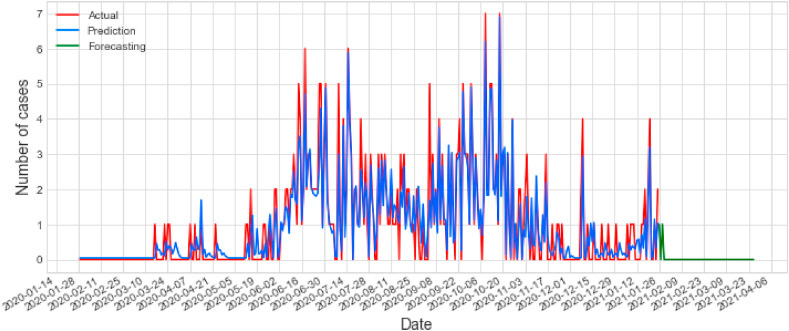
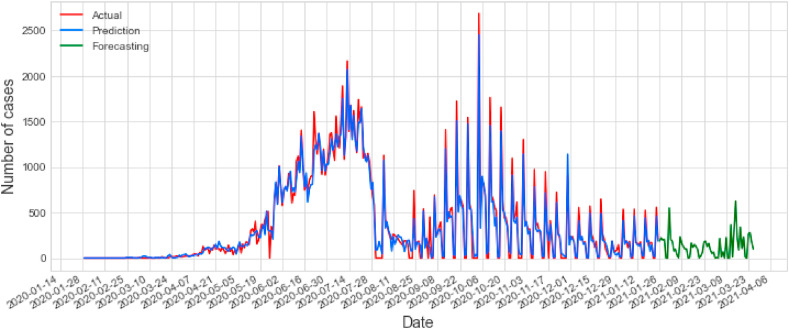
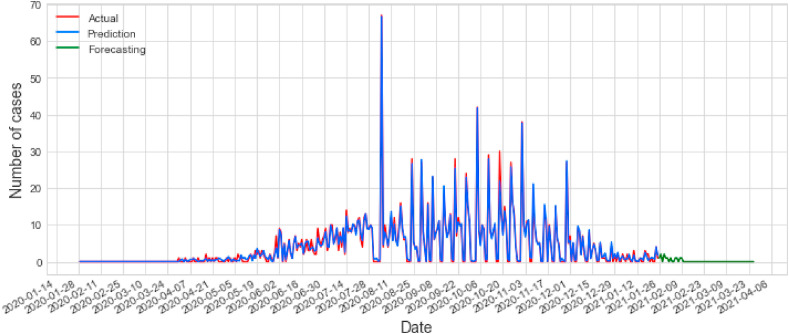
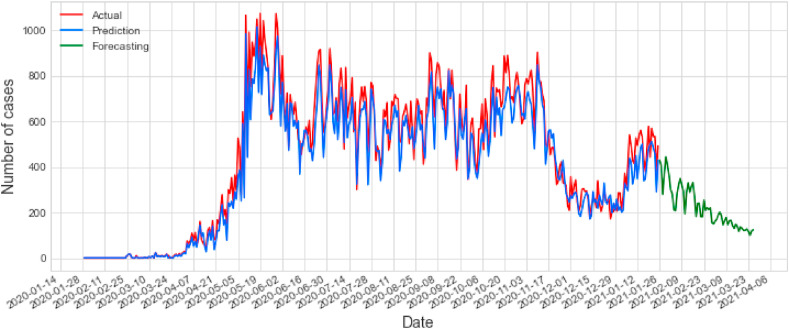
Coronavirus-19 (COVID-19) is the black swan of 2020. Still, the human response to restrain the virus is also creating massive ripples through different systems, such as health, economy, education, and tourism. This paper focuses on research and applying Artificial Intelligence (AI) algorithms to predict COVID-19 propagation using the available time-series data and study the effect of the quality of life, the number of tests performed, and the awareness of citizens on the virus in the Gulf Cooperation Council (GCC) countries at the Gulf area. So we focused on cases in the Kingdom of Saudi Arabia (KSA), United Arab of Emirates (UAE), Kuwait, Bahrain, Oman, and Qatar. For this aim, we accessed the time-series real-datasets collected from Johns Hopkins University Center for Systems Science and Engineering (JHU CSSE). The timeline of our data is from January 22, 2020 to January 25, 2021. We have implemented the proposed model based on Long Short-Term Memory (LSTM) with ten hidden units (neurons) to predict COVID-19 confirmed and death cases. From the experimental results, we confirmed that KSA and Qatar would take the most extended period to recover from the COVID-19 virus, and the situation will be controllable in the second half of March 2021 in UAE, Kuwait, Oman, and Bahrain. Also, we calculated the root mean square error (RMSE) between the actual and predicted values of each country for confirmed and death cases, and we found that the best values for both confirmed and death cases are 320.79 and 1.84, respectively, and both are related to Bahrain. While the worst values are 1768.35 and 21.78, respectively, and both are related to KSA. On the other hand, we also calculated the mean absolute relative errors (MARE) between the actual and predicted values of each country for confirmed and death cases, and we found that the best values for both confirmed and deaths cases are 37.76 and 0.30, and these are related to Kuwait and Qatar respectively. While the worst values are 71.45 and 1.33, respectively, and both are related to KSA.

摘要

新型冠状病毒肺炎(COVID-19)是2020年的黑天鹅事件。尽管如此,人类抑制该病毒的应对措施也在不同系统中引发了巨大波动,如卫生、经济、教育和旅游业等。本文着重研究并应用人工智能(AI)算法,利用现有的时间序列数据预测COVID-19的传播情况,并研究生活质量、检测数量以及海湾地区海湾合作委员会(GCC)国家公民对该病毒的认知程度所产生的影响。因此,我们聚焦于沙特阿拉伯王国(KSA)、阿拉伯联合酋长国(UAE)、科威特、巴林、阿曼和卡塔尔的病例情况。为此,我们获取了从约翰·霍普金斯大学系统科学与工程中心(JHU CSSE)收集的时间序列真实数据集。我们的数据时间跨度为2020年1月22日至2021年1月25日。我们基于具有十个隐藏单元(神经元)的长短期记忆(LSTM)实现了所提出的模型,以预测COVID-19确诊病例和死亡病例。从实验结果来看,我们证实沙特阿拉伯和卡塔尔从COVID-19病毒中恢复所需的时间最长,而在阿联酋(UAE)、科威特、阿曼和巴林,情况将在2021年3月下旬得到控制。此外,我们计算了每个国家确诊病例和死亡病例实际值与预测值之间的均方根误差(RMSE),发现确诊病例和死亡病例的最佳值分别为320.79和1.84,且均与巴林相关。而最差值分别为1768.35和21.78,且均与沙特阿拉伯相关。另一方面,我们还计算了每个国家确诊病例和死亡病例实际值与预测值之间的平均绝对相对误差(MARE),发现确诊病例和死亡病例的最佳值分别为37.76和0.30,分别与科威特和卡塔尔相关。而最差值分别为71.45和1.33,且均与沙特阿拉伯相关。
https://cdn.ncbi.nlm.nih.gov/pmc/blobs/a079/8021451/4d9ebebce73c/gr13_lrg.jpg
https://cdn.ncbi.nlm.nih.gov/pmc/blobs/a079/8021451/8dff4cd1cb51/gr1_lrg.jpg
https://cdn.ncbi.nlm.nih.gov/pmc/blobs/a079/8021451/ffd5e65f3b24/gr2_lrg.jpg
https://cdn.ncbi.nlm.nih.gov/pmc/blobs/a079/8021451/62618048f4be/gr3_lrg.jpg
https://cdn.ncbi.nlm.nih.gov/pmc/blobs/a079/8021451/85383a08dfac/gr4_lrg.jpg
https://cdn.ncbi.nlm.nih.gov/pmc/blobs/a079/8021451/379bf194cbd1/gr5_lrg.jpg
https://cdn.ncbi.nlm.nih.gov/pmc/blobs/a079/8021451/65600168dc4a/gr6_lrg.jpg
https://cdn.ncbi.nlm.nih.gov/pmc/blobs/a079/8021451/c8ae007ccbdf/gr7_lrg.jpg
https://cdn.ncbi.nlm.nih.gov/pmc/blobs/a079/8021451/4d6eaef97d1c/gr8_lrg.jpg
https://cdn.ncbi.nlm.nih.gov/pmc/blobs/a079/8021451/c7eaacede815/gr9_lrg.jpg
https://cdn.ncbi.nlm.nih.gov/pmc/blobs/a079/8021451/f84c35792f1e/gr10_lrg.jpg
https://cdn.ncbi.nlm.nih.gov/pmc/blobs/a079/8021451/9f0464422d6f/gr11_lrg.jpg
https://cdn.ncbi.nlm.nih.gov/pmc/blobs/a079/8021451/eaf8ae8444a6/gr12_lrg.jpg
https://cdn.ncbi.nlm.nih.gov/pmc/blobs/a079/8021451/4d9ebebce73c/gr13_lrg.jpg
https://cdn.ncbi.nlm.nih.gov/pmc/blobs/a079/8021451/8dff4cd1cb51/gr1_lrg.jpg
https://cdn.ncbi.nlm.nih.gov/pmc/blobs/a079/8021451/ffd5e65f3b24/gr2_lrg.jpg
https://cdn.ncbi.nlm.nih.gov/pmc/blobs/a079/8021451/62618048f4be/gr3_lrg.jpg
https://cdn.ncbi.nlm.nih.gov/pmc/blobs/a079/8021451/85383a08dfac/gr4_lrg.jpg
https://cdn.ncbi.nlm.nih.gov/pmc/blobs/a079/8021451/379bf194cbd1/gr5_lrg.jpg
https://cdn.ncbi.nlm.nih.gov/pmc/blobs/a079/8021451/65600168dc4a/gr6_lrg.jpg
https://cdn.ncbi.nlm.nih.gov/pmc/blobs/a079/8021451/c8ae007ccbdf/gr7_lrg.jpg
https://cdn.ncbi.nlm.nih.gov/pmc/blobs/a079/8021451/4d6eaef97d1c/gr8_lrg.jpg
https://cdn.ncbi.nlm.nih.gov/pmc/blobs/a079/8021451/c7eaacede815/gr9_lrg.jpg
https://cdn.ncbi.nlm.nih.gov/pmc/blobs/a079/8021451/f84c35792f1e/gr10_lrg.jpg
https://cdn.ncbi.nlm.nih.gov/pmc/blobs/a079/8021451/9f0464422d6f/gr11_lrg.jpg
https://cdn.ncbi.nlm.nih.gov/pmc/blobs/a079/8021451/eaf8ae8444a6/gr12_lrg.jpg
https://cdn.ncbi.nlm.nih.gov/pmc/blobs/a079/8021451/4d9ebebce73c/gr13_lrg.jpg

相似文献

1
COVID-19 prediction using LSTM algorithm: GCC case study.使用长短期记忆网络(LSTM)算法进行2019冠状病毒病(COVID-19)预测:海湾合作委员会(GCC)案例研究
Inform Med Unlocked. 2021;23:100566. doi: 10.1016/j.imu.2021.100566. Epub 2021 Apr 6.
2
Hemodialysis delivery, dialysis dose achievement, and vascular access types in hemodialysis patients from the Gulf Cooperation Council countries enrolled in the dialysis outcomes and practice patterns study phase 5 (2012-2015).参与透析结果与实践模式研究第5阶段(2012 - 2015年)的海湾合作委员会国家血液透析患者的血液透析治疗、透析剂量达成情况及血管通路类型
Saudi J Kidney Dis Transpl. 2016 Nov;27(6 Suppl 1):S42-50. doi: 10.4103/1319-2442.194889.
3
A Bidirectional Long Short-Term Memory Model Algorithm for Predicting COVID-19 in Gulf Countries.一种用于预测海湾国家新冠疫情的双向长短期记忆模型算法
Life (Basel). 2021 Oct 21;11(11):1118. doi: 10.3390/life11111118.
4
The impact of environmental and climate parameters on the incidence and mortality of COVID-19 in the six Gulf Cooperation Council countries: A cross-country comparison study.环境和气候参数对海湾合作委员会六国 COVID-19 发病率和死亡率的影响:一项跨国比较研究。
PLoS One. 2022 Jul 28;17(7):e0269204. doi: 10.1371/journal.pone.0269204. eCollection 2022.
5
Systematic thematic review of e-health research in the Gulf Cooperation Council (Arabian Gulf): Bahrain, Kuwait, Oman, Qatar, Saudi Arabia and United Arab Emirates.系统主题评价海湾合作委员会(阿拉伯湾)的电子健康研究:巴林、科威特、阿曼、卡塔尔、沙特阿拉伯和阿拉伯联合酋长国。
J Telemed Telecare. 2017 May;23(4):452-459. doi: 10.1177/1357633X16647894. Epub 2016 May 28.
6
Forecasting the SARS COVID-19 pandemic and critical care resources threshold in the Gulf Cooperation Council (GCC) countries: population analysis of aggregate data.预测海湾合作委员会(GCC)国家 SARS-CoV-2 大流行和重症监护资源阈值:综合数据的人口分析。
BMJ Open. 2021 May 11;11(5):e044102. doi: 10.1136/bmjopen-2020-044102.
7
Human papillomavirus prevalence and genotypes in Gulf Cooperation Council countries: A scoping review 2017-2024.海湾合作委员会国家的人乳头瘤病毒流行情况及基因型:2017 - 2024年范围综述
Qatar Med J. 2024 Jul 31;2024(3):33. doi: 10.5339/qmj.2024.33. eCollection 2024.
8
Ecological study of breast cancer incidence among nationals and nonnationals in the Gulf Cooperation Council countries.海湾合作委员会国家国民与非国民乳腺癌发病率的生态学研究。
East Mediterr Health J. 2023 Jan 19;29(1):40-48. doi: 10.26719/emhj.23.005.
9
Effect of temperature and humidity on the dynamics of daily new cases and deaths due to COVID-19 outbreak in Gulf countries in Middle East Region.温度和湿度对中东地区海湾国家 COVID-19 每日新增病例和死亡人数动态的影响。
Eur Rev Med Pharmacol Sci. 2020 Jul;24(13):7524-7533. doi: 10.26355/eurrev_202007_21927.
10
Progress of the Gulf Cooperation Council (GCC) Countries Towards Achieving the 95-95-95 UNAIDS Targets: A Review.海湾合作委员会(GCC)国家实现联合国艾滋病规划署 95-95-95 目标的进展:综述。
J Epidemiol Glob Health. 2023 Sep;13(3):397-406. doi: 10.1007/s44197-023-00097-1. Epub 2023 Apr 20.

引用本文的文献

1
Weather Conditions and COVID-19 Cases: Insights from the GCC Countries.天气状况与新冠疫情病例:来自海湾合作委员会国家的见解
Intell Syst Appl. 2022 Sep;15:200093. doi: 10.1016/j.iswa.2022.200093. Epub 2022 Jun 18.
2
A Systematic Review of the Outcomes of Utilization of Artificial Intelligence Within the Healthcare Systems of the Middle East: A Thematic Analysis of Findings.中东医疗系统中人工智能应用成果的系统评价:研究结果的主题分析
Health Sci Rep. 2024 Dec 24;7(12):e70300. doi: 10.1002/hsr2.70300. eCollection 2024 Dec.
3
A data-driven combined prediction method for the demand for intensive care unit healthcare resources in public health emergencies.

本文引用的文献

1
Automatic detection of coronavirus disease (COVID-19) using X-ray images and deep convolutional neural networks.使用X射线图像和深度卷积神经网络自动检测冠状病毒病(COVID-19)。
Pattern Anal Appl. 2021;24(3):1207-1220. doi: 10.1007/s10044-021-00984-y. Epub 2021 May 9.
2
A deep learning algorithm using CT images to screen for Corona virus disease (COVID-19).利用 CT 图像进行冠状病毒病(COVID-19)筛查的深度学习算法。
Eur Radiol. 2021 Aug;31(8):6096-6104. doi: 10.1007/s00330-021-07715-1. Epub 2021 Feb 24.
3
Application of artificial neural networks to predict the COVID-19 outbreak.
面向突发公共卫生事件的重症监护医疗资源需求的一种数据驱动的联合预测方法。
BMC Health Serv Res. 2024 Apr 17;24(1):477. doi: 10.1186/s12913-024-10955-8.
4
Deep learning in public health: Comparative predictive models for COVID-19 case forecasting.深度学习在公共卫生领域的应用:用于 COVID-19 病例预测的比较预测模型。
PLoS One. 2024 Mar 14;19(3):e0294289. doi: 10.1371/journal.pone.0294289. eCollection 2024.
5
Predicting the daily counts of COVID-19 infection using temporal convolutional networks.使用时间卷积网络预测新冠病毒感染的每日病例数
J Glob Health. 2023 May 26;13:03029. doi: 10.7189/jogh.13.03029.
6
Nesting the SIRV model with NAR, LSTM and statistical methods to fit and predict COVID-19 epidemic trend in Africa.将 SIRV 模型与 NAR、LSTM 和统计方法嵌套,以拟合和预测非洲的 COVID-19 疫情趋势。
BMC Public Health. 2023 Jan 19;23(1):138. doi: 10.1186/s12889-023-14992-6.
7
Application of big data and artificial intelligence in epidemic surveillance and containment.大数据与人工智能在疫情监测与防控中的应用。
Intell Med. 2023 Feb;3(1):36-43. doi: 10.1016/j.imed.2022.10.003. Epub 2022 Nov 5.
8
Forecasting COVID-19 Epidemic Trends by Combining a Neural Network with Estimation.结合神经网络与估计方法预测新冠疫情趋势
Entropy (Basel). 2022 Jul 4;24(7):929. doi: 10.3390/e24070929.
9
FedSGDCOVID: Federated SGD COVID-19 Detection under Local Differential Privacy Using Chest X-ray Images and Symptom Information.FedSGDCOVID:基于胸部 X 光图像和症状信息的联邦 SGD COVID-19 检测,采用本地差分隐私保护。
Sensors (Basel). 2022 May 13;22(10):3728. doi: 10.3390/s22103728.
10
Artificial intelligence for forecasting and diagnosing COVID-19 pandemic: A focused review.人工智能在预测和诊断 COVID-19 大流行中的应用:一项重点综述。
Artif Intell Med. 2022 Jun;128:102286. doi: 10.1016/j.artmed.2022.102286. Epub 2022 Mar 28.
应用人工神经网络预测新型冠状病毒肺炎疫情。
Glob Health Res Policy. 2020 Nov 23;5(1):50. doi: 10.1186/s41256-020-00175-y.
4
Clinical features of patients infected with 2019 novel coronavirus in Wuhan, China.中国武汉地区 2019 年新型冠状病毒感染患者的临床特征。
Lancet. 2020 Feb 15;395(10223):497-506. doi: 10.1016/S0140-6736(20)30183-5. Epub 2020 Jan 24.
5
LSTM: A Search Space Odyssey.长短期记忆网络:搜索空间奥德赛。
IEEE Trans Neural Netw Learn Syst. 2017 Oct;28(10):2222-2232. doi: 10.1109/TNNLS.2016.2582924. Epub 2016 Jul 8.
6
Learning to forget: continual prediction with LSTM.学习遗忘:使用长短期记忆网络进行持续预测。
Neural Comput. 2000 Oct;12(10):2451-71. doi: 10.1162/089976600300015015.
7
Long short-term memory.长短期记忆
Neural Comput. 1997 Nov 15;9(8):1735-80. doi: 10.1162/neco.1997.9.8.1735.