Antimicrobial Resistance Unit (ARU), Animal Health Department, Faculty of Veterinary Medicine and VISAVET Health Surveillance Centre, Complutense University of Madrid, Madrid, Spain.
Centre for Genomic Pathogen Surveillance (CGPS), Wellcome Sanger Institute, Hinxton, UK.
Commun Biol. 2021 Apr 12;4(1):457. doi: 10.1038/s42003-021-01949-x.
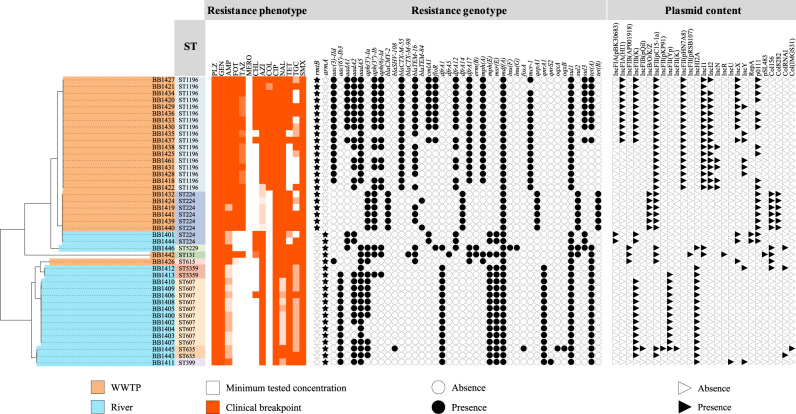
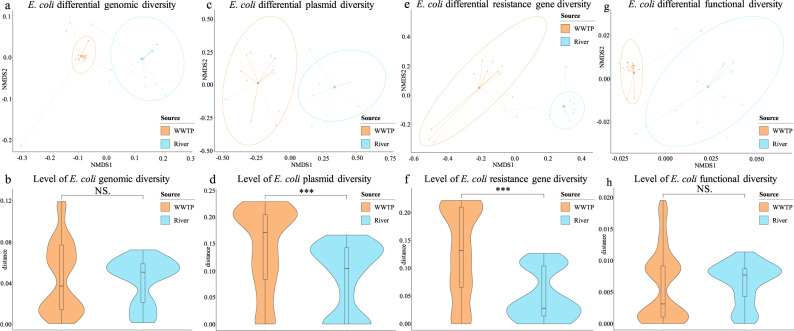
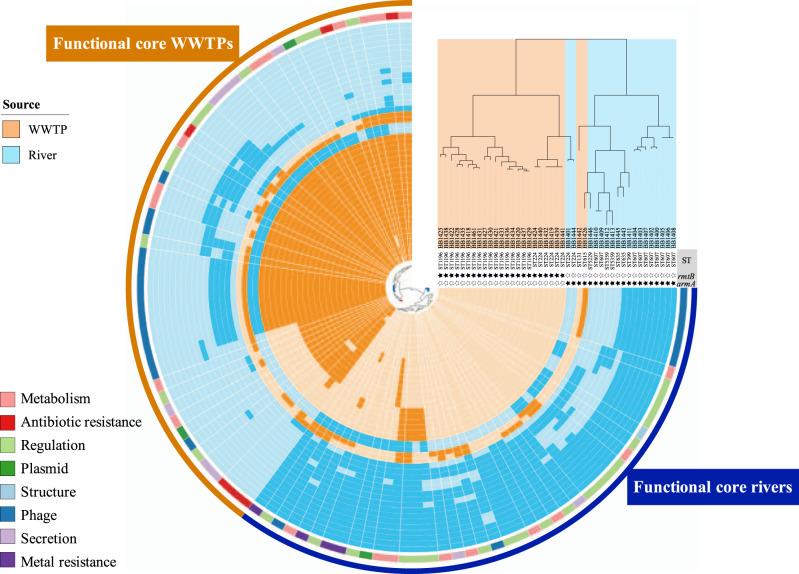
Aquatic environments are key niches for the emergence, evolution and dissemination of antimicrobial resistance. However, the population diversity and the genetic elements that drive the dynamics of resistant bacteria in different aquatic environments are still largely unknown. The aim of this study was to understand the population genomics and evolutionary events of Escherichia coli resistant to clinically important antibiotics including aminoglycosides, in anthropogenic and natural water ecosystems. Here we show that less different E. coli sequence types (STs) are identified in wastewater than in rivers, albeit more resistant to antibiotics, and with significantly more plasmids/cell (6.36 vs 3.72). However, the genomic diversity within E. coli STs in both aquatic environments is similar. Wastewater environments favor the selection of conserved chromosomal structures associated with diverse flexible plasmids, unraveling promiscuous interplasmidic resistance genes flux. On the contrary, the key driver for river E. coli adaptation is a mutable chromosome along with few plasmid types shared between diverse STs harboring a limited resistance gene content.
水生环境是抗菌药物耐药性出现、进化和传播的关键生态位。然而,不同水生环境中耐药细菌的种群多样性和驱动其动态变化的遗传因子在很大程度上仍然未知。本研究旨在了解水生环境中对包括氨基糖苷类在内的临床重要抗生素具有耐药性的大肠杆菌的群体基因组学和进化事件。在这里,我们发现尽管废水中的大肠杆菌序列类型(ST)比河流中的耐药性更强,但数量却较少,且每个细胞的质粒数量明显更多(6.36 比 3.72)。然而,两种水生环境中大肠杆菌 ST 内的基因组多样性相似。废水环境有利于选择与多样化的可移动质粒相关的保守染色体结构,揭示了混杂的质粒间耐药基因流。相反,河流中大肠杆菌适应的关键驱动因素是易变的染色体,以及不同 ST 之间共享的少数质粒类型,这些 ST 携带的耐药基因含量有限。