College of Medicine, Southwest Jiaotong University, Chengdu, Sichuan 610031, P.R. China.
Department of Gastroenterology, Chengdu First People's Hospital, Chengdu, Sichuan 610016, P.R. China.
Oncol Rep. 2021 Jun;45(6). doi: 10.3892/or.2021.8046. Epub 2021 Apr 13.
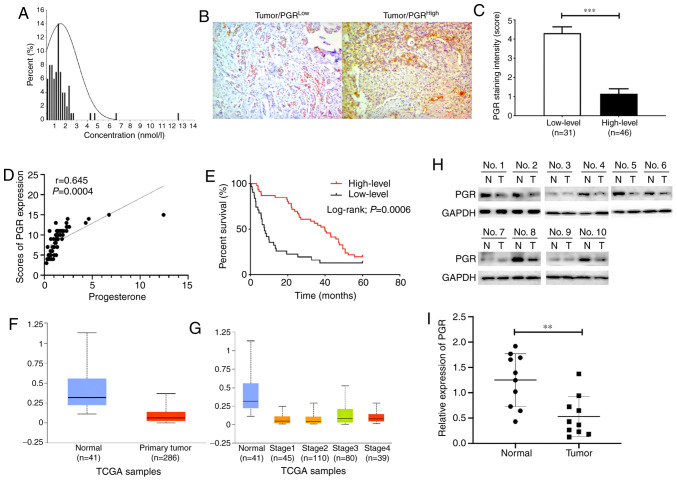
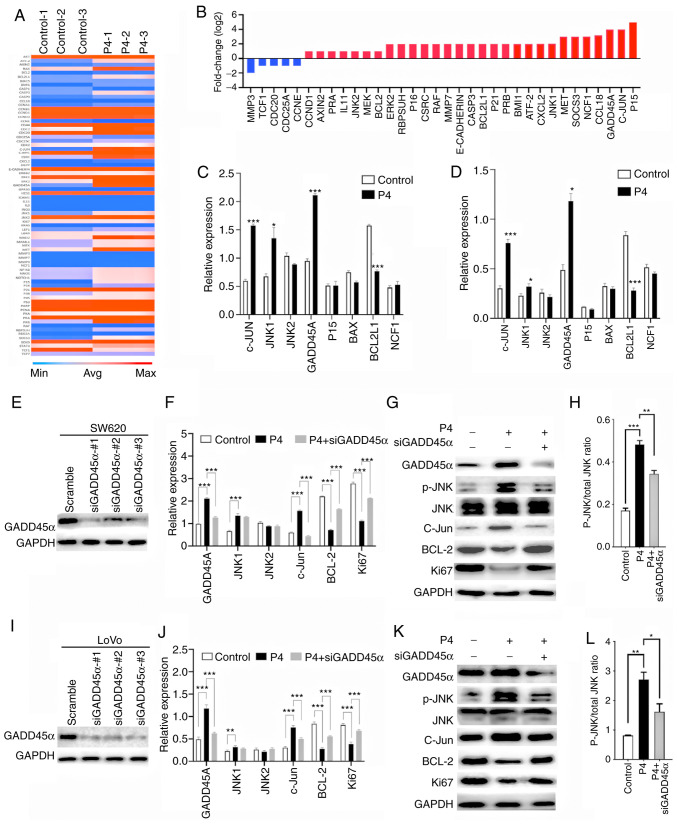
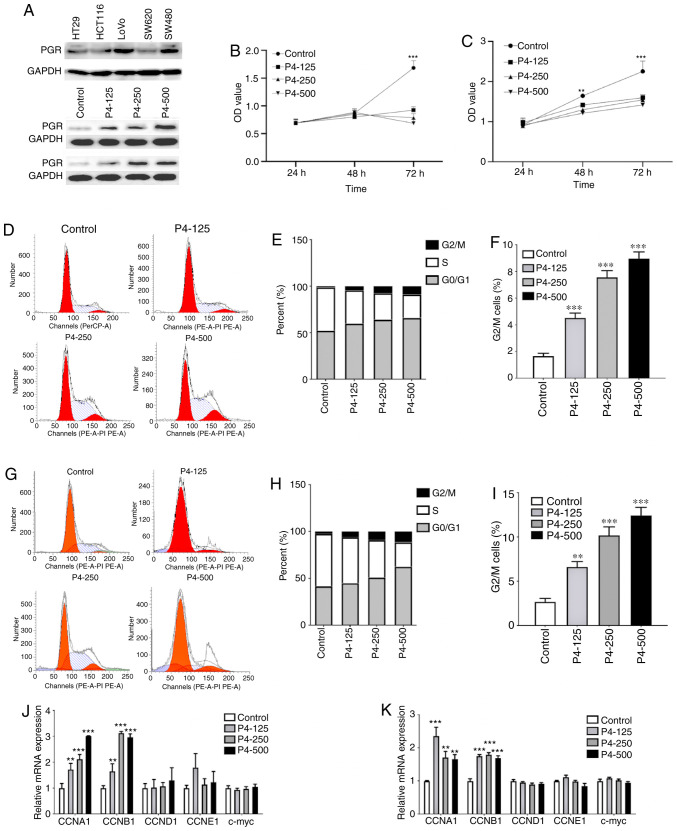
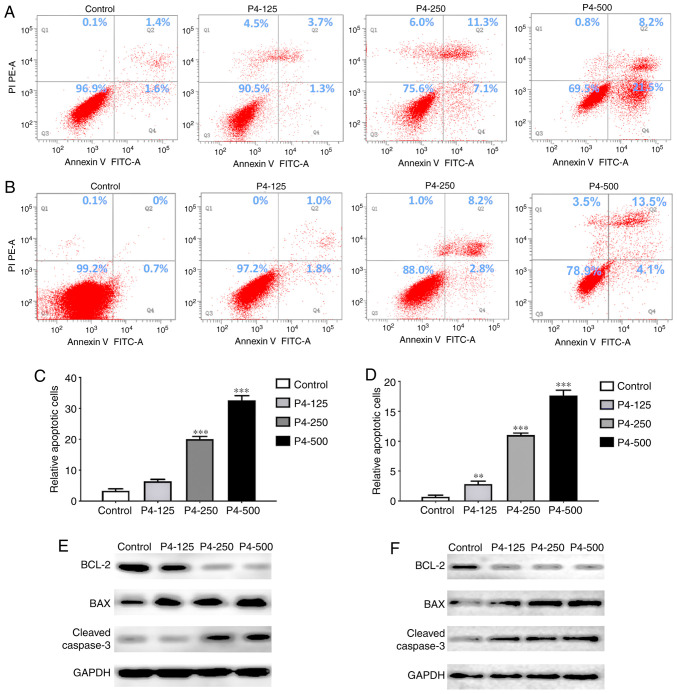
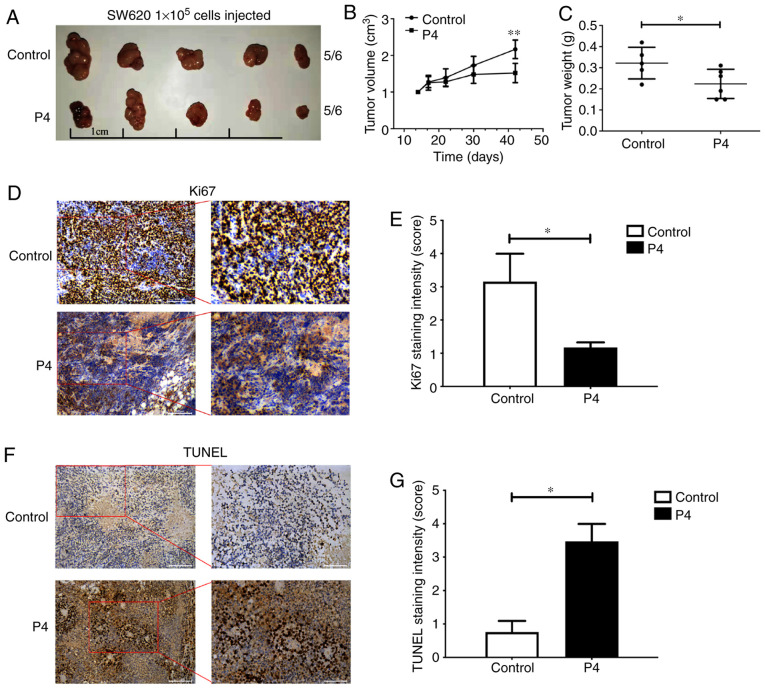
Colorectal cancer (CRC) is the third most diagnosed cancer worldwide. Progesterone is associated with a decreased risk of CRC and leads to a favourable prognosis. However, the specific mechanism by which progesterone suppresses malignant progression remains to be elucidated. In the present study, the level of progesterone was first analysed in 77 patients with CRC, and immunohistochemistry was performed to detect the expression of progesterone receptor (PGR) in the paired specimens. The correlations between progesterone, PGR and CRC prognosis were assessed. A Cell Counting Kit‑8 assay was then used to detect proliferation of the CRC cells. Flow cytometry was performed to estimate apoptosis and to evaluate the cycle of the CRC cells. A xenograft tumour model was established in nude mice to assess the role of progesterone in tumour growth. Finally, a PCR microarray was used to screen differentially expressed genes to further interpret the mechanism by which progesterone inhibits the malignant progression of CRC. It was found that low expression of progesterone and PGR were significantly associated with poor prognosis of CRC. In addition, progesterone suppressed CRC cell proliferation by arresting the cell cycle and inducing apoptosis . Moreover, the inhibitory role of progesterone in tumour growth was verified . Further investigation showed that the level of growth arrest and DNA damage‑inducible protein α (GADD45α) was up‑regulated by progesterone, and this was followed by the activation of the JNK pathway. Progesterone increased the activity of the JNK pathway via GADD45α to inhibit proliferation by arresting the cell cycle and inducing apoptosis, thereby suppressing the malignant progression of CRC. Therefore, it can be concluded that progesterone and PGR might act as inhibiting factors for poor prognosis of CRC.
结直肠癌(CRC)是全球第三大常见癌症。孕激素与 CRC 风险降低相关,并导致有利的预后。然而,孕激素抑制恶性进展的确切机制仍有待阐明。在本研究中,首先分析了 77 例 CRC 患者的孕激素水平,并通过免疫组织化学检测配对标本中孕激素受体(PGR)的表达。评估了孕激素、PGR 与 CRC 预后之间的相关性。然后使用细胞计数试剂盒-8 检测 CRC 细胞的增殖。通过流式细胞术评估细胞凋亡和细胞周期。在裸鼠中建立异种移植肿瘤模型,以评估孕激素在肿瘤生长中的作用。最后,使用 PCR 微阵列筛选差异表达基因,以进一步解释孕激素抑制 CRC 恶性进展的机制。结果发现,孕激素和 PGR 的低表达与 CRC 的不良预后显著相关。此外,孕激素通过阻滞细胞周期和诱导细胞凋亡抑制 CRC 细胞增殖。此外,孕激素抑制肿瘤生长的作用得到了验证。进一步的研究表明,孕激素上调生长停滞和 DNA 损伤诱导蛋白α(GADD45α)的水平,随后激活 JNK 途径。孕激素通过 GADD45α 增加 JNK 途径的活性,通过阻滞细胞周期和诱导细胞凋亡来抑制增殖,从而抑制 CRC 的恶性进展。因此,可以得出结论,孕激素和 PGR 可能作为 CRC 不良预后的抑制因子。