Takeda Pharmaceuticals Ltd., 40 Landsdowne Street, Cambridge, MA, 02139, USA.
Neurotherapeutics. 2021 Apr;18(2):686-708. doi: 10.1007/s13311-021-01027-4. Epub 2021 Apr 12.
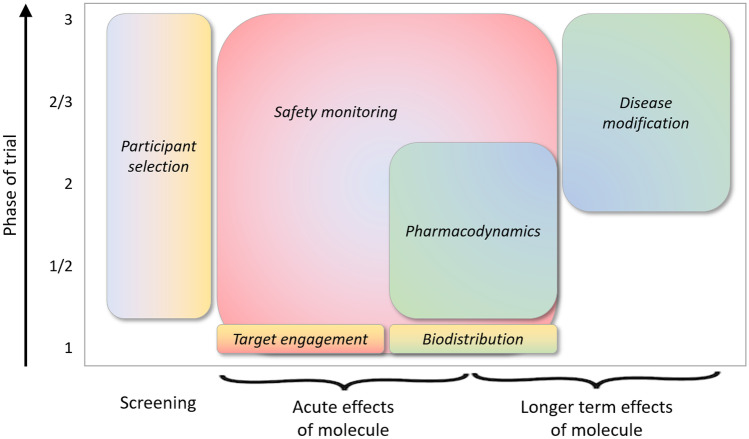
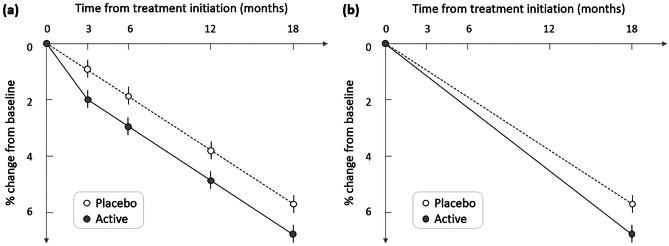
Imaging biomarkers play a wide-ranging role in clinical trials for neurological disorders. This includes selecting the appropriate trial participants, establishing target engagement and mechanism-related pharmacodynamic effect, monitoring safety, and providing evidence of disease modification. In the early stages of clinical drug development, evidence of target engagement and/or downstream pharmacodynamic effect-especially with a clear relationship to dose-can provide confidence that the therapeutic candidate should be advanced to larger and more expensive trials, and can inform the selection of the dose(s) to be further tested, i.e., to "de-risk" the drug development program. In these later-phase trials, evidence that the therapeutic candidate is altering disease-related biomarkers can provide important evidence that the clinical benefit of the compound (if observed) is grounded in meaningful biological changes. The interpretation of disease-related imaging markers, and comparability across different trials and imaging tools, is greatly improved when standardized outcome measures are defined. This standardization should not impinge on scientific advances in the imaging tools per se but provides a common language in which the results generated by these tools are expressed. PET markers of pathological protein aggregates and structural imaging of brain atrophy are common disease-related elements across many neurological disorders. However, PET tracers for pathologies beyond amyloid β and tau are needed, and the interpretability of structural imaging can be enhanced by some simple considerations to guard against the possible confound of pseudo-atrophy. Learnings from much-studied conditions such as Alzheimer's disease and multiple sclerosis will be beneficial as the field embraces rarer diseases.
影像学生物标志物在神经疾病的临床试验中发挥着广泛的作用。这包括选择合适的试验参与者、确定靶标结合和与机制相关的药效学效应、监测安全性以及提供疾病改善的证据。在临床药物开发的早期阶段,靶标结合和/或下游药效学效应的证据(尤其是与剂量有明确关系的证据)可以增强对治疗候选药物进行更大规模、更昂贵试验的信心,并为选择进一步测试的剂量提供信息,即“降低”药物开发计划的风险。在这些后期试验中,治疗候选药物改变与疾病相关的生物标志物的证据可以提供重要证据,表明该化合物的临床获益(如果观察到)是基于有意义的生物学变化。当定义了标准化的结果测量时,疾病相关影像学标志物的解释以及不同试验和影像学工具之间的可比性都得到了极大的提高。这种标准化不应影响成像工具本身的科学进步,而是提供一种通用语言,以表达这些工具生成的结果。病理性蛋白聚集体的 PET 标志物和大脑萎缩的结构影像学是许多神经疾病中常见的疾病相关因素。然而,需要针对淀粉样蛋白β和 tau 以外的病理学的 PET 示踪剂,并且通过一些简单的考虑可以增强结构影像学的可解释性,以防止可能的假性萎缩的混杂。从阿尔茨海默病和多发性硬化症等研究较多的疾病中吸取的经验教训将有助于该领域涵盖更罕见的疾病。