Oh Byeongtaek, Wu Yu-Wei, Swaminathan Vishal, Lam Vivek, Ding Jun, George Paul M
Department of Neurology and Neurological Sciences Stanford University School of Medicine Stanford CA 94305 USA.
Department of Neurosurgery Stanford University School of Medicine Stanford CA 94305 USA.
Adv Sci (Weinh). 2021 Feb 18;8(7):2002112. doi: 10.1002/advs.202002112. eCollection 2021 Apr.
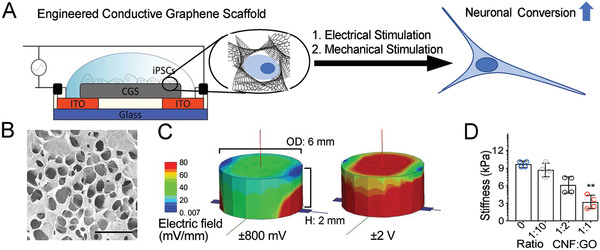
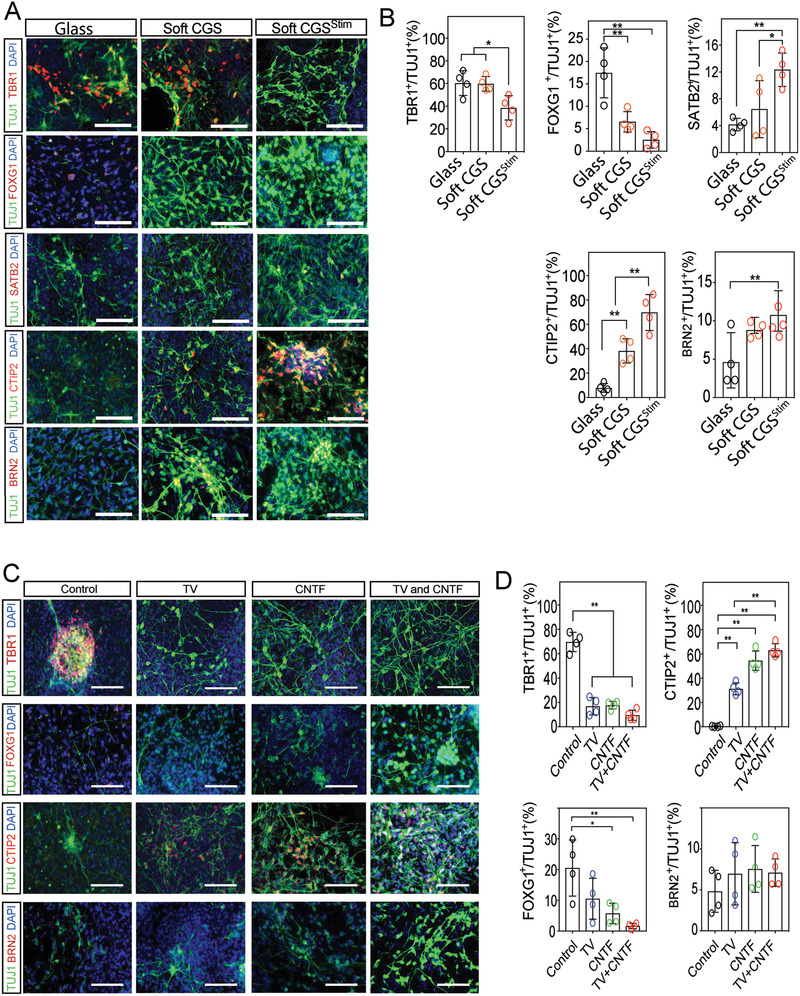
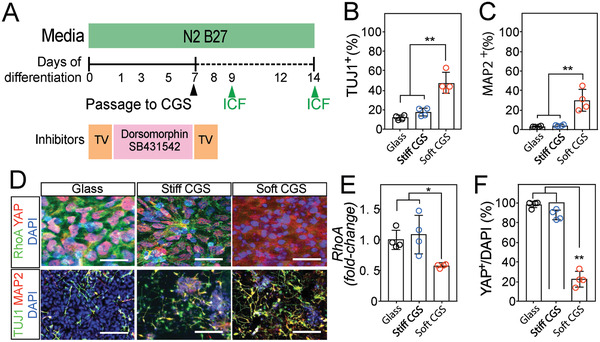
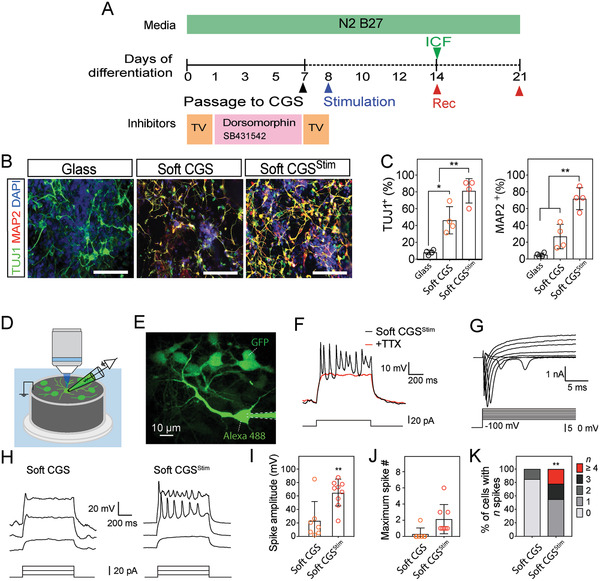
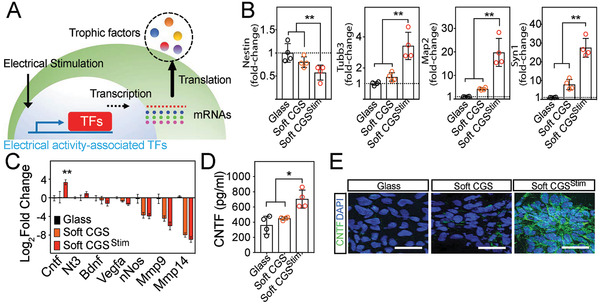
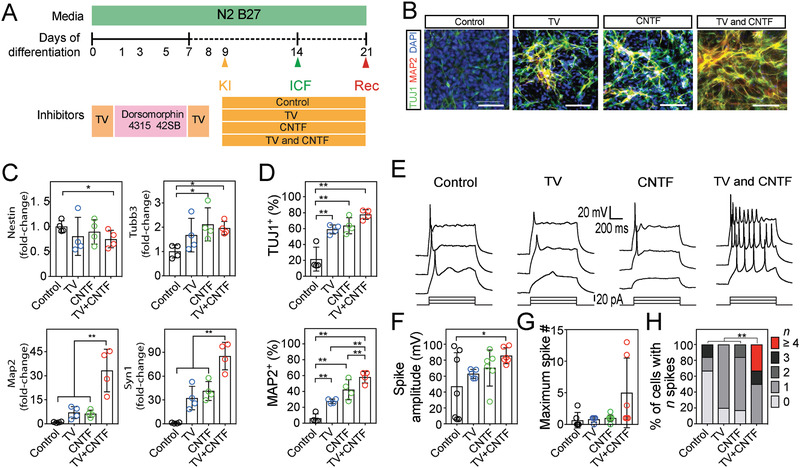
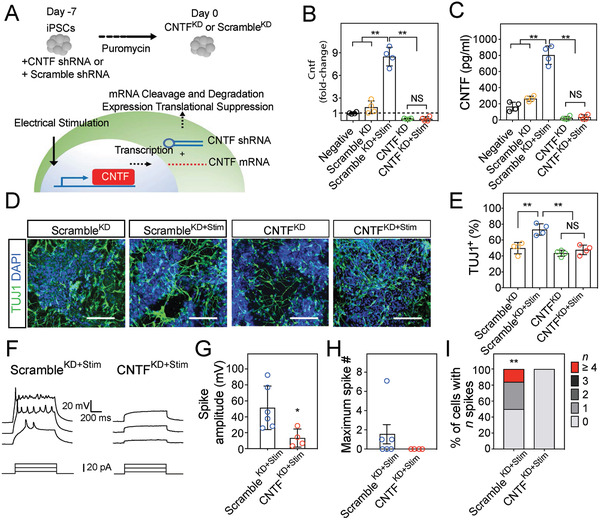
The application of induced pluripotent stem cells (iPSCs) in disease modeling and regenerative medicine can be limited by the prolonged times required for functional human neuronal differentiation and traditional 2D culture techniques. Here, a conductive graphene scaffold (CGS) to modulate mechanical and electrical signals to promote human iPSC-derived neurons is presented. The soft CGS with cortex-like stiffness (≈3 kPa) and electrical stimulation (±800 mV/100 Hz for 1 h) incurs a fivefold improvement in the rate (14d) of generating iPSC-derived neurons over some traditional protocols, with an increase in mature cellular markers and electrophysiological characteristics. Consistent with other culture conditions, it is found that the pro-neurogenic effects of mechanical and electrical stimuli rely on RhoA/ROCK signaling and de novo ciliary neurotrophic factor (CNTF) production respectively. Thus, the CGS system creates a combined physical and continuously modifiable, electrical niche to efficiently and quickly generate iPSC-derived neurons.
诱导多能干细胞(iPSC)在疾病建模和再生医学中的应用可能会受到功能性人类神经元分化所需的较长时间以及传统二维培养技术的限制。在此,我们展示了一种导电石墨烯支架(CGS),它可调节机械和电信号以促进源自人类iPSC的神经元生长。具有皮层样刚度(约3 kPa)的柔软CGS和电刺激(±800 mV/100 Hz,持续1小时)使源自iPSC的神经元生成速率(14天)比某些传统方案提高了五倍,同时成熟细胞标志物和电生理特性也有所增加。与其他培养条件一致,发现机械和电刺激的促神经生成作用分别依赖于RhoA/ROCK信号传导和从头产生睫状神经营养因子(CNTF)。因此,CGS系统创建了一个物理和可连续调节的电微环境组合,以高效快速地生成源自iPSC的神经元。