Biobehavioral Imaging and Molecular Neuropsychopharmacology Unit, National Institute on Drug Abuse Intramural Research Program, Baltimore, MD, USA.
Molecular Neuropharmacology Section, National Institute of Neurological Disorders and Stroke Intramural Research Program, Bethesda, MD, USA.
Mol Psychiatry. 2021 Nov;26(11):6704-6722. doi: 10.1038/s41380-021-01093-2. Epub 2021 Apr 15.
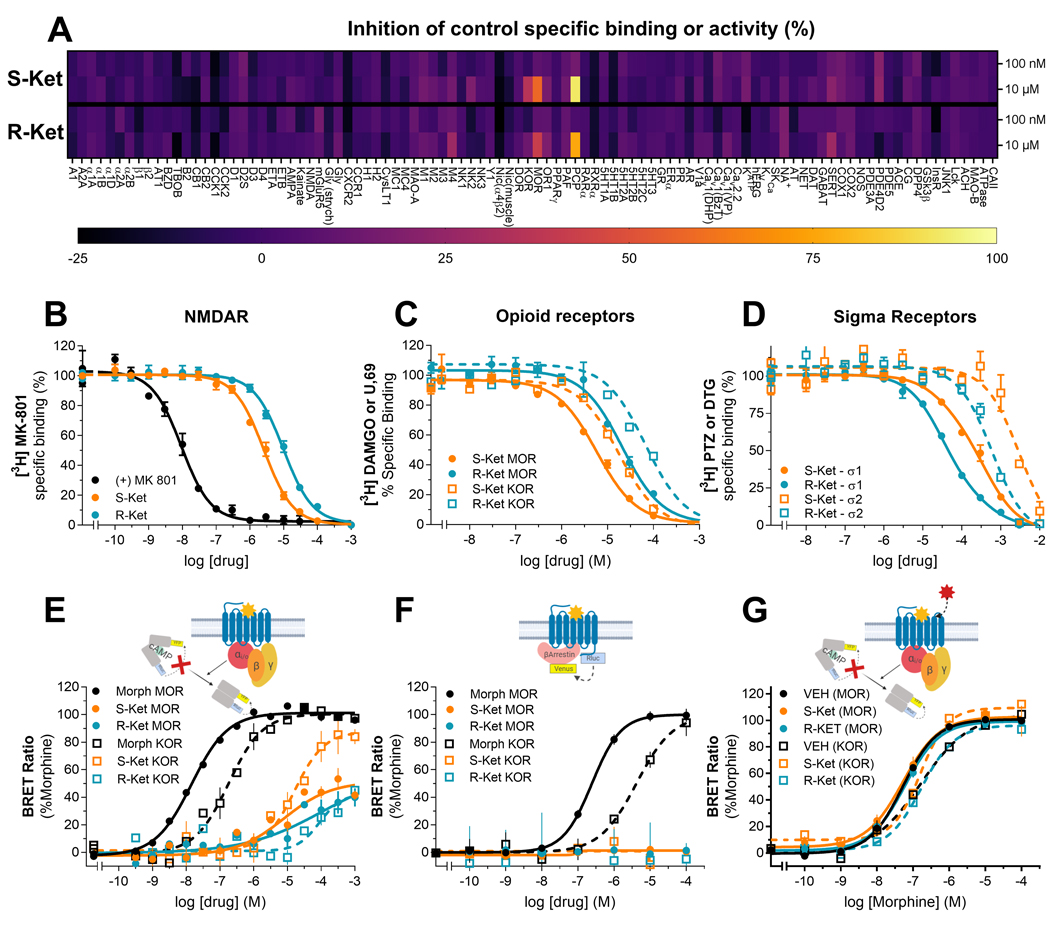
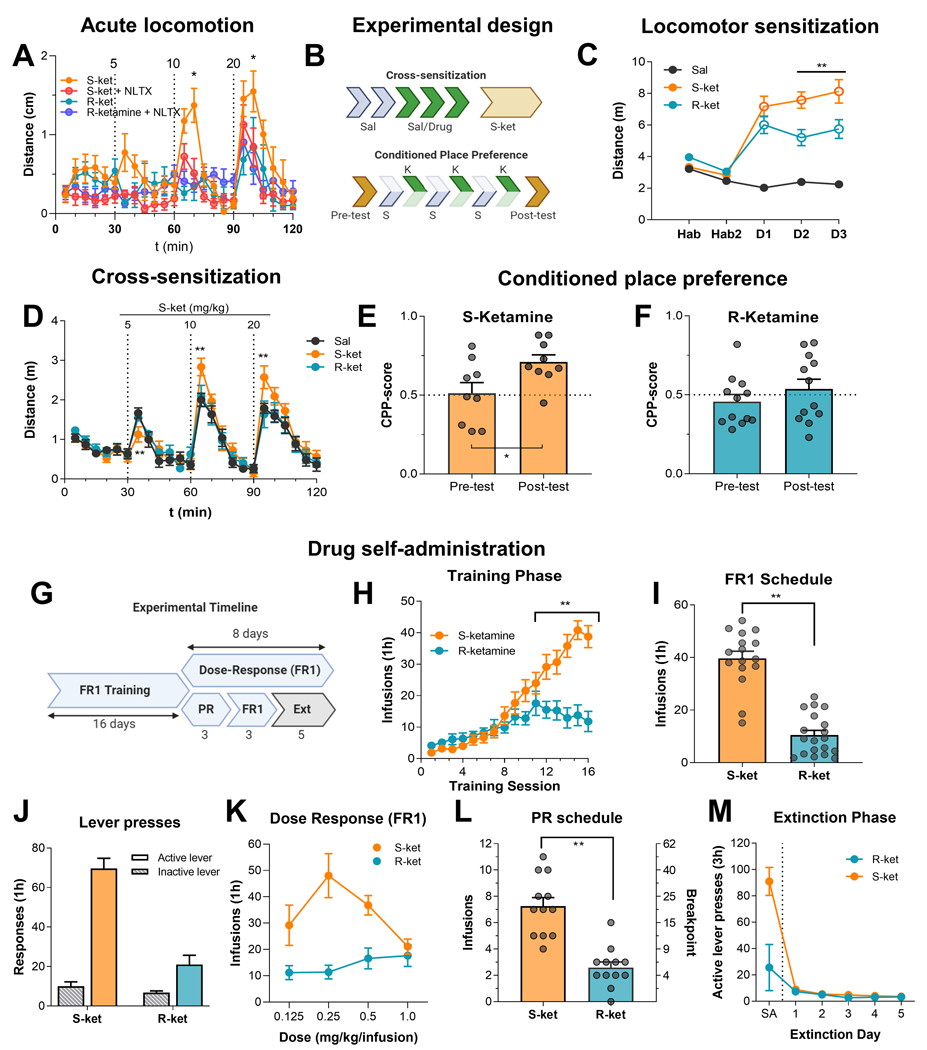
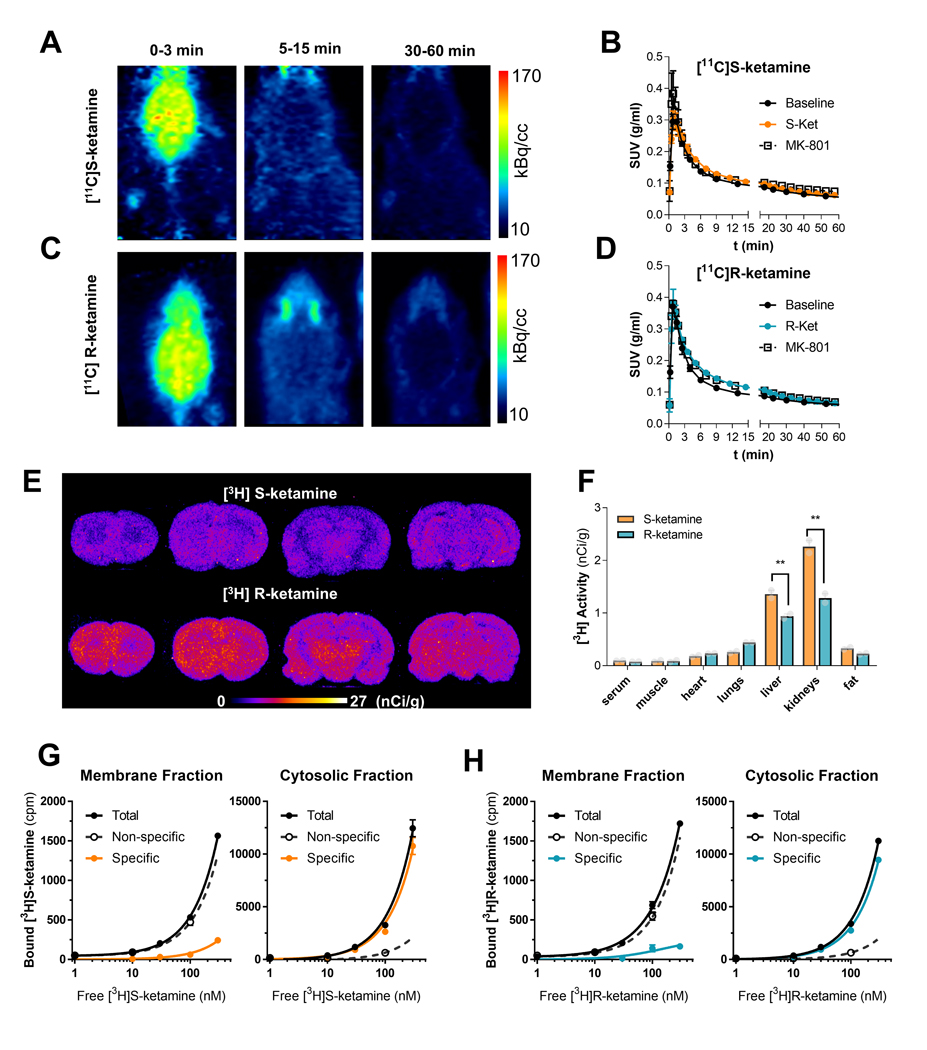
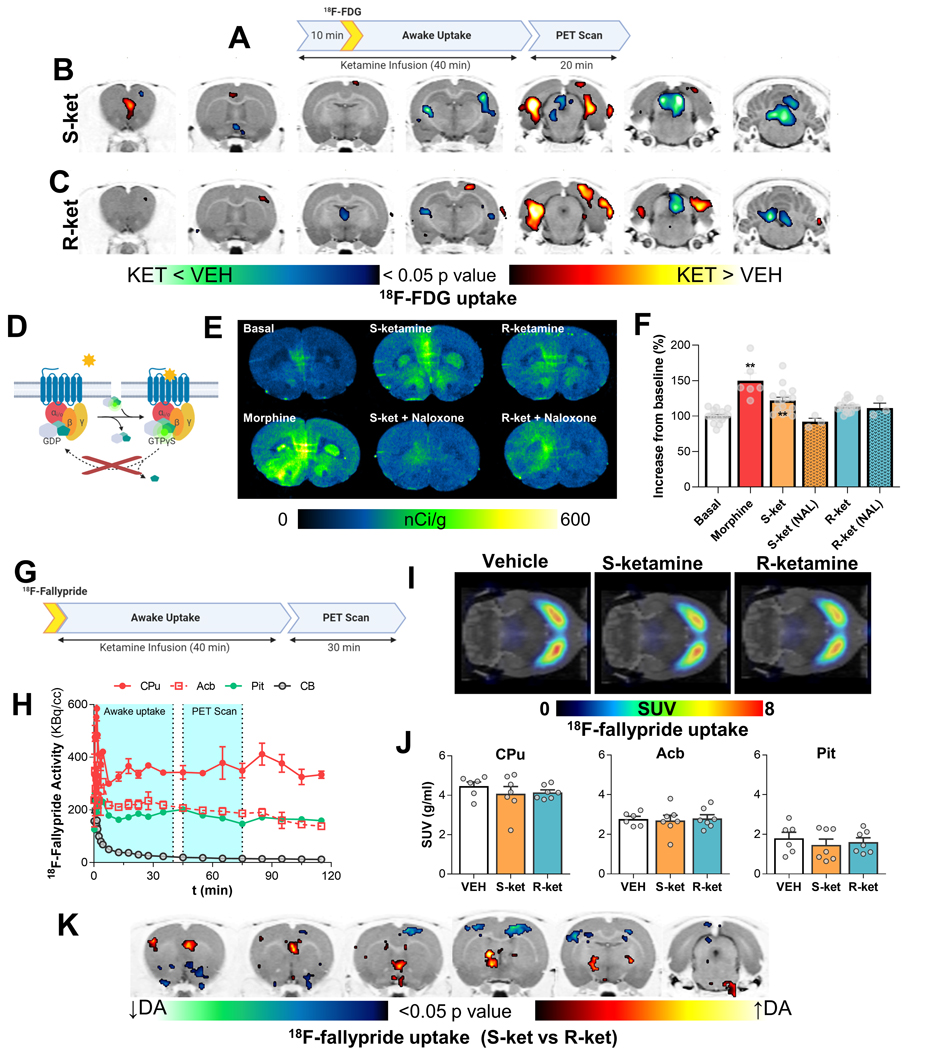
Ketamine, a racemic mixture of (S)-ketamine and (R)-ketamine enantiomers, has been used as an anesthetic, analgesic and more recently, as an antidepressant. However, ketamine has known abuse liability (the tendency of a drug to be used in non-medical situations due to its psychoactive effects), which raises concerns for its therapeutic use. (S)-ketamine was recently approved by the United States' FDA for treatment-resistant depression. Recent studies showed that (R)-ketamine has greater efficacy than (S)-ketamine in preclinical models of depression, but its clinical antidepressant efficacy has not been established. The behavioral effects of racemic ketamine have been studied extensively in preclinical models predictive of abuse liability in humans (self-administration and conditioned place preference [CPP]). In contrast, the behavioral effects of each enantiomer in these models are unknown. We show here that in the intravenous drug self-administration model, the gold standard procedure to assess potential abuse liability of drugs in humans, rats self-administered (S)-ketamine but not (R)-ketamine. Subanesthetic, antidepressant-like doses of (S)-ketamine, but not of (R)-ketamine, induced locomotor activity (in an opioid receptor-dependent manner), induced psychomotor sensitization, induced CPP in mice, and selectively increased metabolic activity and dopamine tone in medial prefrontal cortex (mPFC) of rats. Pharmacological screening across thousands of human proteins and at biological targets known to interact with ketamine yielded divergent binding and functional enantiomer profiles, including selective mu and kappa opioid receptor activation by (S)-ketamine in mPFC. Our results demonstrate divergence in the pharmacological, functional, and behavioral effects of ketamine enantiomers, and suggest that racemic ketamine's abuse liability in humans is primarily due to the pharmacological effects of its (S)-enantiomer.
氯胺酮是一种(S)-氯胺酮和(R)-氯胺酮对映异构体的外消旋混合物,已被用作麻醉剂、镇痛药,最近又被用作抗抑郁药。然而,氯胺酮具有已知的滥用倾向(由于其精神活性作用,药物在非医疗情况下被使用的倾向),这引起了人们对其治疗用途的关注。(S)-氯胺酮最近被美国食品和药物管理局批准用于治疗抵抗性抑郁症。最近的研究表明,(R)-氯胺酮在抑郁症的临床前模型中比(S)-氯胺酮具有更大的疗效,但它的临床抗抑郁疗效尚未确定。外消旋氯胺酮的行为效应在预测人类滥用倾向的临床前模型中得到了广泛研究(自我给药和条件位置偏好[CPP])。相比之下,每种对映体在这些模型中的行为效应尚不清楚。我们在这里表明,在静脉药物自我给药模型中,这是评估人类潜在滥用倾向的金标准程序,大鼠自我给予(S)-氯胺酮,但不给予(R)-氯胺酮。亚麻醉、抗抑郁剂量的(S)-氯胺酮,但不是(R)-氯胺酮,诱导运动活动(以阿片受体依赖的方式),诱导精神运动敏化,诱导小鼠条件位置偏好,并选择性增加中前额叶皮层(mPFC)的代谢活性和多巴胺张力。在数以千计的人类蛋白和已知与氯胺酮相互作用的生物靶标上进行的药理学筛选产生了不同的结合和功能对映体特征,包括(S)-氯胺酮在 mPFC 中选择性地激活μ和κ阿片受体。我们的结果表明,氯胺酮对映体的药理学、功能和行为效应存在差异,并表明外消旋氯胺酮在人类中的滥用倾向主要是由于其(S)-对映体的药理学效应。