Bao Yaya, Gu Dadong
Shaoxing University Medical College, Shaoxing, China.
Department of Neurology, Zhuji Affiliated Hospital of Shaoxing University, Zhuji, China.
Front Neurol. 2021 Mar 31;12:642899. doi: 10.3389/fneur.2021.642899. eCollection 2021.
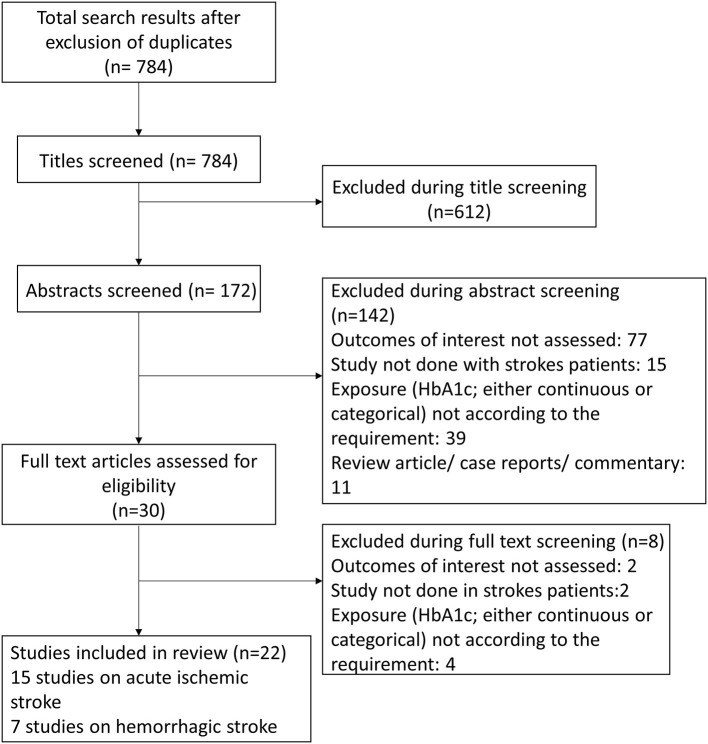
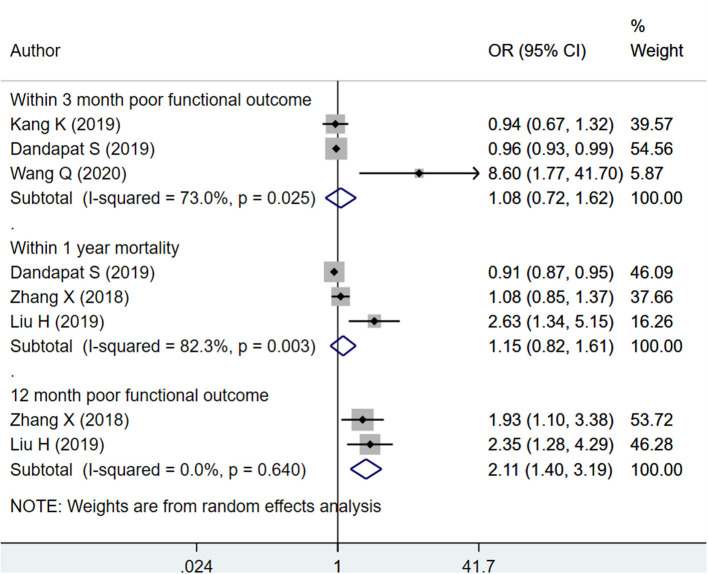
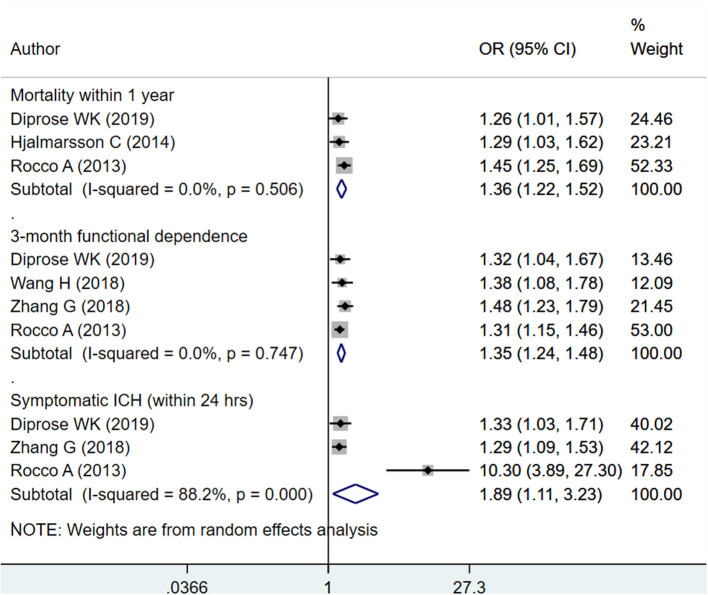
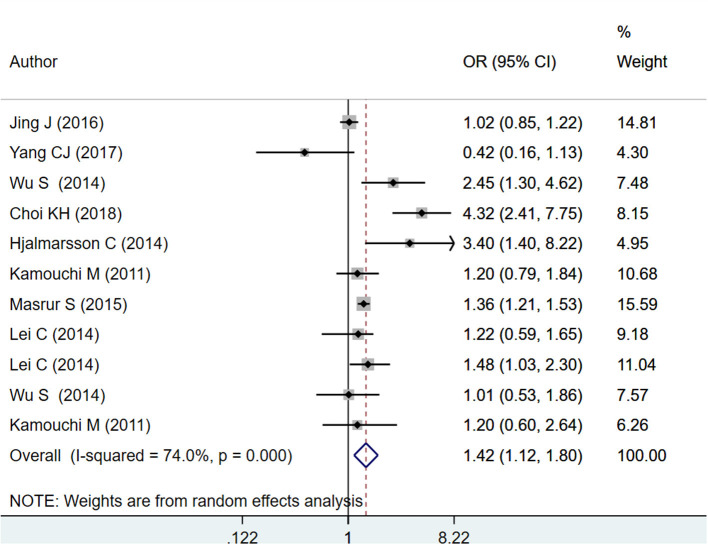
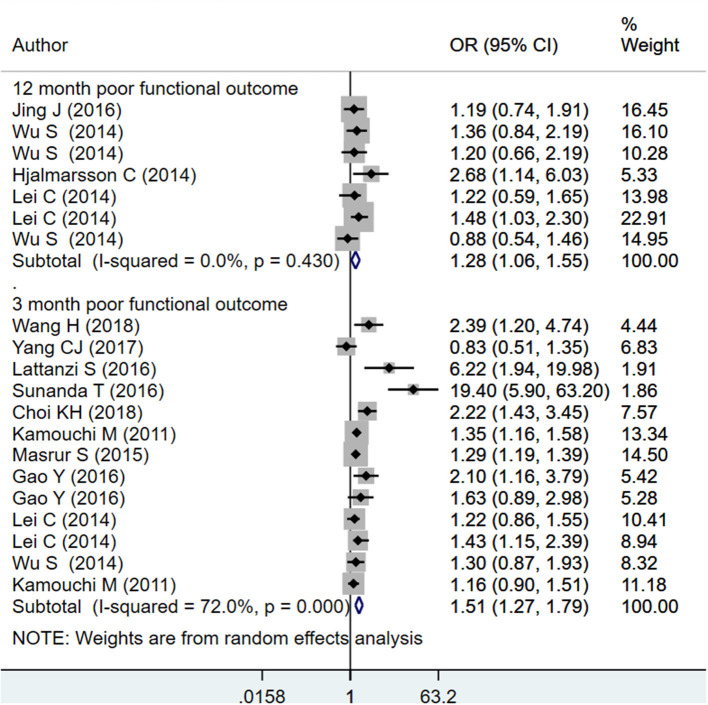
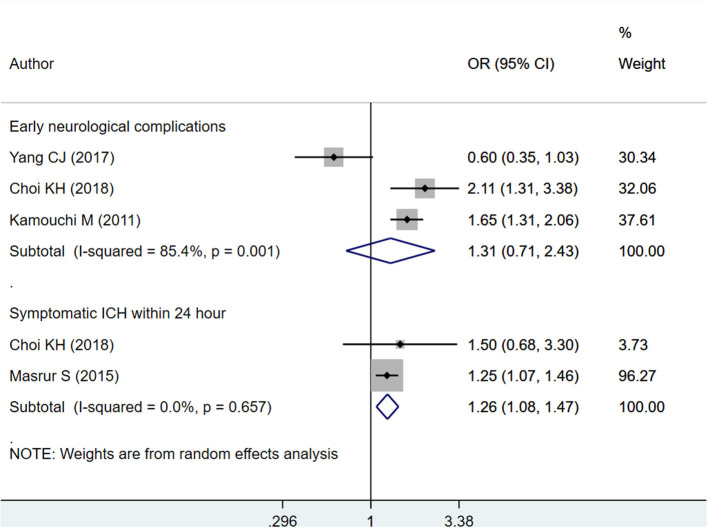
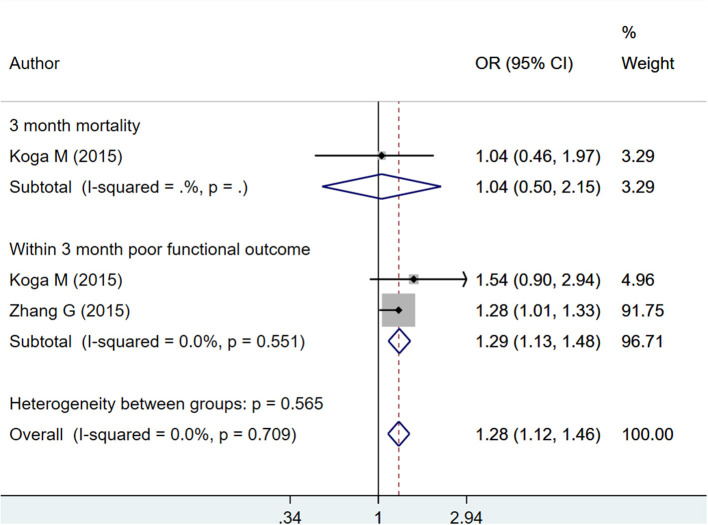
Glycated hemoglobin (HbA1c) has emerged as a useful biochemical marker reflecting the average glycemic control over the last 3 months, and the values are not affected by short-term transient changes in blood glucose levels. However, its prognostic value in the acute neurological conditions such as stroke is still not well-established. The present meta-analysis was conducted to assess the relationship of HbA1c with outcomes such as mortality, early neurological complications, and functional dependence in stroke patients. A systematic search was conducted for the PubMed, Scopus, and Google Scholar databases. Studies, either retrospective or prospective in design that examined the relationship between HbA1c with outcomes of interest and presented the strength of association in the form of adjusted odds ratio/hazard ratios were included in the review. Statistical analysis was done using STATA version 13.0. A total of 22 studies (15 studies on acute ischemic stroke and seven studies on hemorrhagic stroke) were included in the meta-analysis. For patients with acute ischemic stroke, each unit increase in HbA1c was found to be associated with an increased risk of mortality within 1 year, increased risk of poor functional outcome at 3 months, and an increased risk of symptomatic intracranial hemorrhage (sICH) within 24 h of admission. In those with HbA1c ≥ 6.5%, there was an increased risk of mortality within 1 year of admission, increased risk of poor functional outcomes at 3 and 12 months as well as an increased risk of symptomatic intracranial hemorrhage (sICH) within 24 h of admission. In patients with hemorrhagic stroke, each unit increase in HbA1c was found to be associated with increased risk of poor functional outcome within the first 3 months from the time of admission for stroke. In those with HbA1c ≥ 6.5%, there was an increased risk of poor functional outcome at 12 months. The findings indicate that glycated hemoglobin (HbA1c) could serve as a useful marker to predict the outcomes in patients with stroke and aid in the implementation of adequate preventive management strategies at the earliest.
糖化血红蛋白(HbA1c)已成为反映过去3个月平均血糖控制情况的有用生化标志物,其数值不受血糖水平短期短暂变化的影响。然而,其在中风等急性神经系统疾病中的预后价值仍未得到充分确立。本荟萃分析旨在评估HbA1c与中风患者死亡率、早期神经并发症和功能依赖等结局之间的关系。对PubMed、Scopus和谷歌学术数据库进行了系统检索。纳入回顾的研究设计为回顾性或前瞻性,研究了HbA1c与感兴趣结局之间的关系,并以调整后的比值比/风险比的形式呈现关联强度。使用STATA 13.0进行统计分析。荟萃分析共纳入22项研究(15项关于急性缺血性中风的研究和7项关于出血性中风的研究)。对于急性缺血性中风患者,发现HbA1c每升高一个单位与1年内死亡风险增加、3个月时功能结局不良风险增加以及入院后24小时内症状性颅内出血(sICH)风险增加相关。在HbA1c≥6.5%的患者中,入院1年内死亡风险增加、3个月和12个月时功能结局不良风险增加以及入院后24小时内症状性颅内出血(sICH)风险增加。对于出血性中风患者,发现HbA1c每升高一个单位与中风入院后前3个月内功能结局不良风险增加相关。在HbA1c≥(6.5%)的患者中,12个月时功能结局不良风险增加。研究结果表明,糖化血红蛋白(HbA1c)可作为预测中风患者结局的有用标志物,并有助于尽早实施适当的预防管理策略。