Makatsa Mohau S, Tincho Marius B, Wendoh Jerome M, Ismail Sherazaan D, Nesamari Rofhiwa, Pera Francisco, de Beer Scott, David Anura, Jugwanth Sarika, Gededzha Maemu P, Mampeule Nakampe, Sanne Ian, Stevens Wendy, Scott Lesley, Blackburn Jonathan, Mayne Elizabeth S, Keeton Roanne S, Burgers Wendy A
Institute of Infectious Disease and Molecular Medicine, University of Cape Town, Cape Town, South Africa.
Division of Medical Virology, Department of Pathology, University of Cape Town, Cape Town, South Africa.
Front Plant Sci. 2021 Mar 31;12:589940. doi: 10.3389/fpls.2021.589940. eCollection 2021.
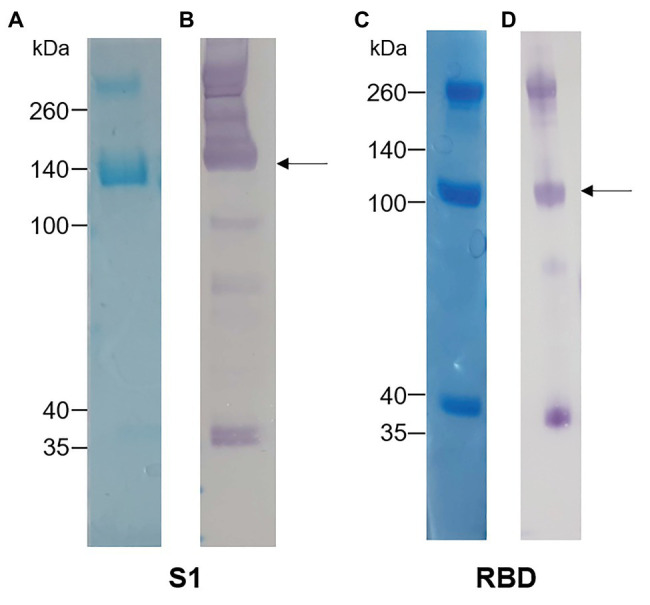
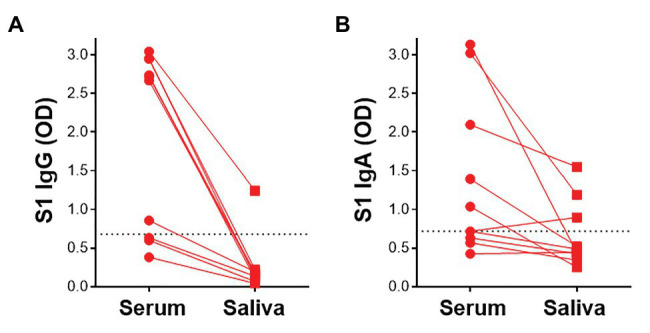
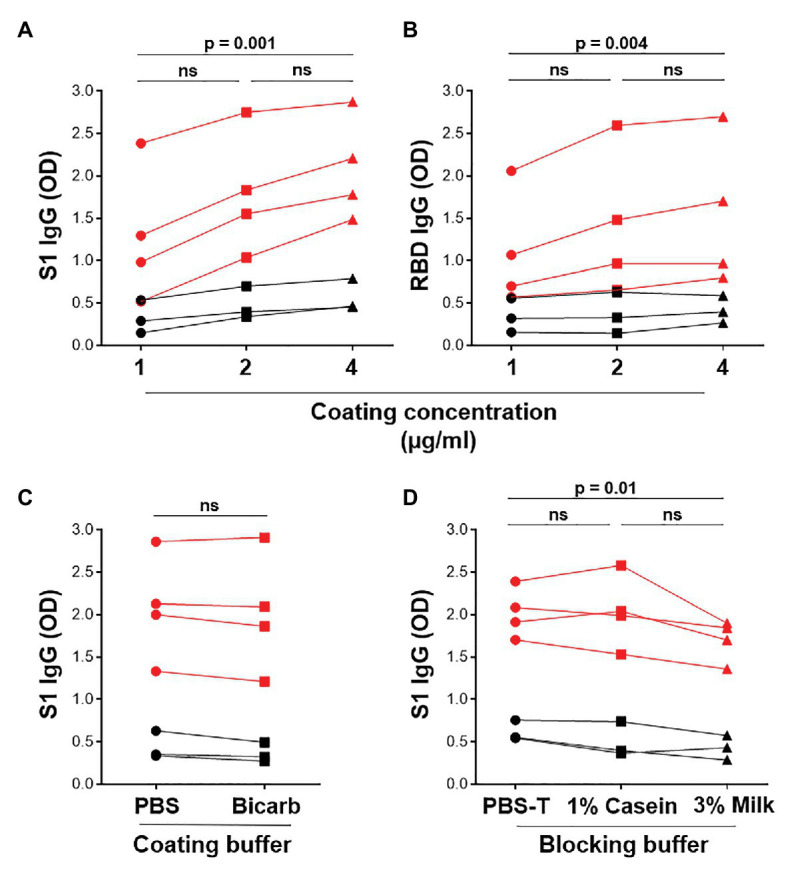
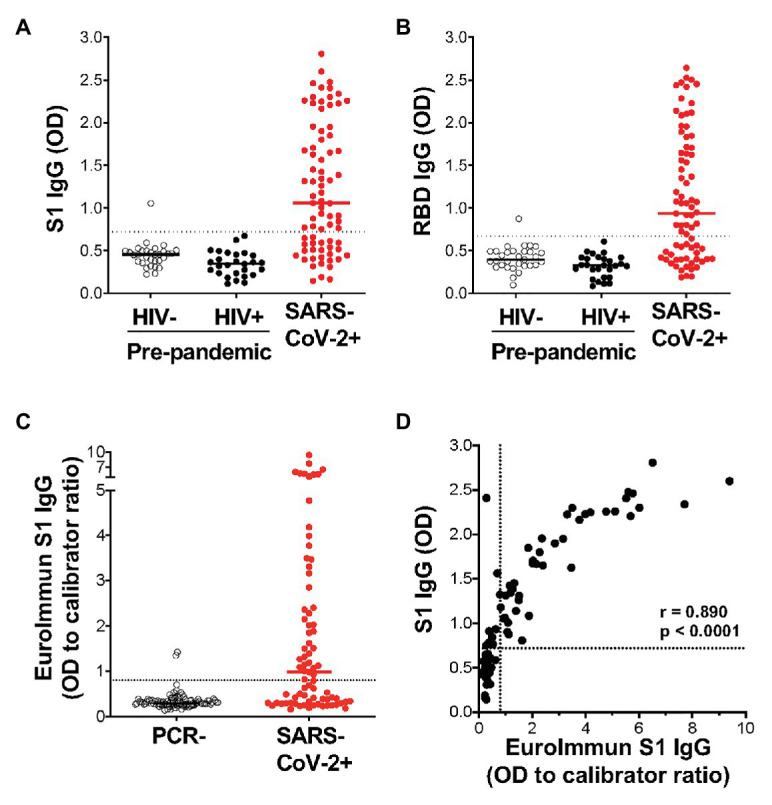
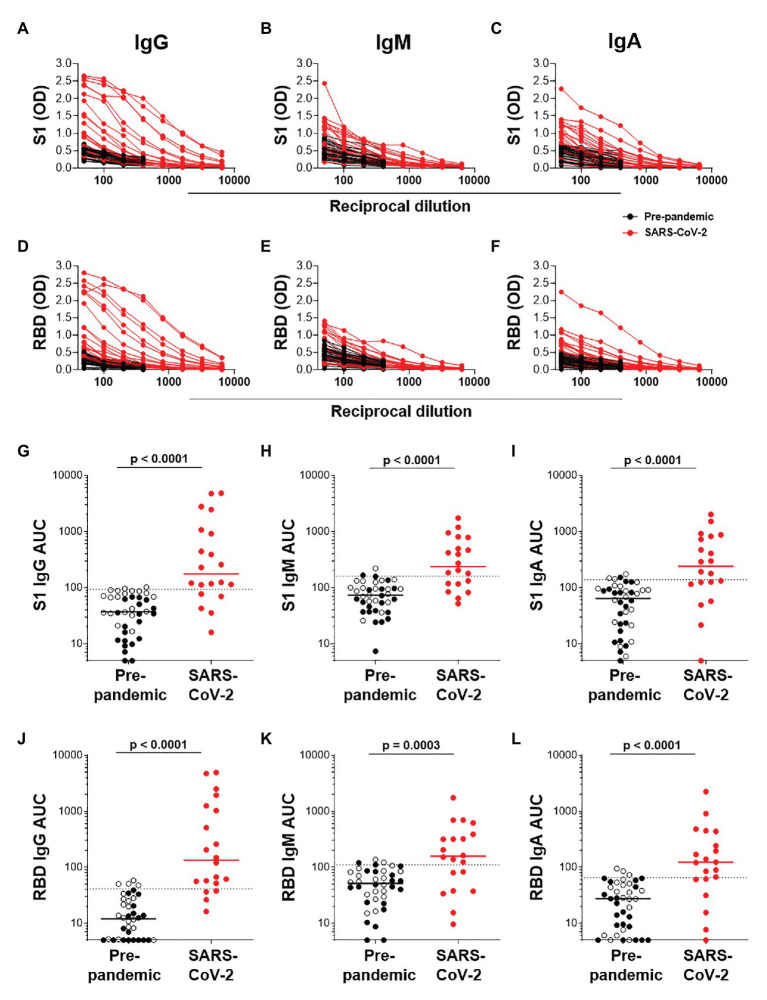
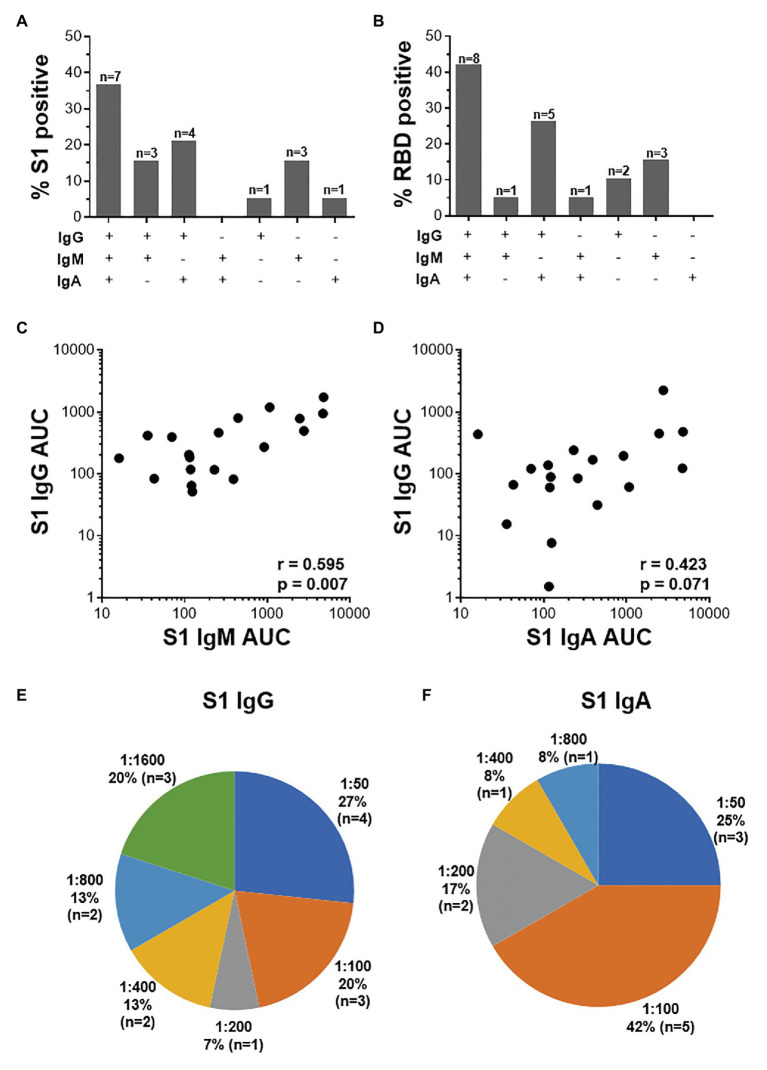
: The severe acute respiratory syndrome coronavirus 2 (SARS-CoV-2) pandemic has swept the world and poses a significant global threat to lives and livelihoods, with 115 million confirmed cases and at least 2.5 million deaths from Coronavirus disease 2019 (COVID-19) in the first year of the pandemic. Developing tools to measure seroprevalence and understand protective immunity to SARS-CoV-2 is a priority. We aimed to develop a serological assay using plant-derived recombinant viral proteins, which represent important tools in less-resourced settings. : We established an indirect ELISA using the S1 and receptor-binding domain (RBD) portions of the spike protein from SARS-CoV-2, expressed in . We measured antibody responses in sera from South African patients ( = 77) who had tested positive by PCR for SARS-CoV-2. Samples were taken a median of 6 weeks after the diagnosis, and the majority of participants had mild and moderate COVID-19 disease. In addition, we tested the reactivity of pre-pandemic plasma ( = 58) and compared the performance of our in-house ELISA with a commercial assay. We also determined whether our assay could detect SARS-CoV-2-specific IgG and IgA in saliva. We demonstrate that SARS-CoV-2-specific immunoglobulins are readily detectable using recombinant plant-derived viral proteins, in patients who tested positive for SARS-CoV-2 by PCR. Reactivity to S1 and RBD was detected in 51 (66%) and 48 (62%) of participants, respectively. Notably, we detected 100% of samples identified as having S1-specific antibodies by a validated, high sensitivity commercial ELISA, and optical density (OD) values were strongly and significantly correlated between the two assays. For the pre-pandemic plasma, 1/58 (1.7%) of samples were positive, indicating a high specificity for SARS-CoV-2 in our ELISA. SARS-CoV-2-specific IgG correlated significantly with IgA and IgM responses. Endpoint titers of S1- and RBD-specific immunoglobulins ranged from 1:50 to 1:3,200. S1-specific IgG and IgA were found in saliva samples from convalescent volunteers. : We demonstrate that recombinant SARS-CoV-2 proteins produced in plants enable robust detection of SARS-CoV-2 humoral responses. This assay can be used for seroepidemiological studies and to measure the strength and durability of antibody responses to SARS-CoV-2 in infected patients in our setting.
严重急性呼吸综合征冠状病毒2(SARS-CoV-2)大流行席卷全球,对生命和生计构成重大全球威胁,在大流行的第一年,2019冠状病毒病(COVID-19)确诊病例达1.15亿例,死亡至少250万例。开发测量血清流行率和了解对SARS-CoV-2的保护性免疫的工具是当务之急。我们旨在开发一种使用植物源重组病毒蛋白的血清学检测方法,这在资源较少的环境中是重要工具。
我们建立了一种间接酶联免疫吸附测定(ELISA),使用在……中表达的SARS-CoV-2刺突蛋白的S1和受体结合域(RBD)部分。我们测量了通过聚合酶链反应(PCR)检测SARS-CoV-2呈阳性的南非患者(n = 77)血清中的抗体反应。样本在诊断后中位数6周采集,大多数参与者患有轻度和中度COVID-19疾病。此外,我们检测了大流行前血浆(n = 58)的反应性,并将我们内部ELISA的性能与一种商业检测方法进行了比较。我们还确定了我们的检测方法是否能检测唾液中SARS-CoV-2特异性IgG和IgA。
我们证明,在通过PCR检测SARS-CoV-2呈阳性的患者中,使用植物源重组病毒蛋白可轻松检测到SARS-CoV-2特异性免疫球蛋白。分别在51名(66%)和48名(62%)参与者中检测到对S1和RBD的反应性。值得注意的是,我们检测到通过一种经过验证的高灵敏度商业ELISA鉴定为具有S1特异性抗体的所有样本,并且两种检测方法之间的光密度(OD)值呈强且显著的相关性。对于大流行前血浆,1/58(1.7%)的样本呈阳性,表明我们的ELISA对SARS-CoV-2具有高特异性。SARS-CoV-2特异性IgG与IgA和IgM反应显著相关。S1和RBD特异性免疫球蛋白的终点滴度范围为1:50至1:3200。在康复志愿者的唾液样本中发现了S1特异性IgG和IgA。
我们证明,植物中产生的重组SARS-CoV-2蛋白能够有力地检测SARS-CoV-2体液反应。该检测方法可用于血清流行病学研究,并用于测量我们环境中感染患者对SARS-CoV-2抗体反应的强度和持久性。