Luo Huaiyong, Guo Jianbin, Yu Bolun, Chen Weigang, Zhang Huan, Zhou Xiaojing, Chen Yuning, Huang Li, Liu Nian, Ren Xiaoping, Yan Liying, Huai Dongxin, Lei Yong, Liao Boshou, Jiang Huifang
Key Laboratory of Biology and Genetic Improvement of Oil Crops, Ministry of Agriculture, Oil Crops Research Institute of the Chinese Academy of Agricultural Sciences, Wuhan, China.
Front Plant Sci. 2021 Mar 18;12:644402. doi: 10.3389/fpls.2021.644402. eCollection 2021.
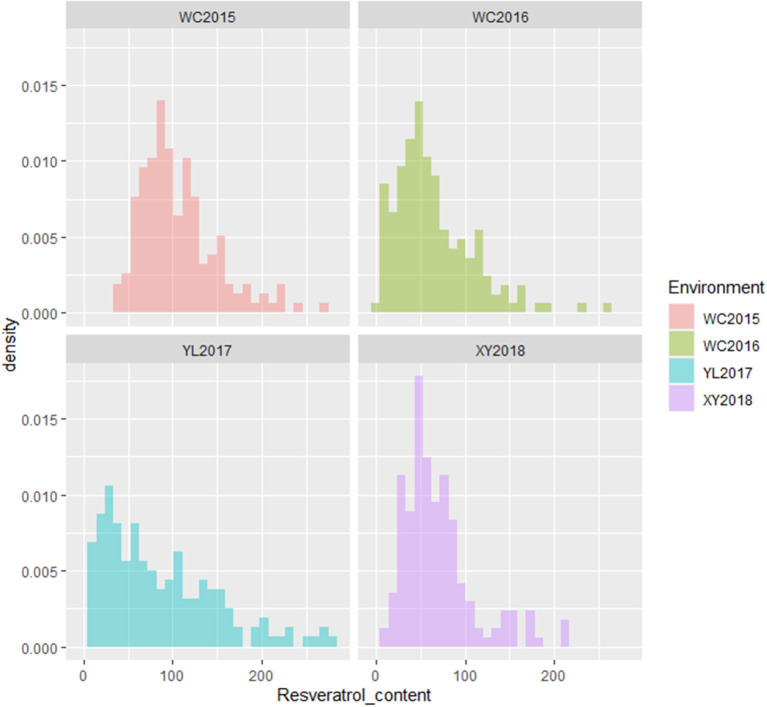
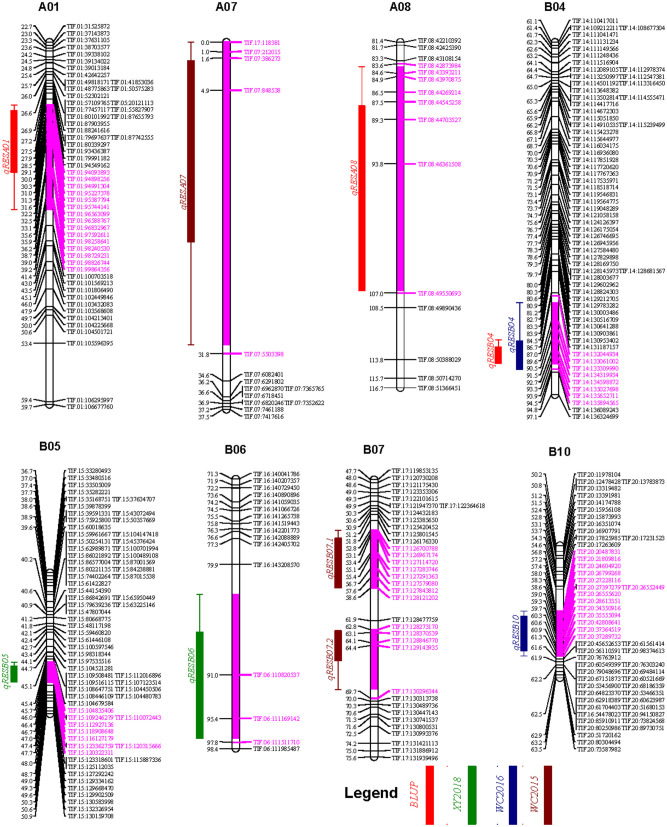
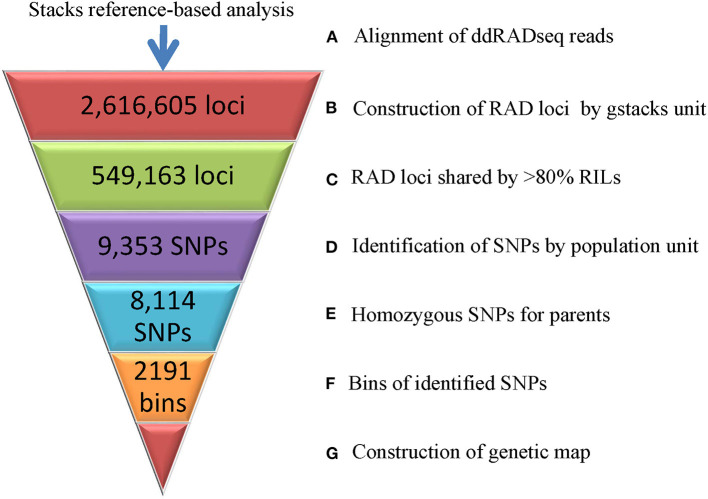
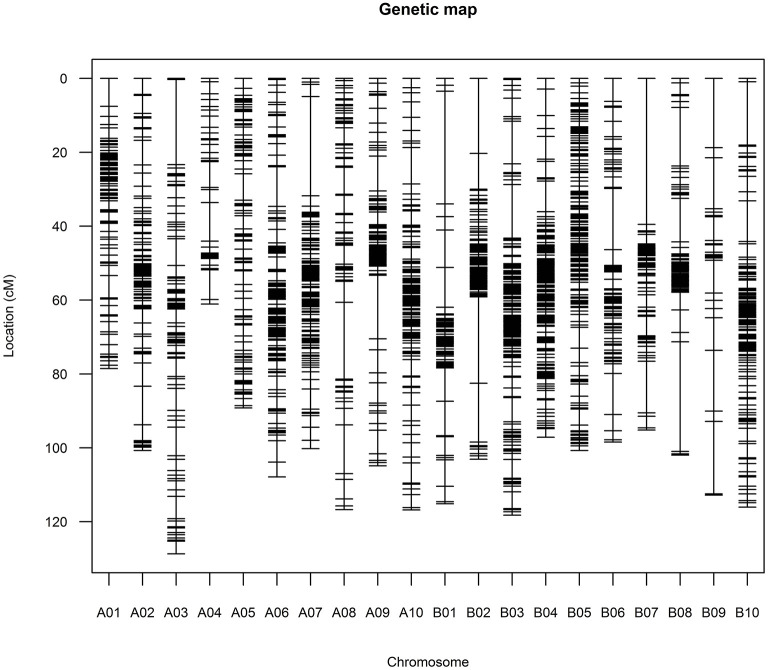
Resveratrol (trans-3,4',5-trihydroxystilbene) is a natural stilbene phytoalexin which is also found to be good for human health. Cultivated peanut ( L.), a worldwide important legume crop, is one of the few sources of human's dietary intake of resveratrol. Although the variations of resveratrol contents among peanut varieties were observed, the variations across environments and its underlying genetic basis were poorly investigated. In this study, the resveratrol content in seeds of a recombination inbred line (RIL) population (Zhonghua 6 × Xuhua 13, 186 progenies) were quantified by high performance liquid chromatography (HPLC) method across four environments. Genotypes, environments and genotype × environment interactions significantly influenced the resveratrol contents in the RIL population. A total of 8,114 high-quality single nucleotide polymorphisms (SNPs) were identified based on double-digest restriction-site-associated DNA sequencing (ddRADseq) reads. These SNPs were clustered into bins using a reference-based method, which facilitated the construction of high-density genetic map (2,183 loci with a total length of 2,063.55 cM) and the discovery of several chromosome translocations. Through composite interval mapping (CIM), nine additive quantitative trait loci (QTL) for resveratrol contents were identified on chromosomes A01, A07, A08, B04, B05, B06, B07, and B10 with 5.07-8.19% phenotypic variations explained (PVE). Putative genes within their confidential intervals might play roles in diverse primary and secondary metabolic processes. These results laid a foundation for the further genetic dissection of resveratrol content as well as the breeding and production of high-resveratrol peanuts.
白藜芦醇(反式 - 3,4',5 - 三羟基二苯乙烯)是一种天然的二苯乙烯类植物抗毒素,也被发现对人体健康有益。栽培花生(Arachis hypogaea L.)是一种全球重要的豆科作物,是人类膳食中白藜芦醇的少数来源之一。虽然已观察到花生品种间白藜芦醇含量存在差异,但对不同环境下的差异及其潜在遗传基础的研究较少。本研究通过高效液相色谱(HPLC)法在四个环境中对重组自交系(RIL)群体(中花6号×徐花13号,186个后代)种子中的白藜芦醇含量进行了定量分析。基因型、环境以及基因型×环境互作对RIL群体中的白藜芦醇含量有显著影响。基于双酶切限制性位点关联DNA测序(ddRADseq) reads共鉴定出8114个高质量单核苷酸多态性(SNP)。这些SNP采用基于参考的方法聚类到bins中,这有助于构建高密度遗传图谱(2183个位点,总长2063.55 cM)并发现了几个染色体易位。通过复合区间作图(CIM),在A01、A07、A08、B04、B05、B06、B07和B10染色体上鉴定出9个控制白藜芦醇含量的加性数量性状位点(QTL),解释的表型变异(PVE)为5.07%至8.19%。其置信区间内的推定基因可能在多种初级和次级代谢过程中发挥作用。这些结果为进一步对白藜芦醇含量进行遗传剖析以及高白藜芦醇花生的育种和生产奠定了基础。