Goldberg Daniel L, Anenberg Susan C, Kerr Gaige Hunter, Mohegh Arash, Lu Zifeng, Streets David G
Department of Environmental and Occupational Health George Washington University Washington DC USA.
Energy Systems Division Argonne National Laboratory Argonne IL USA.
Earths Future. 2021 Apr;9(4):e2020EF001665. doi: 10.1029/2020EF001665. Epub 2021 Apr 2.
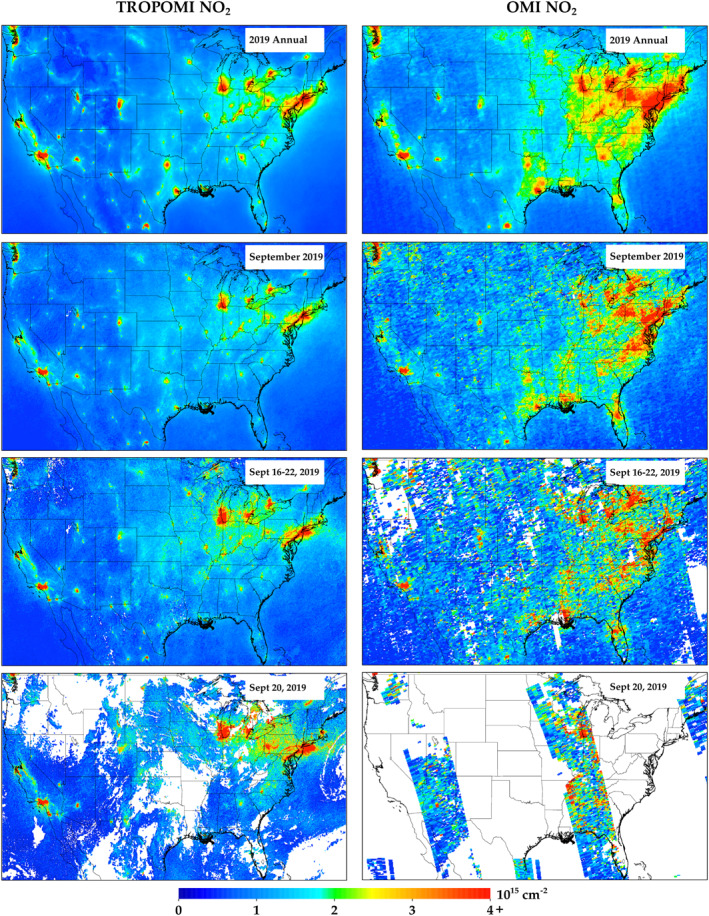
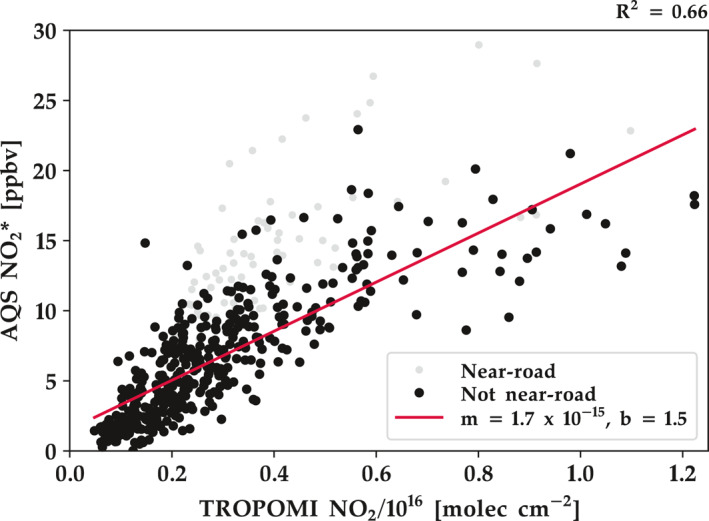
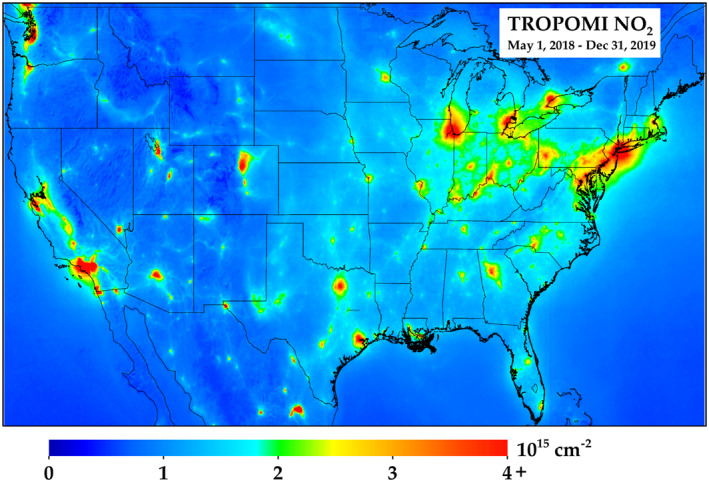
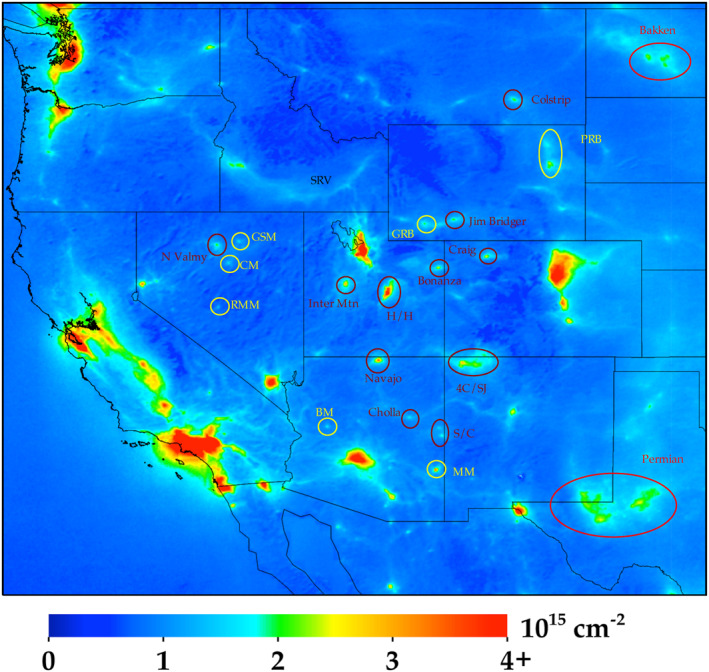
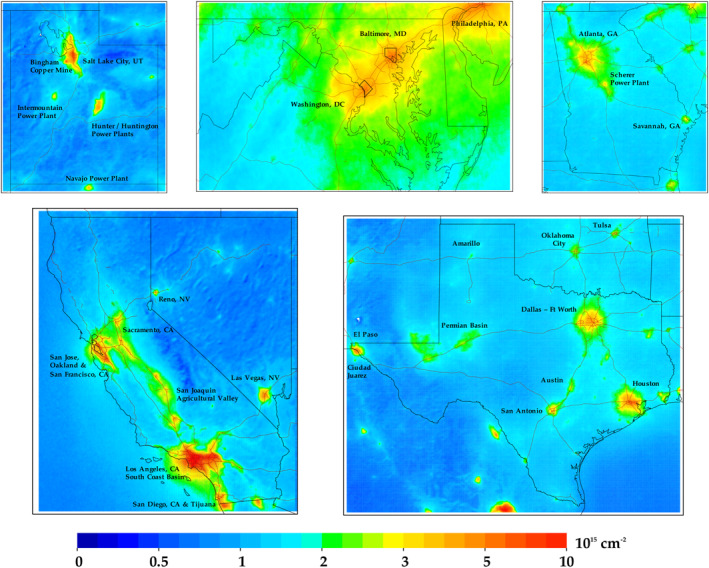
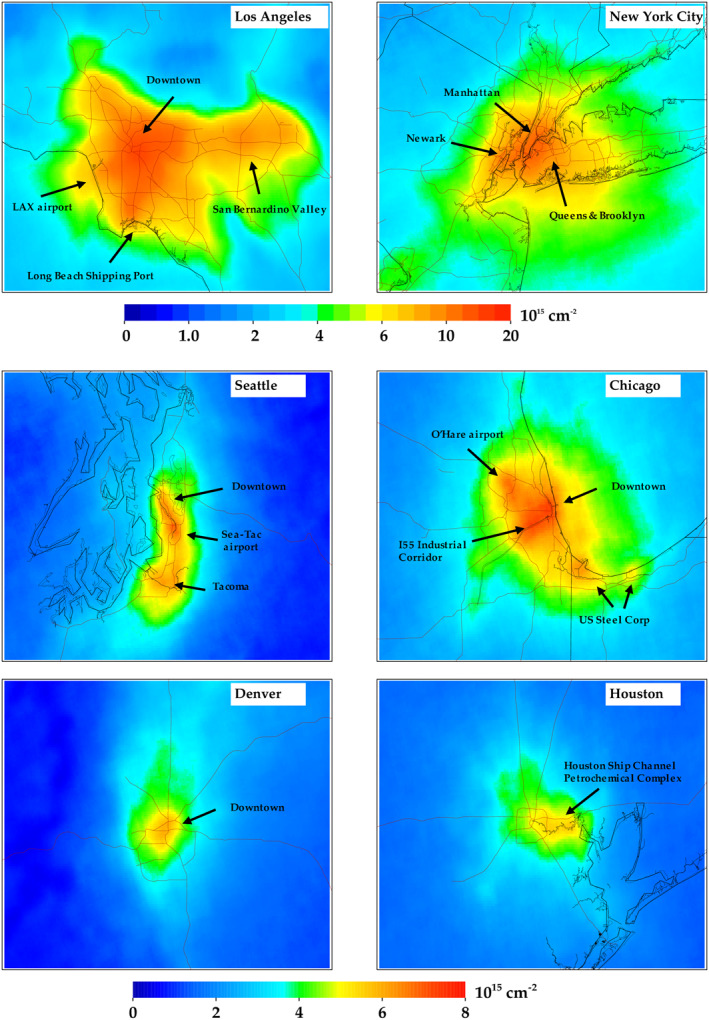
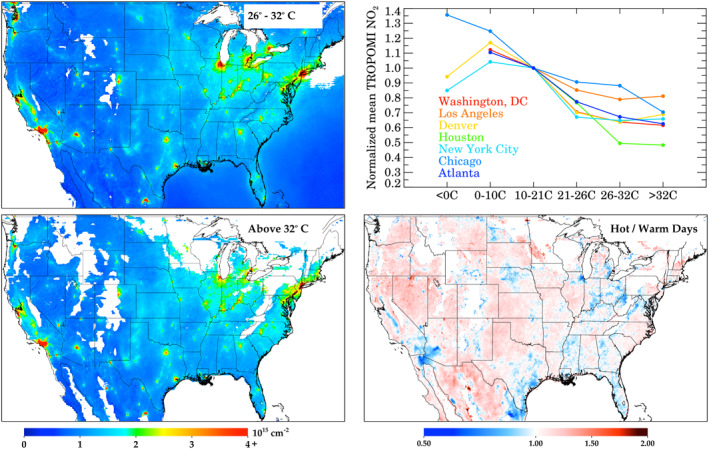
Observing the spatial heterogeneities of NO air pollution is an important first step in quantifying NO emissions and exposures. This study investigates the capabilities of the Tropospheric Monitoring Instrument (TROPOMI) in observing the spatial and temporal patterns of NO pollution in the continental United States. The unprecedented sensitivity of the sensor can differentiate the fine-scale spatial heterogeneities in urban areas, such as emissions related to airport/shipping operations and high traffic, and the relatively small emission sources in rural areas, such as power plants and mining operations. We then examine NO columns by day-of-the-week and find that Saturday and Sunday concentrations are 16% and 24% lower respectively, than during weekdays. We also analyze the correlation of daily maximum 2-m temperatures and NO column amounts and find that NO is larger on the hottest days (>32°C) as compared to warm days (26°C-32°C), which is in contrast to a general decrease in NO with increasing temperature at moderate temperatures. Finally, we demonstrate that a linear regression fit of 2019 annual TROPOMI NO data to annual surface-level concentrations yields relatively strong correlation ( = 0.66). These new developments make TROPOMI NO satellite data advantageous for policymakers and public health officials, who request information at high spatial resolution and short timescales, in order to assess, devise, and evaluate regulations.
观测一氧化氮空气污染的空间异质性是量化一氧化氮排放和暴露的重要第一步。本研究调查了对流层监测仪器(TROPOMI)在美国大陆观测一氧化氮污染的空间和时间模式的能力。该传感器前所未有的灵敏度能够区分城市地区的精细尺度空间异质性,例如与机场/航运运营和高流量交通相关的排放,以及农村地区相对较小的排放源,如发电厂和采矿作业。然后,我们按星期几检查一氧化氮柱总量,发现周六和周日的浓度分别比工作日低16%和24%。我们还分析了每日最高2米温度与一氧化氮柱总量的相关性,发现与温暖天气(26°C - 32°C)相比,在最热的日子(>32°C)一氧化氮含量更高,这与在中等温度下一氧化氮随温度升高而普遍下降的情况相反。最后,我们证明将2019年TROPOMI一氧化氮年度数据与年度地面浓度进行线性回归拟合可得到相对较强的相关性( = 0.66)。这些新进展使TROPOMI一氧化氮卫星数据对政策制定者和公共卫生官员具有优势,他们需要高空间分辨率和短时间尺度的信息,以便评估、制定和评估法规。