Varga Tibor V, Bu Feifei, Dissing Agnete S, Elsenburg Leonie K, Bustamante Joel J Herranz, Matta Joane, van Zon Sander K R, Brouwer Sandra, Bültmann Ute, Fancourt Daisy, Hoeyer Klaus, Goldberg Marcel, Melchior Maria, Strandberg-Larsen Katrine, Zins Marie, Clotworthy Amy, Rod Naja H
Section of Epidemiology, Department of Public Health, University of Copenhagen, Copenhagen, Denmark.
Department of Behavioural Science and Health, University College London, 1-19 Torrington Place, London, WC1E 7HB, UK.
Lancet Reg Health Eur. 2021 Mar;2:100020. doi: 10.1016/j.lanepe.2020.100020.
In response to the COVID-19 pandemic, governments around the world instituted various public-health measures. Our project aimed to highlight the most significant similarities and differences in key mental-health indicators between four Western and Northern European countries, and identify the population subgroups with the poorest mental-health outcomes during the first months of the pandemic.
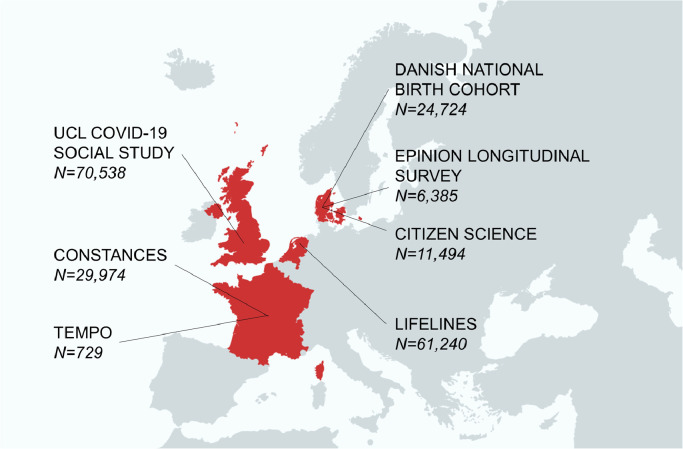
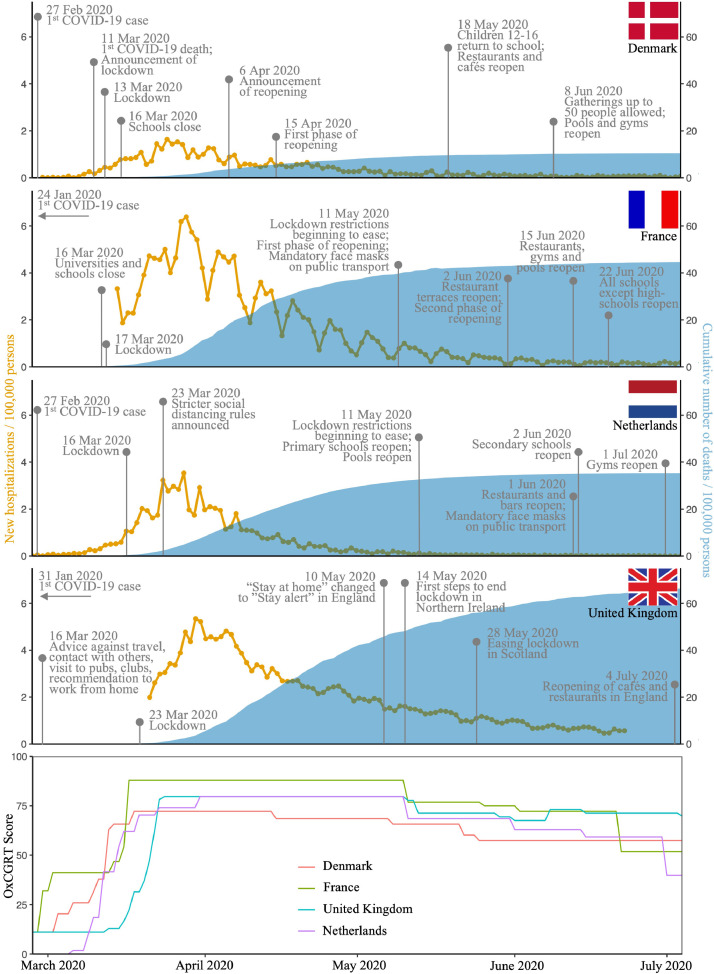
We analysed time-series survey data of 205,084 individuals from seven studies from Denmark, France, the Netherlands, and the UK to assess the impact of the pandemic and associated lockdowns. All analyses focused on the initial lockdown phase (March-July 2020). The main outcomes were loneliness, anxiety, and COVID-19-related worries and precautionary behaviours.
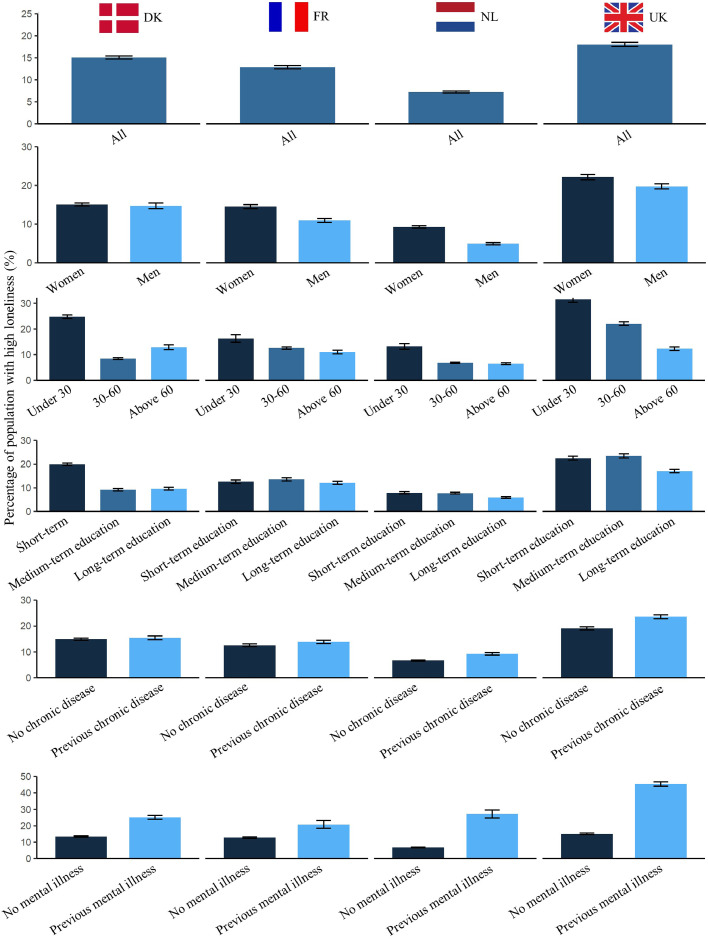
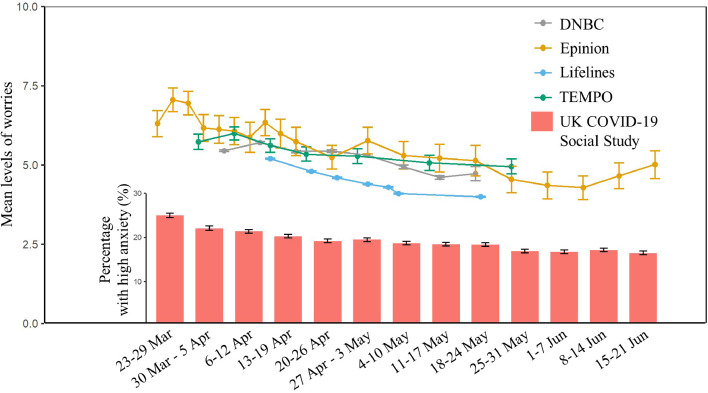
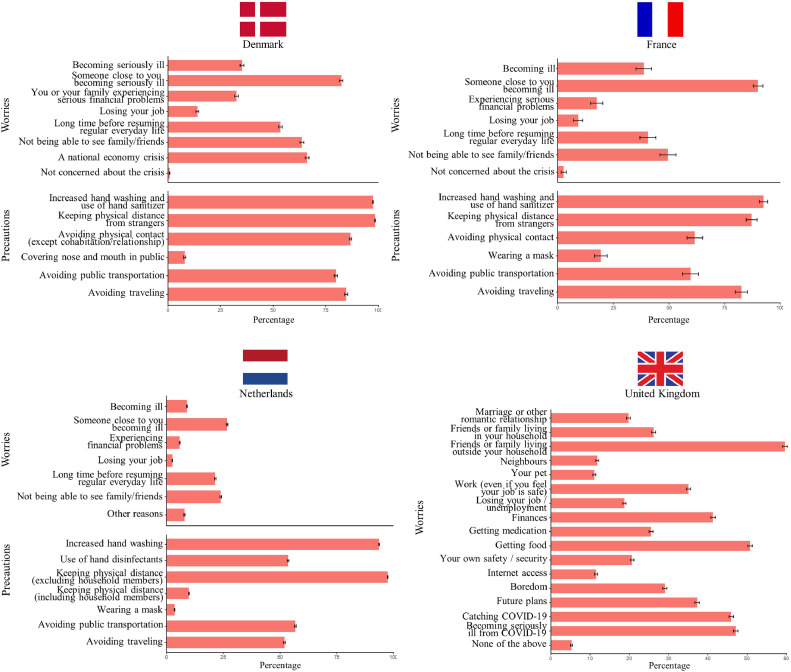
COVID-19-related worries were consistently high in each country but decreased during the gradual reopening phases. While only 7% of the respondents reported high levels of loneliness in the Netherlands, percentages were higher in the rest of the three countries (13-18%). In all four countries, younger individuals and individuals with a history of mental illness expressed the highest levels of loneliness.
The pandemic and associated country lockdowns had a major impact on the mental health of populations, and certain subgroups should be closely followed to prevent negative long-term consequences. Younger individuals and individuals with a history of mental illness would benefit from tailored public-health interventions to prevent or counteract the negative effects of the pandemic. Individuals across Western and Northern Europe have thus far responded in psychologically similar ways despite differences in government approaches to the pandemic.
See the Funding section.
为应对新冠疫情,世界各国政府采取了各种公共卫生措施。我们的项目旨在突出四个西北欧国家在关键心理健康指标方面最显著的异同,并确定在疫情最初几个月中心理健康状况最差的人群亚组。
我们分析了来自丹麦、法国、荷兰和英国的七项研究中205,084名个体的时间序列调查数据,以评估疫情及相关封锁措施的影响。所有分析都集中在最初的封锁阶段(2020年3月至7月)。主要结果包括孤独感、焦虑以及与新冠疫情相关的担忧和预防行为。
每个国家与新冠疫情相关的担忧一直居高不下,但在逐步解封阶段有所下降。在荷兰,只有7%的受访者表示孤独感强烈,而在其他三个国家这一比例更高(13%-18%)。在所有四个国家中,年轻人和有精神疾病史的人孤独感最强。
疫情及相关的国家封锁措施对民众心理健康产生了重大影响,应密切关注某些亚组人群,以防止产生负面的长期后果。年轻人和有精神疾病史的人将受益于量身定制的公共卫生干预措施,以预防或抵消疫情的负面影响。尽管各国政府应对疫情的方式存在差异,但到目前为止,西北欧各国的民众在心理上的反应方式相似。
见资金来源部分。