Sano Emi, Deguchi Sayaka, Sakamoto Ayaka, Mimura Natsumi, Hirabayashi Ai, Muramoto Yukiko, Noda Takeshi, Yamamoto Takuya, Takayama Kazuo
Center for iPS Cell Research and Application (CiRA), Kyoto University, Shogoin Kawaharacho 53, Sakyo-ku, Kyoto 606-8507, Japan.
Laboratory of Ultrastructural Virology, Institute for Frontier Life and Medical Sciences, Kyoto University, Kyoto 606-8507, Japan.
iScience. 2021 May 21;24(5):102428. doi: 10.1016/j.isci.2021.102428. Epub 2021 Apr 16.
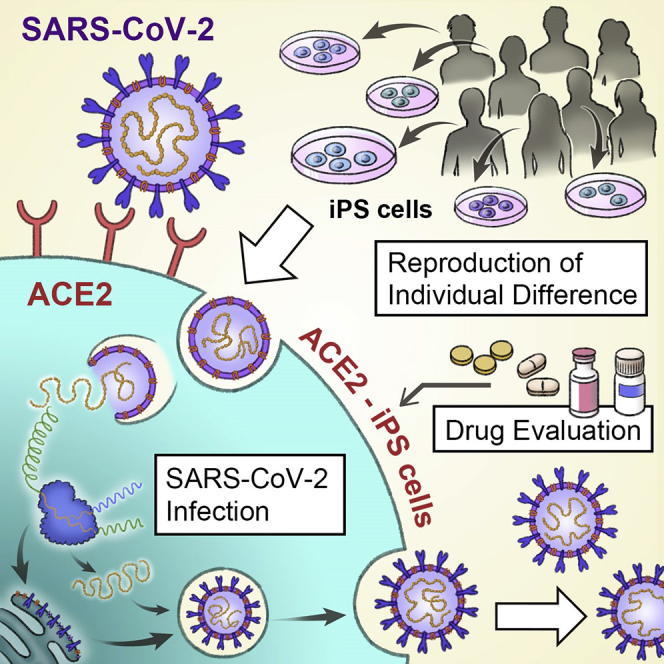
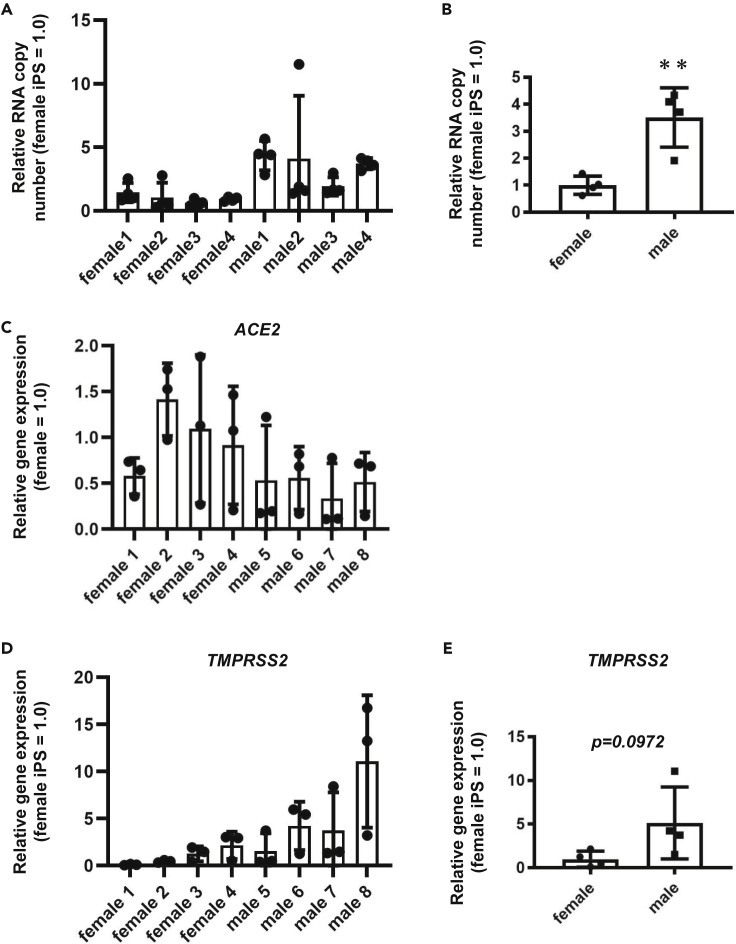
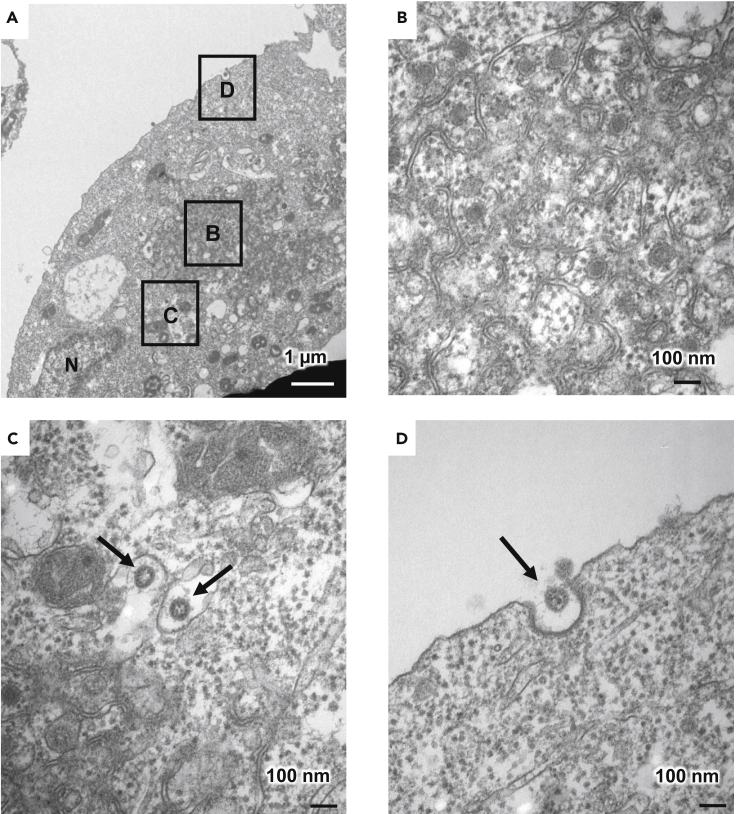
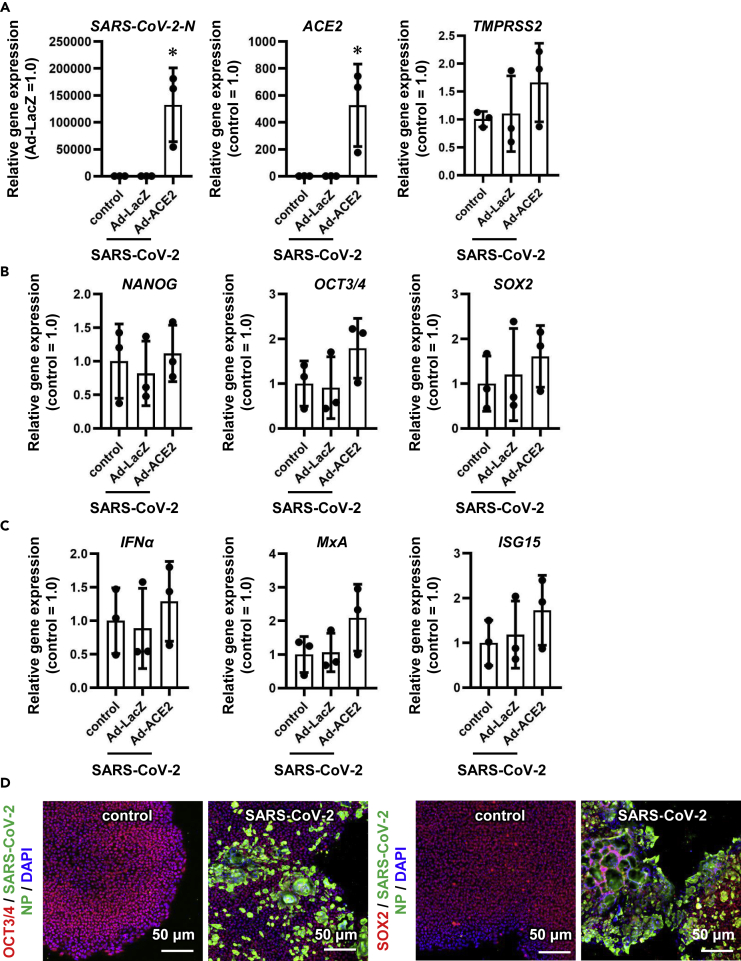
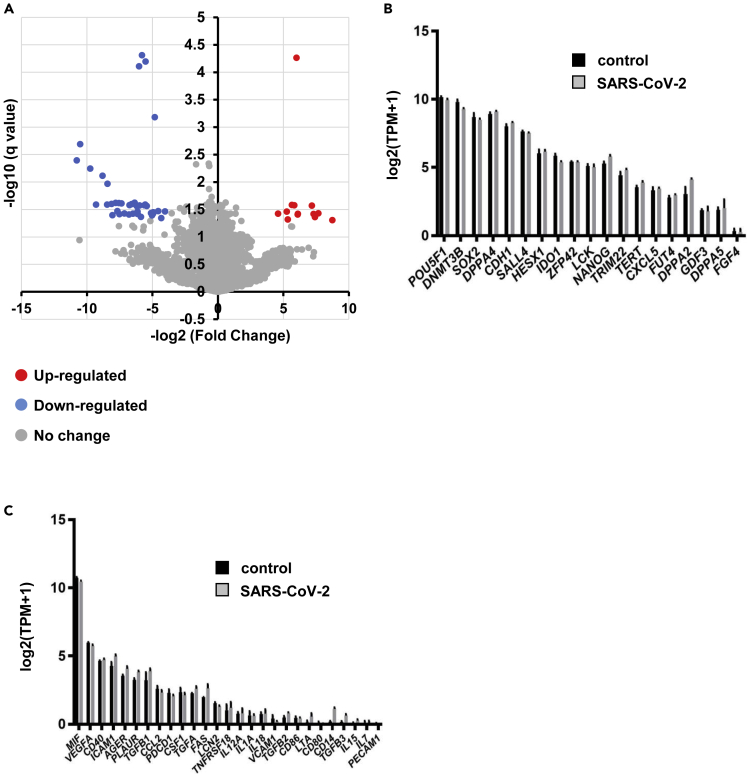
Genetic differences are a primary reason for differences in the susceptibility and severity of COVID-19. As induced pluripotent stem (iPS) cells maintain the genetic information of the donor, they can be used to model individual differences in SARS-CoV-2 infection . We found that human iPS cells expressing the SARS-CoV-2 receptor angiotensin-converting enzyme 2 (ACE2) (ACE2-iPS cells) can be infected w SARS-CoV-2. In infected ACE2-iPS cells, the expression of SARS-CoV-2 nucleocapsid protein, budding of viral particles, and production of progeny virus, double membrane spherules, and double-membrane vesicles were confirmed. We performed SARS-CoV-2 infection experiments on ACE2-iPS/ embryonic stem (ES) cells from eight individuals. Male iPS/ES cells were more capable of producing the virus compared with female iPS/ES cells. These findings suggest that ACE2-iPS cells can not only reproduce individual differences in SARS-CoV-2 infection but also are a useful resource to clarify the causes of individual differences in COVID-19 due to genetic differences.
基因差异是导致新冠病毒易感性和严重程度存在差异的主要原因。由于诱导多能干细胞(iPS细胞)保留了供体的遗传信息,它们可用于模拟个体在感染严重急性呼吸综合征冠状病毒2(SARS-CoV-2)方面的差异。我们发现,表达SARS-CoV-2受体血管紧张素转换酶2(ACE2)的人iPS细胞(ACE2-iPS细胞)可被SARS-CoV-2感染。在受感染的ACE2-iPS细胞中,证实了SARS-CoV-2核衣壳蛋白的表达、病毒颗粒的出芽以及子代病毒、双膜小球和双膜囊泡的产生。我们对来自8名个体的ACE2-iPS/胚胎干细胞(ES细胞)进行了SARS-CoV-2感染实验。与雌性iPS/ES细胞相比,雄性iPS/ES细胞产生病毒的能力更强。这些发现表明,ACE2-iPS细胞不仅可以再现个体在SARS-CoV--2感染方面的差异,而且是阐明由于基因差异导致的新冠病毒个体差异原因的有用资源。