Prenatal Diagnostic Center and Cord Blood Bank, Guangzhou Women and Children's Medical Center, Guangzhou Medical University, Guangzhou, China.
Department of Medicine, the University of Hong Kong, Hong Kong SAR, China.
Theranostics. 2021 Jan 1;11(5):2170-2181. doi: 10.7150/thno.53136. eCollection 2021.
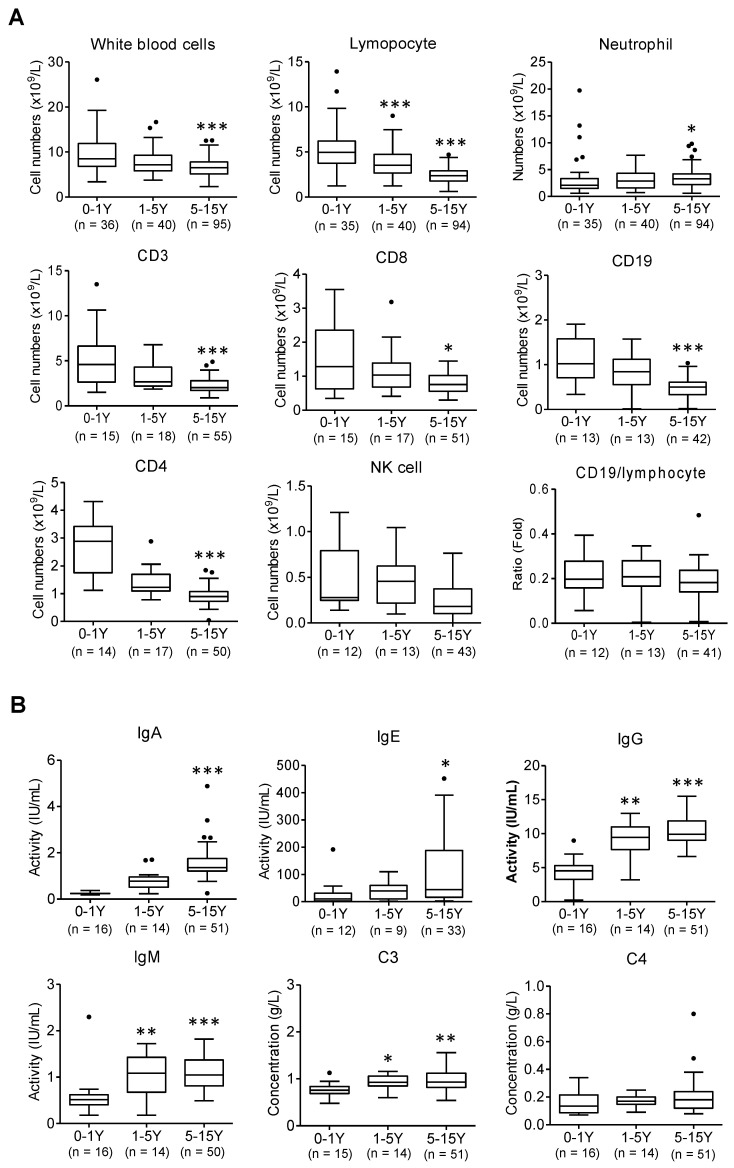
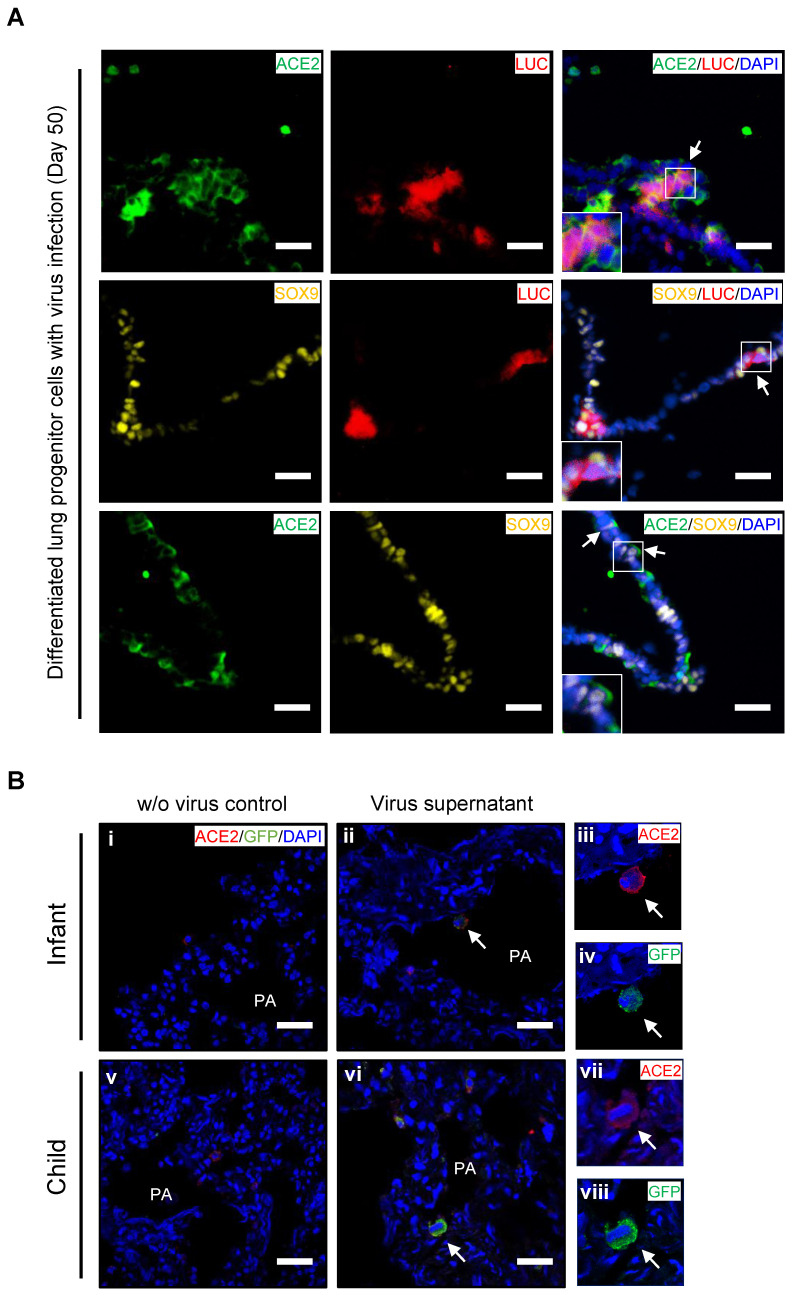
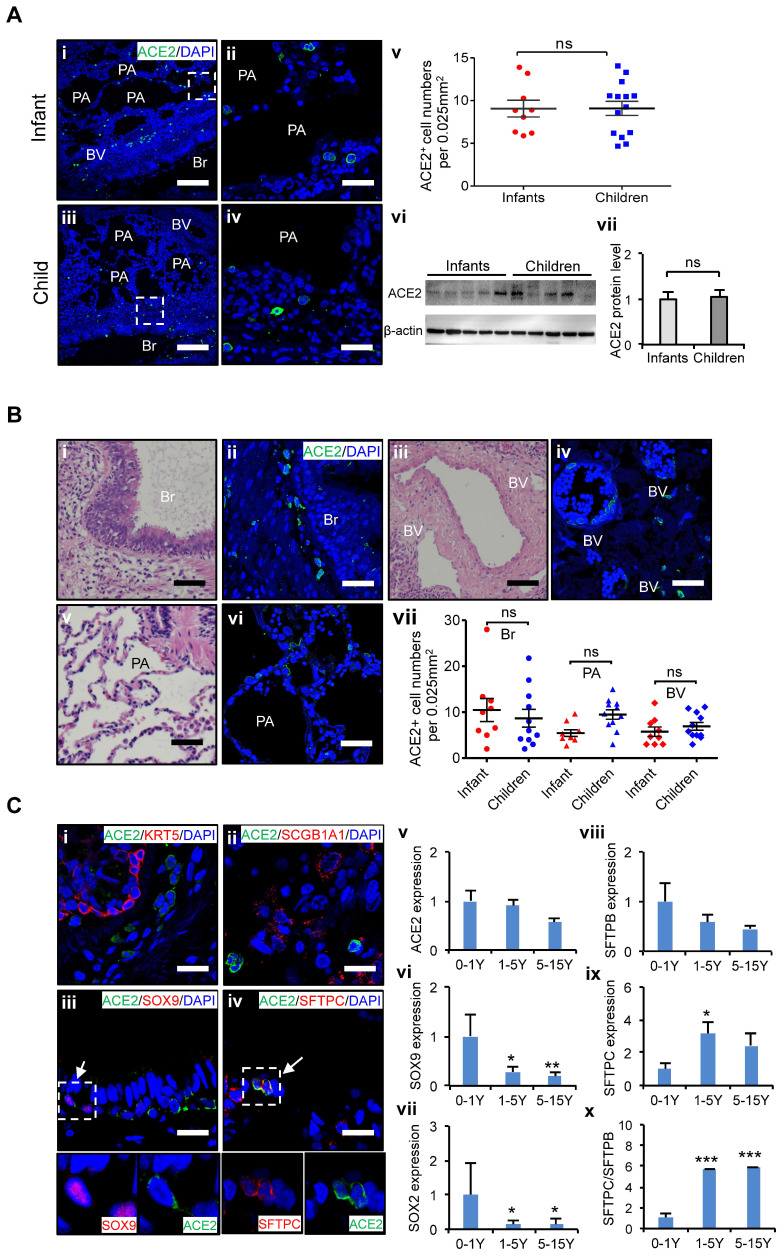
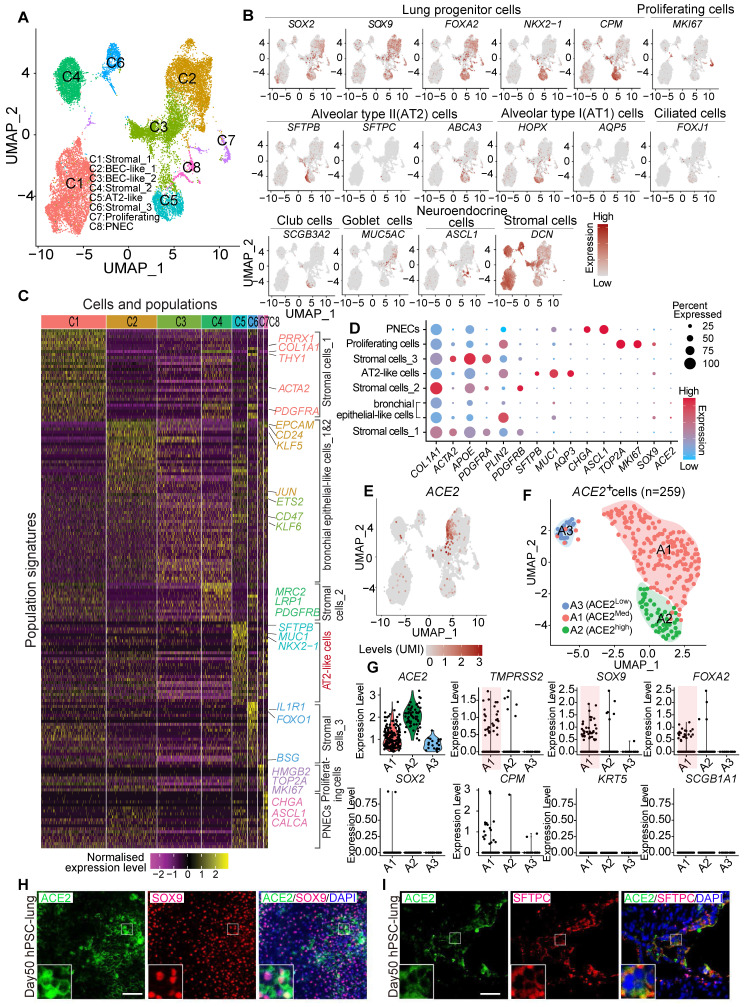
An increasing number of children with severe coronavirus disease 2019 (COVID-19) is being reported, yet the spectrum of disease severity and expression patterns of angiotensin-converting enzyme 2 (ACE2) in children at different developmental stages are largely unknow. We analysed clinical features in a cohort of 173 children with COVID-19 (0-15 yrs.-old) between January 22, 2020 and March 15, 2020. We systematically examined the expression and distribution of in different developmental stages of children by using a combination of children's lung biopsies, pluripotent stem cell-derived lung cells, RNA-sequencing profiles, and SARS-CoV-2 pseudoviral infections. It revealed that infants (< 1yrs.-old), with a weaker potency of immune response, are more vulnerable to develop pneumonia whereas older children (> 1 yrs.-old) are more resistant to lung injury. The expression levels of however do not vary by age in children's lung. is notably expressed not only in Alveolar Type II (AT II) cells, but also in positive lung progenitor cells detected in both pluripotent stem cell derivatives and infants' lungs. The cells are readily infected by SARS-CoV-2 pseudovirus and the numbers of the double positive cells are significantly decreased in older children. Infants (< 1 yrs.-old) with SARS-CoV-2 infection are more vulnerable to lung injuries. expression in multiple types of lung cells including positive progenitor cells, in cooperation with an unestablished immune system, could be risk factors contributing to vulnerability of infants with COVID-19. There is a need to continue monitoring lung development in young children who have recovered from SARS-CoV-2 infection.
越来越多患有严重 2019 冠状病毒病(COVID-19)的儿童被报告,然而不同发育阶段儿童的疾病严重程度谱和血管紧张素转换酶 2(ACE2)的表达模式在很大程度上尚不清楚。我们分析了 2020 年 1 月 22 日至 2020 年 3 月 15 日期间 173 名 COVID-19 患儿(0-15 岁)的临床特征。我们使用儿童肺活检、多能干细胞衍生的肺细胞、RNA 测序谱和 SARS-CoV-2 假病毒感染的组合,系统地检查了不同发育阶段儿童中 的表达和分布。结果表明,免疫反应能力较弱的婴儿(<1 岁)更容易发展为肺炎,而年龄较大的儿童(>1 岁)对肺损伤的抵抗力更强。然而,儿童肺中的 表达水平不因年龄而异。不仅在肺泡 II 型(AT II)细胞中,而且在多能干细胞衍生物和婴儿肺中检测到的阳性肺祖细胞中也明显表达。这些细胞很容易被 SARS-CoV-2 假病毒感染,并且在年龄较大的儿童中双阳性细胞的数量显著减少。感染 SARS-CoV-2 的婴儿(<1 岁)更容易发生肺损伤。多种类型的肺细胞(包括阳性祖细胞)中的 表达,与未建立的免疫系统合作,可能是导致 COVID-19 婴儿易受感染的危险因素。需要继续监测从 SARS-CoV-2 感染中康复的幼儿的肺部发育情况。