Philips Institute for Oral Health Research, Virginia Commonwealth University School of Dentistry, Richmond, VA, 23298, USA.
Department of Internal Medicine, Section on Molecular Medicine, Wake Forest School of Medicine, Medical Center Boulevard, Winston-Salem, NC, 27157, USA.
Metabolomics. 2021 Apr 23;17(5):44. doi: 10.1007/s11306-021-01795-2.
Manganese is important for the endocarditis pathogen Streptococcus sanguinis. Little is known about why manganese is required for virulence or how it impacts the metabolome of streptococci.
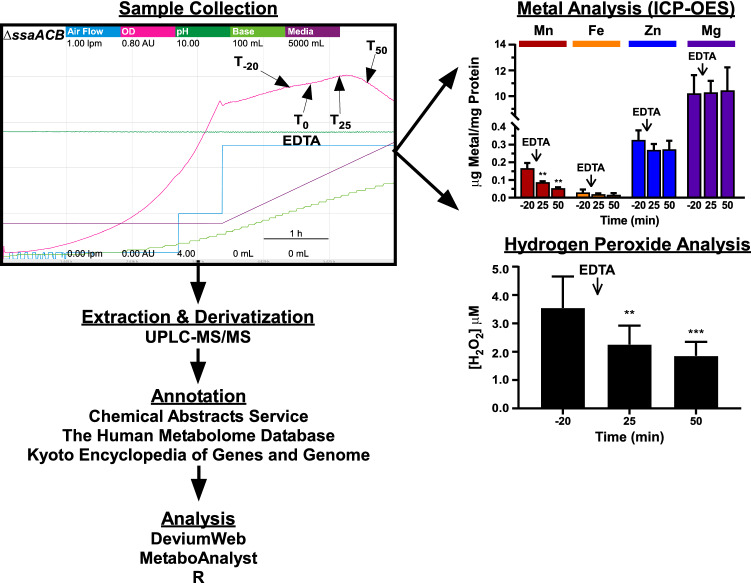
We applied untargeted metabolomics to cells and media to understand temporal changes resulting from manganese depletion.
EDTA was added to a S. sanguinis manganese-transporter mutant in aerobic fermentor conditions. Cell and media samples were collected pre- and post-EDTA treatment. Metabolomics data were generated using positive and negative modes of data acquisition on an LC-MS/MS system. Data were subjected to statistical processing using MetaboAnalyst and time-course analysis using Short Time series Expression Miner (STEM). Recombinant enzymes were assayed for metal dependence.
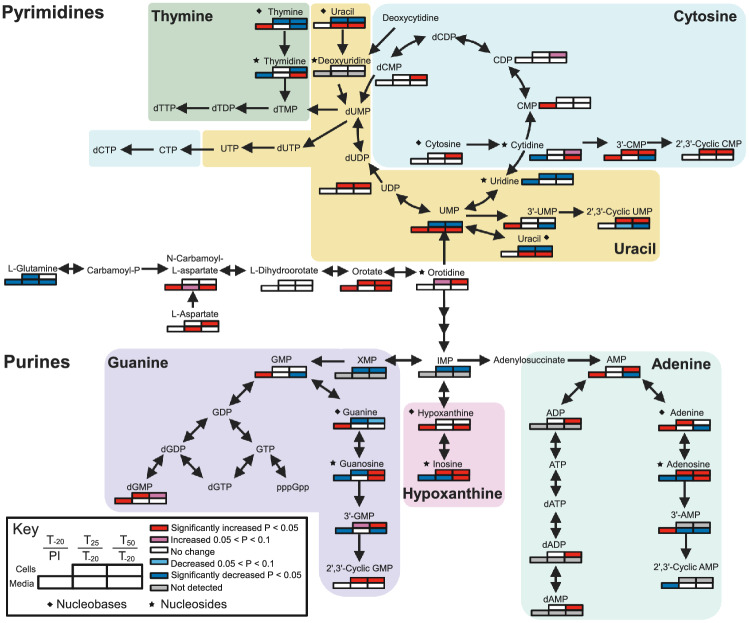
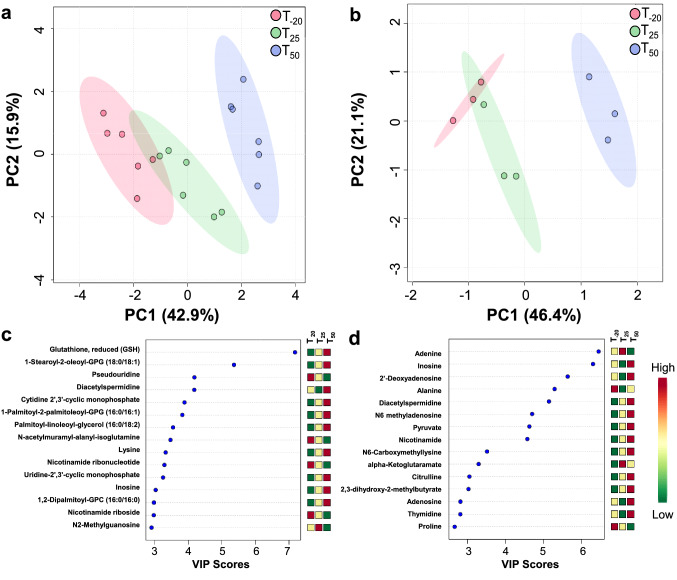
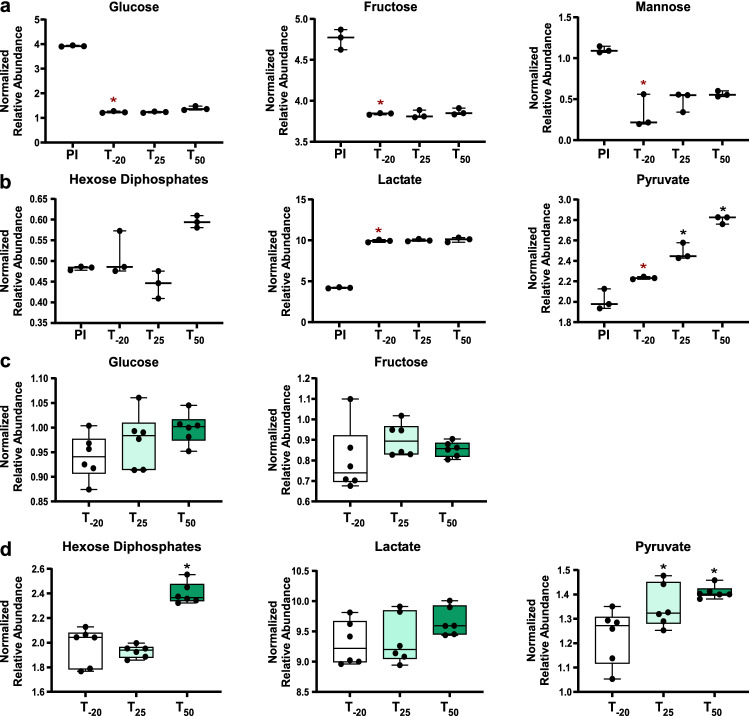
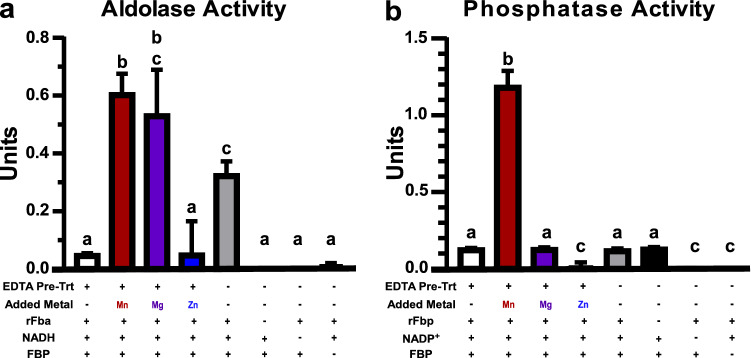
We observed quantitative changes in 534 and 422 metabolites in cells and media, respectively, after EDTA addition. The 173 cellular metabolites identified as significantly different indicated enrichment of purine and pyrimidine metabolism. Further multivariate analysis revealed that the top 15 cellular metabolites belonged primarily to lipids and redox metabolites. The STEM analysis revealed global changes in cells and media in comparable metabolic pathways. Glycolytic intermediates such as fructose-1,6-bisphosphate increased, suggesting that enzymes that utilize them require manganese for activity or expression. Recombinant enzymes were confirmed to utilize manganese in vitro. Nucleosides accumulated, possibly due to a blockage in conversion to nucleobases resulting from manganese-dependent regulation.
Differential analysis of metabolites revealed the activation of a number of metabolic pathways in response to manganese depletion, many of which are connected to carbon catabolite repression.
锰对于心内膜炎病原体血链球菌至关重要。然而,目前对于锰为何是毒力所必需的,以及它如何影响链球菌的代谢组,人们知之甚少。
我们应用非靶向代谢组学方法研究细胞和培养基,以了解锰耗竭导致的时间变化。
在有氧发酵罐条件下,向血链球菌锰转运体突变株中添加 EDTA。在 EDTA 处理前后收集细胞和培养基样本。使用 LC-MS/MS 系统的正、负离子模式采集代谢组学数据。使用 MetaboAnalyst 进行统计处理,使用 Short Time series Expression Miner(STEM)进行时间序列分析。对重组酶进行金属依赖性测定。
我们观察到 EDTA 添加后细胞和培养基中分别有 534 种和 422 种代谢物发生了定量变化。鉴定出的 173 种细胞代谢物表明嘌呤和嘧啶代谢明显富集。进一步的多元分析显示,前 15 种细胞代谢物主要属于脂质和氧化还原代谢物。STEM 分析显示细胞和培养基中在可比代谢途径中存在全局变化。糖酵解中间产物如果糖-1,6-二磷酸增加,这表明需要锰才能发挥活性或表达的利用它们的酶。重组酶在体外被证实利用锰。核苷积累,可能是由于锰依赖性调节导致向核苷碱基的转化受阻。
代谢物的差异分析揭示了锰耗竭后许多代谢途径的激活,其中许多与碳分解代谢阻遏有关。