Naik Charudatta, Srinath N, Ranganath Mahesh Kumar, Umashankar D N, Gupta Himani
Department of Oral and Maxillofacial Surgery, Krishnadevaraya College of Dental Sciences, Bengaluru, Karnataka, India.
Department of Periodontics, Krishnadevaraya College of Dental Sciences, Bengaluru, Karnataka, India.
Natl J Maxillofac Surg. 2020 Jul-Dec;11(2):207-212. doi: 10.4103/njms.NJMS_35_20. Epub 2020 Dec 16.
This study was carried out to assess bone regeneration following the use of polycaprolactone (PCL) scaffold in maxillary and mandibular osseous defects.
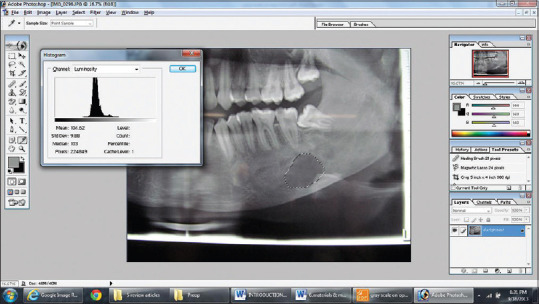
This prospective study included ten patients with maxillary or mandibular osseous defects present due to enucleation of periapical cysts or alveolar clefts requiring bone grafting and for lateral ridge augmentation that were treated with PCL scaffold. The patients were assessed clinically for pain, swelling, infection, and graft exposure at 1 week, 3, and 5 month postoperatively and were also evaluated radiographically for bone fill using intraoral periapical and/or panoramic radiographs at 4, 6, and 9 month postoperatively.
PCL scaffold was used in a total of six alveolar clefts and three cases of periapical cysts and one case of lateral ridge augmentation. Nine out of ten cases demonstrated wound dehiscence and scaffold exposure in the oral cavity. Radiographically, on comparison to the control regions, all these nine cases failed to demonstrate appreciable bone density gain. Only one case of radicular cyst in the mandible was recorded to have satisfactory healing.
Although PCL scaffold has the potential for bone regeneration in osseous defects, the scaffold exhibited marked tendency for dehiscence in intraoral defects that significantly affected bone healing. A long-term study designed with a larger sample size and categorization of the defects is required to assess its efficacy in varied defects. Moreover, comparative evaluation of PCL and autogenous or alloplastic bone grafting material could provide assenting results.
本研究旨在评估聚己内酯(PCL)支架在上颌和下颌骨缺损后的骨再生情况。
这项前瞻性研究纳入了10例因根尖囊肿摘除或牙槽裂而存在上颌或下颌骨缺损、需要骨移植以及进行侧方牙槽嵴增高术的患者,他们接受了PCL支架治疗。术后1周、3个月和5个月对患者进行临床评估,包括疼痛、肿胀、感染和移植材料暴露情况,术后4个月、6个月和9个月还使用口腔根尖片和/或全景片进行影像学评估,以观察骨填充情况。
PCL支架共用于6例牙槽裂、3例根尖囊肿和1例侧方牙槽嵴增高术。10例中有9例出现伤口裂开和口腔内支架暴露。影像学检查显示,与对照区域相比,这9例均未显示出明显的骨密度增加。仅1例下颌根端囊肿愈合情况良好。
尽管PCL支架在骨缺损中有促进骨再生的潜力,但该支架在口腔内缺损处有明显的裂开倾向,这显著影响了骨愈合。需要设计一项样本量更大且对缺损进行分类的长期研究,以评估其在不同缺损中的疗效。此外,对PCL与自体或异体骨移植材料进行比较评估可能会得出一致的结果。