Habebo Teshome Tesfaye, Pooyan Ebrahim Jaafari, Mosadeghrad Ali Mohammad, Babore Getachew Ossabo, Dessu Blen Kassahun
Tehran University of Medical Sciences, international campus (TUMS-IC), Tehran, Iran.
School of Public Health, Tehran University of Medical Sciences (TUMS), Tehran, Iran.
Ethiop J Health Sci. 2020 Jul 1;30(4):623-638. doi: 10.4314/ejhs.v30i4.18.
Diabetes has no cure so far, but appropriate self-management contributes to delay or control its progression. However, poor self-management by diabetic patients adds to disease burden. The pooled prevalence of overall, and its main components of poor self-management among Ethiopian diabetic patients remain elusive. Hence, this study aimed to determine the prevalence of poor diabetes self-management behaviors among diabetic patients in Ethiopia.
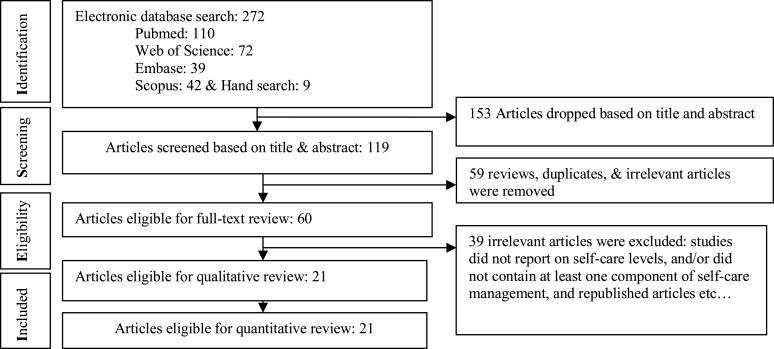
by using different combinations of search terms, we accessed articles done until February 15, 2020 through Pubmed, Scopus, Web of Science and Embase databases. Newcastle-Ottawa quality assessment scale was used for quality assessment, and STATA version 14 software along with the random-effects model was employed for statistical analyses. The Preferred Reporting Items for Systematic Reviews and Meta-Analyses (PRISMA.) guideline was followed to report the results.
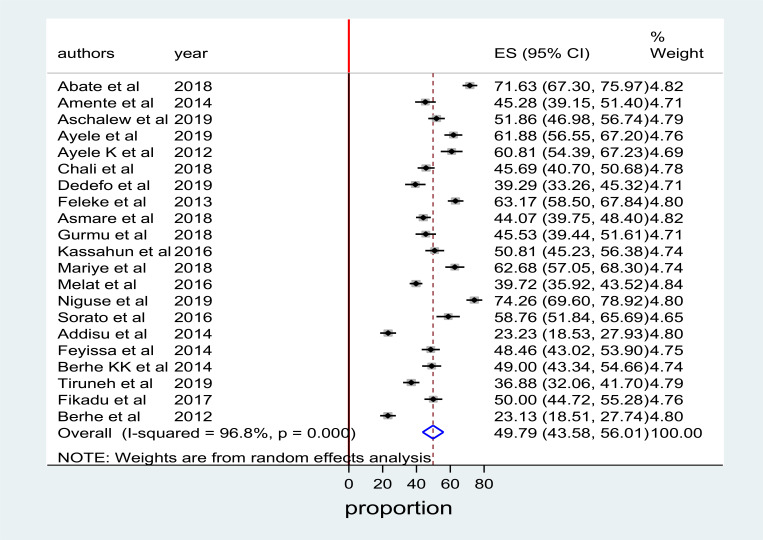
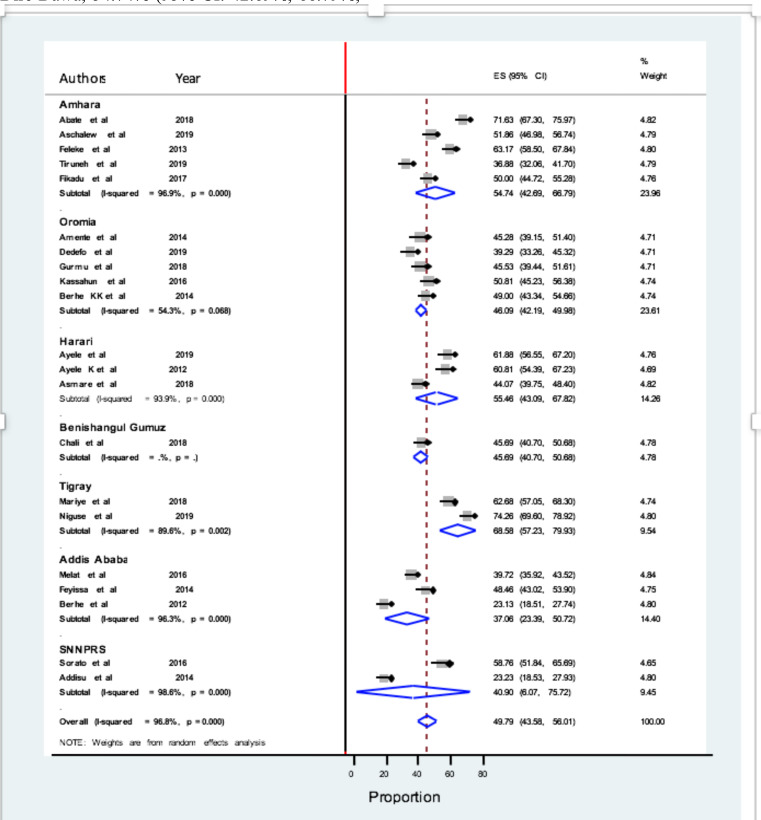
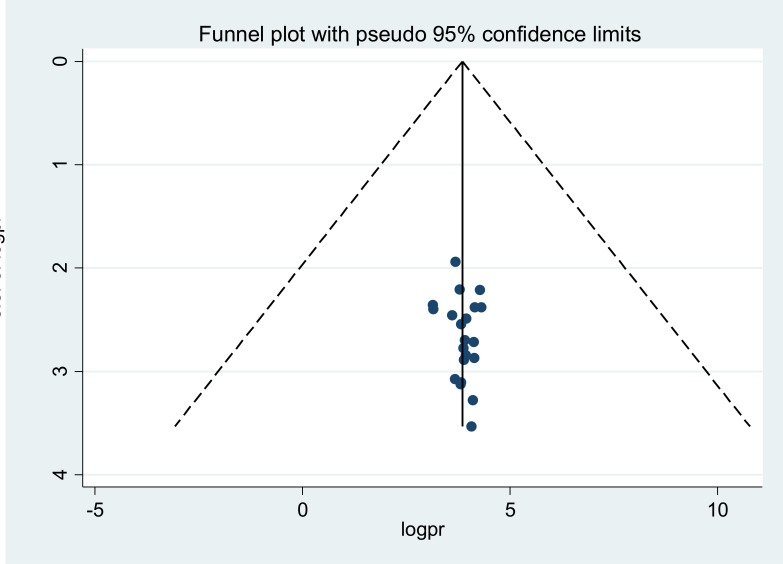
Twenty-one studies with 7,168 participants were included in this meta-analysis. The overall pooled prevalence of poor self-management behavior among diabetic patients in Ethiopia was 49.79% (95% CI: 43.58%, 56.01%). Based on subgroup analysis, the estimated magnitudes of poor self-management by regions were 68.58% in Tigray, 55.46% in Harari, 54.74%, in Amhara, 40.90%, in SNNPRS and 37.06% in Addis Ababa. The worst (80.91%) and relatively better (24.65%) self-management components were observed on self-blood glucose monitoring and medication adherence, respectively.
One in two diabetic patients in Ethiopia had poor self-management. Thus, we strongly recommend to the ministry of health and universities to train diabetes health educators, and the health facilities to deliver tailored diabetes health education.
糖尿病目前无法治愈,但适当的自我管理有助于延缓或控制其进展。然而,糖尿病患者自我管理不善会增加疾病负担。埃塞俄比亚糖尿病患者总体自我管理不善及其主要组成部分的合并患病率仍不明确。因此,本研究旨在确定埃塞俄比亚糖尿病患者中糖尿病自我管理行为不佳的患病率。
通过使用不同的搜索词组合,我们检索了截至2020年2月15日在PubMed、Scopus、科学网和Embase数据库上发表的文章。采用纽卡斯尔-渥太华质量评估量表进行质量评估,并使用STATA 14版软件和随机效应模型进行统计分析。结果报告遵循系统评价和Meta分析的首选报告项目(PRISMA)指南。
本Meta分析纳入了21项研究,共7168名参与者。埃塞俄比亚糖尿病患者自我管理行为不佳的总体合并患病率为49.79%(95%CI:43.58%,56.01%)。根据亚组分析,各地区自我管理不善的估计比例分别为:提格雷地区68.58%,哈拉里地区55.46%,阿姆哈拉地区54.74%,南方各族州人民区域州40.90%,亚的斯亚贝巴37.06%。自我血糖监测和药物依从性方面分别观察到最差(80.91%)和相对较好(24.65%)的自我管理情况。
埃塞俄比亚每两名糖尿病患者中就有一名自我管理不善。因此,我们强烈建议卫生部和各大学培训糖尿病健康教育工作者,并建议医疗机构提供量身定制的糖尿病健康教育。