Marcello Elena, Maqbool Muhammad, Nigmatullin Rinat, Cresswell Mark, Jackson Philip R, Basnett Pooja, Knowles Jonathan C, Boccaccini Aldo R, Roy Ipsita
School of Life Sciences, College of Liberal Arts and Sciences, University of Westminster, London, United Kingdom.
Institute of Biomaterials, Department of Materials Science and Engineering, University of Erlangen-Nuremberg, Erlangen, Germany.
Front Bioeng Biotechnol. 2021 Apr 7;9:647007. doi: 10.3389/fbioe.2021.647007. eCollection 2021.
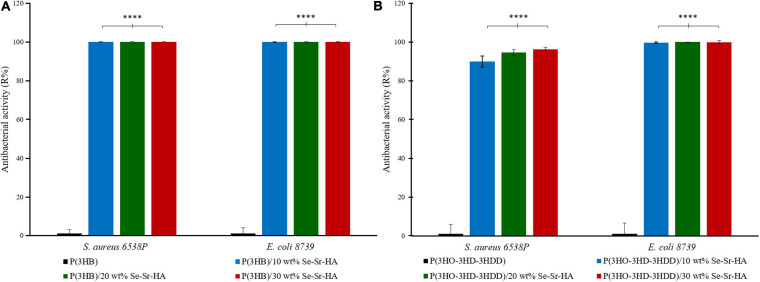
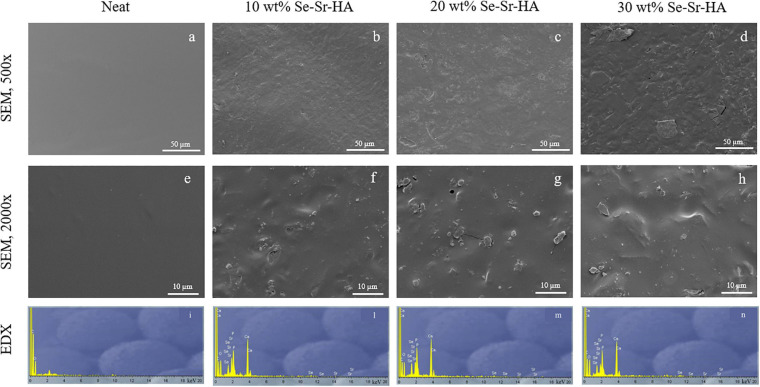
Due to the threat posed by the rapid growth in the resistance of microbial species to antibiotics, there is an urgent need to develop novel materials for biomedical applications capable of providing antibacterial properties without the use of such drugs. Bone healing represents one of the applications with the highest risk of postoperative infections, with potential serious complications in case of bacterial contaminations. Therefore, tissue engineering approaches aiming at the regeneration of bone tissue should be based on the use of materials possessing antibacterial properties alongside with biological and functional characteristics. In this study, we investigated the combination of polyhydroxyalkanoates (PHAs) with a novel antimicrobial hydroxyapatite (HA) containing selenium and strontium. Strontium was chosen for its well-known osteoinductive properties, while selenium is an emerging element investigated for its multi-functional activity as an antimicrobial and anticancer agent. Successful incorporation of such ions in the HA structure was obtained. Antibacterial activity against 6538P and 8739 was confirmed for co-substituted HA in the powder form. Polymer-matrix composites based on two types of PHAs, P(3HB) and P(3HO-co-3HD-co-3HDD), were prepared by the incorporation of the developed antibacterial HA. An in-depth characterization of the composite materials was conducted to evaluate the effect of the filler on the physicochemical, thermal, and mechanical properties of the films. antibacterial testing showed that the composite samples induce a high reduction of the number of 6538P and 8739 bacterial cells cultured on the surface of the materials. The films are also capable of releasing active ions which inhibited the growth of both Gram-positive and Gram-negative bacteria.
由于微生物对抗生素的耐药性迅速增长带来的威胁,迫切需要开发用于生物医学应用的新型材料,这些材料能够在不使用此类药物的情况下提供抗菌性能。骨愈合是术后感染风险最高的应用之一,一旦发生细菌污染,可能会引发严重并发症。因此,旨在骨组织再生的组织工程方法应基于使用具有抗菌性能以及生物学和功能特性的材料。在本研究中,我们研究了聚羟基脂肪酸酯(PHA)与一种新型含硒和锶的抗菌羟基磷灰石(HA)的组合。选择锶是因为其众所周知的骨诱导特性,而硒作为一种抗菌和抗癌剂因其多功能活性而成为正在研究的新兴元素。成功地将这些离子掺入到HA结构中。证实了粉末形式的共取代HA对6538P和8739具有抗菌活性。通过掺入所开发的抗菌HA制备了基于两种类型PHA(聚(3-羟基丁酸酯)(P(3HB))和聚(3-羟基辛酸酯-co-3-羟基癸酸酯-co-3-羟基十二烷酸酯)(P(3HO-co-3HD-co-3HDD))的聚合物基复合材料。对复合材料进行了深入表征,以评估填料对薄膜的物理化学、热学和力学性能的影响。抗菌测试表明,复合材料样品可使在材料表面培养的6538P和8739细菌细胞数量大幅减少。这些薄膜还能够释放抑制革兰氏阳性菌和革兰氏阴性菌生长的活性离子。