Li Jiafeng, Lou Junsheng, Yu Gaoxiang, Chen Yijie, Chen Ruiheng, Chen Zhuliu, Wu Chenyu, Ding Jian, Xu Yu, Jiang Jingtao, Xu Huazi, Zhu Xuwei, Gao Weiyang, Zhou Kailiang
Department of Orthopaedics, The Second Affiliated Hospital and Yuying Children's Hospital of Wenzhou Medical University, Wenzhou, China.
Zhejiang Provincial Key Laboratory of Orthopaedics, Wenzhou, China.
Front Cell Dev Biol. 2021 Apr 8;9:643996. doi: 10.3389/fcell.2021.643996. eCollection 2021.
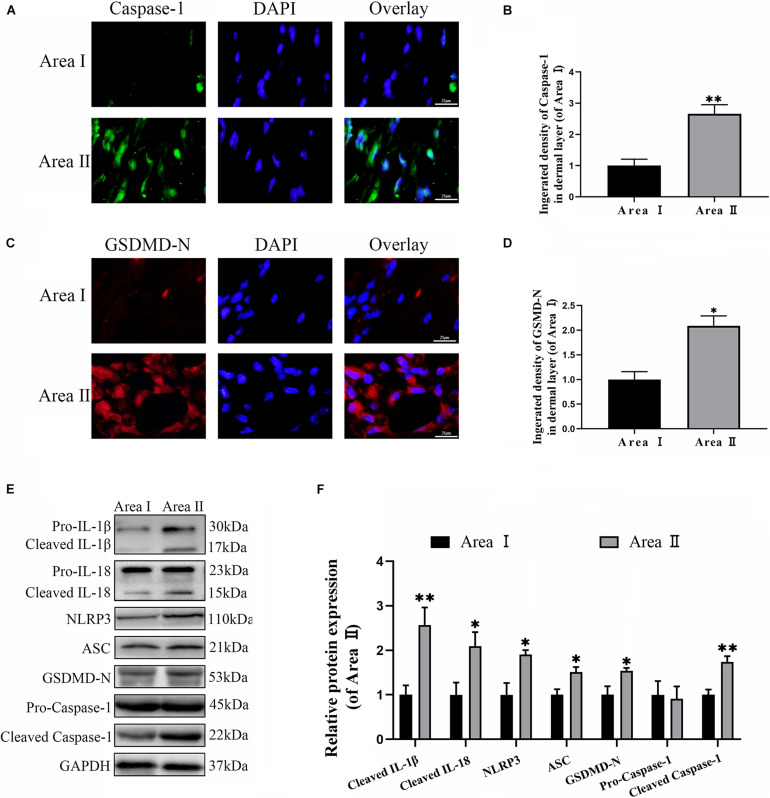
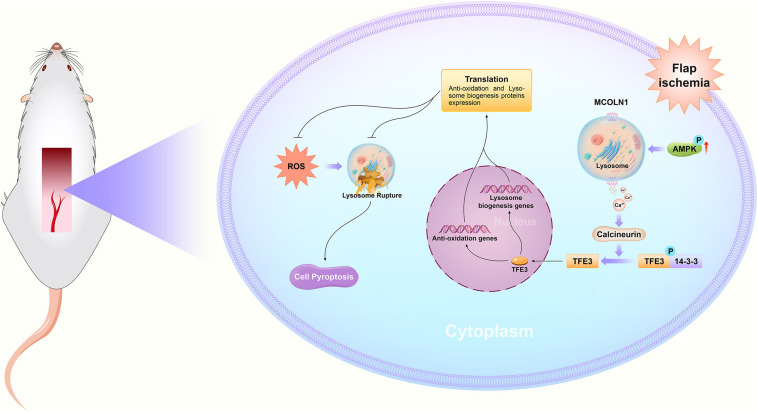
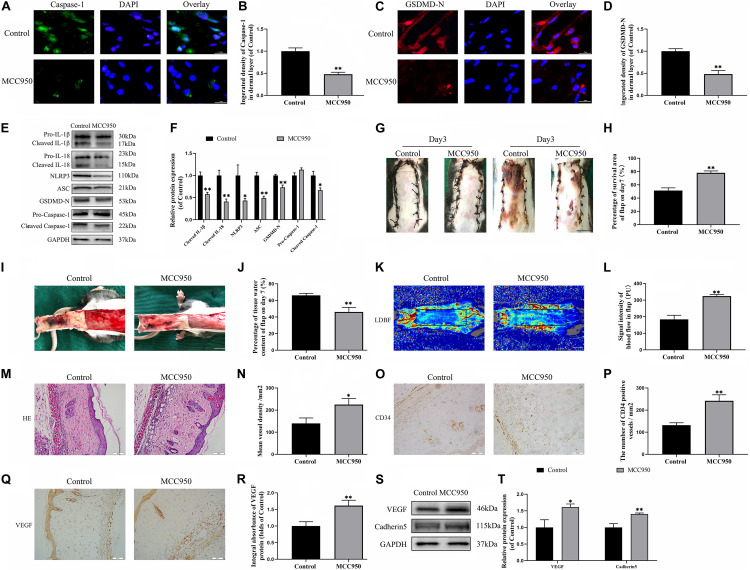
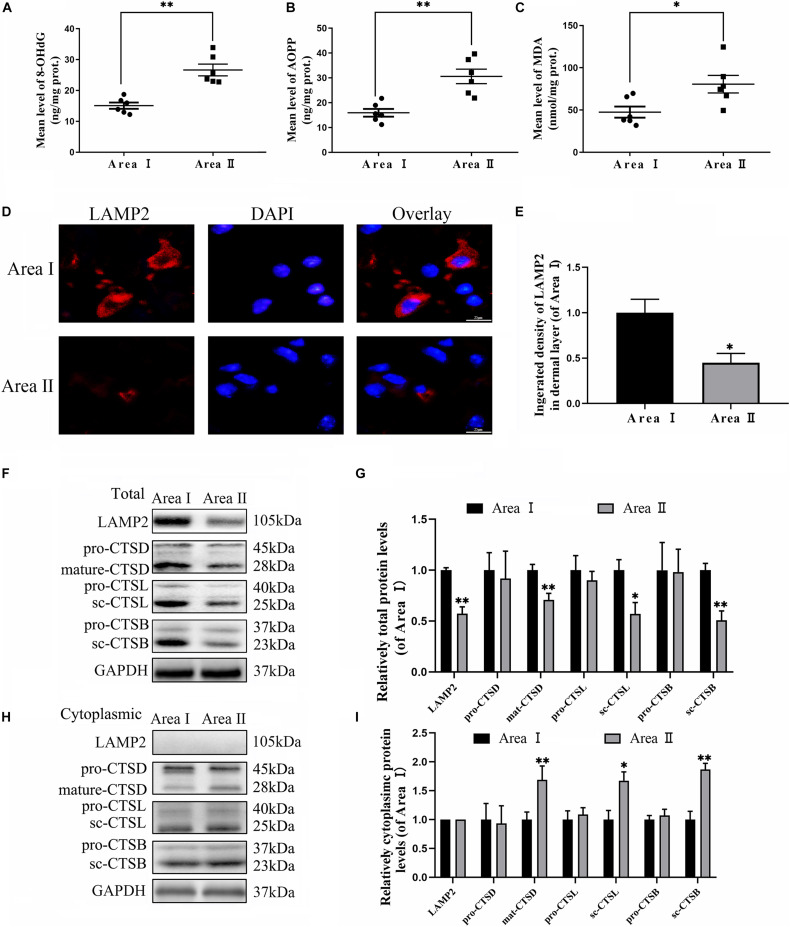
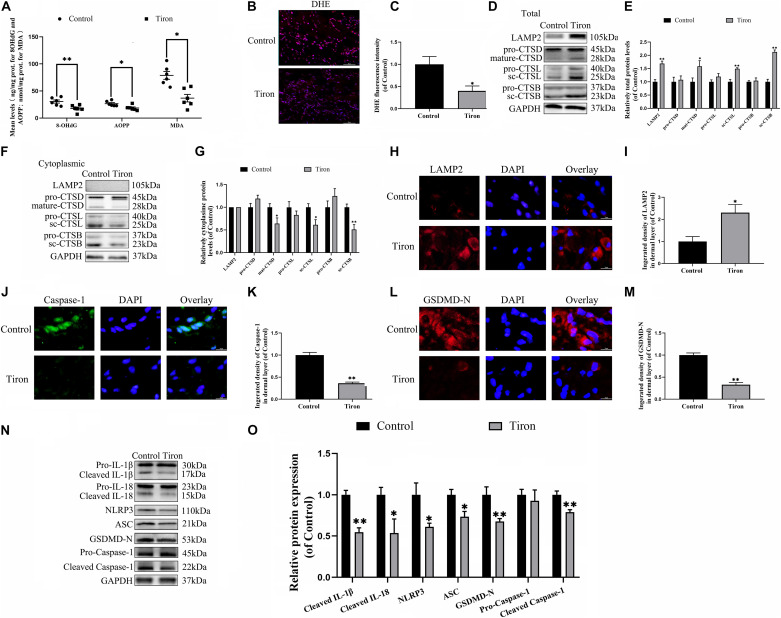
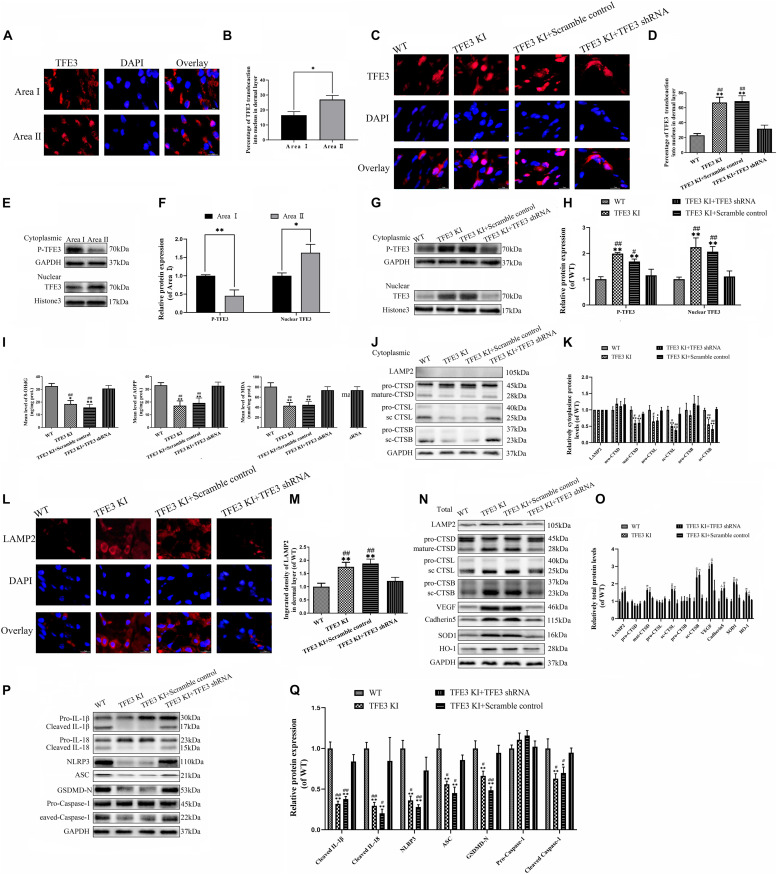
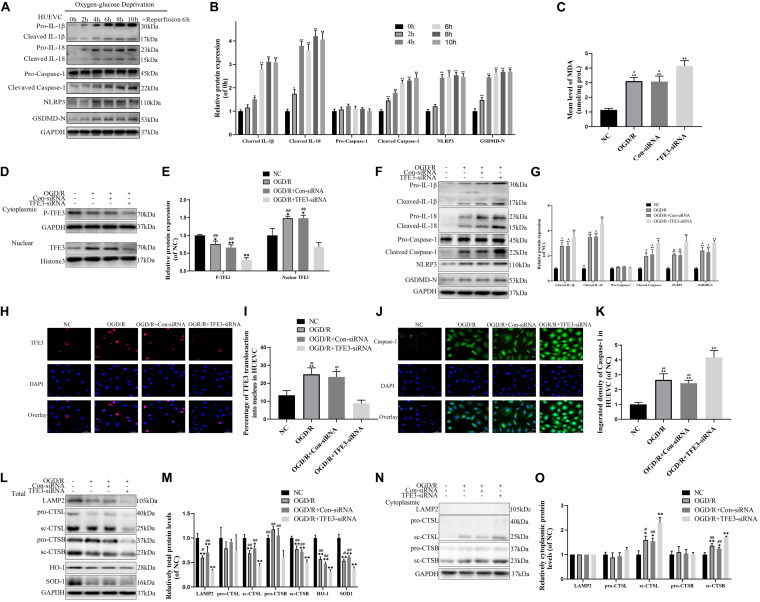
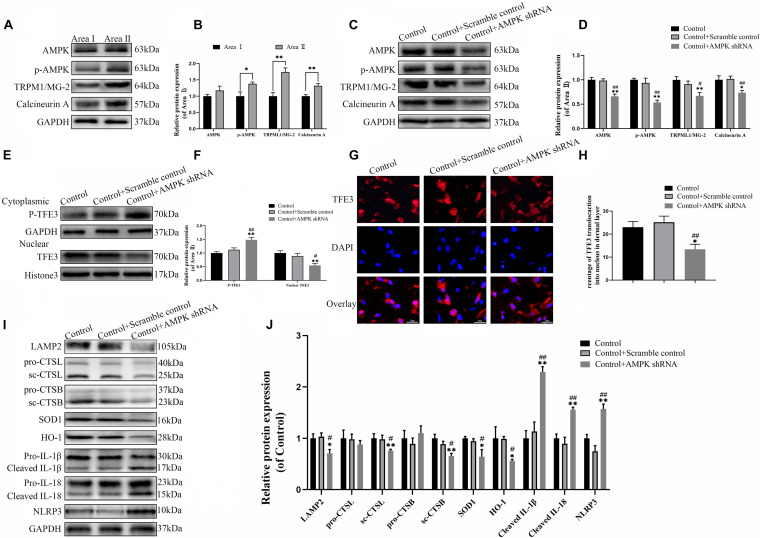
Increasing evidence indicates that pyroptosis, a new type of programmed cell death, may participate in random flap necrosis and play an important role. ROS-induced lysosome malfunction is an important inducement of pyroptosis. Transcription factor E3 (TFE3) exerts a decisive effect in oxidative metabolism and lysosomal homeostasis. We explored the effect of pyroptosis in random flap necrosis and discussed the effect of TFE3 in modulating pyroptosis. Histological analysis via hematoxylin-eosin staining, immunohistochemistry, general evaluation of flaps, evaluation of tissue edema, and laser Doppler blood flow were employed to determine the survival of the skin flaps. Western blotting, immunofluorescence, and enzyme-linked immunosorbent assays were used to calculate the expressions of pyroptosis, oxidative stress, lysosome function, and the AMPK-MCOLN1 signaling pathway. In cell experiments, HUVEC cells were utilized to ensure the relationship between TFE3, reactive oxygen species (ROS)-induced lysosome malfunction and cell pyroptosis. Our results indicate that pyroptosis exists in the random skin flap model and oxygen and glucose deprivation/reperfusion cell model. In addition, NLRP3-mediated pyroptosis leads to necrosis of the flaps. Moreover, we also found that ischemic flaps can augment the accumulation of ROS, thereby inducing lysosomal malfunction and finally initiating pyroptosis. Meanwhile, we observed that TFE3 levels are interrelated with ROS levels, and overexpression and low expression of TFE3 levels can, respectively, inhibit and promote ROS-induced lysosomal dysfunction and pyroptosis during and experiments. In conclusion, we found the activation of TFE3 in random flaps is partially regulated by the AMPK-MCOLN1 signal pathway. Taken together, TFE3 is a key regulator of ROS-induced pyroptosis in random skin flaps, and TFE3 may be a promising therapeutic target for improving random flap survival.
越来越多的证据表明,焦亡作为一种新型程序性细胞死亡,可能参与随意皮瓣坏死并发挥重要作用。活性氧(ROS)诱导的溶酶体功能障碍是焦亡的重要诱因。转录因子E3(TFE3)在氧化代谢和溶酶体稳态中起决定性作用。我们探讨了焦亡在随意皮瓣坏死中的作用,并讨论了TFE3在调节焦亡中的作用。通过苏木精-伊红染色、免疫组织化学、皮瓣综合评估、组织水肿评估和激光多普勒血流测定进行组织学分析,以确定皮瓣的存活情况。采用蛋白质免疫印迹法、免疫荧光法和酶联免疫吸附测定法来计算焦亡、氧化应激、溶酶体功能以及AMPK-MCOLN1信号通路的表达。在细胞实验中,利用人脐静脉内皮细胞(HUVEC)来确定TFE3、活性氧(ROS)诱导的溶酶体功能障碍与细胞焦亡之间的关系。我们的结果表明,焦亡存在于随意皮瓣模型和氧糖剥夺/再灌注细胞模型中。此外,NLRP3介导的焦亡导致皮瓣坏死。而且,我们还发现缺血皮瓣可增加ROS的积累,从而诱导溶酶体功能障碍并最终引发焦亡。同时,我们观察到TFE3水平与ROS水平相关,在实验期间,TFE3水平的过表达和低表达可分别抑制和促进ROS诱导的溶酶体功能障碍和焦亡。总之,我们发现随意皮瓣中TFE3的激活部分受AMPK-MCOLN1信号通路调节。综上所述,TFE3是随意皮瓣中ROS诱导焦亡的关键调节因子,TFE3可能是改善随意皮瓣存活的一个有前景的治疗靶点。