Oh Sechang, Tsujimoto Takehiko, Kim Bokun, Uchida Fumihiko, Suzuki Hideo, Iizumi Seiichiro, Isobe Tomonori, Sakae Takeji, Tanaka Kiyoji, Shoda Junichi
Faculty of Medicine, University of Tsukuba, Tsukuba, Ibaraki, Japan.
Faculty of Human Sciences, Shimane University, Shimane, Japan.
JHEP Rep. 2021 Feb 10;3(3):100253. doi: 10.1016/j.jhepr.2021.100253. eCollection 2021 Jun.
BACKGROUND & AIMS: A weight-loss-independent beneficial effect of exercise on non-alcoholic fatty liver disease (NAFLD) management has been reported, but the underlying mechanism is unknown. To help determine this mechanism, the effects of exercise on individual tissues (liver, adipose tissue, and skeletal muscle) were retrospectively studied.
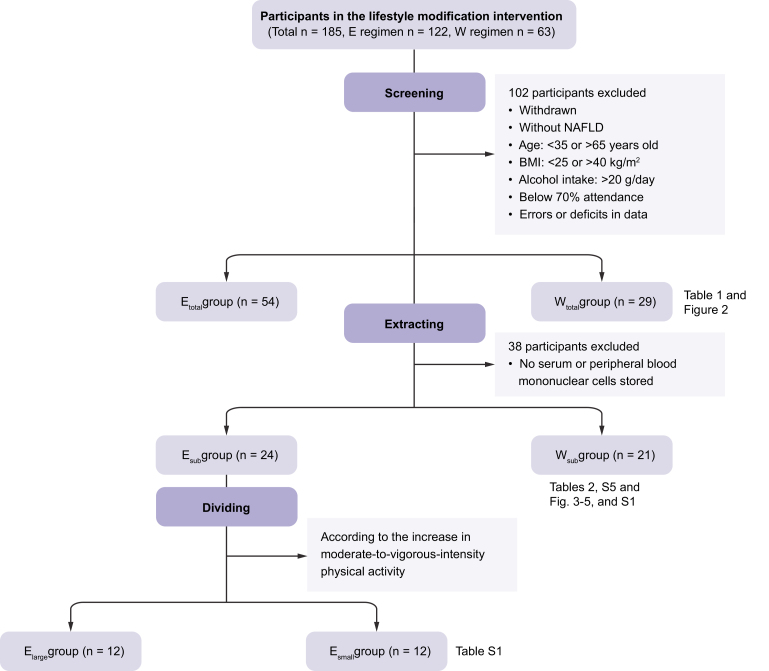
Data from Japanese obese men with NAFLD in a 3-month exercise regimen were analysed and compared with those in a 3-month dietary restriction program designed to achieve weight loss. The underlying mechanism was studied in a smaller subcohort.
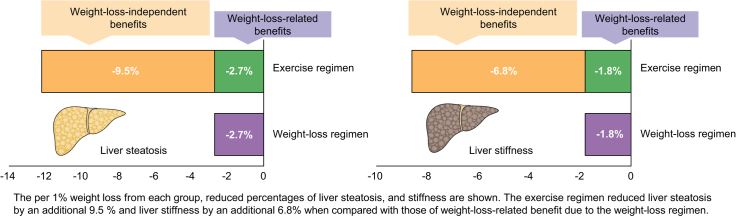
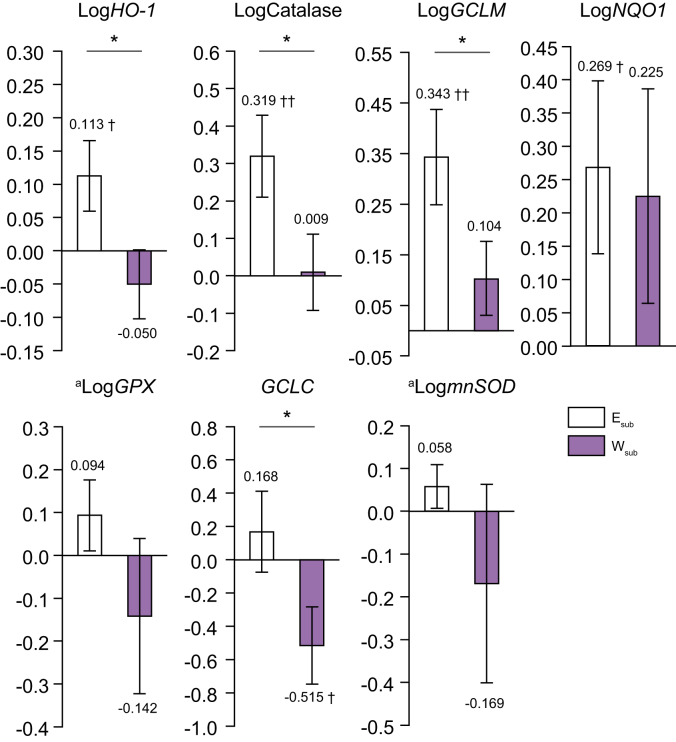
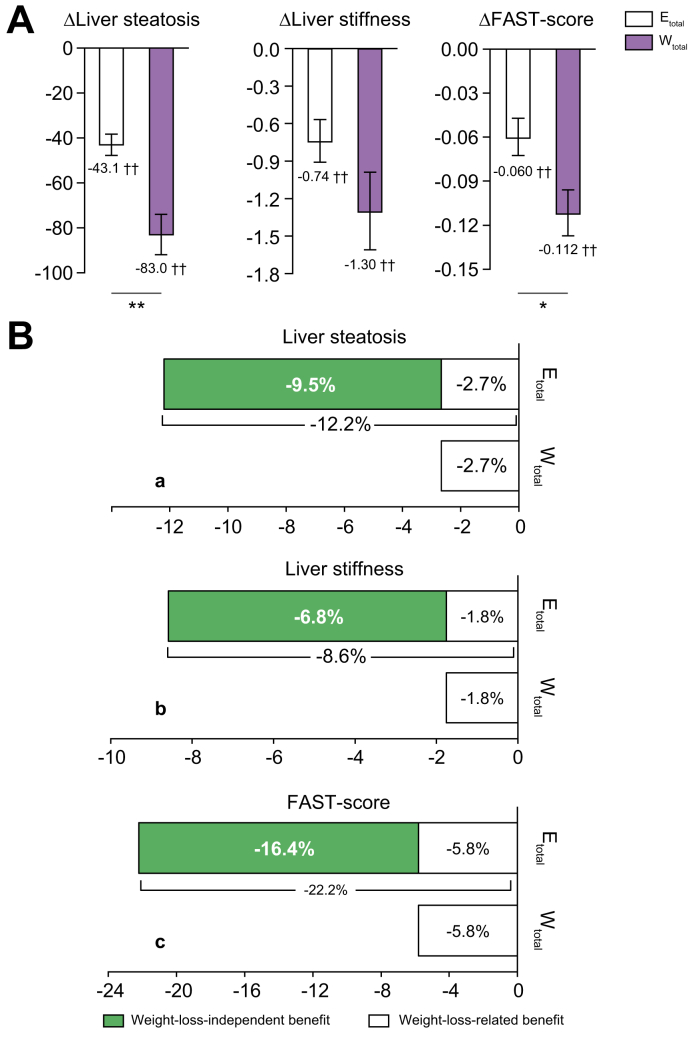
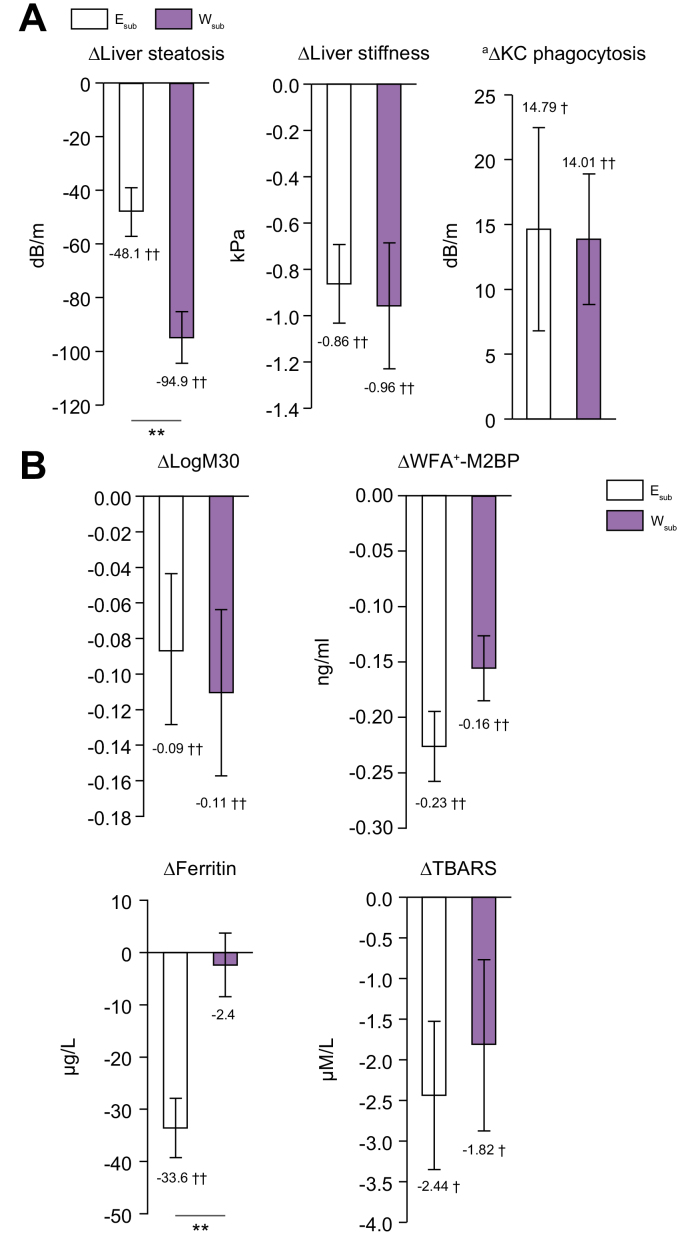
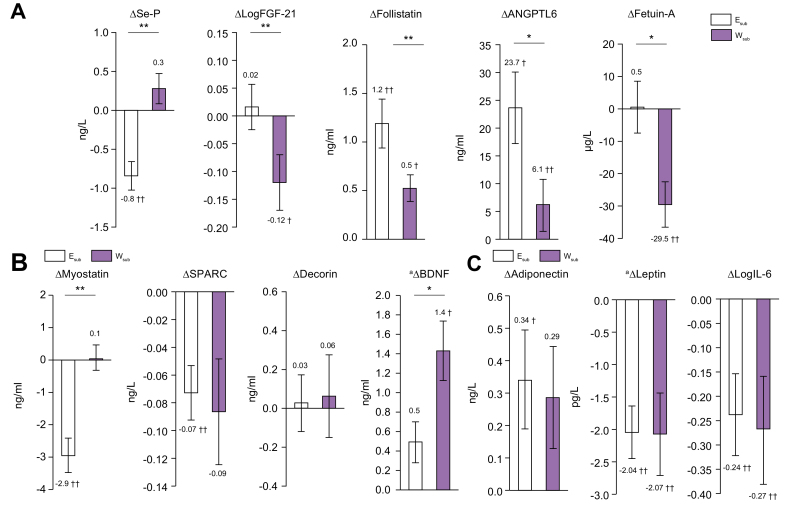
Independent of the effect of weight loss, the exercise regimen reduced liver steatosis by 9.5% and liver stiffness by 6.8% per 1% weight loss, and resulted in a 16.4% reduction in FibroScan-AST score. Improvements in these hepatic parameters were closely associated with anthropometric changes (reduction in adipose tissue and preservation of muscle mass), increases in muscle strength (+11.6%), reductions in inflammation and oxidative stress (ferritin: -22.3% and thiobarbituric acid: -12.3%), and changes in organokine concentrations (selenoprotein-P: -11.2%, follistatin: +17.1%, adiponectin: +8.9%, and myostatin: -21.6%) during the exercise regimen. Moreover, the expression of target genes of the transcription factor Nrf2, an oxidative stress sensor, was higher in monocytes, suggesting that Nrf2 is activated. Large amounts of high-intensity exercise were effective at further reducing liver steatosis and potentiating improvements in pathophysiological parameters (liver enzyme activities and organokine profiles).
The weight-loss-independent benefits of exercise include anti-steatotic and anti-stiffness effects in the livers of patients with NAFLD. These benefits seem to be acquired through the modification of inter-organ crosstalk, which is characterised by improvements in organokine imbalance and reductions in inflammation and oxidative stress.
We investigated the effects of exercise on non-alcoholic fatty liver disease (NAFLD) that were not related to weight loss. We found that exercise had considerable weight-loss-independent benefits for the liver through a number of mechanisms. This suggests that exercise is important for NAFLD patients, regardless of whether they lose weight.
运动对非酒精性脂肪性肝病(NAFLD)的管理具有与体重减轻无关的有益作用,但其潜在机制尚不清楚。为了帮助确定这一机制,我们回顾性研究了运动对各个组织(肝脏、脂肪组织和骨骼肌)的影响。
分析了日本肥胖NAFLD男性在3个月运动方案中的数据,并与旨在实现体重减轻的3个月饮食限制计划中的数据进行比较。在一个较小的亚队列中研究了潜在机制。
与体重减轻的影响无关,运动方案每减轻1%的体重,肝脏脂肪变性降低9.5%,肝脏硬度降低6.8%,FibroScan-AST评分降低16.4%。这些肝脏参数的改善与人体测量学变化(脂肪组织减少和肌肉量保持)、肌肉力量增加(+11.6%)、炎症和氧化应激降低(铁蛋白:-22.3%,硫代巴比妥酸:-12.3%)以及运动方案期间器官因子浓度变化(硒蛋白-P:-11.2%,卵泡抑素:+17.1%,脂联素:+8.9%,肌肉生长抑制素:-21.6%)密切相关。此外,氧化应激传感器转录因子Nrf2的靶基因在单核细胞中的表达较高,表明Nrf2被激活。大量高强度运动在进一步降低肝脏脂肪变性和增强病理生理参数(肝酶活性和器官因子谱)改善方面有效。
运动与体重减轻无关的益处包括对NAFLD患者肝脏的抗脂肪变性和抗硬化作用。这些益处似乎是通过改变器官间相互作用获得的,其特征是器官因子失衡得到改善,炎症和氧化应激降低。
我们研究了运动对与体重减轻无关的非酒精性脂肪性肝病(NAFLD)的影响。我们发现运动通过多种机制对肝脏具有与体重减轻无关的显著益处。这表明运动对NAFLD患者很重要,无论他们是否体重减轻。