Wu Hongzhi, Sun Hao, Ma Chengzhan, Lian Lina, Lu Lei, Xu Liangmei, Xu Li
College of Animal Science and Technology, Northeast Agricultural University, Harbin, Heilongjiang 150030, China.
Hebei Sogreen Food Co., Ltd. Shijiazhuang, Hebei, 050000, China.
Anim Biosci. 2021 Nov;34(11):1829-1838. doi: 10.5713/ab.20.0712. Epub 2021 Apr 23.
The effects of maternal dietary energy levels on breast muscle fibre development in offspring of broiler breeders were investigated.
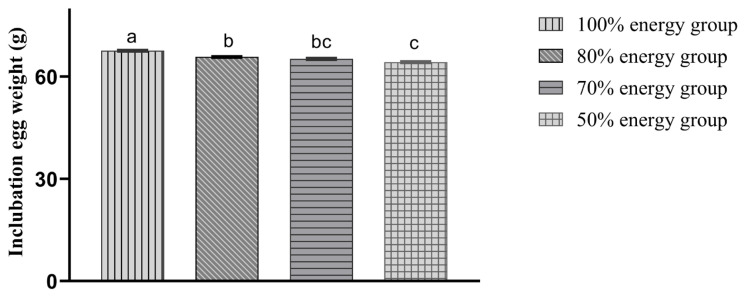
A total of 480 20-week-old Arbor Acres (AA) healthy female broiler breeders, with an average body weight of 2.33±0.01 kg, were randomly divided into 4 treatment groups with 6 replicates and 20 broiler breeders for each replicate and fed a corn and soybean meal diet with 100%, 80%, 70%, and 50% energy levels, respectively. Approximately 300 eggs per treatment were collected for incubation for 6 days. Then, 120 0-day-old female broilers at each energy level were randomly selected and divided into 6 replicates with 20 broilers for each replicate, with this experimental phase with the offspring lasting for 49 days.
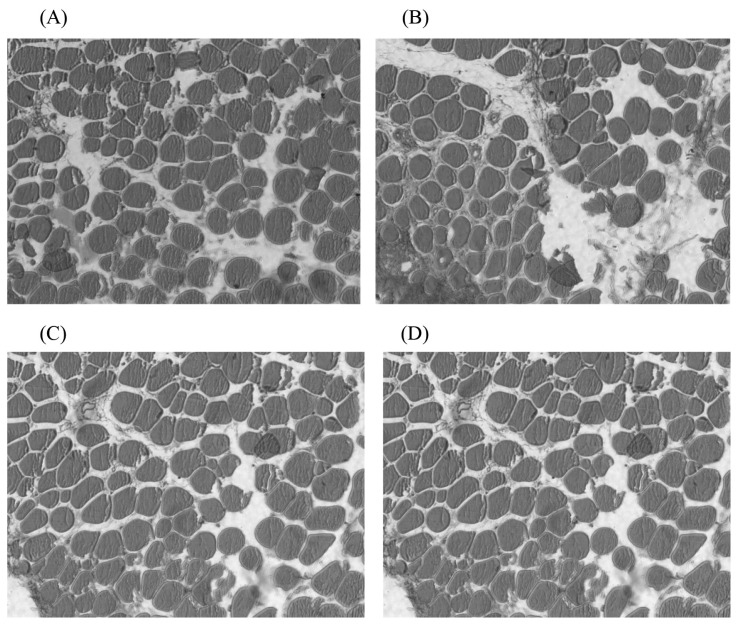
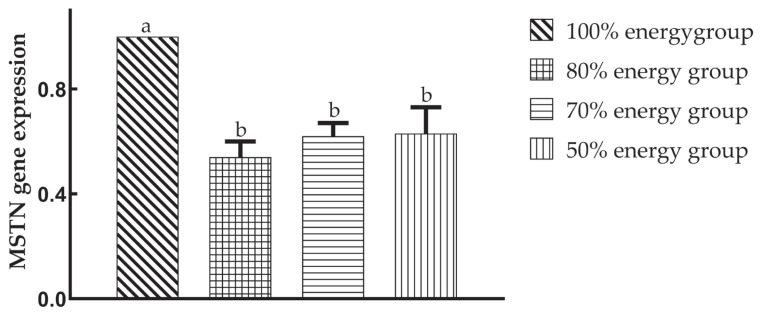
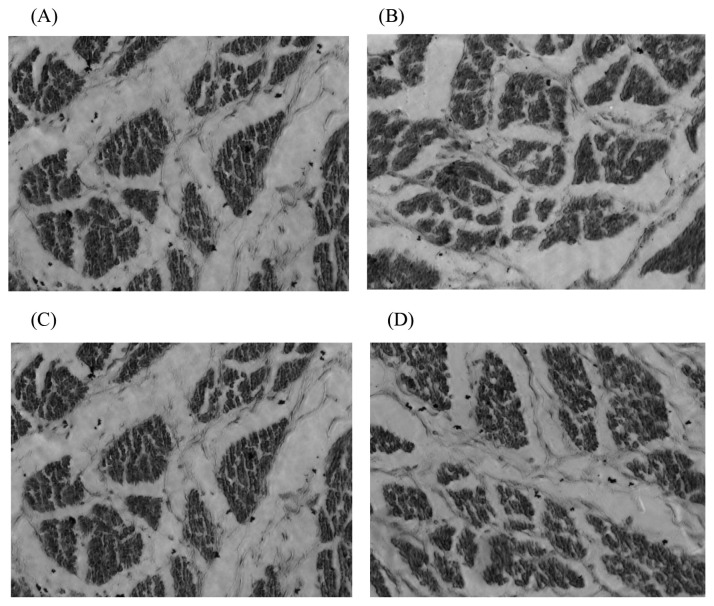
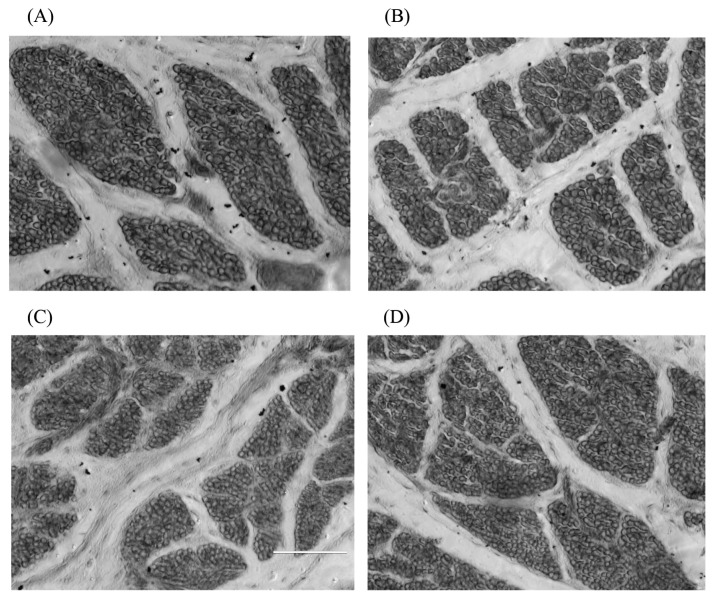
Compared with the 100% energy group, the breast muscle fibre diameter at embryonic day 21 in the 80% energy group was significantly reduced (p<0.05). In the 80% energy group, the muscle fibre density of the breast increased significantly (p<0.05) at embryonic days 15 and 21. The breast muscle fibre diameter of the offspring in each group was significantly decreased (p<0.05) on the 1st day. The breast muscle sarcomere length of the embryos in the 80% energy group was significantly higher (p<0.05) than those in the 70% and 50% energy groups. Compared with the 100% energy group, the expression of the myostatin gene in the offspring was significantly decreased (p<0.05).
In conclusion, the effects of a maternal dietary energy level of 80% in this study were found to be optimal for breast muscle fibre development in offspring, which indicated that the metabolic energy level of AA broilers of 9.36 MJ/kg for the mid-term diet for laying eggs has a more practical significance.
研究肉种鸡母体日粮能量水平对其后代胸肌纤维发育的影响。
选取480只20周龄的健康爱拔益加(AA)雌性肉种鸡,平均体重2.33±0.01 kg,随机分为4个处理组,每组6个重复,每个重复20只种鸡,分别饲喂能量水平为100%、80%、70%和50%的玉米-豆粕型日粮。每个处理组收集约300枚种蛋孵化6天。然后,从每个能量水平随机选取120只1日龄雌性肉鸡,分为6个重复,每个重复20只,该子代实验阶段持续49天。
与100%能量组相比,80%能量组在胚胎期21天的胸肌纤维直径显著减小(p<0.05)。在80%能量组中,胚胎期15天和21天胸肌的肌纤维密度显著增加(p<0.05)。各能量组子代在1日龄时胸肌纤维直径均显著减小(p<0.05)。80%能量组胚胎的胸肌肌节长度显著高于70%和50%能量组(p<0.05)。与100%能量组相比,子代中肌肉生长抑制素基因的表达显著降低(p<0.05)。
综上所述,本研究发现母体日粮能量水平为80%对后代胸肌纤维发育最为适宜,这表明AA肉种鸡产蛋中期日粮代谢能水平为9.36 MJ/kg具有更实际的意义。