State Key Laboratory of Rice Biology & Ministry of Agriculture and Rural Affairs Key Lab of Molecular Biology of Crop Pathogens and Insects, Institute of Insect Sciences, Zhejiang University, Hangzhou, China.
College of Plant Protection, Nanjing Agricultural University, China.
Genome Biol Evol. 2021 May 7;13(5). doi: 10.1093/gbe/evab083.
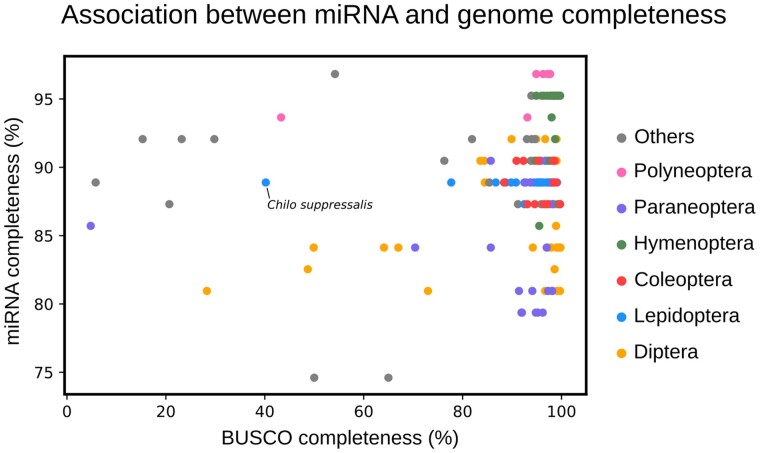
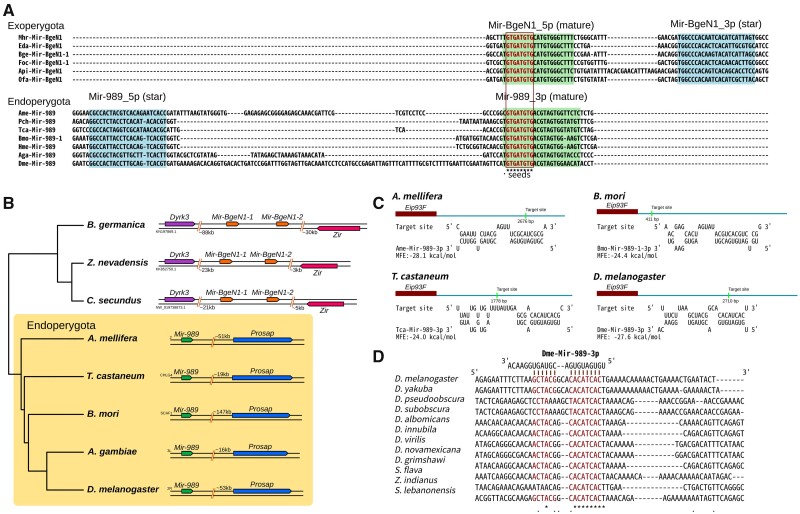
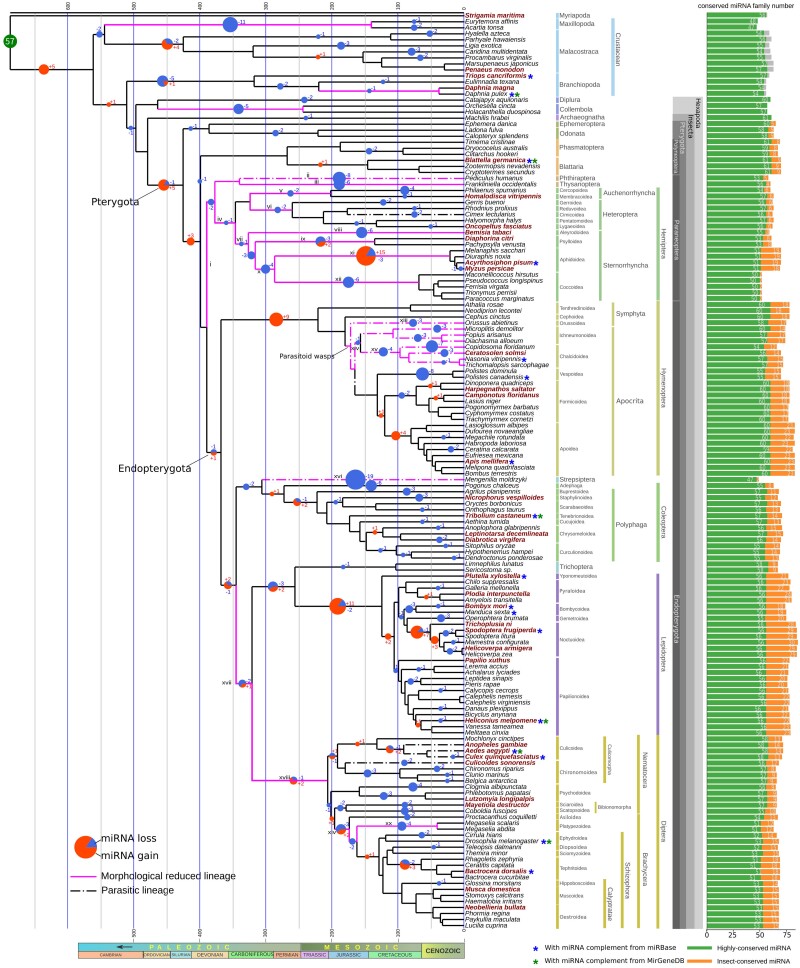
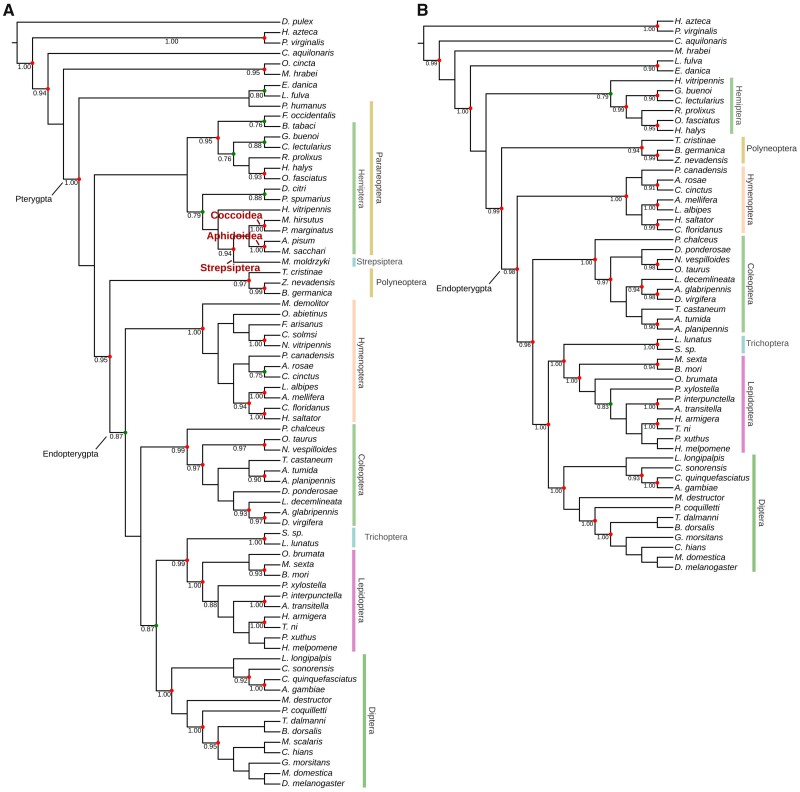
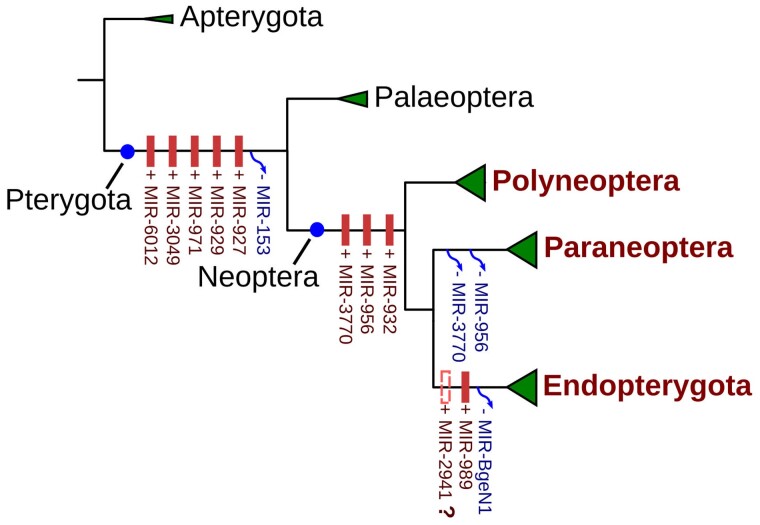
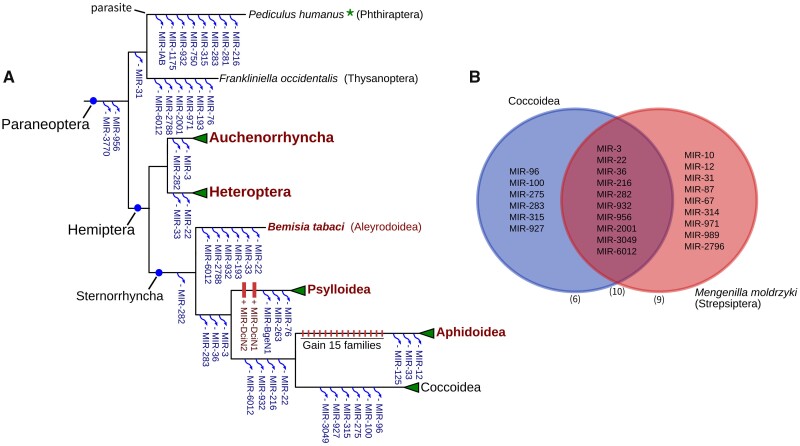
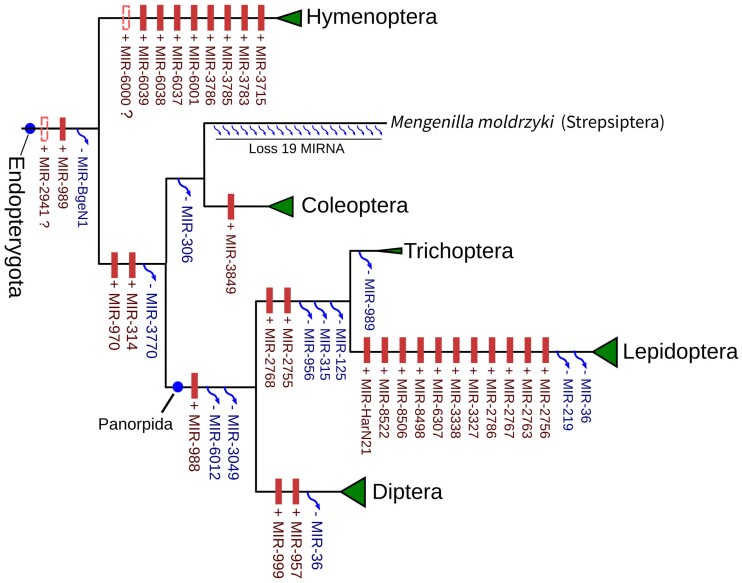
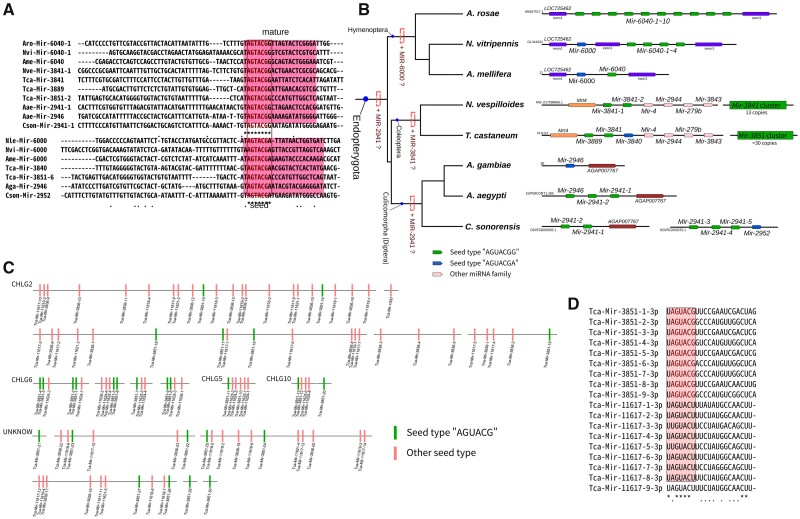
Insects are among the most diverse and successful groups of animals and exhibit great morphological diversity and complexity. The innovation of wings and metamorphosis are some examples of the fascinating biological evolution of insects. Most microRNAs (miRNAs) contribute to canalization by conferring robustness to gene networks and thus increase the heritability of important phenotypes. Though previous studies have demonstrated how miRNAs regulate important phenotypes, little is still known about miRNA evolution in insects. Here, we used both small RNA-seq data and homology searching methods to annotate the miRNA repertoires of 152 arthropod species, including 135 insects and 17 noninsect arthropods. We identified 16,212 miRNA genes, and classified them into highly conserved (62), insect-conserved (90), and lineage-specific (354) miRNA families. The phylogenetic relationship of miRNA binary presence/absence dynamics implies that homoplastic loss of conserved miRNA families tends to occur in far-related morphologically simplified taxa, including scale insects (Coccoidea) and twisted-wing insects (Strepsiptera), leading to inconsistent phylogenetic tree reconstruction. The common ancestor of Insecta shares 62 conserved miRNA families, of which five were rapidly gained in the early winged-insects (Pterygota). We also detected extensive miRNA losses in Paraneoptera that are correlated with morphological reduction, and miRNA gains in early Endopterygota around the time holometabolous metamorphosis appeared. This was followed by abundant miRNA gains in Hymenoptera and Lepidoptera. In summary, we provide a comprehensive data set and a detailed evolutionary analysis of miRNAs in insects. These data will be important for future studies on miRNA functions associated with insect morphological innovation and trait biodiversity.
昆虫是动物中最多样化和最成功的群体之一,表现出极大的形态多样性和复杂性。翅膀的创新和变态是昆虫迷人的生物进化的一些例子。大多数 microRNA(miRNA)通过赋予基因网络稳健性来促进 canalization,从而增加重要表型的遗传性。尽管先前的研究已经表明了 miRNA 如何调节重要表型,但关于昆虫中 miRNA 的进化仍知之甚少。在这里,我们使用了小 RNA-seq 数据和同源搜索方法,对 152 种节肢动物物种的 miRNA 谱进行了注释,包括 135 种昆虫和 17 种非昆虫节肢动物。我们鉴定了 16,212 个 miRNA 基因,并将它们分为高度保守(62)、昆虫保守(90)和谱系特异性(354)miRNA 家族。miRNA 二元存在/缺失动态的系统发育关系表明,保守 miRNA 家族的同源缺失倾向于发生在形态简化的远缘类群中,包括鳞翅目昆虫(蚧总科)和捻翅目昆虫(双翅目),导致系统发育树重建不一致。昆虫的共同祖先共有 62 个保守 miRNA 家族,其中 5 个在早期有翅昆虫(Pterygota)中迅速获得。我们还检测到 Paraneoptera 中广泛的 miRNA 丢失,这与形态减少有关,并且在全变态出现时,早期内翅目昆虫(Endopterygota)周围的 miRNA 获得。随后在膜翅目和鳞翅目昆虫中大量获得 miRNA。总之,我们提供了昆虫 miRNA 的综合数据集和详细的进化分析。这些数据对于未来研究与昆虫形态创新和性状生物多样性相关的 miRNA 功能将是重要的。