Department of Orofacial Pain & TMD, Affiliated Hospital of Stomatology, Nanjing Medical University, 1 Shanghai Road,Gulou District, Nanjing, 210029, Jiangsu, People's Republic of China.
Jiangsu Key Laboratory of Oral Diseases, Orofacial Pain & TMD Research Unit, Affiliated Hospital of Stomatology, Nanjing Medical University, Nanjing, People's Republic of China.
Sci Rep. 2021 Apr 27;11(1):9049. doi: 10.1038/s41598-021-87265-0.
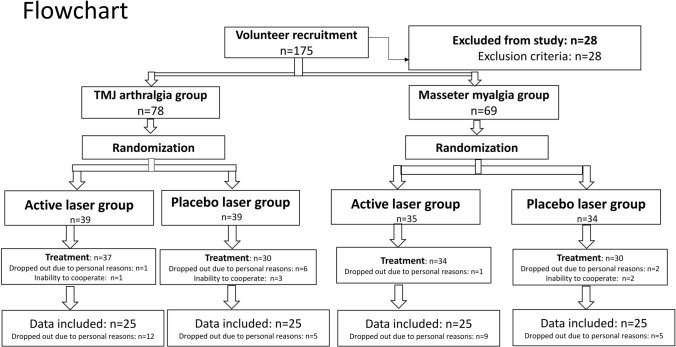
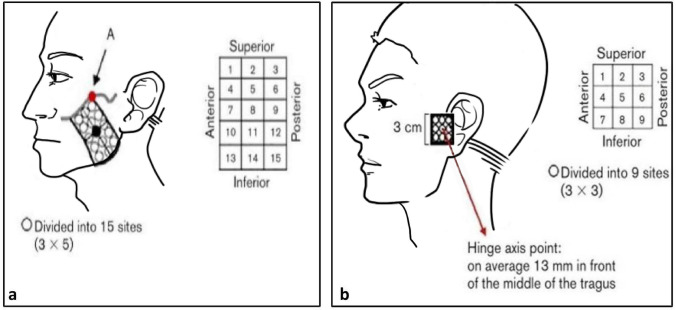
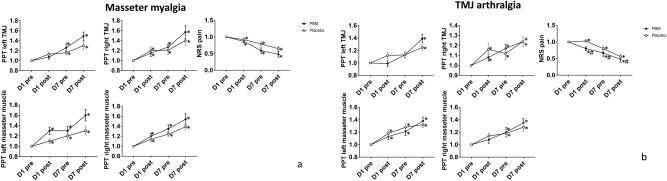
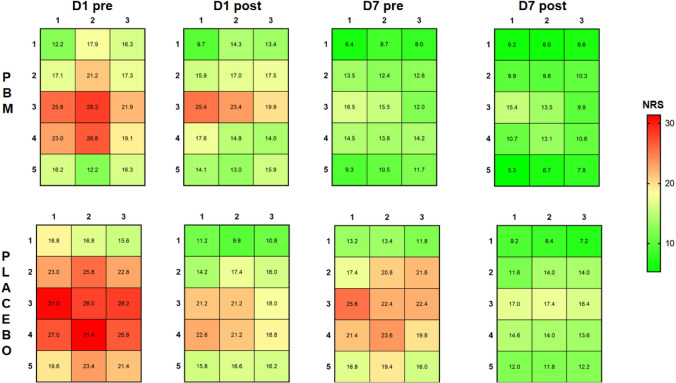
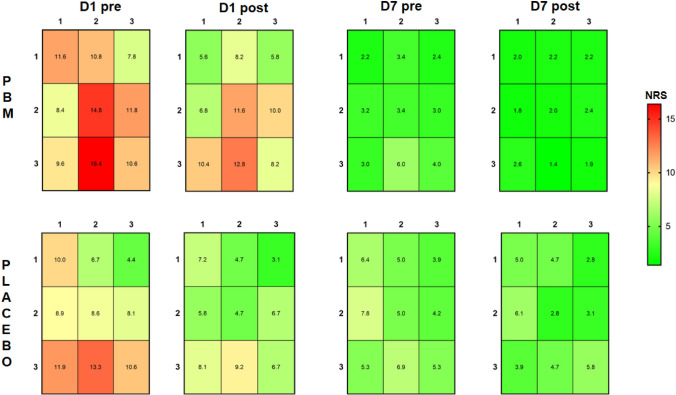
To evaluate the effect of photobiomodulation therapy (PBMT) on painful temporomandibular disorders (TMD) patients in a randomized, double-blinded, placebo-controlled manner. Participants were divided into a masseter myalgia group (n = 88) and a temporomandibular joint (TMJ) arthralgia group (n = 87) according to the Diagnostic Criteria for Temporomandibular Disorders (DC/TMD). Both groups randomly received PBMT or placebo treatment once a day for 7 consecutive days, one session. The PBMT was applied with a gallium-aluminum-arsenide (GaAlAs) laser (wavelength = 810 nm) at pre-determined points in the masseter muscle (6 J/cm, 3 regions, 60 s) or TMJ region (6 J/cm, 5 points, 30 s) according to their most painful site. Pain intensity was rated on a 0-10 numerical rating scale (NRS) and pressure pain thresholds (PPT) and mechanical sensitivity mapping were recorded before and after the treatment on day 1 and day 7. Jaw function was assessed by pain free jaw opening, maximum unassisted jaw opening, maximum assisted jaw opening, maximum protrusion and right and left excursion. Data were analyzed with a mixed model analysis of variance (ANOVA). Pain intensity in arthralgia patients decreased over time (P < 0.001) for both types of interventions, however, PBMT caused greater reduction in pain scores than placebo (P = 0.014). For myalgia patients, pain intensity decreased over time (P < 0.001) but without difference between interventions (P = 0.074). PPTs increased in both myalgia (P < 0.001) and TMJ arthralgia patients over time (P < 0.001) but without difference between interventions (P ≥ 0.614). Overall, PBMT was associated with marginally better improvements in range of motion compared to placebo in both myalgia and arthralgia patients. Pain intensity, sensory function and jaw movements improve after both PBMT and placebo treatments in myalgia and arthralgia patients indicating a substantial non-specific effect of PBMT.
为了以随机、双盲、安慰剂对照的方式评估光生物调节疗法(PBMT)对患有疼痛性颞下颌关节紊乱(TMD)的患者的疗效。参与者根据 TMD 的诊断标准(DC/TMD)分为咀嚼肌肌痛组(n=88)和颞下颌关节(TMJ)关节痛组(n=87)。两组均随机接受每天一次的 PBMT 或安慰剂治疗,连续 7 天,每次 1 个疗程。PBMT 采用砷化镓铝(GaAlAs)激光(波长=810nm)在咀嚼肌(6J/cm,3 个区域,60s)或 TMJ 区域(6J/cm,5 个点,30s)的预先确定的点上施加,根据其最疼痛的部位。在治疗前(第 1 天)和治疗后(第 7 天),使用 0-10 数字评分量表(NRS)和压力疼痛阈值(PPT)记录疼痛强度,并记录机械敏感性图。通过无痛张口、最大自主张口、最大辅助张口、最大前伸以及右侧和左侧运动范围评估下颌功能。采用混合模型方差分析(ANOVA)对数据进行分析。关节炎患者的疼痛强度随时间推移而降低(P<0.001),但 PBMT 引起的疼痛评分降低幅度大于安慰剂(P=0.014)。对于肌痛患者,疼痛强度随时间推移而降低(P<0.001),但干预之间无差异(P=0.074)。肌痛和 TMJ 关节炎患者的 PPT 随时间推移而增加(P<0.001),但干预之间无差异(P≥0.614)。总体而言,与安慰剂相比,PBMT 与肌痛和关节炎患者的运动范围改善有一定关联。肌痛和关节炎患者在接受 PBMT 和安慰剂治疗后,疼痛强度、感觉功能和下颌运动均有所改善,表明 PBMT 具有显著的非特异性作用。