Department of Psychology, Center for Children and Families, Florida International University, Miami, FL.
Department of Psychology, Georgia State University, Atlanta, GA.
J Dev Behav Pediatr. 2021 Dec 1;42(9):751-760. doi: 10.1097/DBP.0000000000000953.
Sleep problems among youth are highly prevalent and associated with adjustment difficulties. When considering influences on youth's sleep, bidirectional links between youth's sleep health and family functioning have been suggested. Parenting practices are among the many familial factors that could be transactionally related to poor sleep in youth; however, research is lacking on potential longitudinal associations between parenting practices and sleep problems in youth. In addition, sensitive periods for this link are mostly unknown. The current study examined longitudinal relations between constellations of parenting practices and youth sleep health to identify profiles of parenting practices that are predictive of sleep problems in youth across different developmental stages.
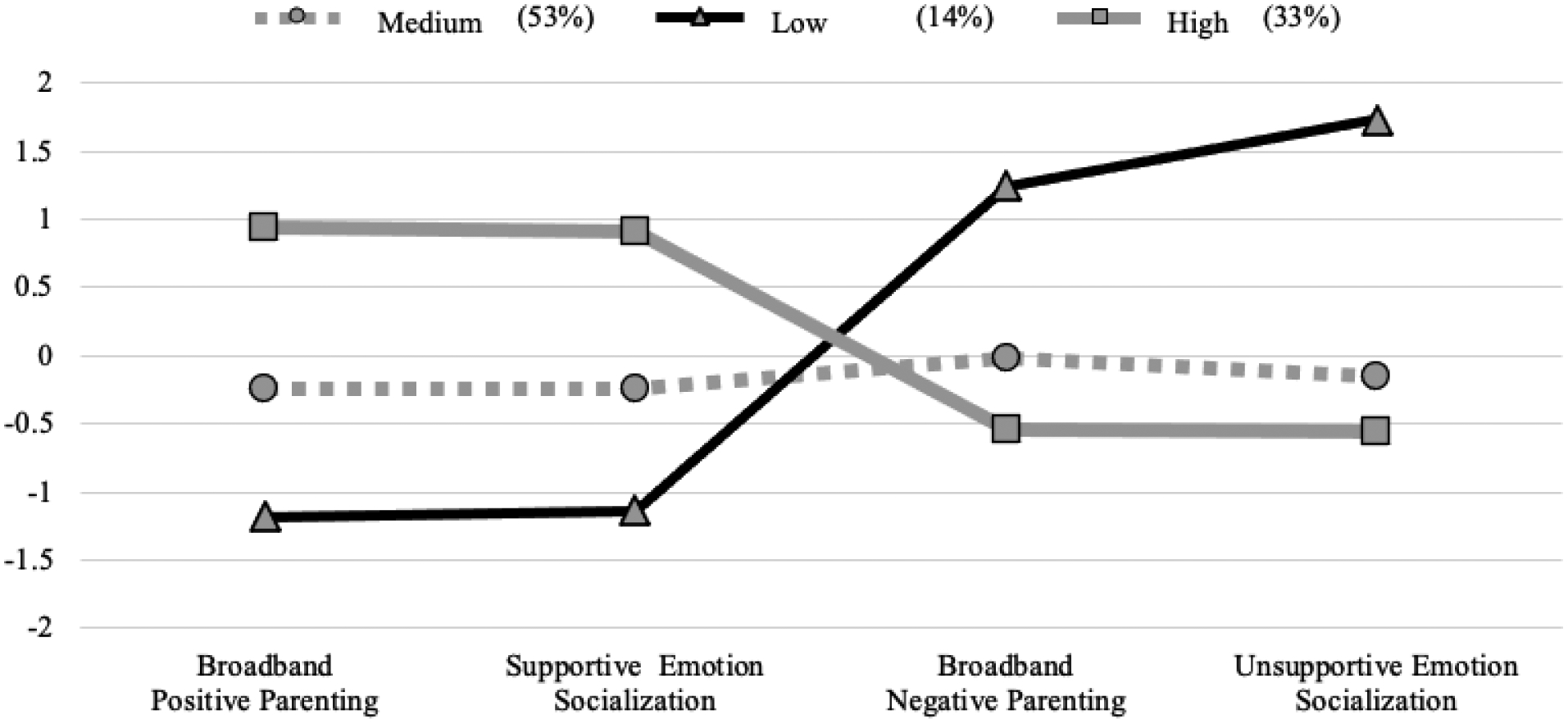
Participants were 292 parents (M = 36.51, SD = 7.3) of children between the ages of 3 and 14 years (M = 8.4, SD = 3.6). A person-centered approach was used to create profiles across traditionally labeled positive and negative parenting practices, as well as supportive and unsupportive parental emotion socialization strategies. Parenting profiles were then examined as longitudinal predictors of youth sleep problems.
Findings revealed 3 distinct parenting profiles, which were differentially associated with sleep problems in youth, with the first profile predicting the lowest levels of sleep problems and the third profile predicting the highest levels of sleep problems, particularly among peripubertal youth.
This study extends previous findings by elucidating distinct constellations of parenting practices that are differentially predictive of youth sleep problems and highlighting parenting among the various family processes that can longitudinally contribute to youth's sleep health.
青少年的睡眠问题非常普遍,并与适应困难有关。在考虑影响青少年睡眠的因素时,已经有人提出了青少年睡眠健康与家庭功能之间的双向联系。养育实践是许多可能与青少年睡眠质量差有关的家庭因素之一;然而,关于养育实践与青少年睡眠问题之间潜在的纵向关联的研究还很缺乏。此外,这种联系的敏感时期大多不为人知。本研究考察了养育实践的不同组合与青少年睡眠健康之间的纵向关系,以确定在不同发展阶段预测青少年睡眠问题的养育实践模式。
参与者为 292 名 3 至 14 岁儿童的家长(M=36.51,SD=7.3)(M=8.4,SD=3.6)。采用以人为中心的方法,根据传统的积极和消极养育实践以及支持和不支持父母情绪社会化策略,创建了不同的养育实践模式。然后,将养育模式作为青少年睡眠问题的纵向预测因素进行了检验。
研究结果显示了 3 种不同的养育模式,它们与青少年的睡眠问题存在不同的关联,其中第一个模式预测睡眠问题最低,第三个模式预测睡眠问题最高,尤其是在青春期前后的青少年中。
本研究通过阐明不同的养育实践模式,这些模式对青少年睡眠问题具有不同的预测作用,突出了养育实践在各种可以对青少年睡眠健康产生纵向影响的家庭过程中的作用,扩展了以往的研究发现。