Universidade Federal de Minas Gerais, Belo Horizonte, MG - Brasil.
Universidade Federal de Ouro Preto, Ouro Preto, MG - Brasil.
Arq Bras Cardiol. 2021 Mar;116(3):423-431. doi: 10.36660/abc.20190861.
Cardiovascular diseases are the leading cause of morbidity and mortality, resulting in high health costs and significant economic losses. The Framingham score has been widely used to stratify the cardiovascular risk of the individuals, identifying those at higher risk for the implementation of prevention measures directed to this group.
To estimate cardiovascular risk at 10 years in the adult Brazilian population.
Cross-sectional study using laboratory data from a subsample of the National Health Survey. To calculate cardiovascular risk, the Framingham score stratified by sex was used.
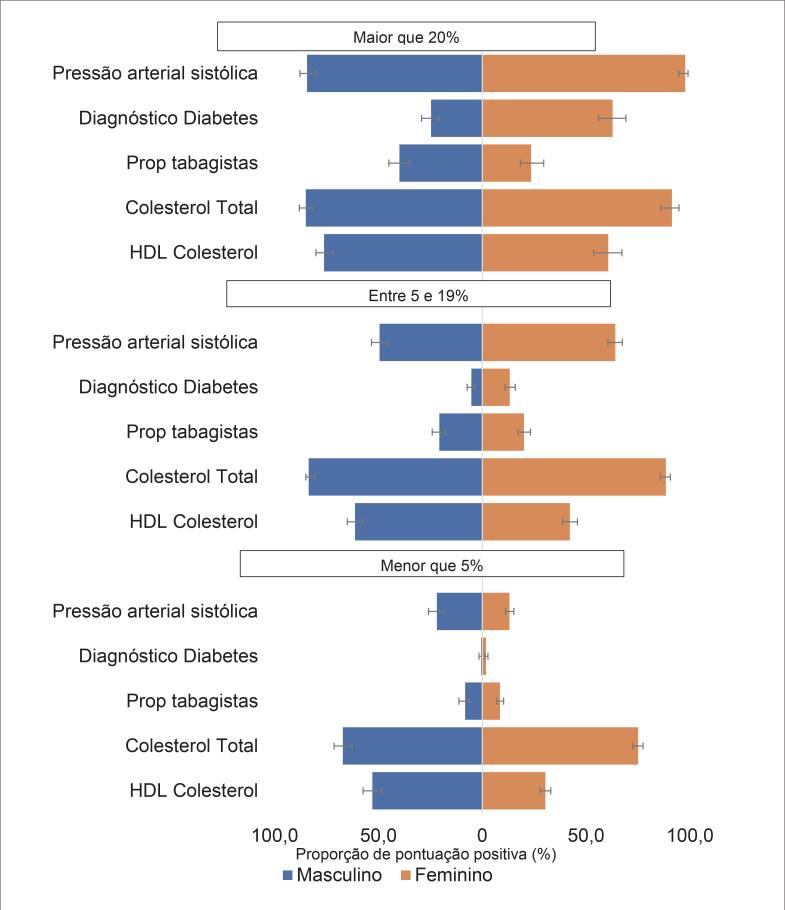
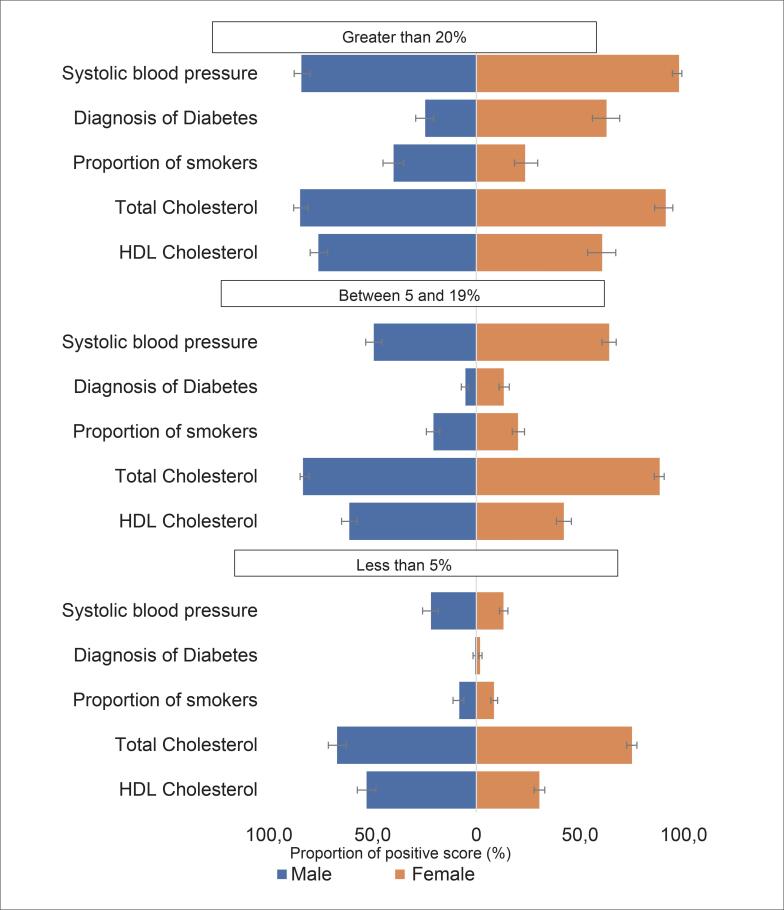
Most women (58.4%) had low cardiovascular risk, 32.9% had medium risk and 8.7% had high risk. Among men, 36.5% had low cardiovascular risk, 41.9% had medium risk and 21.6% had high risk. The risk increased with age and was high in the low-educated population. The proportion of the components of the Framingham model, by risk and sex, shows that, among women at high risk, the indicators that mostly contributed to cardiovascular risk were: systolic blood pressure, total cholesterol, HDL, diabetes and tobacco. Among men, systolic blood pressure, total cholesterol, HDL, tobacco and diabetes.
The study estimates, for the first time in Brazil, the risk of developing cardiovascular disease in ten years. The risk score is useful to support the prevention practices of these diseases, considering the clinical and epidemiological context.
心血管疾病是发病率和死亡率的主要原因,导致高昂的健康成本和巨大的经济损失。弗雷明汉评分被广泛用于对个体的心血管风险进行分层,以确定哪些人有更高的风险,从而针对该人群实施预防措施。
估计巴西成年人在未来 10 年内的心血管风险。
这是一项使用国家健康调查的子样本实验室数据进行的横断面研究。为了计算心血管风险,使用了按性别分层的弗雷明汉评分。
大多数女性(58.4%)心血管风险低,32.9%风险中等,8.7%风险高。男性中,36.5%心血管风险低,41.9%风险中等,21.6%风险高。风险随年龄增长而增加,且在受教育程度较低的人群中较高。按风险和性别划分的弗雷明汉模型各组成部分的比例表明,在高风险的女性中,导致心血管风险的主要指标是:收缩压、总胆固醇、高密度脂蛋白、糖尿病和吸烟。在男性中,主要指标是收缩压、总胆固醇、高密度脂蛋白、吸烟和糖尿病。
该研究首次在巴西估计了未来 10 年内患心血管疾病的风险。考虑到临床和流行病学背景,风险评分可用于支持这些疾病的预防实践。