Department of Pharmacology and Cancer Biology, Duke University, Durham, North Carolina, USA.
Department of Medicine, Duke University, Durham, North Carolina, USA.
J Clin Microbiol. 2021 Jun 18;59(7):e0231320. doi: 10.1128/JCM.02313-20.
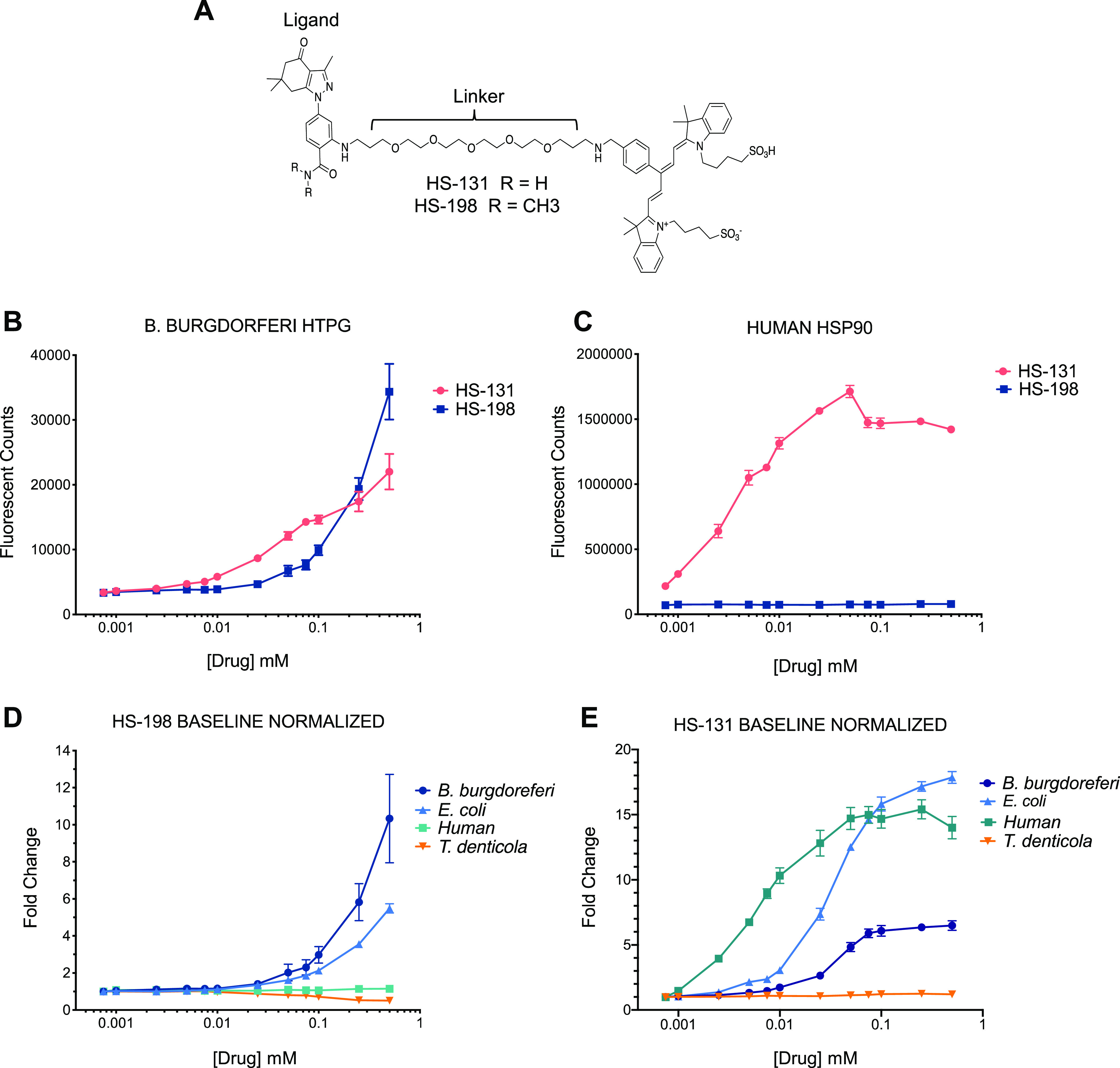
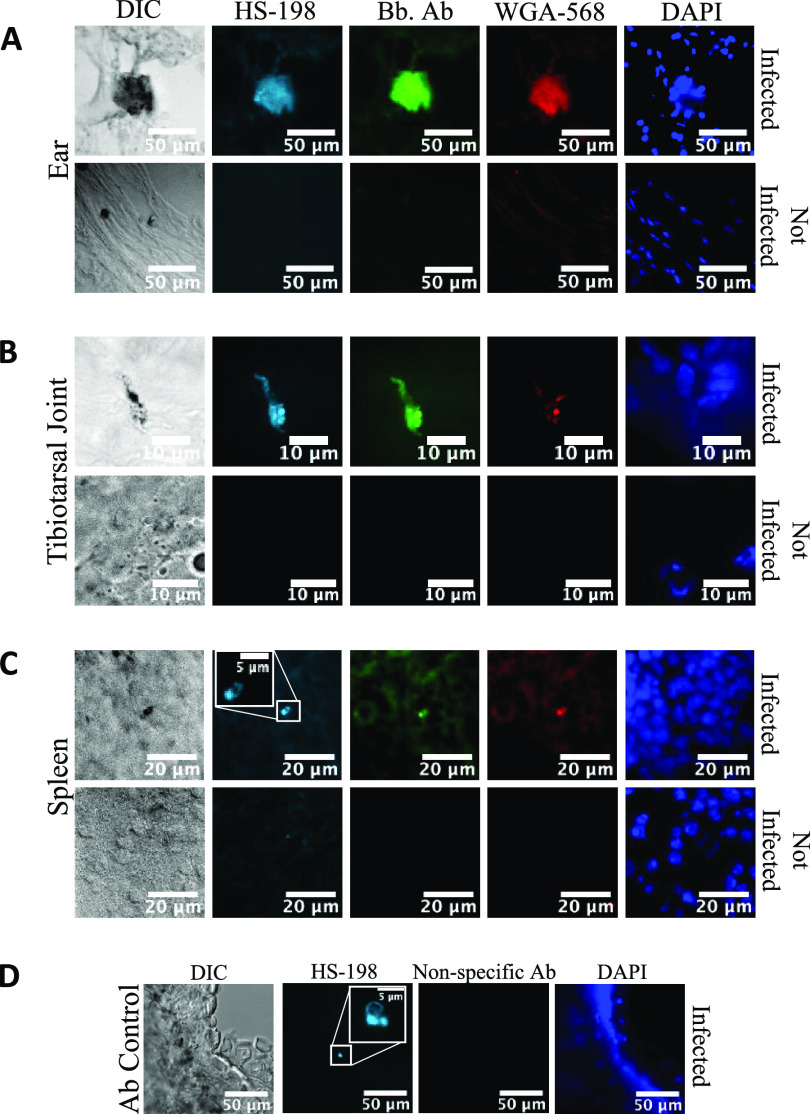
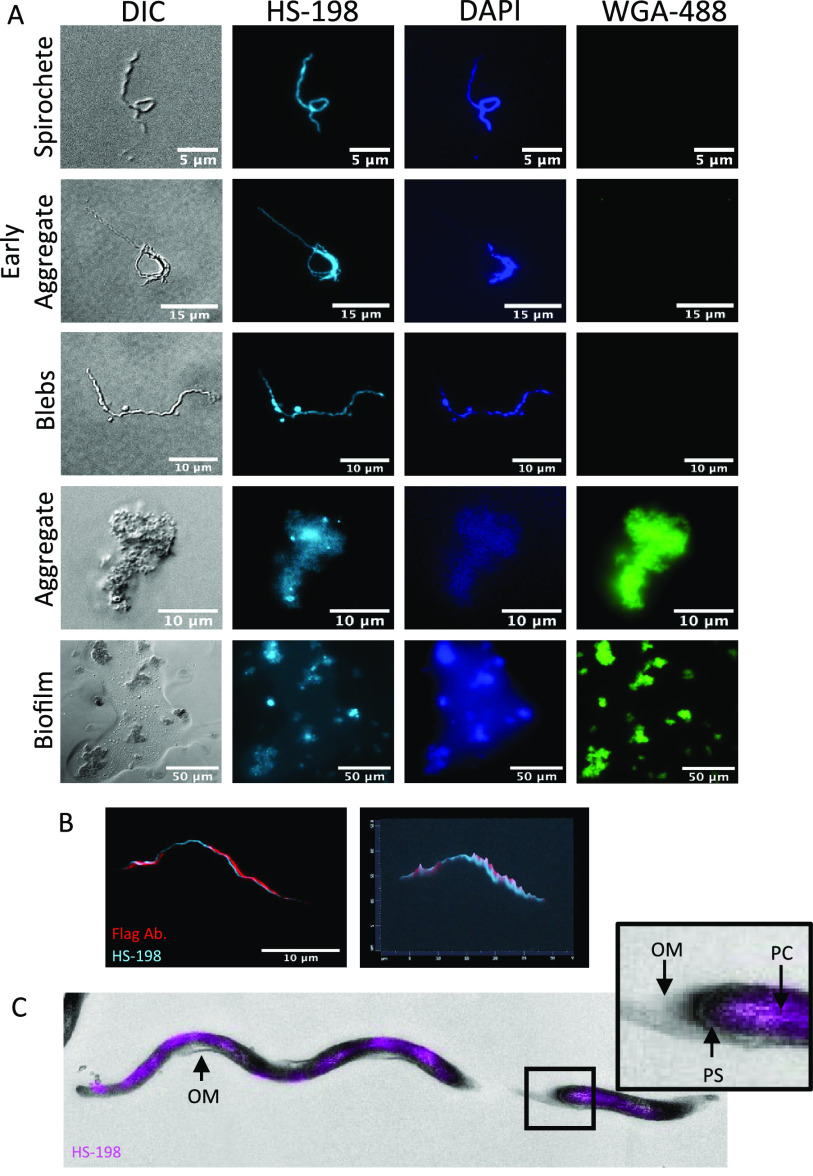
diagnostic imaging of bacterial infections is currently reliant on targeting their metabolic pathways, an ineffective method to identify microbial species with low metabolic activity. Here, we establish HS-198 as a small-molecule fluorescent conjugate that selectively targets the highly conserved bacterial protein HtpG (high-temperature protein G), within Borrelia burgdorferi, the bacterium responsible for Lyme disease. We describe the use of HS-198 to target morphologic forms of B. burgdorferi in both the logarithmic growth phase and the metabolically dormant stationary phase as well as in inactivated spirochetes. Furthermore, in a murine infection model, systemically injected HS-198 identified B. burgdorferi as revealed by imaging in postnecropsy tissue sections. These findings demonstrate how small-molecule probes directed at conserved bacterial protein targets can function to identify the microbe using noninvasive imaging and potentially as scaffolds to deliver antimicrobial agents to the pathogen.
目前,细菌性感染的诊断成像依赖于靶向其代谢途径,这是一种识别代谢活性低的微生物物种的无效方法。在这里,我们建立了 HS-198 作为一种小分子荧光缀合物,它可以选择性地靶向高度保守的细菌蛋白 HtpG(高温蛋白 G),这种蛋白存在于伯氏疏螺旋体中,伯氏疏螺旋体是导致莱姆病的细菌。我们描述了 HS-198 在对数生长期和代谢休眠的静止期以及失活的螺旋体中靶向伯氏疏螺旋体形态的用途。此外,在小鼠感染模型中,全身注射的 HS-198 通过在尸检后组织切片中的成像来识别伯氏疏螺旋体。这些发现表明,针对保守细菌蛋白靶标的小分子探针如何能够使用非侵入性成像来识别微生物,并有可能作为支架将抗菌剂递送到病原体。