Almasaudi Saad
Biology Department, Faculty of Science, King Abdulaziz University, Jeddah, Saudi Arabia.
Saudi J Biol Sci. 2021 Apr;28(4):2188-2196. doi: 10.1016/j.sjbs.2020.10.017. Epub 2020 Oct 16.
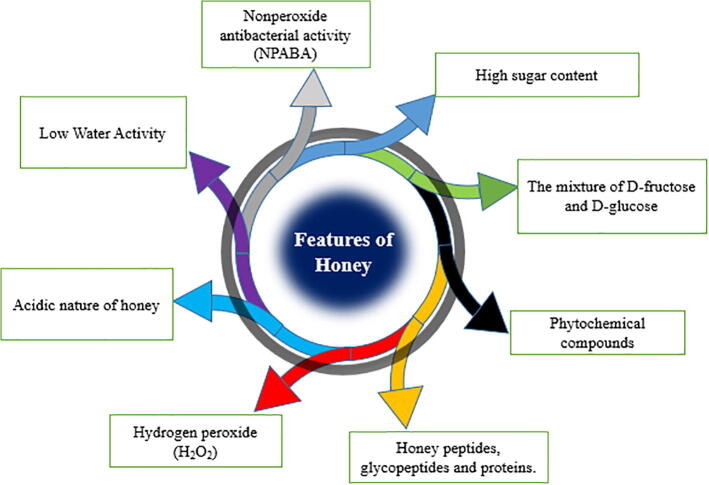
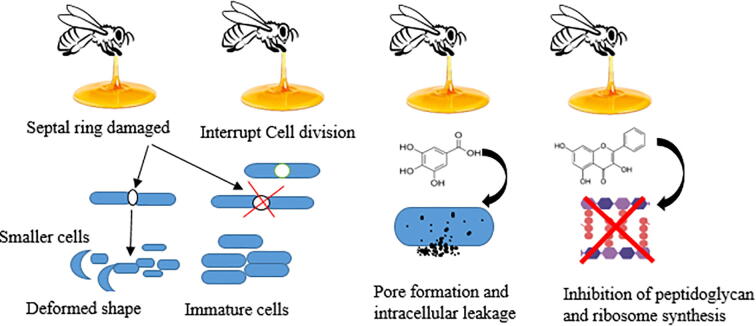
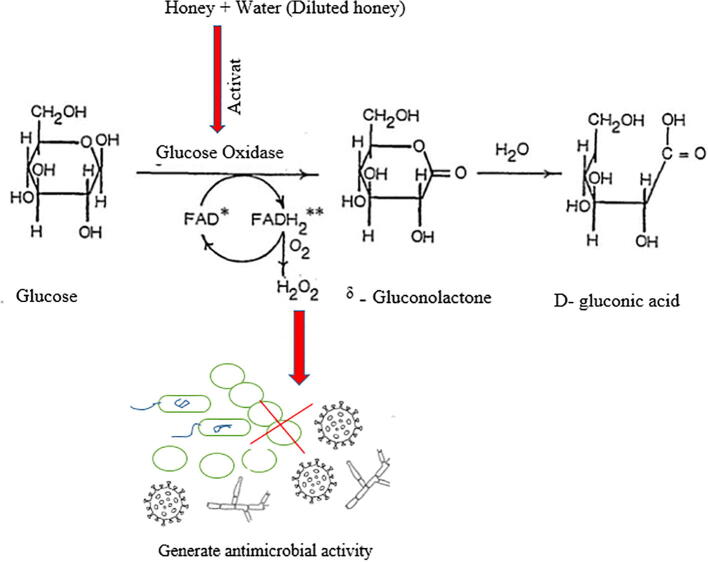
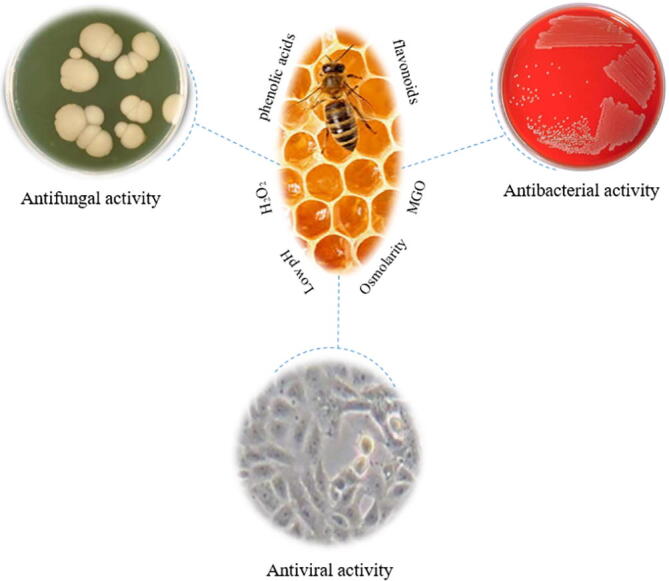
Honey is a powerful antimicrobial agent with a wide range of effects. Various components contribute to the antibacterial efficacy of honey: the sugar content; polyphenol compounds; hydrogen peroxide; 1,2-dicarbonyl compounds; and bee defensin-1. All of these elements are present at different concentrations depending on the source of nectar, bee type, and storage. These components work synergistically, allowing honey to be potent against a variety of microorganisms including multidrug resistant bacteria and modulate their resistance to antimicrobial agents. The effectiveness and potency of honey against microorganisms depends on the type of honey produced, which is contingent on its botanical origin, the health of the bee, its origin, and processing method. The application of antibiotics with honey yielded better antimicrobial potential and synergistic effects were noted against biofilms. In medicine, honey has been used in the treatment of surface wounds, burns, and inflammation, and has a synergistic effect when applied with antibiotics. Tissue repair is enhanced by the low pH of honey (3.5-4): causing a reduction in protease activity on the wound site, elevating oxygen release from hemoglobin and stimulating fibroblast and macrophage activity. Furthermore, HO has antiseptic effects, and it disinfects the wound site and stimulates production of vascular endothelial growth factor. The use of honey will clean wounds or burn areas from free radicals and reduces scarring and contractures. The anti-inflammatory and antibacterial potential of honey will keep the injured area moist and as such prevents it from deterioration and fibrosis. Honey can promote fast healing and reduce scarring and is very convenient for plastic surgery. Skin maceration is protected by honey due to its high osmolarity and because it keeps the injury moist. In non-infected areas, honey still reduced pain and inflammation. In general, the use of honey in medical settings has reduced economic loss and provided proven economic benefits by lowering direct costs in comparison to conventional treatments and by using less antibiotics, faster healing and less hospitalization stay. This review is intended to provide an overview of the antibacterial activities of honey and its applications.
蜂蜜是一种具有广泛作用的强大抗菌剂。多种成分促成了蜂蜜的抗菌功效:糖分含量、多酚化合物、过氧化氢、1,2 - 二羰基化合物以及蜜蜂防御素 - 1。所有这些成分的浓度因花蜜来源、蜜蜂种类和储存方式的不同而各异。这些成分协同发挥作用,使蜂蜜对包括多重耐药菌在内的多种微生物具有强大的抗菌能力,并能调节它们对抗菌剂的耐药性。蜂蜜对微生物的有效性和效力取决于所产蜂蜜的类型,而这又取决于其植物来源、蜜蜂的健康状况、产地以及加工方法。将抗生素与蜂蜜联合使用可产生更好的抗菌潜力,并且发现对生物膜有协同作用。在医学上,蜂蜜已被用于治疗体表伤口、烧伤和炎症,与抗生素联合使用时具有协同效应。蜂蜜的低pH值(3.5 - 4)可促进组织修复:降低伤口部位的蛋白酶活性,提高血红蛋白释放氧气的能力,并刺激成纤维细胞和巨噬细胞的活性。此外,过氧化氢具有防腐作用,可对伤口部位进行消毒并刺激血管内皮生长因子的产生。使用蜂蜜可清除伤口或烧伤部位的自由基,减少疤痕形成和挛缩。蜂蜜的抗炎和抗菌潜力可使受伤区域保持湿润,从而防止其恶化和纤维化。蜂蜜可促进快速愈合并减少疤痕形成,对整形手术非常方便。由于蜂蜜的高渗透压及其能保持伤口湿润,所以可防止皮肤浸渍。在未感染的区域,蜂蜜仍可减轻疼痛和炎症。总体而言,在医疗环境中使用蜂蜜减少了经济损失,并通过与传统治疗相比降低直接成本、减少抗生素使用、加快愈合速度和缩短住院时间提供了已被证实的经济效益。本综述旨在概述蜂蜜的抗菌活性及其应用。