Immunology Research Center, Medical Research Institute, Southwest University, Chongqing 402460, China.
College of Veterinary Medicine, Southwest University, Chongqing 402460, China.
Int J Mol Sci. 2021 Apr 1;22(7):3673. doi: 10.3390/ijms22073673.
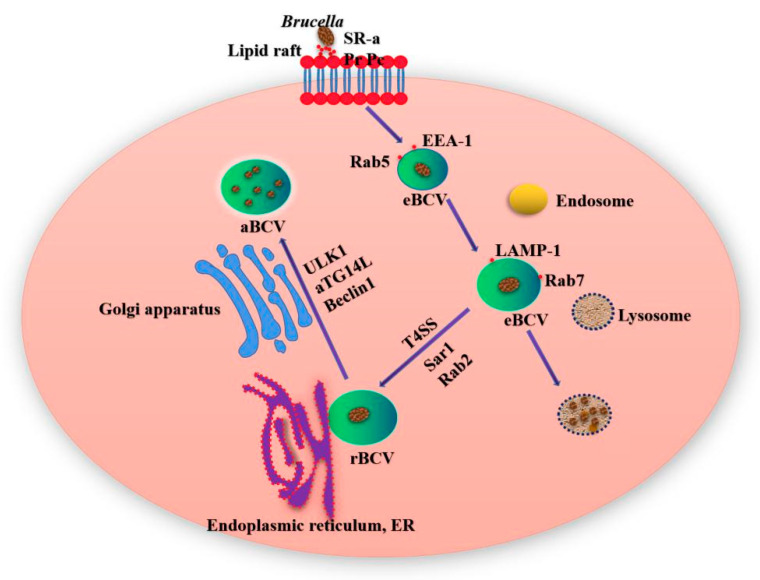
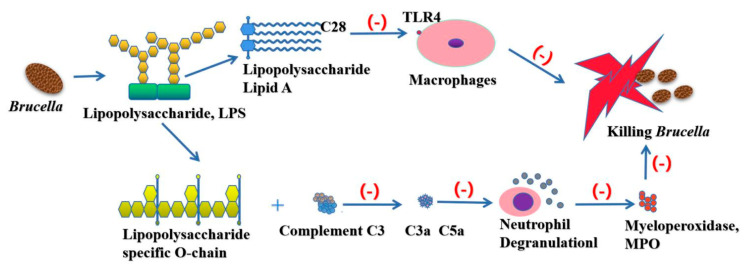
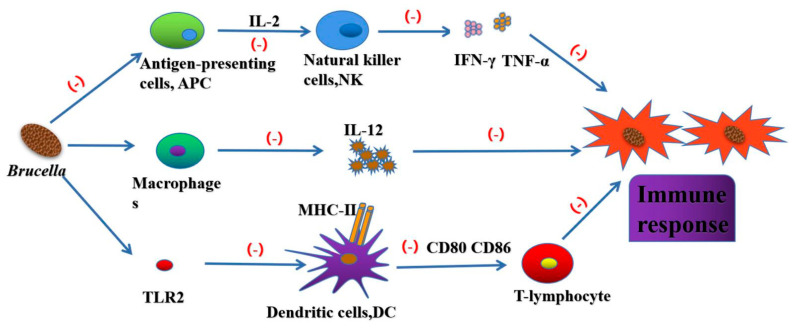
Brucellosis is a highly prevalent zoonotic disease characterized by abortion and reproductive dysfunction in pregnant animals. Although the mortality rate of Brucellosis is low, it is harmful to human health, and also seriously affects the development of animal husbandry, tourism and international trade. Brucellosis is caused by , which is a facultative intracellular parasitic bacteria. It mainly forms -containing vacuoles (BCV) in the host cell to avoid the combination with lysosome (Lys), so as to avoid the elimination of it by the host immune system. not only has the ability to resist the phagocytic bactericidal effect, but also can make the host cells form a microenvironment which is conducive to its survival, reproduction and replication, and survive in the host cells for a long time, which eventually leads to the formation of chronic persistent infection. can proliferate and replicate in cells, evade host immune response and induce persistent infection, which are difficult problems in the treatment and prevention of Brucellosis. Therefore, the paper provides a preliminary overview of the facultative intracellular parasitic and immune escape mechanisms of , which provides a theoretical basis for the later study on the pathogenesis of .
布鲁氏菌病是一种高度流行的动物源性传染病,其特征是妊娠动物流产和生殖功能障碍。虽然布鲁氏菌病的死亡率低,但它对人类健康有害,也严重影响畜牧业、旅游业和国际贸易的发展。布鲁氏菌病是由布鲁氏菌引起的,它是一种兼性细胞内寄生菌。它主要在宿主细胞中形成含有(BCV)的空泡,以避免与溶酶体(Lys)结合,从而避免被宿主免疫系统清除。不仅具有抵抗吞噬杀菌作用的能力,还能使宿主细胞形成有利于其生存、繁殖和复制的微环境,在宿主细胞中长期存活,最终导致慢性持续性感染的形成。可以在细胞内增殖和复制,逃避宿主免疫反应并诱导持续性感染,这是布鲁氏菌病治疗和预防的难题。因此,本文对布鲁氏菌的兼性细胞内寄生和免疫逃逸机制进行了初步概述,为后来研究布鲁氏菌的发病机制提供了理论依据。