Huertas Stella Maris, Bobadilla Pablo Ernesto, Alcántara Ignacio, Akkermans Emilie, van Eerdenburg Frank J C M
Departamento de Salud Publica Veterinaria, Facultad de Veterinaria, Universidad de la República Uruguay, Montevideo 11600, Uruguay.
OIE Collaborating Centre for Animal Welfare and Livestock Production Systems for Uruguay-A multi-national OIE Centre, Universidad de la República Uruguay, Montevideo 11600, Uruguay.
Animals (Basel). 2021 Apr 1;11(4):992. doi: 10.3390/ani11040992.
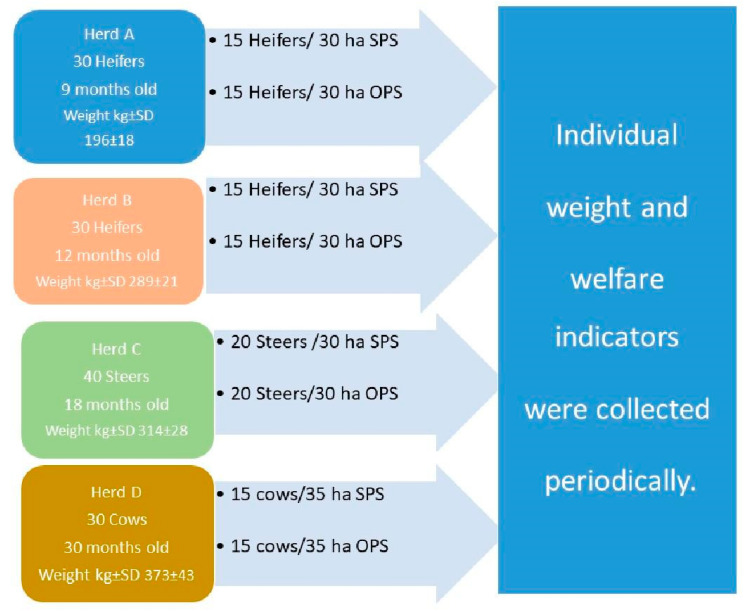
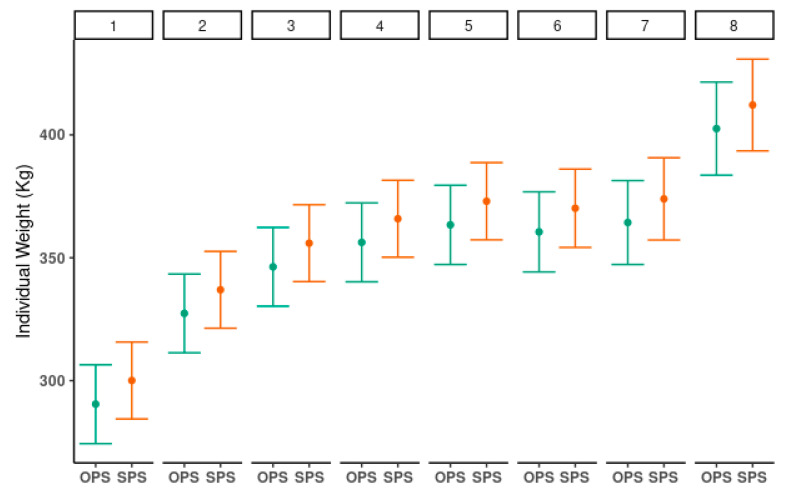
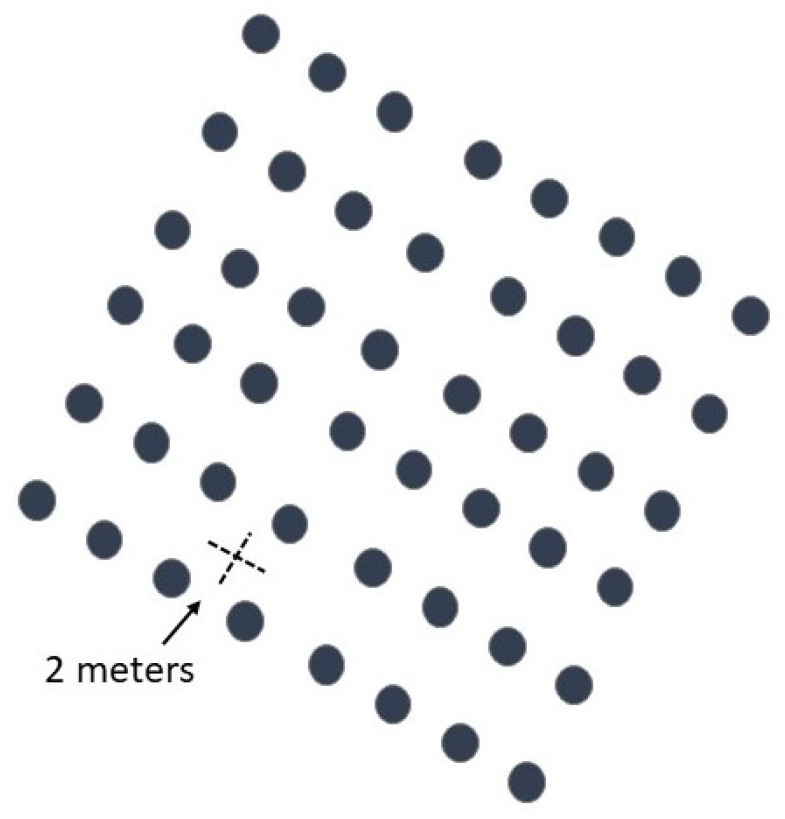
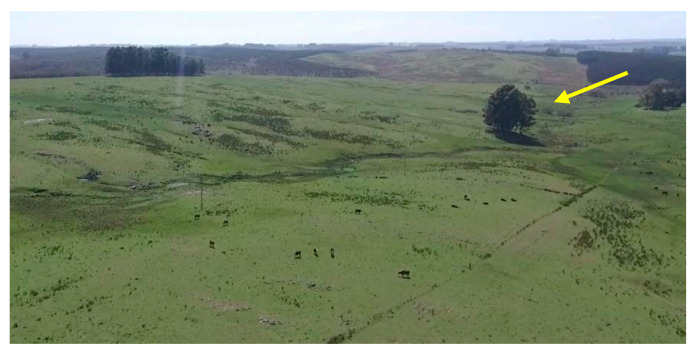
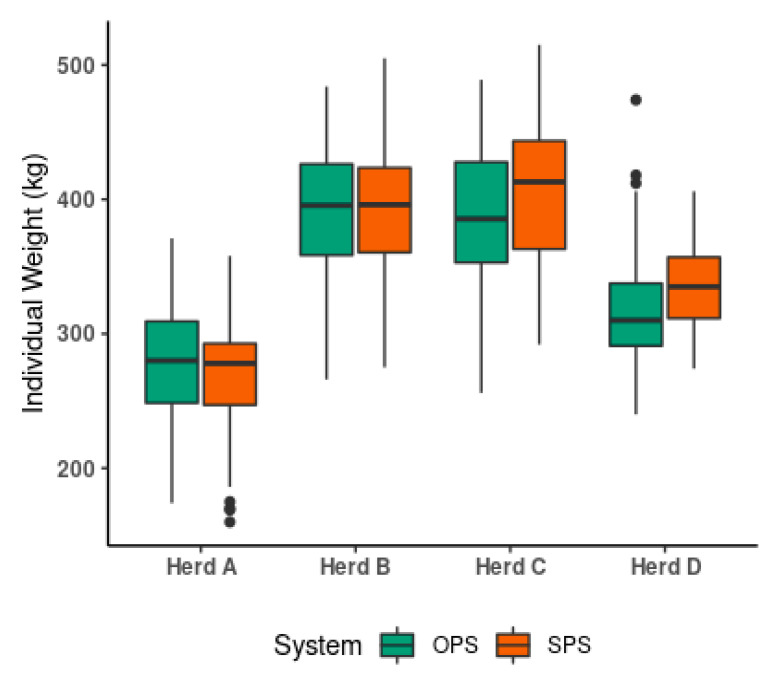
The potential benefits of keeping Zebu cattle in silvopastoral systems are well described in tropical regions. In order to obtain information on European breeds of beef cattle () in temperate climate zones, individual records of body weight and welfare indicators were obtained from 130 beef cattle. These belonged to four herds and were randomly allocated to two contiguous plots: Silvopastoral Systems (SPS) and Open Pastures Systems (OPS). The SPS in this study were areas with exotic trees of for paper pulp production planted in a 2 × 2 design (two meters between each tree) over diverse, native grasses. The OPS were large open areas with a great diversity of native grasses, herbs, and small plots of trees where the animals could rest and shelter from extreme weather conditions. Over the course of one year, individual body weights and a number of specific animal welfare indicators were measured every 45 days. After a descriptive analysis, a generalized linear mixed model (GLMM) with a Gaussian distribution, with time and system (OPS or SPS) fitted as fixed effects and individuals nested by herd as random intercepts, was used. The results showed that weight gain did not differ between the two systems. None of the animals showed any sign of impaired welfare in either system over the study period. Silvopastoral systems offer animals a sustainable and richer environment that will improves their welfare. The additional income provided by the wood production allows the farmers to maintain their traditional cattle farming lifestyle.
在热带地区,关于在林牧系统中饲养瘤牛的潜在益处已有详尽描述。为获取温带气候区欧洲肉牛品种()的相关信息,我们从130头肉牛中获取了个体体重记录和福利指标。这些肉牛分属四个牛群,被随机分配到两个相邻地块:林牧系统(SPS)和开放式牧场系统(OPS)。本研究中的林牧系统区域种植了用于纸浆生产的外来树木,树木按2×2的设计种植(树间距两米),树下是多样的本地草本植物。开放式牧场系统是大面积的开阔区域,有种类繁多的本地草本植物、草本植物和小块树木区域,供动物休息并躲避极端天气。在一年时间里,每45天测量一次个体体重和一些特定的动物福利指标。经过描述性分析后,使用了广义线性混合模型(GLMM),该模型采用高斯分布,将时间和系统(OPS或SPS)作为固定效应,将按牛群嵌套的个体作为随机截距。结果表明,两个系统之间的体重增加没有差异。在研究期间,两个系统中的动物均未表现出任何福利受损的迹象。林牧系统为动物提供了一个可持续且更丰富的环境,这将改善它们的福利。木材生产带来的额外收入使农民能够维持其传统的养牛生活方式。