Silva Welligton Conceição da, Silva Jamile Andréa Rodrigues da, Silva Éder Bruno Rebelo da, Barbosa Antônio Vinicius Correa, Sousa Carlos Eduardo Lima, Carvalho Katarina Cardoso de, Santos Maria Roseane Pereira Dos, Neves Kedson Alexandri Lobo, Martorano Lucieta Guerreiro, Camargo Júnior Raimundo Nonato Colares, Lourenço-Júnior José de Brito
Postgraduate Program in Animal Science (PPGCAN), Institute of Veterinary Medicine, Federal University of Para (UFPA), Federal Rural University of the Amazônia (UFRA), Brazilian Agricultural Research Corporation (EMBRAPA), Castanhal 68746-360, Brazil.
Institute of Animal Health and Production, Federal Rural University of the Amazônia (UFRA), Belem 66077-830, Brazil.
Animals (Basel). 2023 Aug 28;13(17):2735. doi: 10.3390/ani13172735.
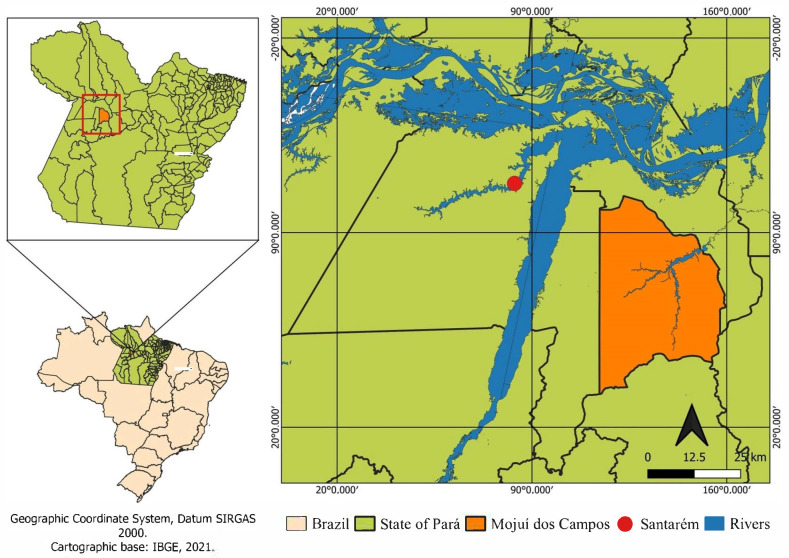
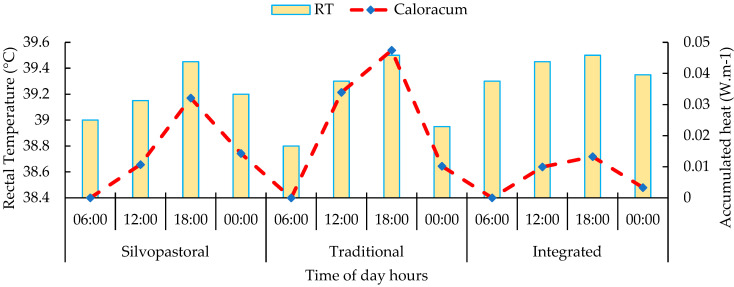
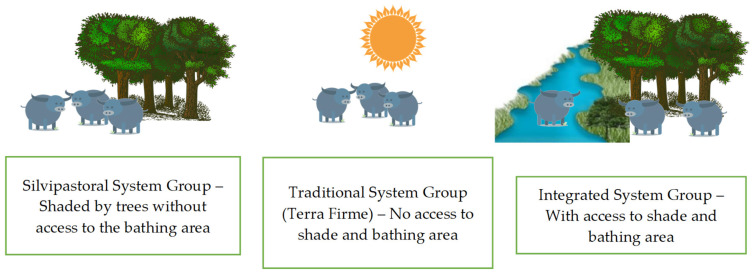
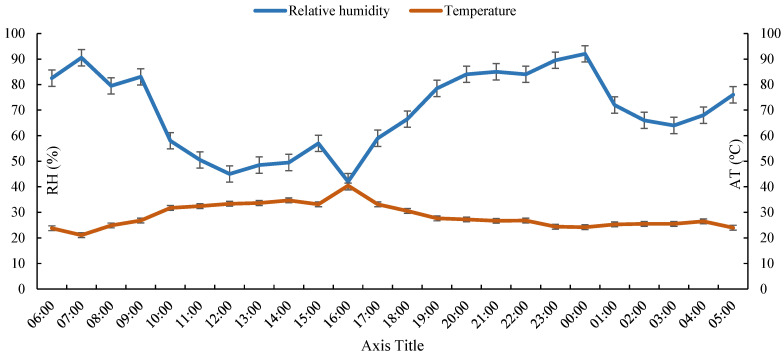
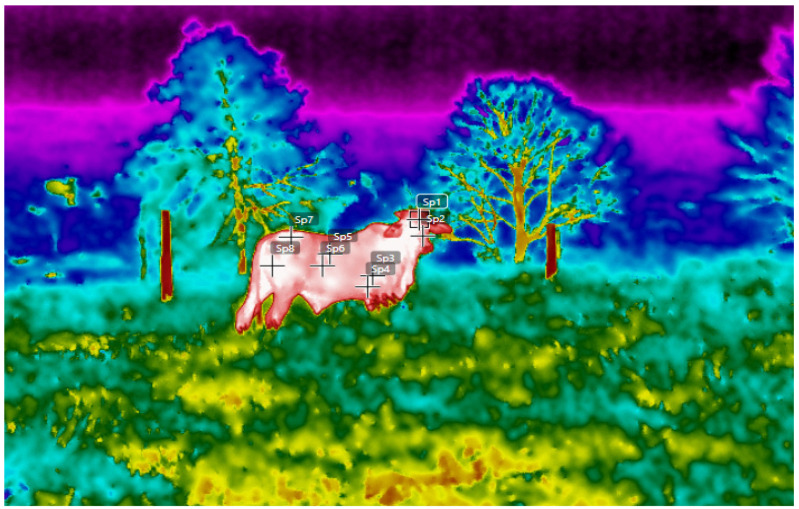
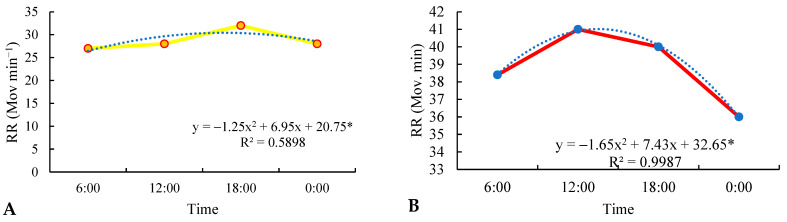
In the Lower Amazon mesoregion, there are basically three types of production systems: the traditional (without shade and no bathing area), the silvopastoral (with shade and no bathing area), and the integrated (with shade and bathing area). It is considered that the type of production system influences the thermal comfort and productivity of cattle, so this research aims to evaluate the influence of these three types of production systems on the thermoregulation of Nellore cattle. The experiment was carried out on a rural property for raising cattle, located in Mojuí dos Campos, Pará, Brazil, during the transition period (June/July). Thirty bovine males (not castrated, aged between 18 and 20 months, average weight of 250 ± 36 kg, body condition score of 3.5, clinically healthy) were randomly divided into three groups: Silvopastoral System-SS ( = 10), Traditional System-TS ( = 10), and Integrated System-IS ( = 10). Climate variables were collected (air temperature (AT °C), relative humidity (RH %), wind speed (WS, m/s), solar radiation (SR), black globe temperature (BGT °C), and physiological parameters, such as respiratory rate (RR) and rectal temperature (RT)) at 6 a.m., 12 p.m., 6 p.m., and 12 a.m. to determine the thermal comfort situation of the animals. Thermographic images of the environment and animals were captured in order to obtain the body surface temperature (BST) through infrared thermography. The Benezra Thermal Comfort Index (BTCI), Environmental Stress Index (ESI), Equivalent Temperature Index (ETI), and Iberian Heat Tolerance Index (Iberian HTI) were used. The results showed that the silvopastoral system, with shading by chestnut trees and an ample vegetative area, presented better thermal conditions, with an average of 28.98 °C, in comparison with the traditional system (35.93 °C) and the integrated one (34.11 °C). It was observed that the body surface temperature of cattle did not differ significantly between the anatomical regions of the body and the studied systems ( > 0.05). As for the respiratory rate, the traditional system registered higher values, with an average of 41 movements per minute, indicating possible thermal stress ( < 0.05). The thermal comfort indices revealed that all systems presented moderate stress conditions during times of higher solar intensity. It is concluded that the silvopastoral system proved to be more favorable for cattle, providing shade and reducing thermal stress, which may have a positive impact on animal welfare and productivity in this region.
在亚马逊河下游中区域,基本上有三种生产系统类型:传统型(无遮荫且无洗浴区)、农牧混合型(有遮荫且无洗浴区)和综合型(有遮荫且有洗浴区)。人们认为生产系统类型会影响牛的热舒适度和生产力,因此本研究旨在评估这三种生产系统类型对内洛尔牛体温调节的影响。实验于巴西帕拉州莫茹伊 - 多斯坎波斯的一个养牛农村地产上,在过渡时期(6月/7月)进行。三十头公牛(未阉割,年龄在18至20个月之间,平均体重为250±36千克,体况评分为3.5,临床健康)被随机分为三组:农牧混合系统 - SS(= 10)、传统系统 - TS(= 10)和综合系统 - IS(= 10)。在上午6点、中午12点、下午6点和凌晨12点收集气候变量(气温(AT,°C)、相对湿度(RH,%)、风速(WS,米/秒)、太阳辐射(SR)、黑球温度(BGT,°C))以及生理参数,如呼吸频率(RR)和直肠温度(RT),以确定动物的热舒适状况。拍摄环境和动物的热成像图像,以便通过红外热成像获得体表温度(BST)。使用了贝内兹拉热舒适指数(BTCI)、环境压力指数(ESI)、等效温度指数(ETI)和伊比利亚耐热指数(伊比利亚HTI)。结果表明,与传统系统(35.93°C)和综合系统(34.11°C)相比,有栗树遮荫且植被丰富的农牧混合系统呈现出更好的热条件,平均为28.98°C。观察到牛的体表温度在身体各解剖区域和所研究的系统之间没有显著差异(P>0.05)。至于呼吸频率,传统系统记录的值更高,平均每分钟41次呼吸,表明可能存在热应激(P<0.05)。热舒适指数显示,在太阳强度较高时,所有系统都呈现出中等压力状况。结论是,农牧混合系统被证明对牛更有利,提供了遮荫并减少了热应激,这可能对该地区的动物福利和生产力产生积极影响。