Miranda Bruno, Rea Ilaria, Dardano Principia, De Stefano Luca, Forestiere Carlo
Institute of Applied Sciences and Intelligent Systems, Unit of Naples, National Research Council, Via P. Castellino 111, 80131 Napoli, Italy.
Department of Electrical Engineering and Information Technology, University of Naples Federico II, Via Claudio 21, 80125 Napoli, Italy.
Biosensors (Basel). 2021 Apr 4;11(4):107. doi: 10.3390/bios11040107.
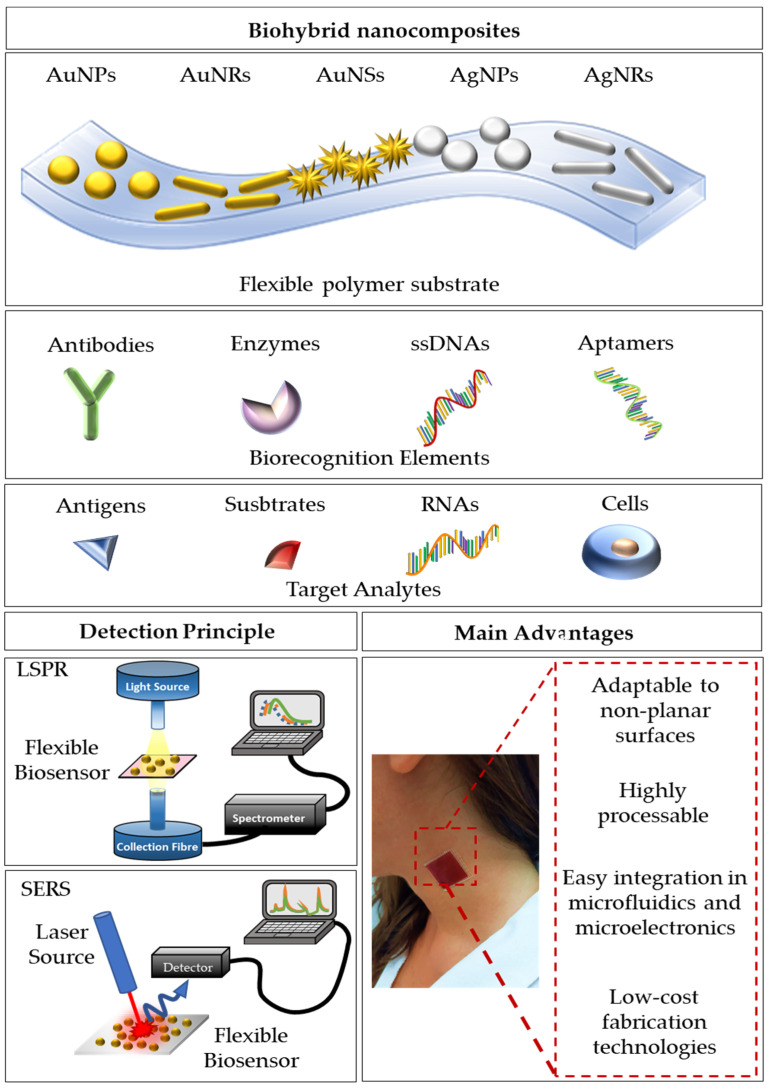
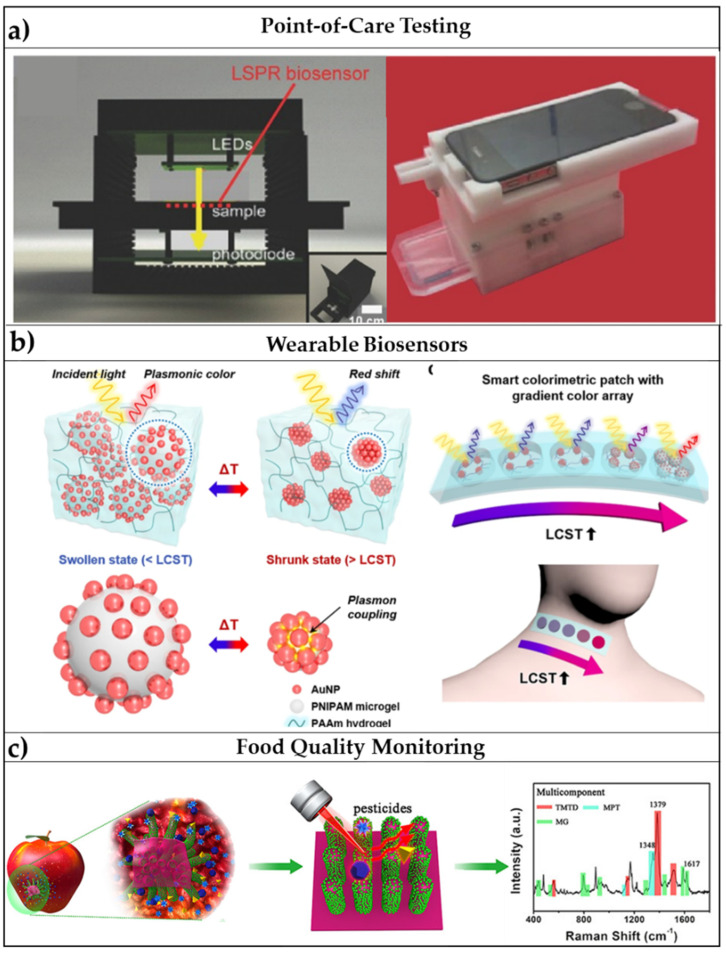
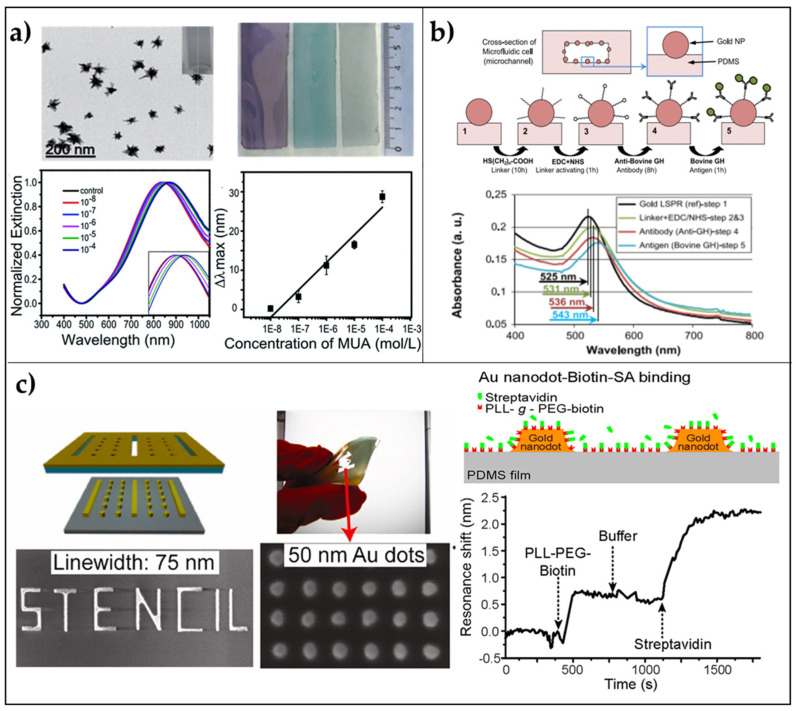
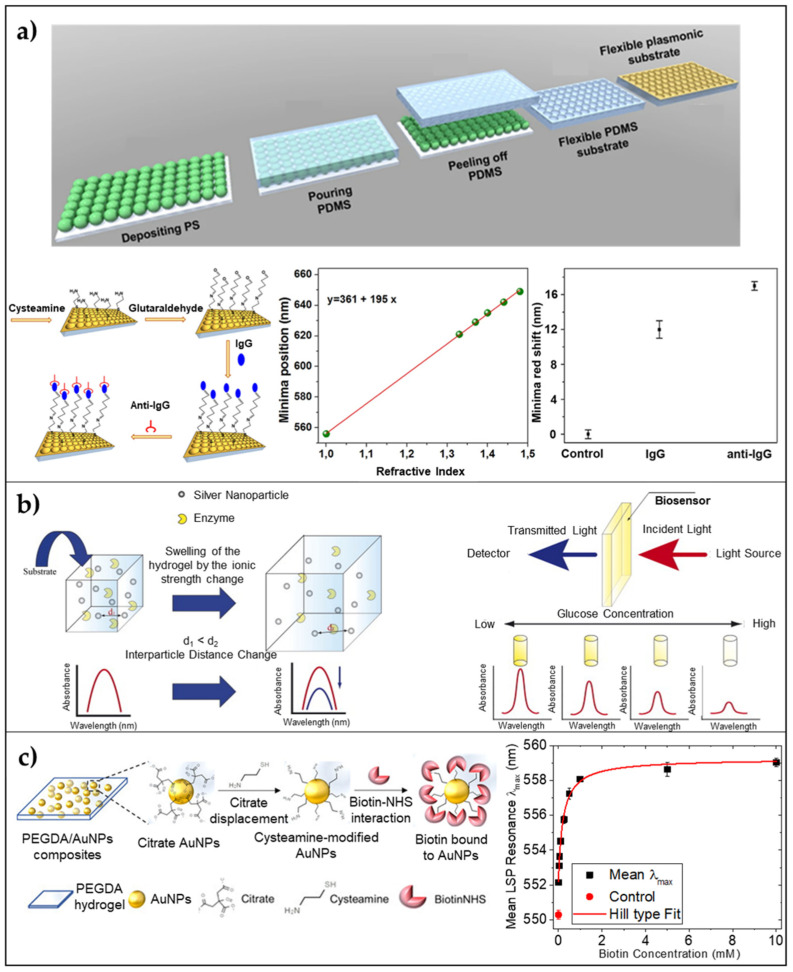
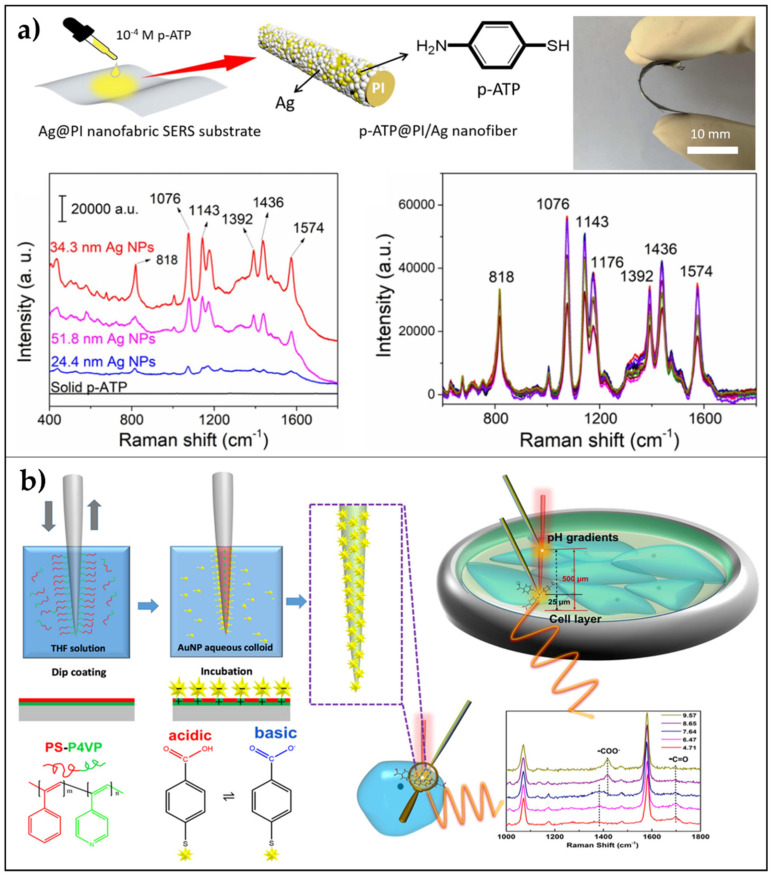
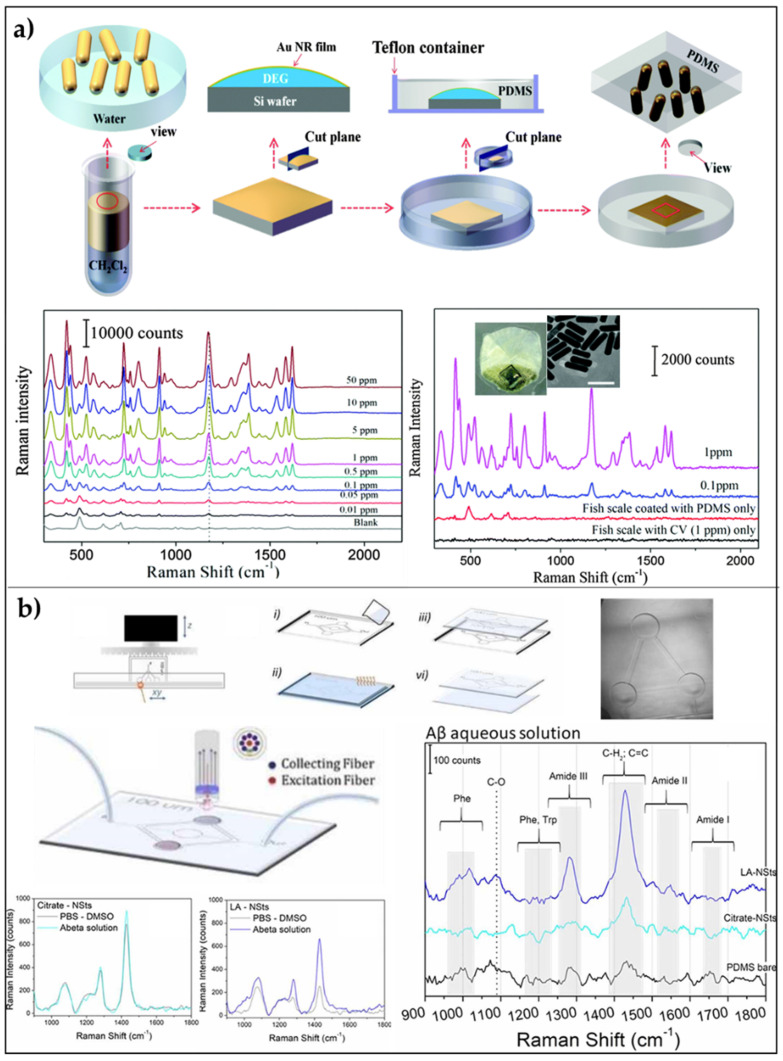
Over the last 30 years, optical biosensors based on nanostructured materials have obtained increasing interest since they allow the screening of a wide variety of biomolecules with high specificity, low limits of detection, and great sensitivity. Among them, flexible optical platforms have the advantage of adapting to non-planar surfaces, suitable for in vivo and real-time monitoring of diseases and assessment of food safety. In this review, we summarize the newest and most advanced platforms coupling optically active materials (noble metal nanoparticles) and flexible substrates giving rise to hybrid nanomaterials and/or nanocomposites, whose performances are comparable to the ones obtained with hard substrates (e.g., glass and semiconductors). We focus on localized surface plasmon resonance (LSPR)-based and surface-enhanced Raman spectroscopy (SERS)-based biosensors. We show that large-scale, cost-effective plasmonic platforms can be realized with the currently available techniques and we emphasize the open issues associated with this topic.
在过去30年里,基于纳米结构材料的光学生物传感器越来越受到关注,因为它们能够以高特异性、低检测限和高灵敏度筛选多种生物分子。其中,柔性光学平台具有适应非平面表面的优势,适用于疾病的体内实时监测和食品安全评估。在这篇综述中,我们总结了耦合光学活性材料(贵金属纳米颗粒)和柔性基底以产生杂化纳米材料和/或纳米复合材料的最新和最先进的平台,其性能与使用硬质基底(如玻璃和半导体)所获得的性能相当。我们重点关注基于局域表面等离子体共振(LSPR)和表面增强拉曼光谱(SERS)的生物传感器。我们表明,利用现有技术可以实现大规模、具有成本效益的等离子体平台,并且我们强调了与该主题相关的未解决问题。