• 文献检索
  • 文档翻译
  • 深度研究
  • 学术资讯
  • Suppr Zotero 插件Zotero 插件
  • 邀请有礼
  • 套餐&价格
  • 历史记录
应用&插件
Suppr Zotero 插件Zotero 插件浏览器插件Mac 客户端Windows 客户端微信小程序
定价
高级版会员购买积分包购买API积分包
服务
文献检索文档翻译深度研究API 文档MCP 服务
关于我们
关于 Suppr公司介绍联系我们用户协议隐私条款
关注我们

Suppr 超能文献

核心技术专利:CN118964589B侵权必究
粤ICP备2023148730 号-1Suppr @ 2026

文献检索

告别复杂PubMed语法,用中文像聊天一样搜索,搜遍4000万医学文献。AI智能推荐,让科研检索更轻松。

立即免费搜索

文件翻译

保留排版,准确专业,支持PDF/Word/PPT等文件格式,支持 12+语言互译。

免费翻译文档

深度研究

AI帮你快速写综述,25分钟生成高质量综述,智能提取关键信息,辅助科研写作。

立即免费体验

抗流感病毒表面糖蛋白的药物:作用机制与耐药性。

Antivirals Targeting the Surface Glycoproteins of Influenza Virus: Mechanisms of Action and Resistance.

机构信息

State Key Laboratory of Respiratory Diseases, Guangzhou Medical University, 195 Dongfengxi Rd, Guangzhou 510182, China.

Department of Infectious Diseases, St. Jude Children's Research Hospital, 262 Danny Thomas Place, Memphis, TN 38105, USA.

出版信息

Viruses. 2021 Apr 6;13(4):624. doi: 10.3390/v13040624.

DOI:10.3390/v13040624
PMID:33917376
原文链接:https://pmc.ncbi.nlm.nih.gov/articles/PMC8067422/
Abstract

Hemagglutinin and neuraminidase, which constitute the glycoprotein spikes expressed on the surface of influenza A and B viruses, are the most exposed parts of the virus and play critical roles in the viral lifecycle. As such, they make prominent targets for the immune response and antiviral drugs. Neuraminidase inhibitors, particularly oseltamivir, constitute the most commonly used antivirals against influenza viruses, and they have proved their clinical utility against seasonal and emerging influenza viruses. However, the emergence of resistant strains remains a constant threat and consideration. Antivirals targeting the hemagglutinin protein are relatively new and have yet to gain global use but are proving to be effective additions to the antiviral repertoire, with a relatively high threshold for the emergence of resistance. Here we review antiviral drugs, both approved for clinical use and under investigation, that target the influenza virus hemagglutinin and neuraminidase proteins, focusing on their mechanisms of action and the emergence of resistance to them.

摘要

血凝素和神经氨酸酶构成了甲型和乙型流感病毒表面表达的糖蛋白刺突,它们是病毒最暴露的部分,在病毒生命周期中起着关键作用。因此,它们成为免疫反应和抗病毒药物的主要目标。神经氨酸酶抑制剂,特别是奥司他韦,是目前最常用于治疗流感病毒的抗病毒药物,它们已被证明对季节性和新发流感病毒具有临床疗效。然而,耐药株的出现仍然是一个持续的威胁和考虑因素。针对血凝素蛋白的抗病毒药物相对较新,尚未在全球范围内使用,但已被证明是抗病毒药物库的有效补充,其耐药性的出现具有相对较高的阈值。在这里,我们综述了已批准临床使用和正在研究中的针对流感病毒血凝素和神经氨酸酶蛋白的抗病毒药物,重点介绍它们的作用机制以及对它们产生耐药性的情况。
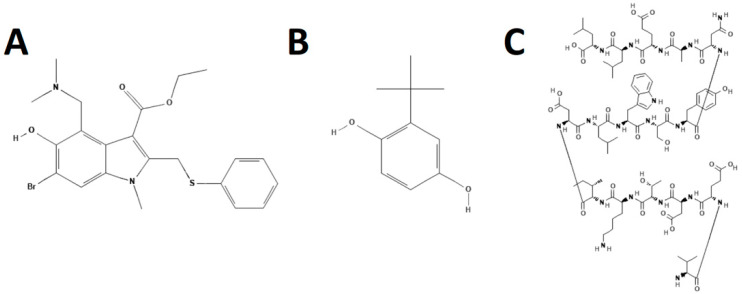
https://cdn.ncbi.nlm.nih.gov/pmc/blobs/f8b0/8067422/0a47d0a1d4ce/viruses-13-00624-g003.jpg
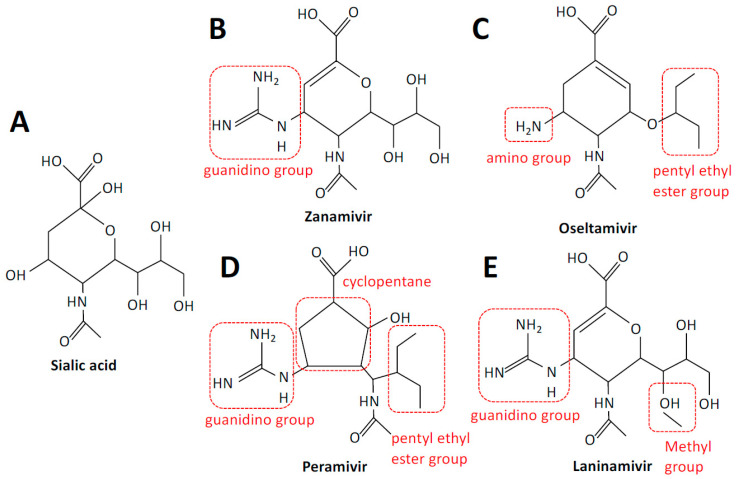
https://cdn.ncbi.nlm.nih.gov/pmc/blobs/f8b0/8067422/59bea9aff09a/viruses-13-00624-g001.jpg
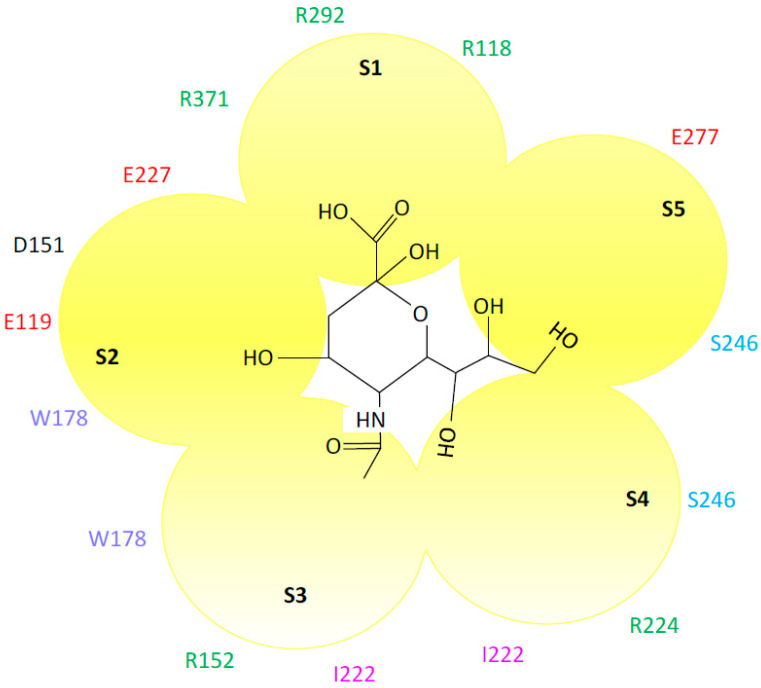
https://cdn.ncbi.nlm.nih.gov/pmc/blobs/f8b0/8067422/b7aa69c93aed/viruses-13-00624-g002.jpg
https://cdn.ncbi.nlm.nih.gov/pmc/blobs/f8b0/8067422/0a47d0a1d4ce/viruses-13-00624-g003.jpg
https://cdn.ncbi.nlm.nih.gov/pmc/blobs/f8b0/8067422/59bea9aff09a/viruses-13-00624-g001.jpg
https://cdn.ncbi.nlm.nih.gov/pmc/blobs/f8b0/8067422/b7aa69c93aed/viruses-13-00624-g002.jpg
https://cdn.ncbi.nlm.nih.gov/pmc/blobs/f8b0/8067422/0a47d0a1d4ce/viruses-13-00624-g003.jpg

相似文献

1
Antivirals Targeting the Surface Glycoproteins of Influenza Virus: Mechanisms of Action and Resistance.抗流感病毒表面糖蛋白的药物:作用机制与耐药性。
Viruses. 2021 Apr 6;13(4):624. doi: 10.3390/v13040624.
2
[High prevalence of antiviral resistant influenza, and reduced clinical effectiveness of the antivirals against resistant influenza strains].[抗病毒耐药性流感的高流行率以及抗病毒药物对耐药流感毒株的临床有效性降低]
Jpn J Antibiot. 2010 Feb;63(1):81-91.
3
In vitro evaluation of neuraminidase inhibitors using the neuraminidase-dependent release assay of hemagglutinin-pseudotyped viruses.使用血凝素假型病毒的神经氨酸酶依赖性释放测定法对神经氨酸酶抑制剂进行体外评估。
Antiviral Res. 2008 Sep;79(3):199-205. doi: 10.1016/j.antiviral.2008.03.002. Epub 2008 Apr 14.
4
Influenza virus resistance to neuraminidase inhibitors.流感病毒对神经氨酸酶抑制剂的耐药性。
Antiviral Res. 2013 May;98(2):174-85. doi: 10.1016/j.antiviral.2013.03.014. Epub 2013 Mar 22.
5
Neuraminidase inhibitor resistance in influenza viruses.流感病毒中的神经氨酸酶抑制剂耐药性。
J Med Virol. 2007 Oct;79(10):1577-86. doi: 10.1002/jmv.20951.
6
Effect of aloin on viral neuraminidase and hemagglutinin-specific T cell immunity in acute influenza.芦荟素对急性流感病毒神经氨酸酶和血凝素特异性 T 细胞免疫的影响。
Phytomedicine. 2019 Nov;64:152904. doi: 10.1016/j.phymed.2019.152904. Epub 2019 Apr 4.
7
[Neuraminidase inhibitors resistance in influenza viruses and the related mechanisms].[流感病毒中的神经氨酸酶抑制剂耐药性及其相关机制]
Bing Du Xue Bao. 2012 Sep;28(5):572-6.
8
Influenza virus resistance to antiviral therapy.流感病毒对抗病毒治疗的耐药性。
Adv Pharmacol. 2013;67:217-46. doi: 10.1016/B978-0-12-405880-4.00006-8.
9
Screening for Neuraminidase Inhibitor Resistance Markers among Avian Influenza Viruses of the N4, N5, N6, and N8 Neuraminidase Subtypes.对N4、N5、N6和N8神经氨酸酶亚型禽流感病毒中的神经氨酸酶抑制剂耐药性标志物进行筛查。
J Virol. 2017 Dec 14;92(1). doi: 10.1128/JVI.01580-17. Print 2018 Jan 1.
10
Clinical Implications of Antiviral Resistance in Influenza.流感病毒耐药性的临床意义
Viruses. 2015 Sep 14;7(9):4929-44. doi: 10.3390/v7092850.

引用本文的文献

1
Unfurling the Potential of Antiviral Agents Aimed for RNA Virus Ailment.挖掘针对RNA病毒疾病的抗病毒药物的潜力
Curr Drug Targets. 2025;26(8):534-550. doi: 10.2174/0113894501336800250220051811.
2
Influenza neuraminidase mutations and resistance to neuraminidase inhibitors.流感神经氨酸酶突变与对神经氨酸酶抑制剂的耐药性。
Emerg Microbes Infect. 2024 Dec;13(1):2429627. doi: 10.1080/22221751.2024.2429627. Epub 2024 Nov 26.
3
Drug resistance and possible therapeutic options against influenza A virus infection over past years.

本文引用的文献

1
Profiling of Laninamivir-Resistant Substitutions in N3 to N9 Avian Influenza Virus Neuraminidase Subtypes and Their Association with Susceptibility.流感病毒神经氨酸酶亚型 N3 至 N9 中 Laninamivir 耐药取代的分析及其与敏感性的关系。
J Virol. 2020 Dec 9;95(1). doi: 10.1128/JVI.01679-20.
2
Five Novel Non-Sialic Acid-Like Scaffolds Inhibit In Vitro H1N1 and H5N2 Neuraminidase Activity of Influenza a Virus.五种新型非唾液酸样支架抑制甲型流感病毒 H1N1 和 H5N2 神经氨酸酶活性。
Molecules. 2020 Sep 16;25(18):4248. doi: 10.3390/molecules25184248.
3
In Vitro Characterization of Multidrug-Resistant Influenza A(H1N1)pdm09 Viruses Carrying a Dual Neuraminidase Mutation Isolated from Immunocompromised Patients.
近年来抗流感 A 病毒感染的耐药性及可能的治疗选择。
Arch Microbiol. 2024 Nov 5;206(12):458. doi: 10.1007/s00203-024-04181-3.
4
Advancements in Antiviral Drug Development: Comprehensive Insights into Design Strategies and Mechanisms Targeting Key Viral Proteins.抗病毒药物研发进展:针对关键病毒蛋白的设计策略和作用机制的综合见解。
J Microbiol Biotechnol. 2024 Jul 28;34(7):1376-1384. doi: 10.4014/jmb.2403.03008. Epub 2024 Apr 29.
5
Emergence of Eurasian Avian-Like Swine Influenza A (H1N1) virus in a child in Shandong Province, China.中国山东省一名儿童中出现欧亚类禽源性 H1N1 流感病毒。
BMC Infect Dis. 2024 Jun 1;24(1):550. doi: 10.1186/s12879-024-09441-7.
6
A systematic review on the incidence of influenza viruses in wastewater matrices: Implications for public health.关于废水中流感病毒发生率的系统综述:对公共卫生的启示。
PLoS One. 2024 Apr 25;19(4):e0291900. doi: 10.1371/journal.pone.0291900. eCollection 2024.
7
Heteromultivalent Ligand Display on Reversible Self-Assembled Monolayers (rSAMs): A Fluidic Platform for Tunable Influenza Virus Recognition.异多价配体在可重构自组装单层(rSAMs)上的展示:用于流感病毒识别的可调式流体平台。
ACS Appl Mater Interfaces. 2024 Jan 24;16(3):3139-3146. doi: 10.1021/acsami.3c15699. Epub 2024 Jan 10.
8
Peptides as Therapeutic Agents: Challenges and Opportunities in the Green Transition Era.肽类作为治疗药物:绿色转型时代的挑战与机遇。
Molecules. 2023 Oct 19;28(20):7165. doi: 10.3390/molecules28207165.
9
Targeting the Human Influenza a Virus: The Methods, Limitations, and Pitfalls of Virtual Screening for Drug-like Candidates Including Scaffold Hopping and Compound Profiling.靶向人甲型流感病毒:药物样候选物的虚拟筛选方法、局限性和陷阱,包括骨架跃迁和化合物剖析。
Viruses. 2023 Apr 26;15(5):1056. doi: 10.3390/v15051056.
10
Cap snatch prevention: a novel approach to tackle influenza viruses.帽抢夺预防:一种应对流感病毒的新方法。
Signal Transduct Target Ther. 2023 May 8;8(1):193. doi: 10.1038/s41392-023-01474-9.
从免疫功能低下患者中分离出的携带双重神经氨酸酶突变的甲型H1N1pdm09多药耐药流感病毒的体外特性研究
Pathogens. 2020 Sep 2;9(9):725. doi: 10.3390/pathogens9090725.
4
Phage capsid nanoparticles with defined ligand arrangement block influenza virus entry.具有特定配体排列的噬菌体衣壳纳米颗粒可阻止流感病毒进入。
Nat Nanotechnol. 2020 May;15(5):373-379. doi: 10.1038/s41565-020-0660-2. Epub 2020 Mar 30.
5
Global update on the susceptibilities of human influenza viruses to neuraminidase inhibitors and the cap-dependent endonuclease inhibitor baloxavir, 2017-2018.全球 2017-2018 年人类流感病毒对神经氨酸酶抑制剂和帽依赖性内切酶抑制剂巴洛沙韦耐药性的最新情况。
Antiviral Res. 2020 Mar;175:104718. doi: 10.1016/j.antiviral.2020.104718. Epub 2020 Jan 28.
6
Influenza Hemagglutinin Structures and Antibody Recognition.流感血凝素结构与抗体识别
Cold Spring Harb Perspect Med. 2020 Aug 3;10(8):a038778. doi: 10.1101/cshperspect.a038778.
7
Source of oseltamivir resistance due to single E119D and double E119D/H274Y mutations in pdm09H1N1 influenza neuraminidase.由于 pdm09H1N1 流感神经氨酸酶中的单个 E119D 和双 E119D/H274Y 突变导致奥司他韦耐药。
J Comput Aided Mol Des. 2020 Jan;34(1):27-37. doi: 10.1007/s10822-019-00251-7. Epub 2019 Nov 26.
8
Superior inhibition of influenza virus hemagglutinin-mediated fusion by indole-substituted spirothiazolidinones.吲哚取代的螺噻唑烷酮对流感病毒血凝素介导的融合具有更强的抑制作用。
Bioorg Med Chem. 2020 Jan 1;28(1):115130. doi: 10.1016/j.bmc.2019.115130. Epub 2019 Nov 8.
9
A small-molecule fusion inhibitor of influenza virus is orally active in mice.小分子流感病毒融合抑制剂在小鼠体内具有口服活性。
Science. 2019 Mar 8;363(6431). doi: 10.1126/science.aar6221.
10
Influenza Virus Neuraminidase Structure and Functions.流感病毒神经氨酸酶的结构与功能
Front Microbiol. 2019 Jan 29;10:39. doi: 10.3389/fmicb.2019.00039. eCollection 2019.