Titir Snigdha Rahman, Paul Shyamal Kumar, Ahmed Salma, Haque Nazia, Nasreen Syeda Anjuman, Hossain Khondoker Shoaib, Ahmad Fahim Uddin, Nila Sultana Shabnam, Khanam Jobyda, Nowsher Neaz, Al Amin Abu Mohammod Mayeenuddin, Khan Amdad Ullah, Aung Meiji Soe, Kobayashi Nobumichi
Department of Microbiology, Mymensingh Medical College, Mymensingh 2200, Bangladesh.
Netrokona Medical College, Netrokona 2400, Bangladesh.
Trop Med Infect Dis. 2021 Apr 21;6(2):58. doi: 10.3390/tropicalmed6020058.
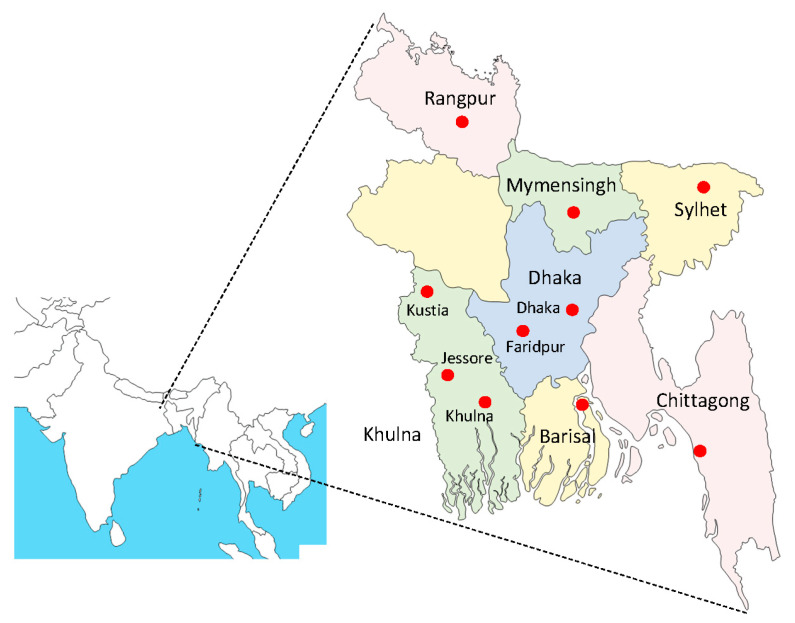
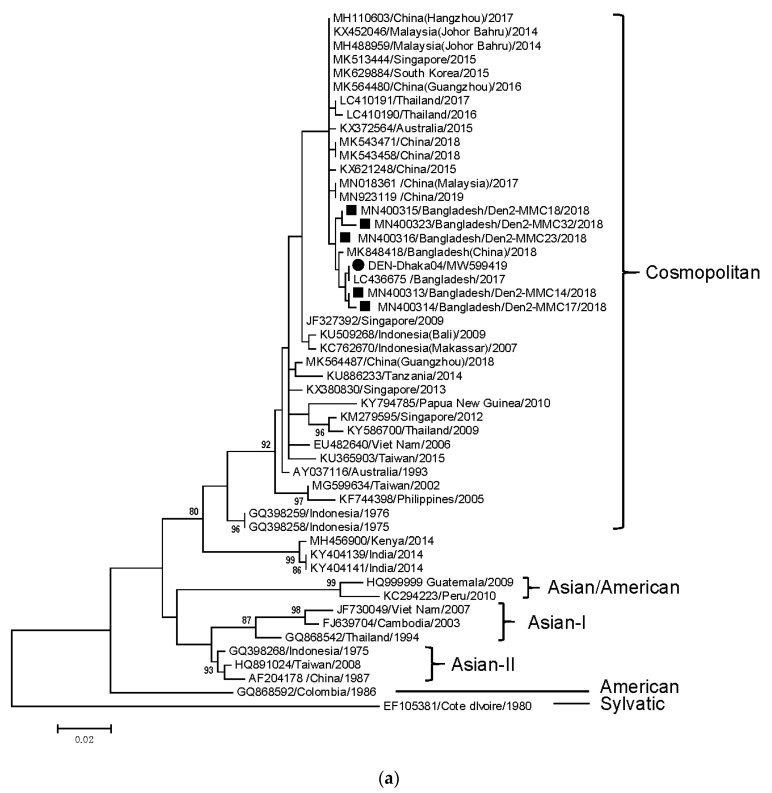
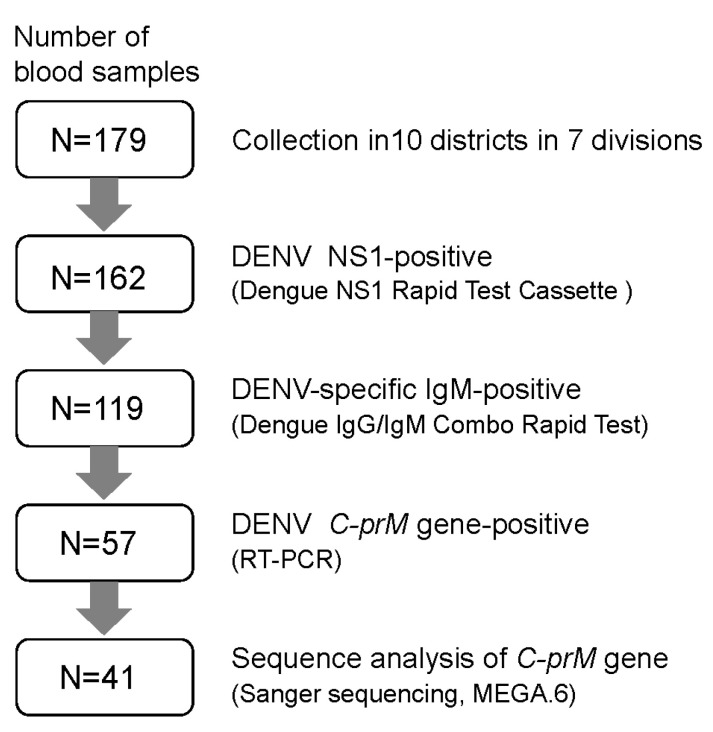
Bangladesh is an endemic region of dengue fever and experienced an unprecedented large outbreak with more than 100,000 confirmed cases in 2019. To understand the prevalence of dengue antibody in patients and molecular epidemiological characteristics of dengue virus (DENV) in this outbreak, a total of 179 blood samples were collected from patients in 10 districts (seven divisions) covering nearly the whole country from August to December 2019. DENV NS-1 was detected in 162 samples, among which DENV-specific IgM was positive in 119 samples (73.5%), including 60.5% samples also positive for DENV-specific IgG. Sequencing of the partial gene and its phylogenetic analysis revealed predominance of DENV type 3 genotype I, accounting for 93% of samples examined. DENV-3 genotype III was identified in two samples from separate districts, and only one DENV-2 cosmopolitan genotype was found in the capital city, Dhaka. These findings suggest the predominance of DENV-3 genotype I and occurrence of DENV-3 genotype III, associated with increased incidence of recent secondary infection in Bangladesh in 2019.
孟加拉国是登革热的流行地区,2019年经历了前所未有的大规模疫情,确诊病例超过10万例。为了解此次疫情中患者登革热抗体的流行情况以及登革病毒(DENV)的分子流行病学特征,于2019年8月至12月从覆盖几乎整个国家的10个地区(7个专区)的患者中总共采集了179份血液样本。在162份样本中检测到DENV NS-1,其中119份样本(73.5%)的DENV特异性IgM呈阳性,包括60.5%的样本DENV特异性IgG也呈阳性。部分基因测序及其系统发育分析显示,DENV 3型基因型I占主导地位,占检测样本的93%。在来自不同地区的两份样本中鉴定出DENV-3基因型III,在首都达卡仅发现一种DENV-2世界基因型。这些发现表明DENV-3基因型I占主导地位以及DENV-3基因型III的出现,这与2019年孟加拉国近期继发感染发病率增加有关。