Department of Civil, Building and Environmental Engineering, Sapienza University of Rome, 00184 Rome, Italy.
Int J Environ Res Public Health. 2021 Apr 17;18(8):4278. doi: 10.3390/ijerph18084278.
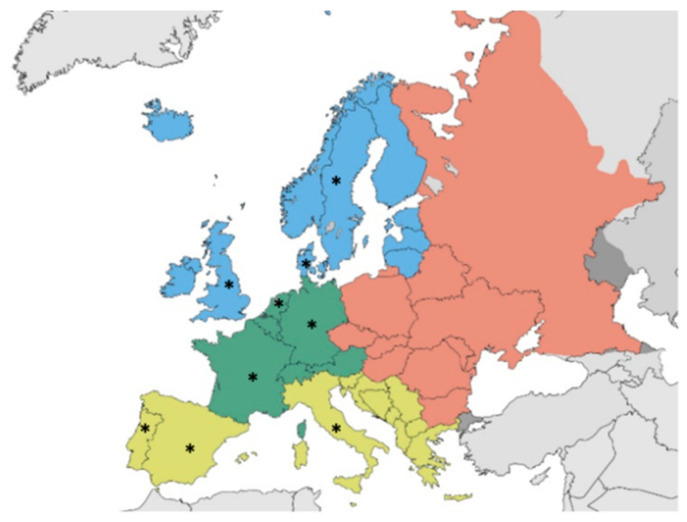
Modern housing units must meet new needs and requirements; housing dimensions and functional characteristics are relevant issues, mainly considering population ageing and disability. The housing standards of nine European countries were compared to analyze their ability to satisfy new population need, in terms of size. The regulations were downloaded from the websites of the official channels of each country. A wide variability in room size was observed (e.g., single room: from 9 m in Italy to 7 m in France, to the absence of any limit in England and Wales, Germany-Hesse, and Denmark). Italian and French legislations define housing dimension considering the room destination and the number of people. The Swedish regulation provides performance requirements and functional indications but does not specify the minimum dimensions of habitable rooms. The rooms' minimum heights vary between 2.70 m in Italy and Portugal and 2.60 m in the Netherlands, but no limits are established in England and Wales. A diverse approach among European countries regulations is observed: from a market-oriented logic one (e.g., England and Wales) in which room minimum dimensions are not defined to a prescriptive one (Italy) and one that is functionality-oriented (the Netherlands). However, considering the health, social, environmental, and economic trends, many of these standards should be revised.
现代住房单元必须满足新的需求和要求;住房尺寸和功能特征是相关问题,主要考虑人口老龄化和残疾问题。比较了九个欧洲国家的住房标准,以分析其在尺寸方面满足新的人口需求的能力。从每个国家的官方渠道网站上下载了法规。观察到房间尺寸的广泛可变性(例如,单人房:从意大利的 9 平方米到法国的 7 平方米,到英格兰和威尔士、德国黑森州和丹麦没有任何限制)。意大利和法国的法规根据房间用途和人数来定义住房尺寸。瑞典法规提供了性能要求和功能指示,但没有具体规定可居住房间的最小尺寸。房间的最小高度在意大利和葡萄牙为 2.70 米,在荷兰为 2.60 米,但在英格兰和威尔士没有设定限制。在欧洲国家的法规中观察到了不同的方法:从以市场为导向的逻辑(例如,英格兰和威尔士),其中不定义房间的最小尺寸,到规定性的(意大利)和以功能为导向的(荷兰)。然而,考虑到健康、社会、环境和经济趋势,许多这些标准应该进行修订。