Department of Medical, Surgical and Experimental Sciences, University of Sassari, Sassari 07100, Italy.
Department of Architecture Design and Urban Planning, University of Sassari, Sassari 07100, Italy.
J Environ Public Health. 2020 Feb 27;2020:7642658. doi: 10.1155/2020/7642658. eCollection 2020.
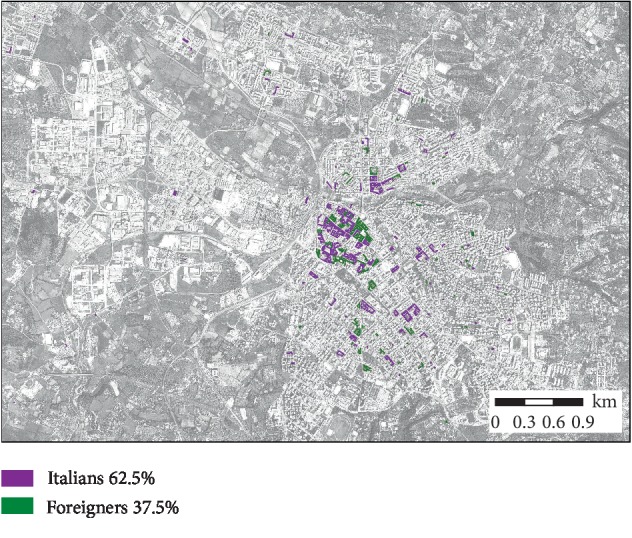
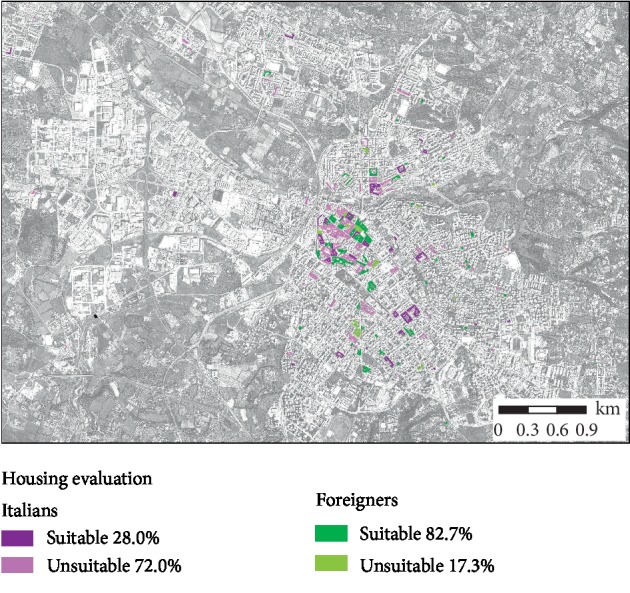
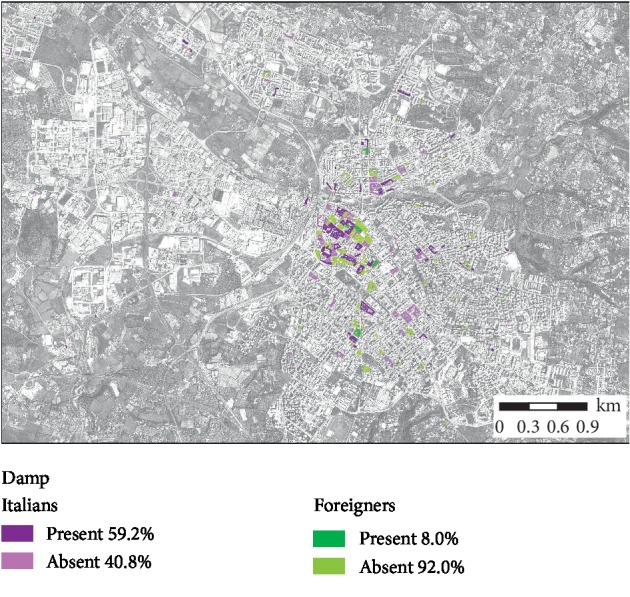
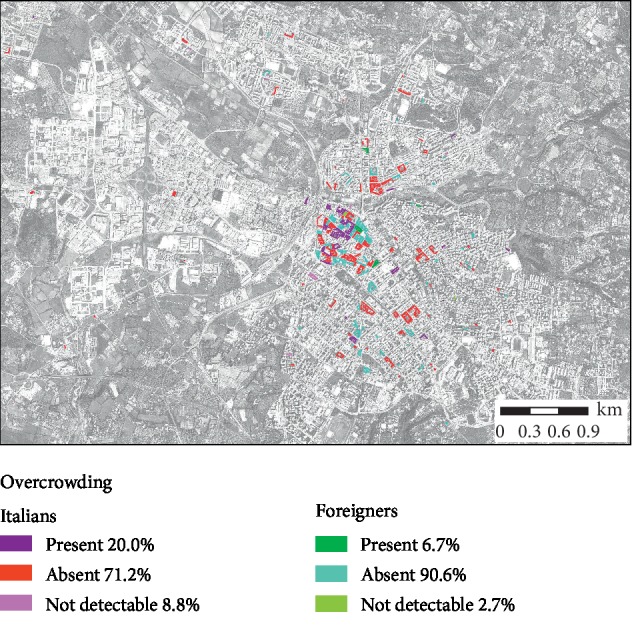
The phenomenon of urbanisation is becoming increasingly prevalent on a global level, and the health issues regarding the urban environment are of primary importance in public health. Accordingly, the present manuscript describes an analysis of the housing conditions of Italian urban areas, referring to the city of Sassari (Sardinia), Italy, focused on the dwelling structural and sanitary conditions issued by the Italian regulations. Data relating to the housing conditions of the population were acquired by the Local Hygiene and Public Health Service (SISP), in a period between 2012 and 2016. Qualitative variables were summarised with absolute and relative (percentages) frequencies, whereas quantitative variables with means and standard deviations depending on their parametric distribution. Statistical comparisons for qualitative and quantitative variables were performed with the test or Student's -test, respectively. A value less than 0.05 was considered statistically significant. Finally, the dwellings and the collected variables were georeferenced on a city map. During the 2012-2016 observation period, 363 certification requests were received from 193 (53.2%) foreign-born citizens and 170 (46.8%) Italians at the SISP offices. The main reasons relate to the request for a residency permit (46.6%) and to obtain a subsidy from the local government (32.8%). Overall, 15.4% of dwellings were found to be improper, while 35.3% and 22.0% were found to be unhygienic and uninhabitable, respectively. The foreigners' homes were found to be suitable in 82.7% of cases; the housing of Italian citizens, on the contrary, was found to be suitable in 28% of the observations. The present study offers a cross section of the housing conditions of Italian urban areas, referring to the city of Sassari. To the authors' best knowledge, this observation is the first one carried out in Sardinia and one of the first observations in Italy. It has emerged that "hygienically unsuitable" homes are those that, in most cases, are located in the city centre. Moreover, the Italian population is hit by a significant housing problem, due to overcrowding, uninhabitability, and unhygienic conditions. Overall, our findings suggest that it is necessary to develop a multidisciplinary approach to guarantee public health, with safe dwellings homes and the surrounding urban context alongside the development of social relations. Nevertheless, there is still little evidence available today on the population housing conditions, especially regarding the private indoor environment, and further research is needed to bridge this knowledge gap.
城市化现象在全球范围内日益普遍,城市环境中的健康问题在公共卫生中尤为重要。因此,本手稿描述了对意大利城市住房条件的分析,以意大利撒丁岛的萨萨里市为例,重点介绍了意大利法规规定的住房结构和卫生条件。人口住房条件数据由当地卫生和公共卫生服务(SISP)在 2012 年至 2016 年期间获得。定性变量用绝对和相对(百分比)频率进行总结,而定量变量则根据其参数分布用平均值和标准差进行总结。分别用 检验和学生 t 检验对定性和定量变量进行统计比较。 值小于 0.05 被认为具有统计学意义。最后,将房屋和收集的变量在城市地图上进行地理定位。在 2012-2016 年的观察期间,SISP 办公室收到了 193 名(53.2%)外国出生公民和 170 名(46.8%)意大利人提出的 363 份认证申请。主要原因涉及居留许可申请(46.6%)和从地方政府获得补贴(32.8%)。总体而言,发现 15.4%的房屋不适当,而 35.3%和 22.0%分别被发现不卫生和不适宜居住。外国人家中的房屋在 82.7%的情况下被认为是合适的;相比之下,意大利公民的住房在 28%的观察中被认为是合适的。本研究提供了意大利城市住房条件的一个横截面,以撒萨里市为例。据作者所知,这是在撒丁岛进行的首次观察,也是意大利的首次观察之一。研究结果表明,“不卫生不适宜”的房屋主要位于市中心。此外,意大利人口由于过度拥挤、不适宜居住和不卫生条件而面临严重的住房问题。总的来说,我们的研究结果表明,有必要采取多学科方法来保障公共卫生,确保安全的住房和周围的城市环境,以及发展社会关系。然而,目前关于人口住房条件的证据仍然很少,特别是关于私人室内环境的证据,需要进一步研究来弥补这一知识空白。