Department of Neurology and Psychiatry, Assiut University Hospitals, Assiut 71511, Egypt.
Department of Physiology and Pharmacology, College of Osteopathic Medicine, Sam Houston State University, Conroe, TX 77304, USA.
Int J Mol Sci. 2021 Apr 15;22(8):4081. doi: 10.3390/ijms22084081.
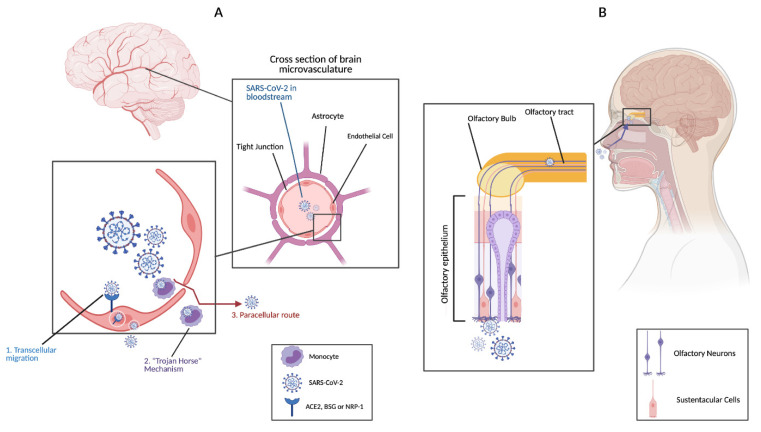
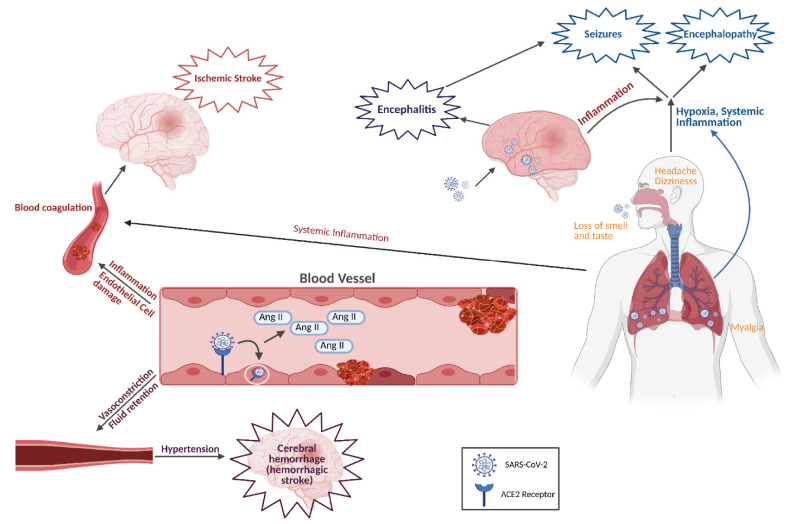
COVID-19 is a severe respiratory disease caused by the newly identified human coronavirus (HCoV) Severe Acute Respiratory Syndrome Coronavirus-2 (SARS-CoV-2). The virus was discovered in December 2019, and in March 2020, the disease was declared a global pandemic by the World Health Organization (WHO) due to a high number of cases. Although SARS-CoV-2 primarily affects the respiratory system, several studies have reported neurological complications in COVID-19 patients. Headache, dizziness, loss of taste and smell, encephalitis, encephalopathy, and cerebrovascular diseases are the most common neurological complications that are associated with COVID-19. In addition, seizures, neuromuscular junctions' disorders, and Guillain-Barré syndrome were reported as complications of COVID-19, as well as neurodegenerative and demyelinating disorders. However, the management of these conditions remains a challenge. In this review, we discuss the prevalence, pathogenesis, and mechanisms of these neurological sequelae that are secondary to SARS-CoV-2 infection. We aim to update neurologists and healthcare workers on the possible neurological complications associated with COVID-19 and the management of these disease conditions.
新型冠状病毒肺炎(COVID-19)是由新型人类冠状病毒(HCoV)严重急性呼吸综合征冠状病毒 2(SARS-CoV-2)引起的严重呼吸系统疾病。该病毒于 2019 年 12 月被发现,由于病例数量众多,世界卫生组织(WHO)于 2020 年 3 月宣布该疾病为全球大流行。尽管 SARS-CoV-2 主要影响呼吸系统,但几项研究报告称 COVID-19 患者存在神经系统并发症。头痛、头晕、味觉和嗅觉丧失、脑炎、脑病和脑血管疾病是与 COVID-19 相关的最常见神经系统并发症。此外,还报告了 COVID-19 的并发症包括癫痫发作、神经肌肉接头疾病和格林-巴利综合征,以及神经退行性和脱髓鞘疾病。然而,这些疾病的管理仍然是一个挑战。在这篇综述中,我们讨论了继发于 SARS-CoV-2 感染的这些神经系统后遗症的流行率、发病机制和机制。我们旨在让神经科医生和医疗保健工作者了解 COVID-19 可能引起的神经系统并发症,以及这些疾病的管理。