Chaim Sheba Medical Center, Division of Endocrinology, Diabetes and Metabolism, Tel-HaShomer, Ramat-Gan 5266202, Israel.
Sackler Faculty of Medicine, University of Tel Aviv, Tel Aviv 6997801, Israel.
Nutrients. 2021 Apr 19;13(4):1359. doi: 10.3390/nu13041359.
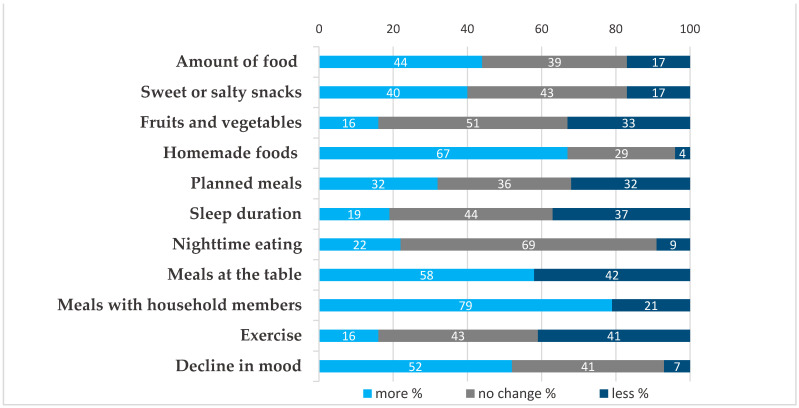
Since the outbreak of COVID-19, billions of people have gone into lockdown, facing pandemic related challenges that engender weight gain, especially in the obese. We report the results of an online survey, conducted during Israel's first quarantine, of 279 adults treated in hospital-based obesity clinics with counseling, medications, surgery, endoscopic procedures, or any combination of these for weight loss. In this study, we assessed the association between changes in dietary and lifestyle habits and body weight, and the benefits of receiving weight management care remotely through telemedicine during lockdown. Compared to patients not receiving obesity care via telemedicine, patients receiving this care were more likely to lose weight (OR, 2.79; = 0.042) and also to increase participation in exercise (OR, 2.4; = 0.022). While 40% of respondents reported consuming more sweet or salty processed snacks and 33% reported less vegetables and fruits, 65% reported more homemade foods. At the same time, 40% of respondents reported a reduction in exercise and 52% reported a decline in mood. Alterations in these eating patterns, as well as in exercise habits and mood, were significantly associated with weight changes. This study highlights that lockdown affects health behaviors associated with weight change, and advocates for the use of telemedicine to provide ongoing obesity care during future quarantines in order to promote weight loss and prevent weight gain.
自 COVID-19 爆发以来,数十亿人被迫居家隔离,面临着与疫情相关的挑战,这些挑战导致体重增加,尤其是肥胖人群。我们报告了一项在线调查的结果,该调查是在以色列首次封锁期间对 279 名在医院肥胖诊所接受咨询、药物治疗、手术、内镜治疗或上述任意组合治疗以减肥的成年人进行的。在这项研究中,我们评估了饮食和生活习惯的变化与体重之间的关系,以及在封锁期间通过远程医疗接受远程体重管理护理的益处。与未通过远程医疗接受肥胖护理的患者相比,接受这种护理的患者更有可能减肥(OR,2.79; = 0.042),并且更有可能增加运动参与度(OR,2.4; = 0.022)。尽管 40%的受访者报告说食用了更多的甜咸加工零食,33%的受访者报告说食用了更少的蔬菜和水果,但 65%的受访者报告说食用了更多的自制食品。与此同时,40%的受访者报告锻炼减少,52%的受访者报告情绪低落。这些饮食习惯、运动习惯和情绪的改变与体重变化显著相关。本研究强调了封锁会影响与体重变化相关的健康行为,并提倡在未来的隔离期间使用远程医疗来提供持续的肥胖护理,以促进减肥和防止体重增加。