Biotech Research & Innovation Centre, University of Copenhagen, 2200 Copenhagen, Denmark.
Int J Mol Sci. 2021 Apr 19;22(8):4227. doi: 10.3390/ijms22084227.
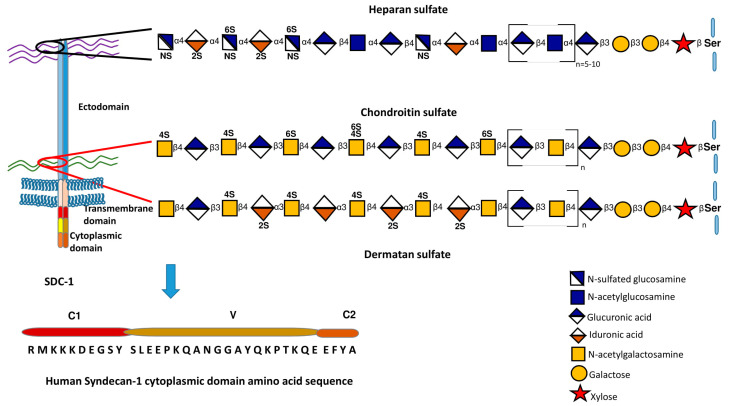
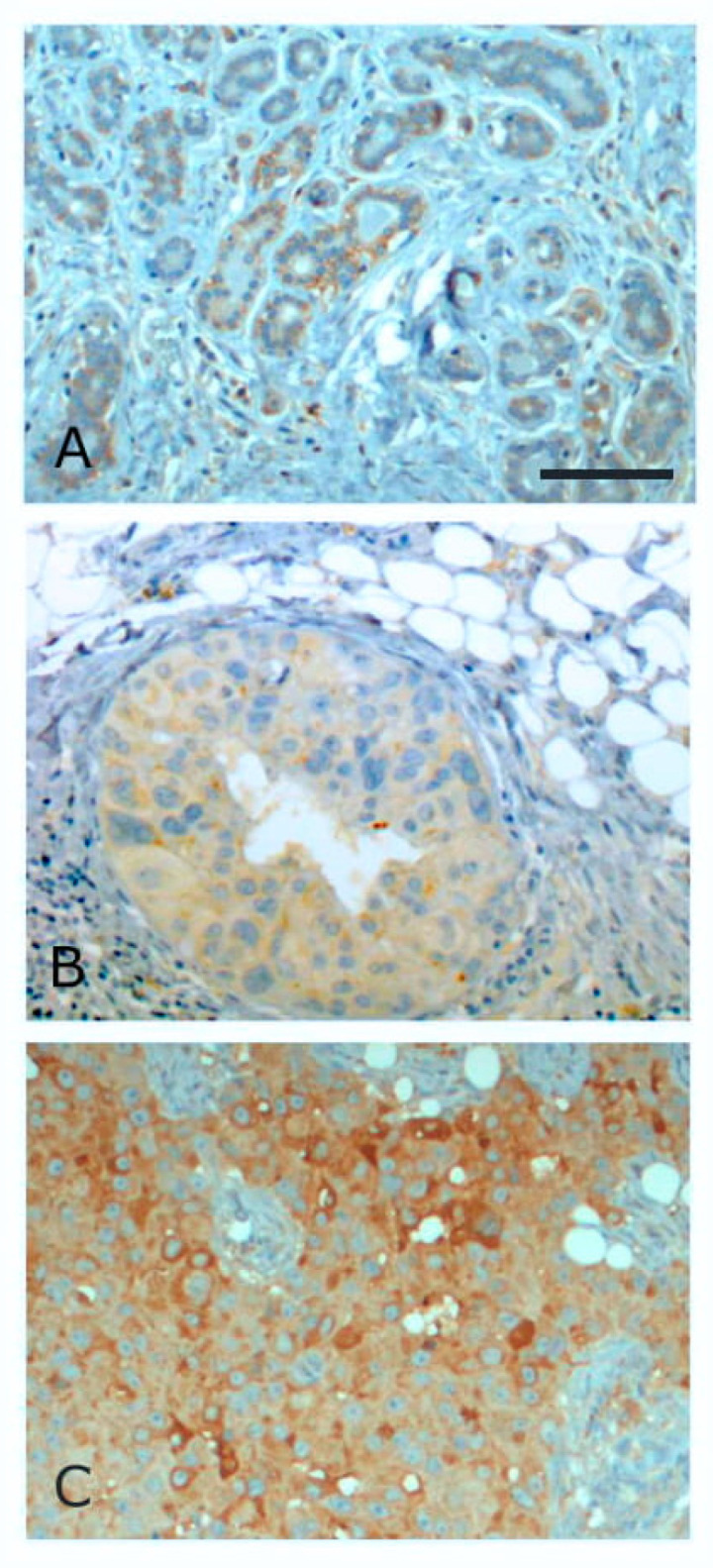
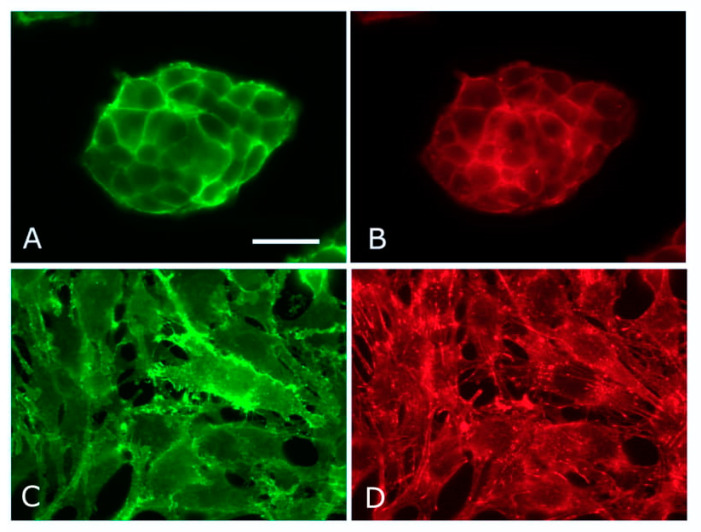
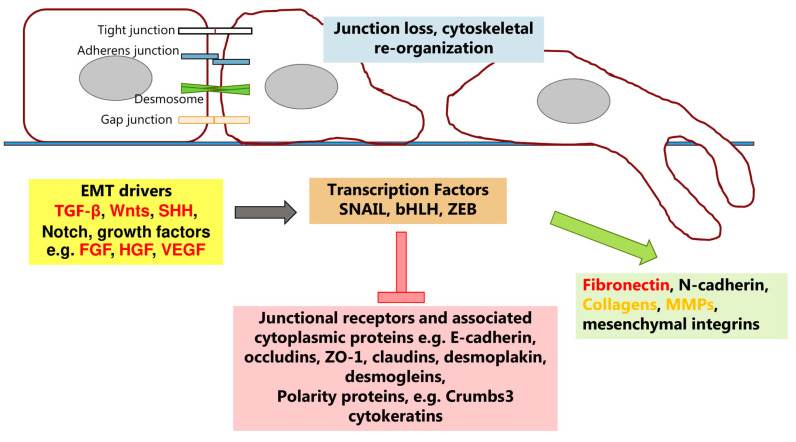
Cell surface proteoglycans are known to be important regulators of many aspects of cell behavior. The principal family of transmembrane proteoglycans is the syndecans, of which there are four in mammals. Syndecan-1 is mostly restricted to epithelia, and bears heparan sulfate chains that are capable of interacting with a large array of polypeptides, including extracellular matrix components and potent mediators of proliferation, adhesion and migration. For this reason, it has been studied extensively with respect to carcinomas and tumor progression. Frequently, but not always, syndecan-1 levels decrease as tumor grade, stage and invasiveness and dedifferentiation increase. This parallels experiments that show depletion of syndecan-1 can be accompanied by loss of cadherin-mediated adhesion. However, in some tumors, levels of syndecan-1 increase, but the characterization of its distribution is relevant. There can be loss of membrane staining, but acquisition of cytoplasmic and/or nuclear staining that is abnormal. Moreover, the appearance of syndecan-1 in the tumor stroma, either associated with its cellular component or the collagenous matrix, is nearly always a sign of poor prognosis. Given its relevance to myeloma progression, syndecan-1-directed antibody-toxin conjugates are being tested in clinical and preclinical trials, and may have future relevance to some carcinomas.
细胞表面蛋白聚糖是已知的是细胞行为的许多方面的重要调节剂。跨膜蛋白聚糖的主要家族是 syndecans,其中哺乳动物有四种。 Syndecan-1 主要局限于上皮细胞,并具有能够与大量多肽相互作用的肝素硫酸链,包括细胞外基质成分和增殖、粘附和迁移的有效介质。出于这个原因,它已经在癌症和肿瘤进展方面进行了广泛的研究。通常,但并非总是如此,随着肿瘤分级、分期和侵袭性以及去分化的增加,syndecan-1 的水平降低。这与实验结果相吻合,即 syndecan-1 的耗竭可能伴随着钙粘蛋白介导的粘附丧失。然而,在一些肿瘤中,syndecan-1 的水平增加,但对其分布的特征是相关的。可能会出现膜染色缺失,但会出现异常的细胞质和/或核染色。此外,syndecan-1 出现在肿瘤基质中,无论是与其细胞成分还是胶原基质相关,几乎总是预后不良的标志。鉴于其与骨髓瘤进展的相关性,syndecan-1 定向抗体-毒素缀合物正在临床试验和临床前试验中进行测试,并且可能对某些癌症具有未来相关性。