Beijing Advanced Innovation Center for Tree Breeding by Molecular Design, Beijing Forestry University, Beijing 100083, China.
National Engineering Laboratory for Tree Breeding, College of Biological Sciences and Technology, Beijing Forestry University, No. 35, Qinghua East Road, Beijing 100083, China.
Int J Mol Sci. 2021 Apr 23;22(9):4410. doi: 10.3390/ijms22094410.
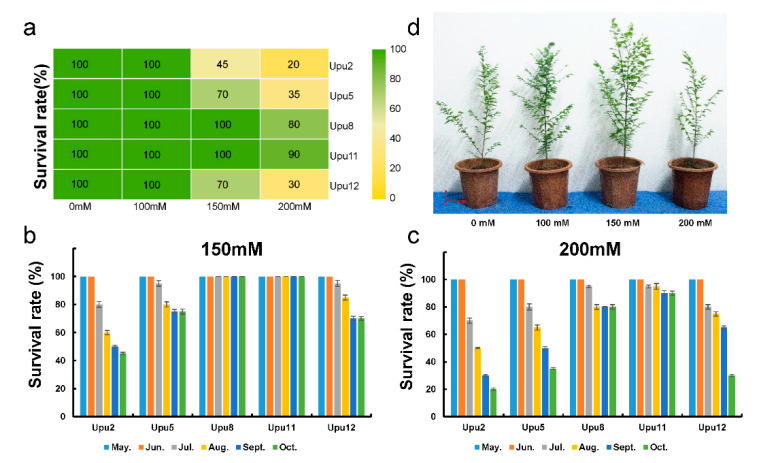
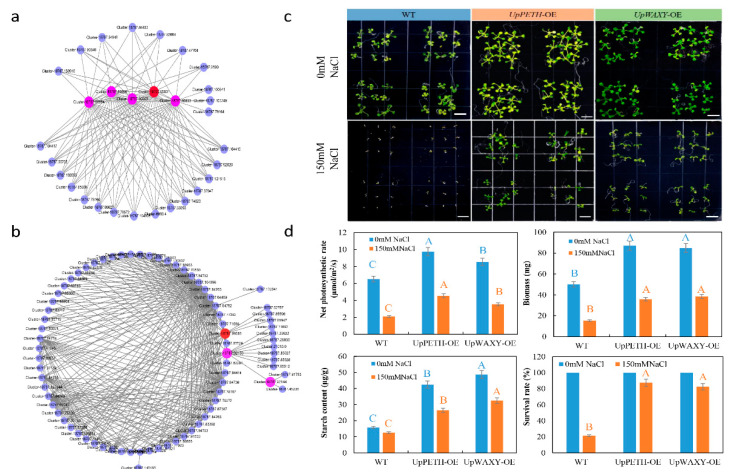
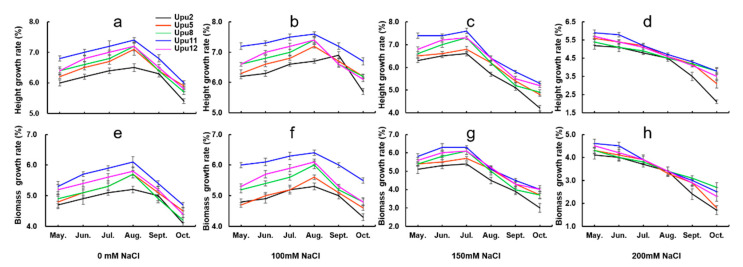
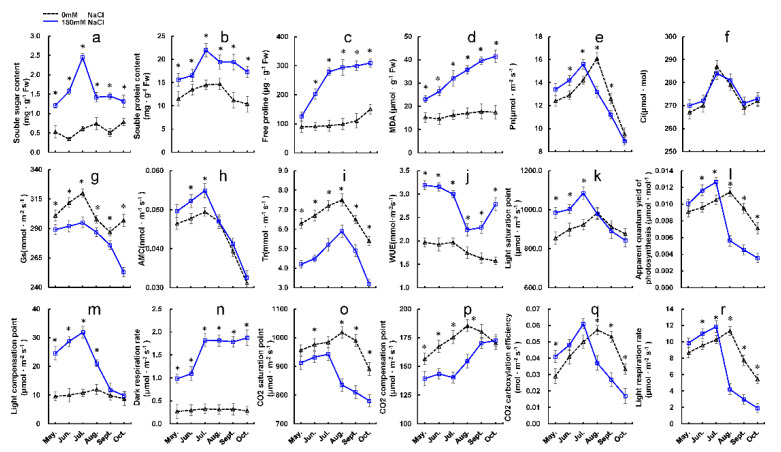
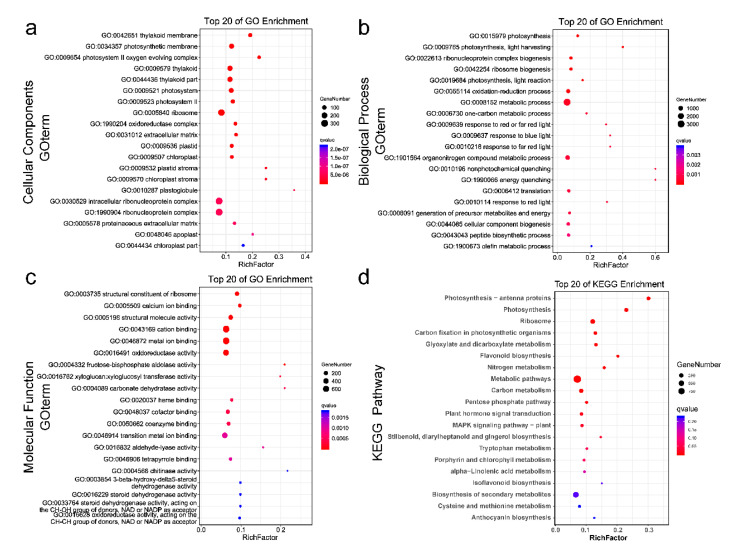
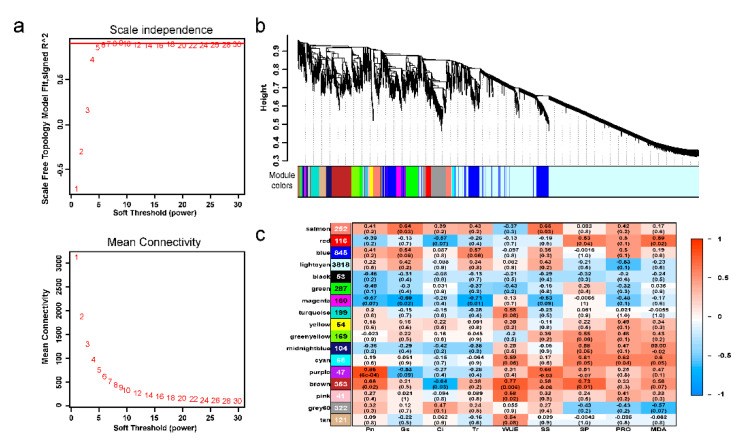
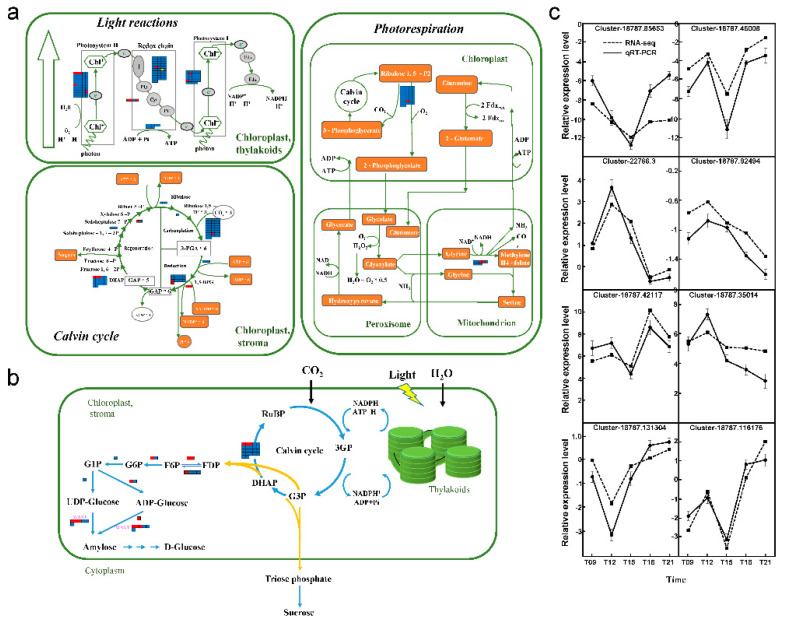
L. is an excellent afforestation and biofuel tree that produces high-quality wood, rich in starch. In addition, is highly adaptable to adverse environmental conditions, which is conducive to its utilization for vegetating saline soils. However, little is known about the physiological responses and transcriptional regulatory network of under salt stress. In this study, we exposed five main cultivars in saline-alkali land (Upu2, 5, 8, 11, and 12) to NaCl stress. Of the five cultivars assessed, Upu11 exhibited the highest salt resistance. Growth and biomass accumulation in Upu11 were promoted under low salt concentrations (<150 mM). However, after 3 months of continuous treatment with 150 mM NaCl, growth was inhibited, and photosynthesis declined. A transcriptome analysis conducted after 3 months of treatment detected 7009 differentially expressed unigenes (DEGs). The gene annotation indicated that these DEGs were mainly related to photosynthesis and carbon metabolism. Furthermore, PHOTOSYNTHETIC ELECTRON TRANSFERH (UpPETH), an important electron transporter in the photosynthetic electron transport chain, and UpWAXY, a key gene controlling amylose synthesis in the starch synthesis pathway, were identified as hub genes in the gene coexpression network. We identified 25 and 62 unigenes that may interact with PETH and WAXY, respectively. Overexpression of UpPETH and UpWAXY significantly increased the survival rates, net photosynthetic rates, biomass, and starch content of transgenic plants under salt stress. Our findings clarify the physiological and transcriptional regulators that promote or inhibit growth under environmental stress. The identification of salt-responsive hub genes directly responsible for photosynthesis and starch synthesis or metabolism will provide targets for future genetic improvements.
柳树是一种优良的造林和生物燃料树种,其木材质量高,富含淀粉。此外,柳树对不利的环境条件具有高度的适应性,有利于其用于绿化盐碱地。然而,柳树在盐胁迫下的生理响应和转录调控网络知之甚少。在这项研究中,我们将五种主要的盐碱地品种(Upu2、5、8、11 和 12)暴露于 NaCl 胁迫下。在评估的五个品种中,Upu11 表现出最高的耐盐性。在低盐浓度(<150mM)下,Upu11 的生长和生物量积累得到促进。然而,在持续用 150mM NaCl 处理 3 个月后,生长受到抑制,光合作用下降。处理 3 个月后的转录组分析检测到 7009 个差异表达的 unigenes(DEGs)。基因注释表明,这些 DEGs 主要与光合作用和碳代谢有关。此外,PHOTOSYNTHETIC ELECTRON TRANSFERH(UpPETH),光合作用电子传递链中的重要电子转运体,以及控制淀粉合成途径中直链淀粉合成的关键基因 UpWAXY,被鉴定为基因共表达网络中的枢纽基因。我们鉴定了 25 和 62 个可能分别与 PETH 和 WAXY 相互作用的 unigenes。在盐胁迫下,过表达 UpPETH 和 UpWAXY 显著提高了转基因植株的存活率、净光合速率、生物量和淀粉含量。我们的研究结果阐明了促进或抑制环境胁迫下生长的生理和转录调节因子。鉴定直接负责光合作用和淀粉合成或代谢的盐响应枢纽基因将为未来的遗传改良提供目标。