Key Laboratory of Biology and Genetic Improvement of Horticulture Crops (Northeast Region), Ministry of Agriculture and Rural Affairs, Northeast Agricultural University, Harbin 150000, China.
College of Horticulture, Northeast Agricultural University, Harbin 150030, China.
Int J Mol Sci. 2021 Apr 20;22(8):4266. doi: 10.3390/ijms22084266.
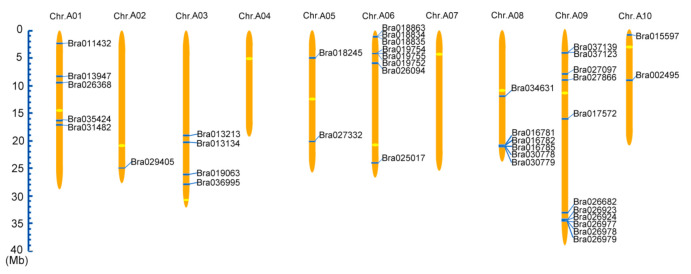
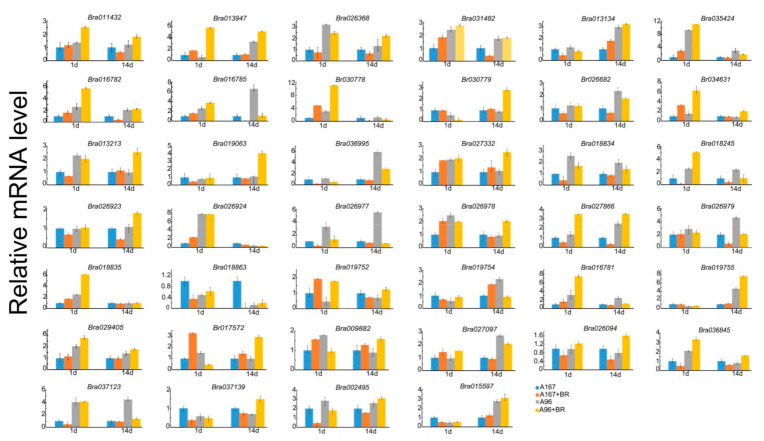
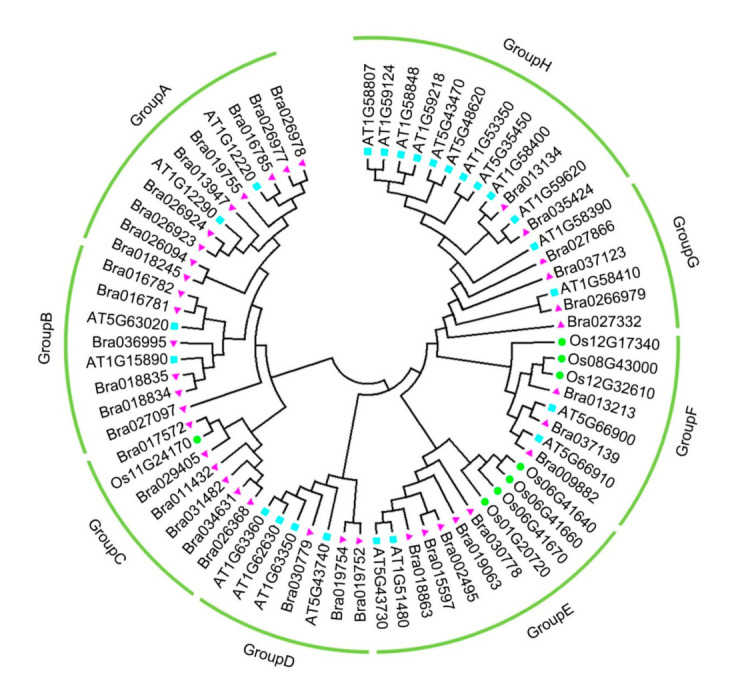
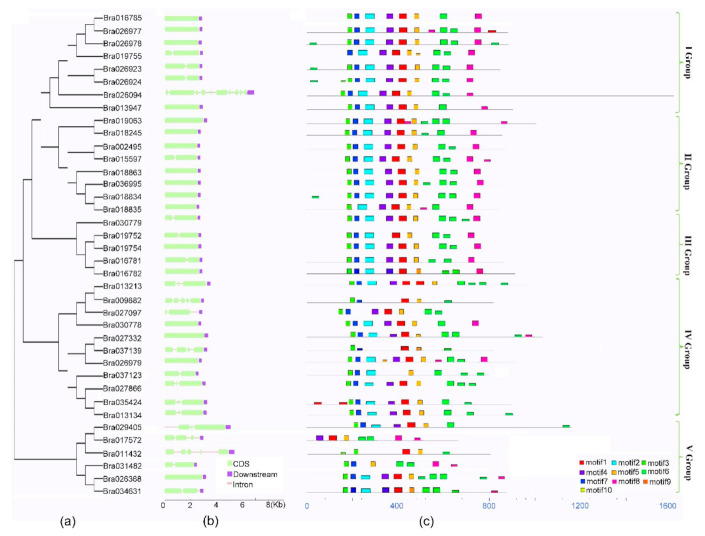
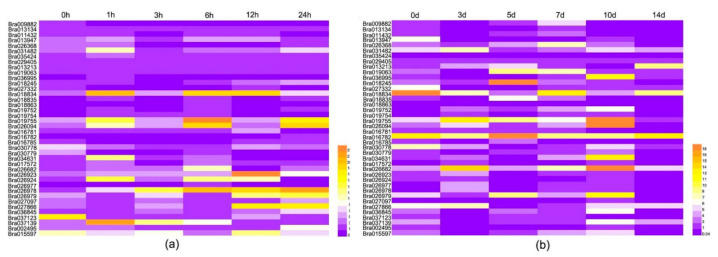
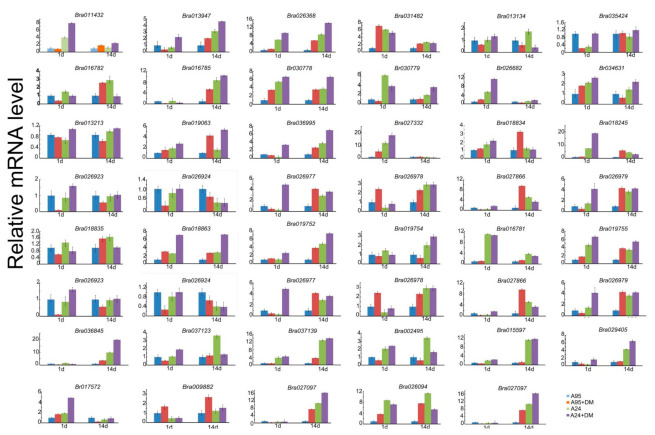
The nucleotide-binding site-leucine-rich repeat (NBS-LRR) gene family is the largest group of plant disease resistance (R) genes widespread in response to viruses, bacteria, and fungi usually involved in effector triggered immunity (ETI). Forty members of the Chinese cabbage CC type NBS-LRR family were investigated in this study. Gene and protein characteristics, such as distributed locations on chromosomes and gene structures, were explored through comprehensive analysis. CC-NBS-LRR proteins were classified according to their conserved domains, and the phylogenetic relationships of CC-NBS-LRR proteins in , , and were compared. Moreover, the roles of genes involved in pathogenesis-related defense were studied and analyzed. First, the expression profiles of genes were detected by inoculating with downy mildew and black rot pathogens. Second, sensitive and resistant Chinese cabbage inbred lines were screened by downy mildew and black rot. Finally, the differential expression levels of genes were monitored at 0, 1, 3, 6, 12 and 24 h for short and 0, 3, 5, 7, 10 and 14 days for long inoculation time. Our study provides information on genes for the investigation of the functions and mechanisms of genes in Chinese cabbage.
核苷酸结合位点-富含亮氨酸重复(NBS-LRR)基因家族是植物抗病(R)基因中最大的一组,广泛存在于病毒、细菌和真菌的反应中,通常涉及效应子触发的免疫(ETI)。本研究调查了中国白菜 CC 型 NBS-LRR 家族的 40 个成员。通过综合分析,研究了基因和蛋白质特征,如在染色体上的分布位置和基因结构。根据保守结构域对 CC-NBS-LRR 蛋白进行分类,并比较了 、 和 中 CC-NBS-LRR 蛋白的系统发育关系。此外,还研究和分析了与发病相关防御相关的 基因的作用。首先,通过接种霜霉病和黑腐病菌检测 基因的表达谱。其次,通过霜霉病和黑腐病筛选中国白菜自交系的敏感性和抗性。最后,监测了短时间(0、1、3、6、12 和 24 小时)和长时间(0、3、5、7、10 和 14 天)接种时 基因的差异表达水平。我们的研究为中国白菜 基因的功能和机制研究提供了信息。