Clemente Filipe Manuel, Ramirez-Campillo Rodrigo, Sarmento Hugo, Castillo Daniel, Raya-González Javier, Rosemann Thomas, Knechtle Beat
Escola Superior Desporto e Lazer, Instituto Politécnico de Viana do Castelo, Rua Escola Industrial e Comercial de Nun'Álvares, 4900-347 Viana do Castelo, Portugal.
Instituto de Telecomunicações, Delegação da Covilhã, 1049-001 Lisboa, Portugal.
Healthcare (Basel). 2021 Apr 13;9(4):457. doi: 10.3390/healthcare9040457.
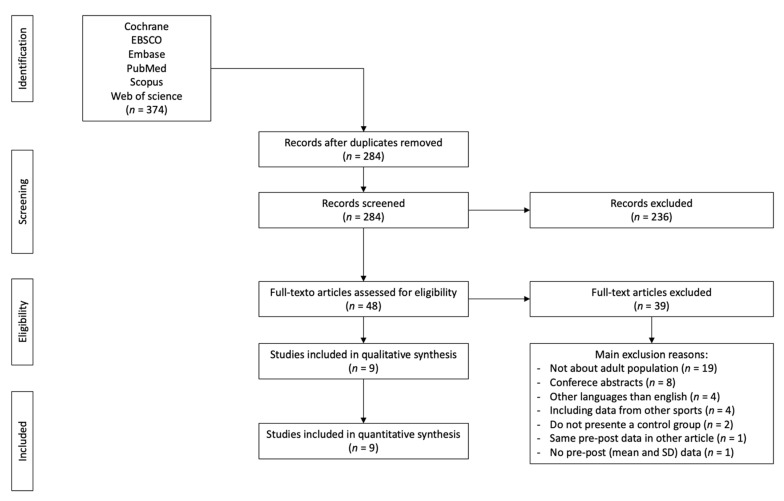
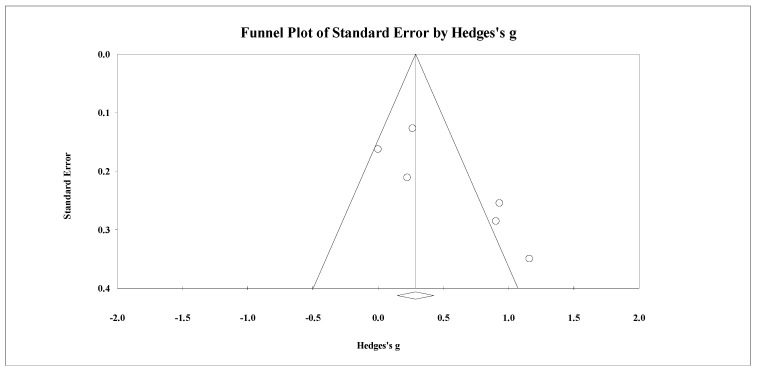
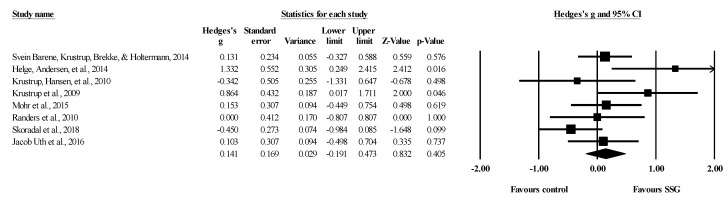
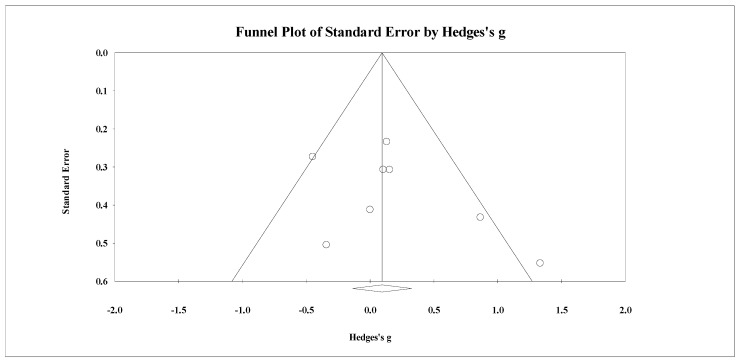
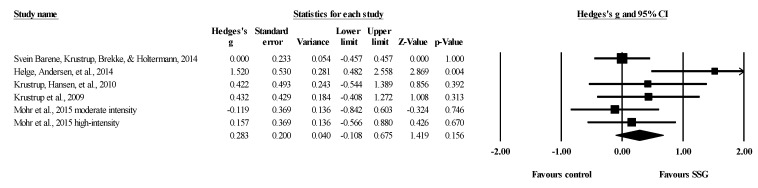
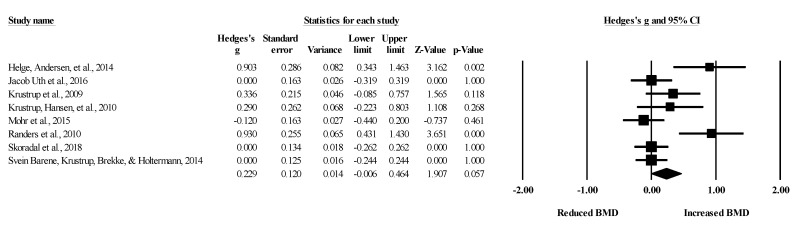
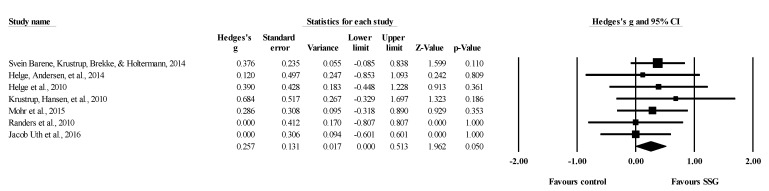
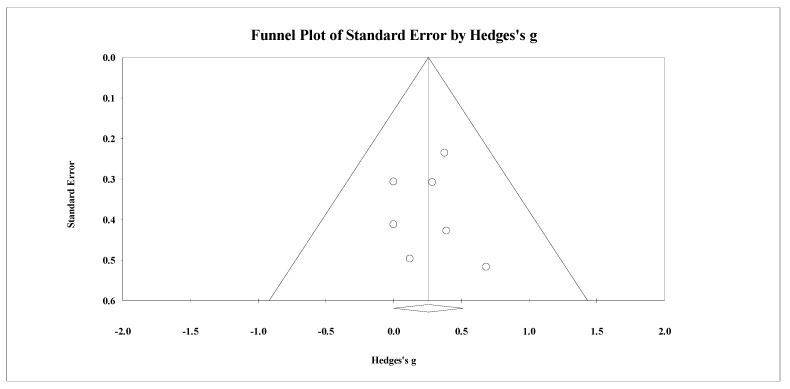
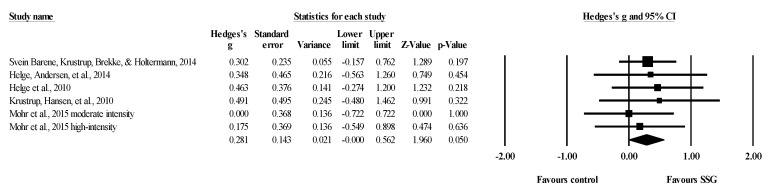
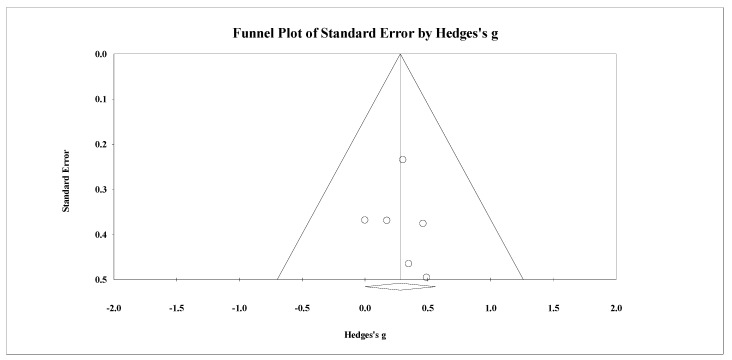
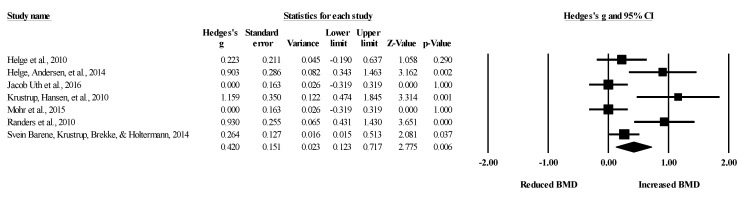
This systematic review with meta-analysis was conducted to assess the effects of small-sided games (SSG)-based training programs on bone mineral density (BMD) in untrained adults. The data sources utilized were Cochrane, Embase, Medline (PubMed), Scopus, SPORTDiscus, and Web of Science. The study eligibility criteria were: (i) untrained adults (>18 years old) of any sex, with or without a noncommunicable disease; (ii) SSG-based programs with a minimum duration of four weeks and no restrictions regarding frequency (number of sessions per week); (iii) passive or active control groups; (iv) pre-post values of BMD; (v) only randomized controlled trials; and (vi) only original and full-text studies written in English. The database search initially yielded 374 titles. From those, nine articles were eligible for the systematic review and meta-analysis. The age of included population varied from a minimum of 20 and a maximum of 71 years old. Non-significant differences between SSG and passive and active control groups on total BMD (ES = 0.14; 0.405 and ES = 0.28; 0.05, respectively). Meanwhile, significant differences in favor of SSGs vs. passive and control groups were detected, evidencing an improvement of BMD in lower limbs of the adult population for both sexes (ES = 0.26; 0.05 and ES = 0.28; 0.156, respectively). As conclusions, SSGs can be used as a non-pharmacological alternative to increase the BMD in the lower limbs despite having no significant impact on total body BMD. Careful generalization should be done of the level of heterogeneity.
本项系统评价及荟萃分析旨在评估基于小场地比赛(SSG)的训练计划对未受过训练的成年人骨密度(BMD)的影响。所使用的数据来源包括Cochrane、Embase、Medline(PubMed)、Scopus、SPORTDiscus和Web of Science。研究纳入标准为:(i)任何性别、年龄大于18岁、无论是否患有非传染性疾病的未受过训练的成年人;(ii)基于SSG的训练计划,最短持续时间为四周,对频率(每周训练次数)无限制;(iii)被动或主动对照组;(iv)BMD的前后测量值;(v)仅纳入随机对照试验;(vi)仅纳入英文撰写的原创全文研究。数据库检索最初得到374个标题。其中,9篇文章符合系统评价和荟萃分析的纳入标准。纳入人群年龄最小为20岁,最大为71岁。SSG组与被动和主动对照组在总骨密度上无显著差异(效应量分别为ES = 0.14;P = 0.405和ES = 0.28;P = 0.05)。同时,检测到SSG组相对于被动和对照组有显著差异,表明成年男女下肢骨密度均有所改善(效应量分别为ES = 0.26;P = 0.05和ES = 0.28;P = 0.156)。结论是,尽管对全身骨密度没有显著影响,但SSG可作为一种非药物方法来增加下肢骨密度。应谨慎推广异质性水平。